

 Email us


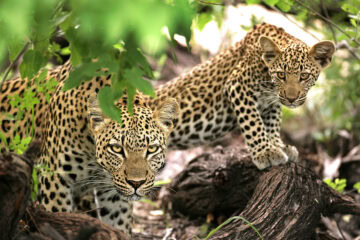
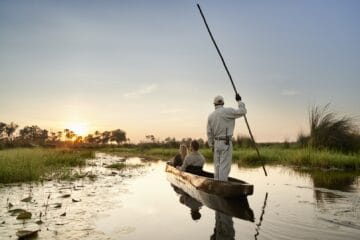
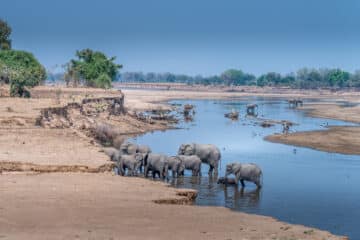

Seven safari destinations stand out as the best places to see African wild dogs: South Luangwa, the Linyanti Concession, the Greater Mana Pools Ecosystem, Madikwe, Nyerere National Park, Kruger, and the Okavango Delta. But what’s it actually like to see these canines in the African bush?
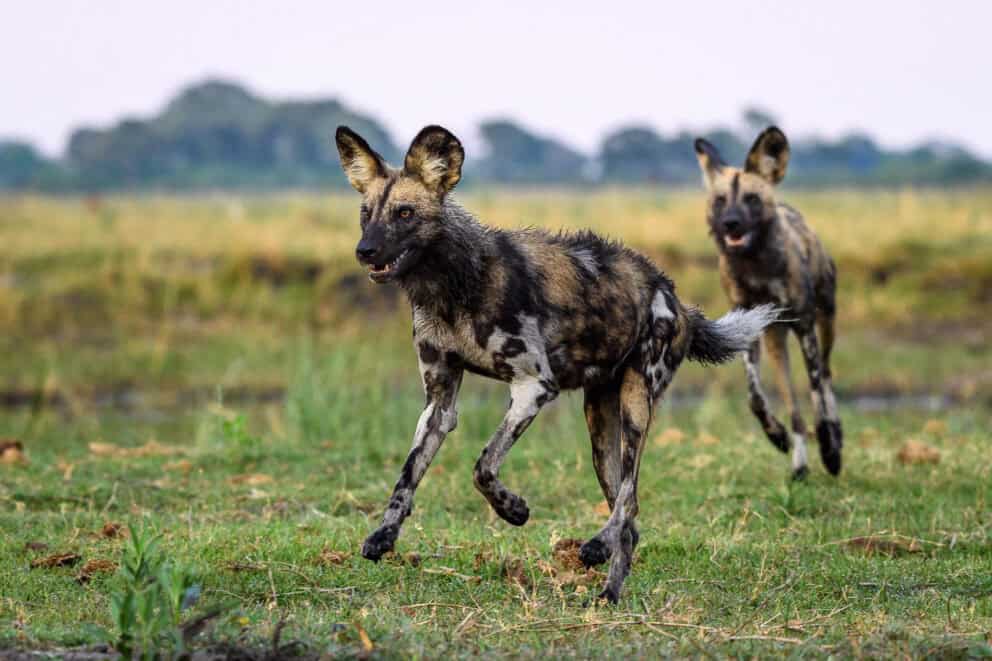
There’s an electric energy that only occurs when a pack of wild dogs (Lycaon pictus) begins to wake.
Unlike other predators that stalk quietly through the shadows, wild dogs are high-octane, intensely social, and relentless hunters. To witness a pack greet each other with high-pitched chirps, ritualised tail-wagging, and tactile bonds before embarking on a lightning-fast twilight hunt is to see one of the most remarkable spectacles in the African bush.
Also known as painted wolves or Cape hunting dogs, these elusive carnivores are a holy grail bucket-list sighting for even the most seasoned travellers.

They’re also Africa’s second most endangered carnivore (the first being the Ethiopian wolf), and sightings of them are extremely scarce.
Because wild dogs require vast, unfragmented territories to survive, finding them takes more than luck – it requires being in the right conservation stronghold at the right time, guided by specialists who understand the ground realities of the bush.
A single pack of wild dogs requires a massive territory, often between 200 and 1,500 square kilometres (77 to 580 square miles). Unless they’re anchored to a den, a pack can easily cover 30 to 50 kilometres (18 to 31 miles) in a single day, making them incredibly difficult to track.
If you’re hoping for that coveted sighting and want to maximise your chances, here’s our expert guide to the seven best places to see African wild dogs.
1. South Luangwa National Park, Zambia
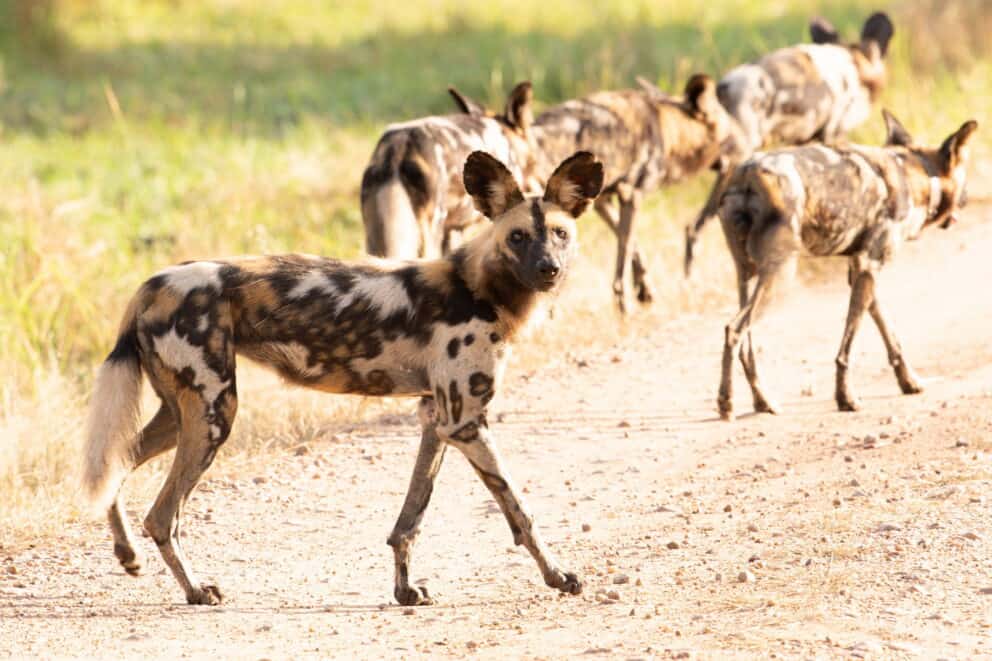
Zambia’s raw, sensory wilderness is legendary, and South Luangwa National Park is a triumph for wild dog conservation. Thanks to over two decades of dedicated anti-poaching units and local community initiatives, such as the Zambian Carnivore Programme, wild dog populations here have bounced back significantly.
The landscape has shifted dramatically, from a location with sporadic sightings to one of the most reliable places on the continent to see large, thriving packs of painted wolves.
Historically considered a seasonal sighting during the greener months, healthy pack dynamics now mean safari-goers have exceptional opportunities to spot them year-round.
As the birthplace of the classic walking safari, South Luangwa offers a rare adventure: tracking wild dogs on foot under the guidance of expert armed scouts and trackers. Guides are also known to recognise individual dogs and their histories, making the sightings even more special.
Explore our South Luangwa National Park tours.
2. Linyanti Concession, Botswana
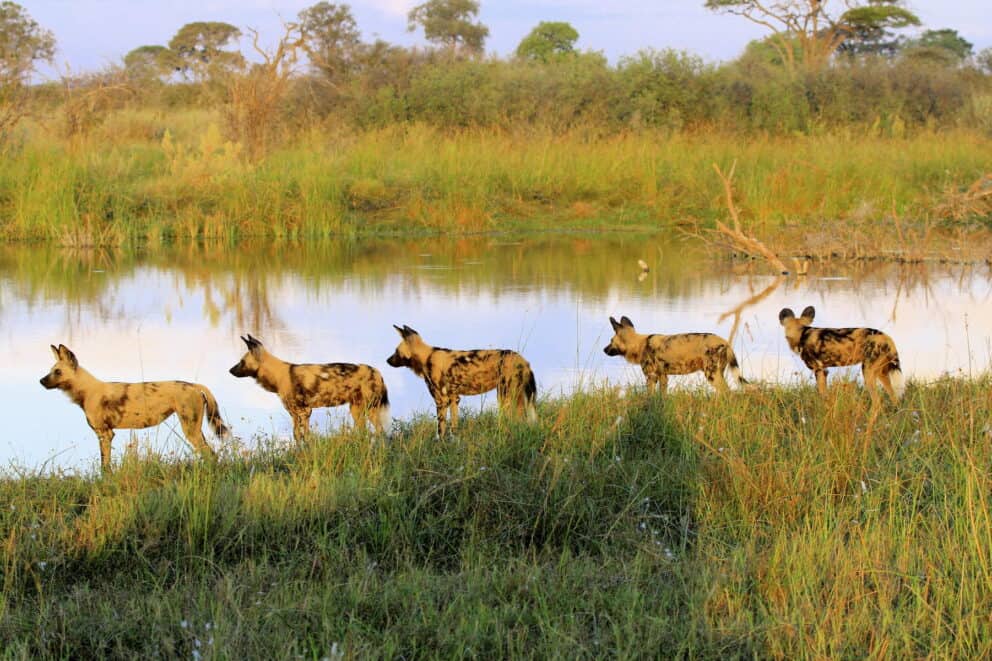
Tucked away in northern Botswana, the private Linyanti Concession, along with its neighbouring reserves (Selinda and Kwando), offers an exclusive, low-impact safari experience where wildlife moves without boundaries.
Positioned in northern Botswana between the Okavango Delta and Chobe National Park, this vast region offers a unique combination of geography and safari privileges that favour high-octane wild dog encounters. Linyanti also forms an integral wildlife corridor within the vast Kavango-Zambezi Transfrontier Conservation Area (KAZA), providing packs with the massive, unfenced roaming ranges that they need to thrive.
The Kwando-Linyanti-Selinda ecosystem is also famous among researchers for its long-standing, multi-generational wild dog packs. Camps like Lagoon and Lebala (in the adjoining Kwando reserve) are even known specifically for their frequent wild dog sightings.
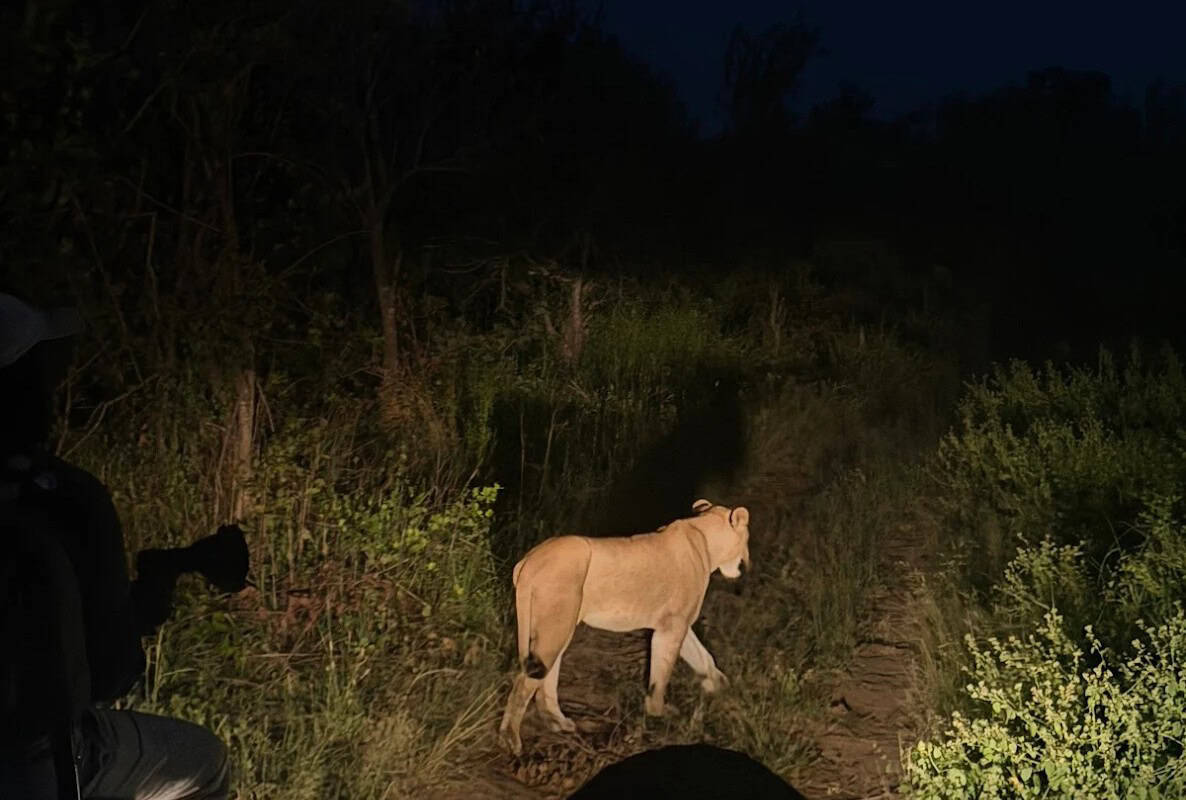
Because private concessions permit off-road driving and night tracking, experienced trackers can follow hunting packs deep into the mopane woodlands and marshes, giving you a front-row seat to the raw speed and coordination of a wild dog hunt.
Explore our Linyanti Concession tours.
3. Greater Mana Pools Ecosystem, Zimbabwe and Zambia
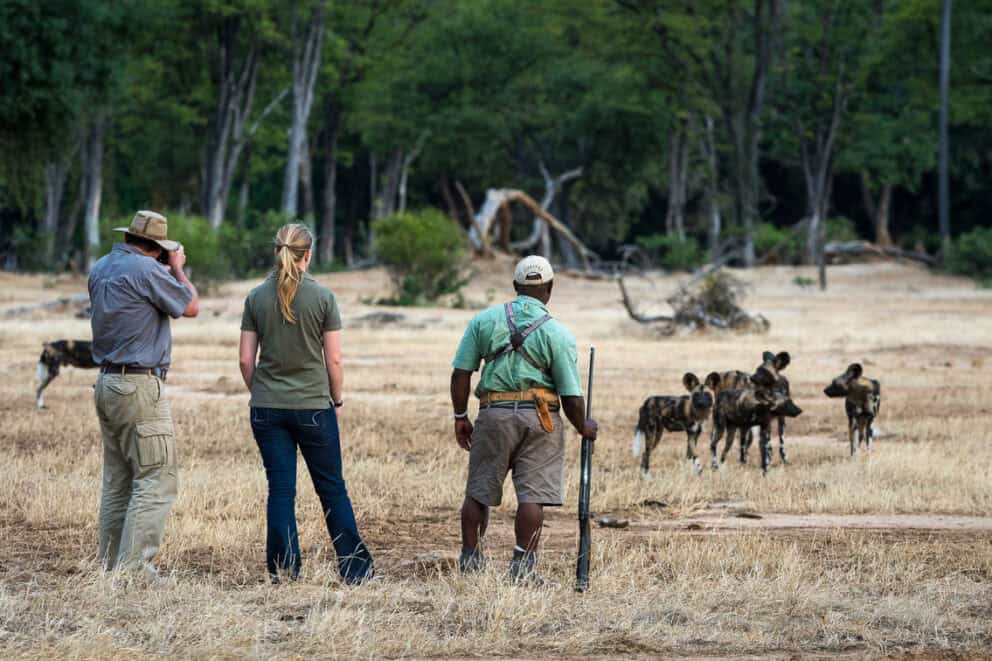
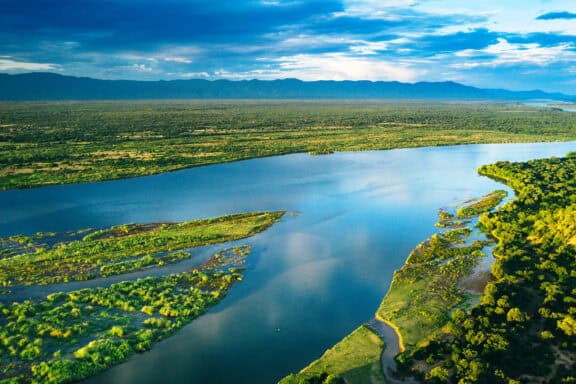
Mana Pools National Park and Lower Zambezi National Park form two halves of a single, continuous, cross-border ecosystem divided by the Zambezi River. Together, this transboundary wilderness represents one of Africa’s most intimate and dramatic destinations for observing African wild dogs.
Mana Pools
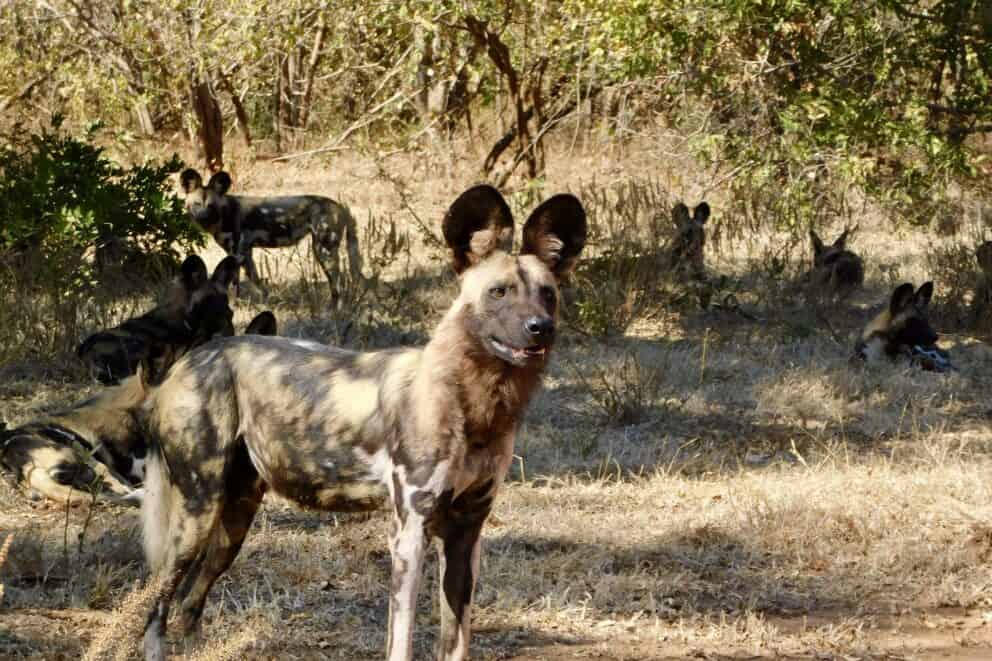
Zimbabwe’s Mana Pools is famous for delivering raw, high-intensity walking safaris, meaning you may even get a glimpse of a pack on foot. With your expert guide, you’ll be able to track packs through Albida groves and river floodplains and, if you’re lucky, could even see a resting pack at eye level.
The packs here have also gained worldwide fame – most notably the Tait and Blacktip packs – thanks to Sir David Attenborough’s BBC Dynasties series, which showcased their incredible family structures, social politics, and dynamic hunts.
Explore our Mana Pools tours.
Lower Zambezi
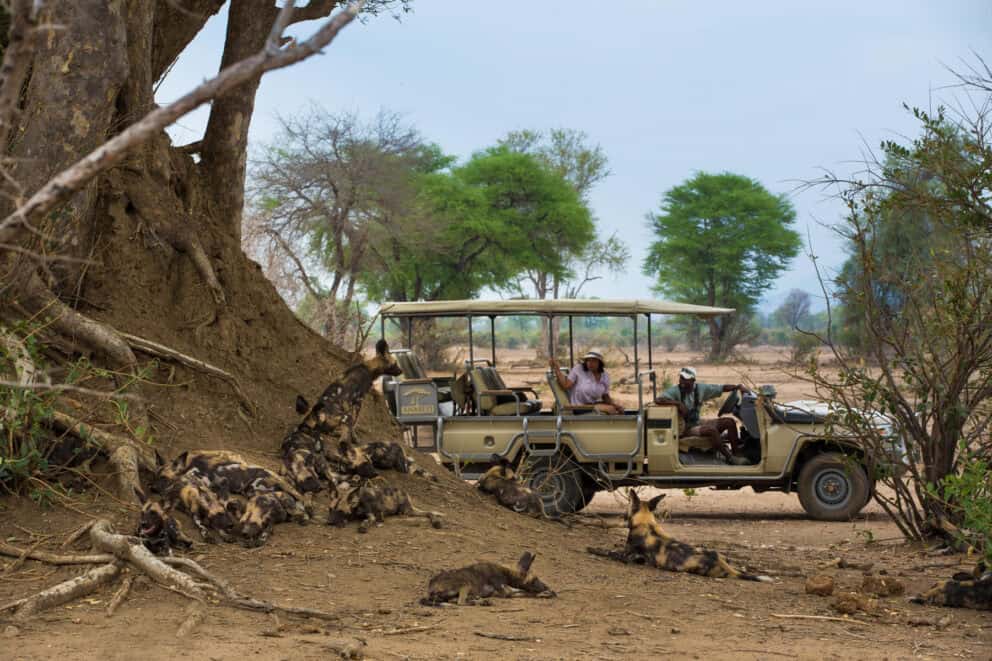
Across the river, Lower Zambezi National Park shares the same wildlife population and ecosystem, but in a quieter way. Over the past decade, collaborative anti-poaching and monitoring efforts between Conservation Lower Zambezi (CLZ) and the Zambian Carnivore Programme have fostered a strong resurgence in wild dog populations.
Packs, including the famous Jeki lineage, now number dozens of individuals across multiple splinter groups. To see them, you can combine open-vehicle game drives with river cruises and canoeing. It’s not uncommon to see them hunting impala right along the riverbank near the park’s open airstrips.
Explore our Lower Zambezi tours.
4. Madikwe Game Reserve, South Africa
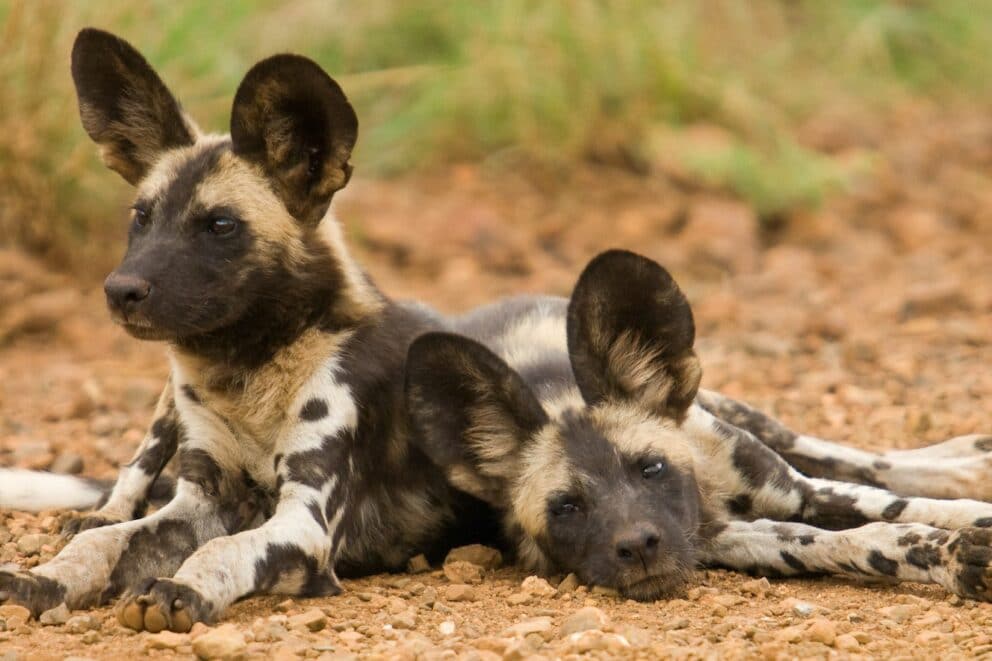
Madikwe Game Reserve in South Africa holds a special place in African safari history as one of the continent’s most successful conservation reintroductions of the African wild dog.
Before 1994, wild dogs had been extinct in the area for decades. Through the historical Operation Phoenix, wild dogs were successfully translocated and reintroduced, and now, after much hardship, they’ve established a thriving, self-sustaining population.
Madikwe features semi-arid Kalahari basin terrain, open plains, and scattered acacia woodlands – this unique, open landscape gives safari goers incredible visibility for spotting wild dogs in Africa. The arid nature of the reserve also means it’s entirely malaria-free, making it ideal for travellers who want top-tier wild dog sightings without any malaria risk.
Safari guides here share real-time tracking information across radio networks, and because off-roading is permitted for major sightings, vehicles can even follow active packs as they navigate the bushveld.
5. Nyerere National Park, Tanzania

Nyerere National Park in southern Tanzania represents one of Africa’s largest preserved wilderness areas. With a vast habitat of over 30,000 square kilometres, Nyerere gives wild dog packs the massive home ranges they need to roam without hitting human borders.
The park is also home to a substantial population of impala and other prey species, a crucial food source to support one of the continent’s most ecologically significant wild dog populations.
Unlike northern Tanzania’s busier safari circuits (like Serengeti and the Ngorongoro Crater), Nyerere receives far fewer visitors. This offers a remote atmosphere where you can track wild dogs for hours without encountering another safari vehicle.
Safari itineraries here can also combine traditional game drives with boat safaris along the Rufiji River and guided walking safaris, offering immersive ways to experience this wild dog habitat.
6. Greater Kruger, South Africa
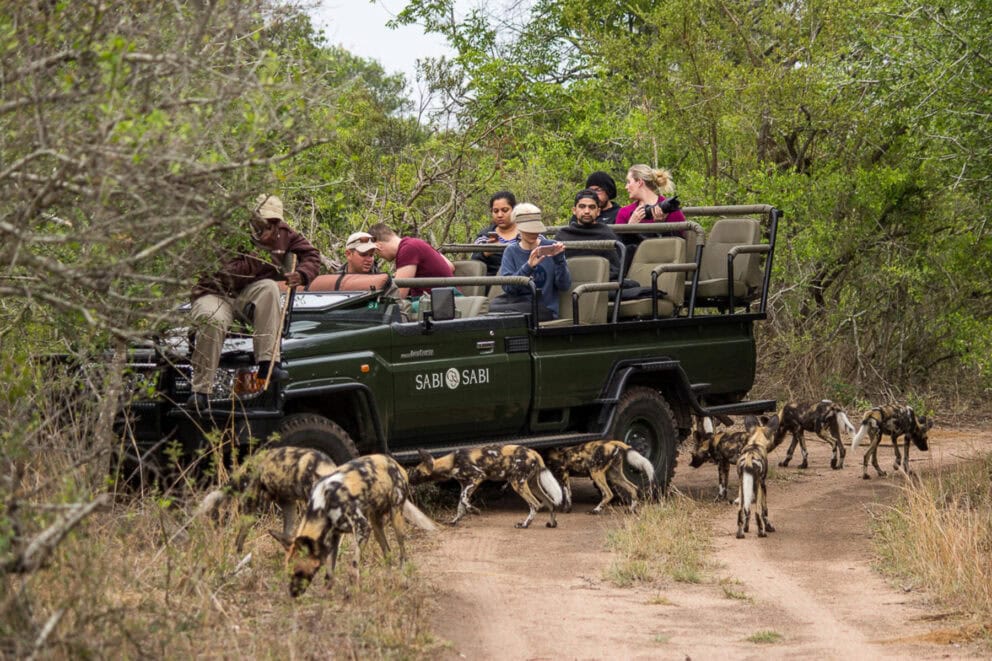
The Greater Kruger – encompassing both the national park and unfenced private reserves like the Sabi Sand Game Reserve and Timbavati – remains a critical stronghold for wild dogs. Together, this joint conservation area covers over 20,000 square kilometres of protected habitat and is home to around 400 individual wild dogs across dozens of distinct packs.
Where you stay in Kruger can significantly affect your tracking success. Sightings in the national park can be opportunistic, as wild dogs move vast distances across the asphalt and dirt network. The southern and central sections – particularly around Pretoriuskop, Lower Sabie, and the open basalt plains of Satara – tend to record the most consistent pack movements.
On the other hand, staying in private reserves within Greater Kruger offers a distinct advantage: tracker-and-guide teams share real-time sightings across radio networks, and off-roading capabilities allow vehicles to follow fast-moving packs through dense bushveld, giving you a drastically higher chance of witnessing a pack.
Explore our Kruger National Park safaris.
7. Okavango Delta, Botswana

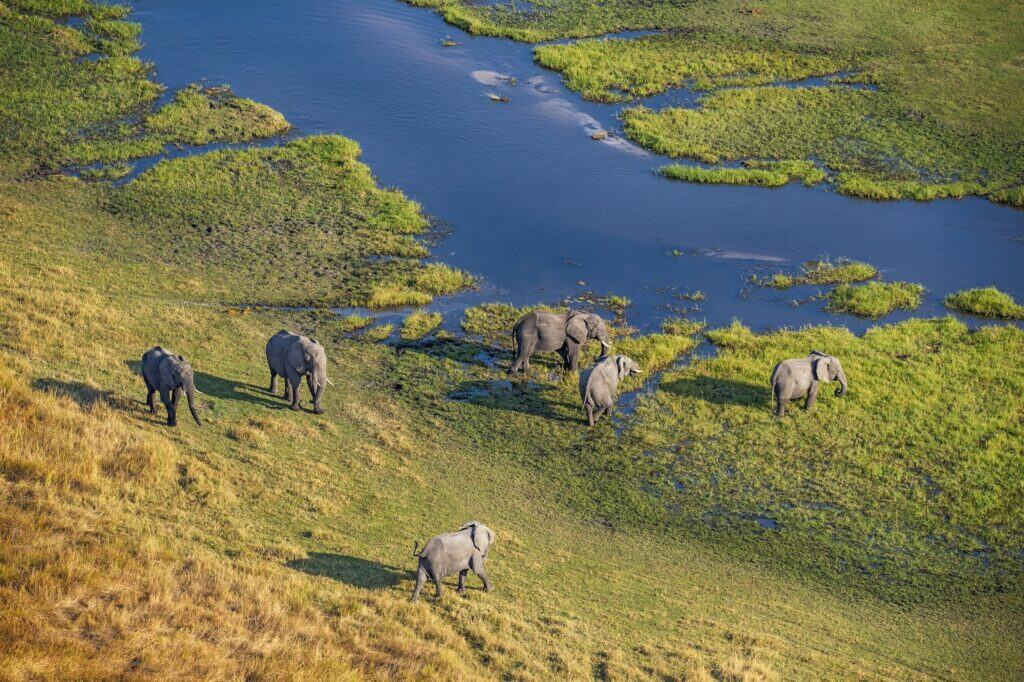
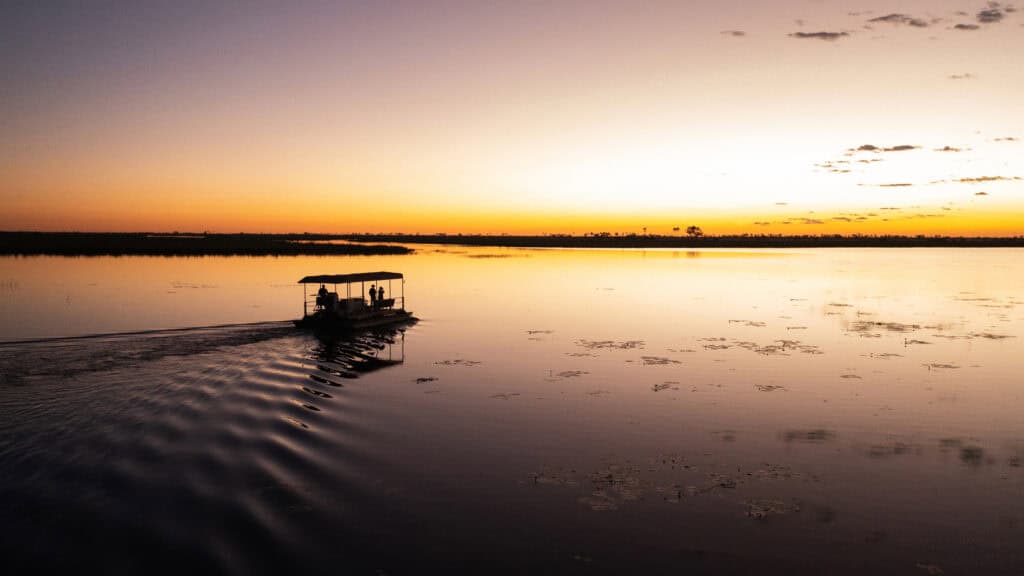
The Okavango Delta is widely regarded as one of the ultimate sanctuaries for the African wild dog. This sprawling wetland oasis, protected from agricultural encroachment and human settlement, provides the perfect condition for thriving wild dog packs.
Dry acacia woodlands, mopane forests, open savannahs, and seasonal floodplains support dense populations of impala, lechwe, reedbuck, and kudu – all of which are perfect prey species for a thriving population of wild dogs.
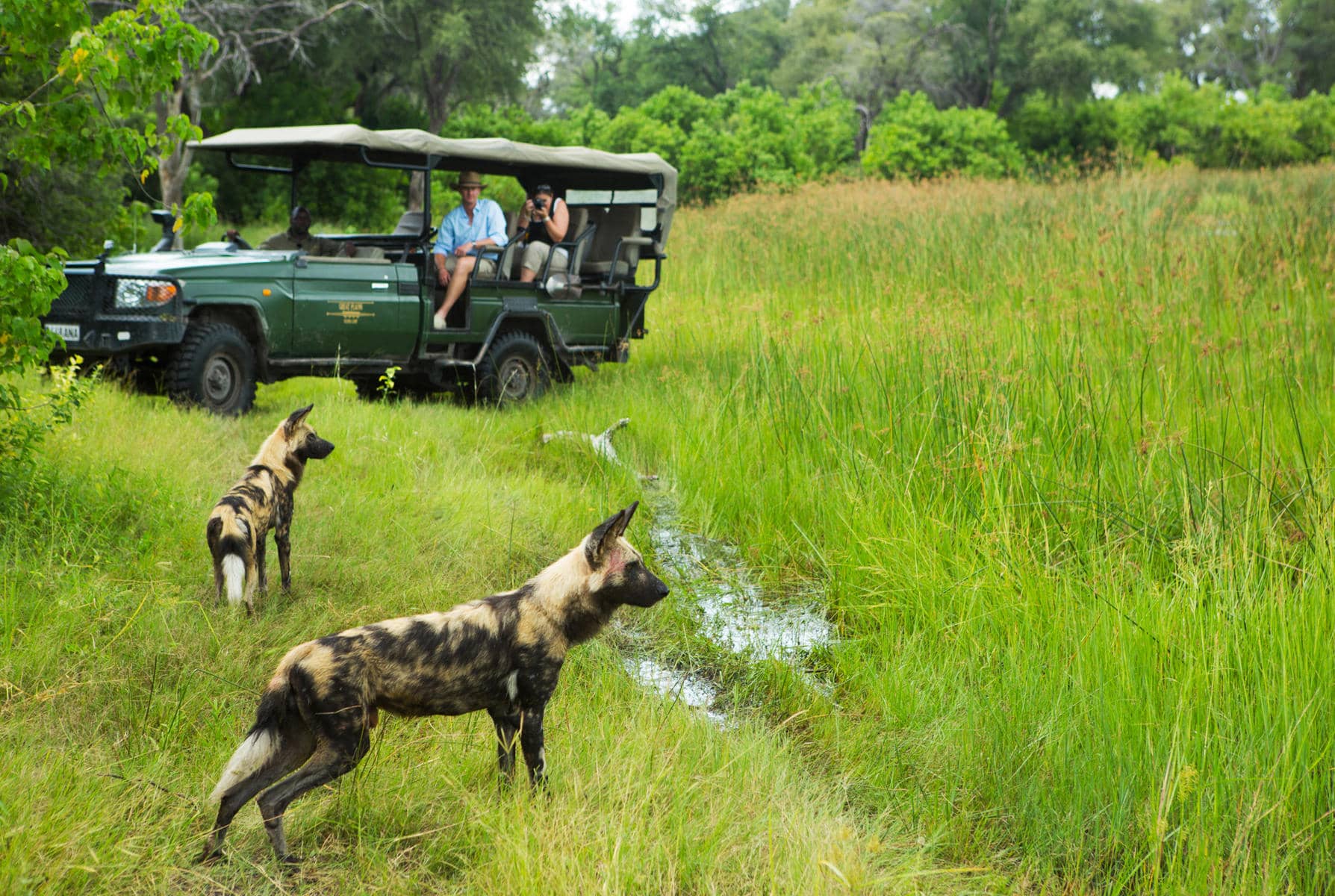
Wild dogs in this area are known to hunt across the flooded channels and grasslands, something which has aided their success. Resident packs are well-habituated to safari vehicles and often groom within metres of them, allowing for up-close photography and observation of their intricate social interactions.
Explore our Okavango Delta safaris.
Understanding the African Wild Dog: Behaviour, Threats, and Tracking Insights
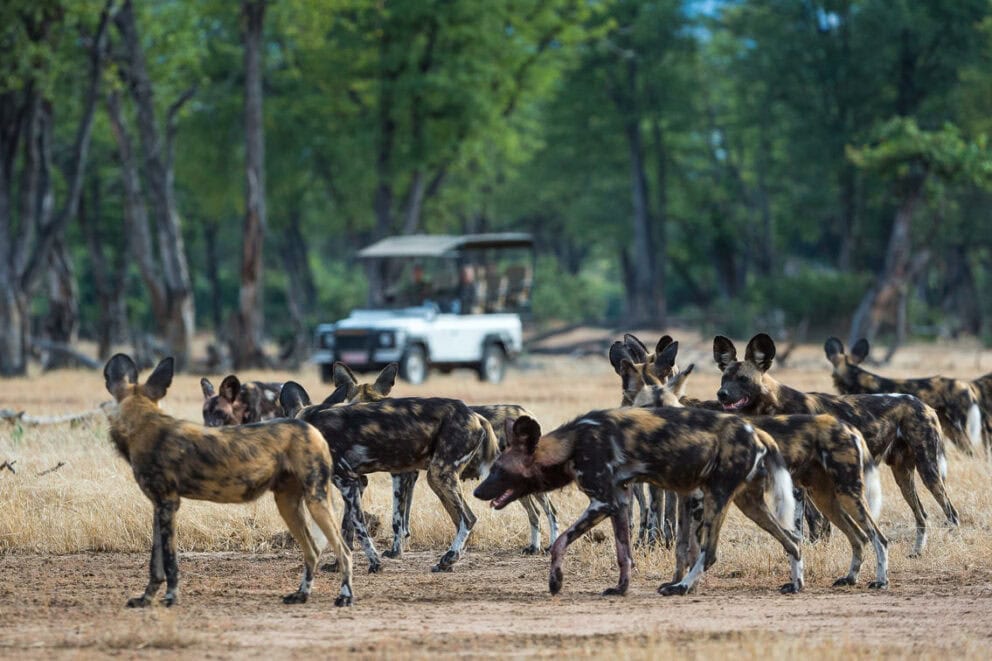
To truly appreciate an encounter with wild dogs, it helps to understand what makes them one of Africa’s most ecologically significant yet endangered predators.
What Do African Wild Dogs Hunt and How?
African wild dogs are endurance hunters with an extraordinarily high hunt success rate, often cited as around 60% to 80%, compared to a lion’s 20% to 30%. They predominantly target medium-sized ungulates such as impala, kudu, bushbuck, and puku. In larger ecosystems like the Serengeti or Okavango, packs will occasionally pursue wildebeest or zebra calves.
Unlike big cats who rely on stealth and sudden power, wild dogs use high-speed endurance, coordinated teamwork, and incredible stamina. A pack will single out an animal and pursue it across the savannah at speeds up to 60 km/h (37 mph) over long distances, tiring out their target while consistently communicating with each other.
African Wild Dog Endangered Status and Key Threats
Currently listed as Endangered on the IUCN Red List of Threatened Species, it’s estimated that fewer than 7,000 wild dogs remain in the wild. Understanding the threats to African wild dogs reveals why intentional, conservation-led tourism is so crucial:
- Habitat Fragmentation: As human populations expand, wild dogs lose the vast, contiguous ranges required for their wide-ranging lifestyle.
- Human-Wildlife Conflict and Snares: Accidental snaring in bushmeat wire traps and retaliation by livestock farmers remain severe threats.
- Infectious Diseases: Because wild dogs share boundaries with domestic communities, outbreaks of rabies and canine distemper contracted from domestic dogs can decimate entire packs in weeks.
- Competition with Larger Predators: Lions and spotted hyenas often steal wild dog kills (kleptoparasitism) and will kill wild dog pups or adults to reduce predator competition.
Expert Tips to Spot African Wild Dogs on Safari
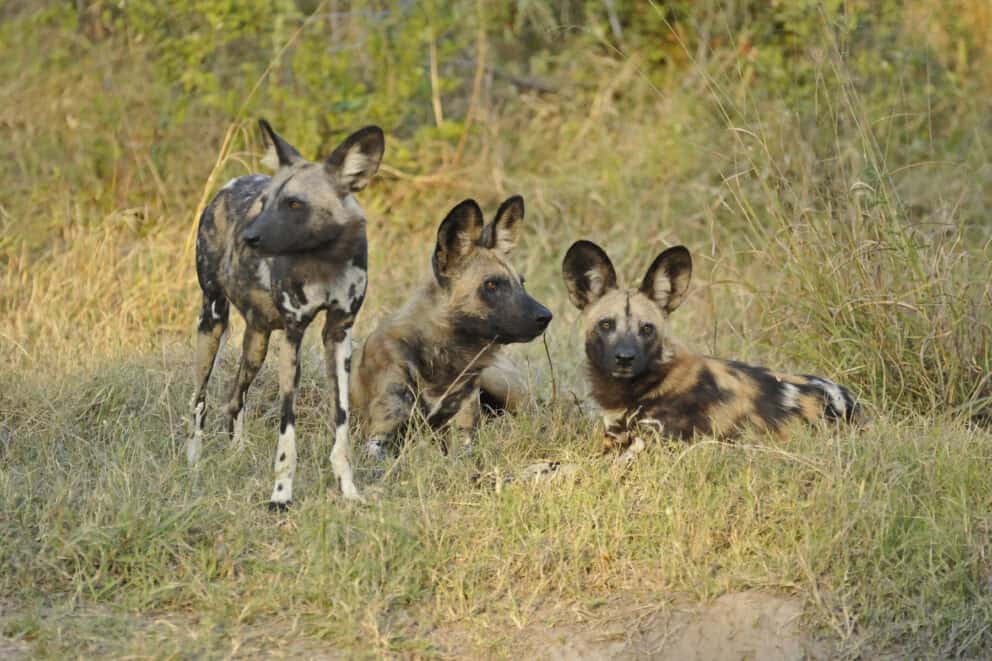
Sometimes seeing wild dogs on safari is about luck. But, to increase the chance of luck shining on you, intentional planning and an understanding of their seasonal behaviour helps:
- Plan Around the Denning Season (June to August): When females give birth, the pack is anchored to a specific subterranean den site for roughly three months to protect the pups. During this window, sightings become far more predictable as the pack leaves every dawn and dusk to hunt before returning to feed the pups.
- Choose Private Concessions: Look for private game reserves or concessions adjacent to national parks. Features like night drives, off-road tracking, and limited vehicle density significantly increase your odds of staying with a pack during an active hunt.
- Listen to the Bush: Your safari guide and tracker will listen for high-pitched contact calls (“hoo” sounds) or alarm calls from prey animals like impala and baboons, which often reveal a pack moving quietly through thick foliage.
Planning Your Wild Dog Safari Experience
At Discover Africa, we believe that extraordinary safaris aren’t off-the-shelf packages – they’re personal journeys designed around who you are, how you want to feel, and the moments you dream of experiencing in nature.
Whether you’re looking to track wild dogs on foot in Mana Pools or off-roading through the Greater Kruger, our Africa-based specialists bring lived experience and on-the-ground knowledge to every itinerary.
Let’s start a conversation about your dream safari.

Written by Thaakiera Ackerdien
• Travel Writer


Verified by Matthys Van Aswegen
• Africa Safari Expert
Discover the African Journey that’s Right for You
 Blog List
























Written by Thaakiera Ackerdien
• Travel Writer
Verified by Matthys Van Aswegen
• Africa Safari Expert
Part of the Southern Africa Safari & East Africa Safari Collections