

 Email us












The landscape stills, and the noise of the day fades into the cool night air. All that remains is the crackling of the campfire, the hush after a burst of laughter, and the gentle, rhythmic cadence of local stories rich with African cultures being shared under a vast canopy of stars.
Crickets chirp in harmony with the gentle beat of a distant drum, and in that quiet, welcoming space, you feel completely at peace.
Immersing yourself in African cultures isn’t just about observing foreign traditions in southern Africa; it’s an invitation to sit together, listen, and discover the shared roots of our universal human story. From the vast deserts of the Kalahari to the bustling creative hubs of Cape Town, the cultures of Africa go beyond just standard sightseeing.
If you’re seeking an experience that goes deep into the history of a place, woven with real human connection, southern Africa provides an incomparable insight into African cultures that will touch your soul.
Travelling with Respect and Intent
True cultural immersion and appreciation demands empathy, awareness, and respect. When you set out to explore cultural traditions in Africa, you must ensure that your presence honours those who open their homes and lives to you.
Meaningful travel means supporting respectful, community-led, and non-exploitative tourism. It’s about ensuring that cultural encounters empower local communities, protect heritage, and support local livelihoods – never turning vibrant living traditions into a spectacle.
Before we get into the cultural experiences offered in southern Africa, here are a few essential etiquette rules:
- Ask Before Photographing: Always request permission before taking a photo of a person or their home and never post it online without their consent.
- Support Artisans Directly: Buy crafts, beadwork, and textiles straight from the creators. This ensures your contribution directly benefits the family and preserves traditional crafts.
- Listen with Curiosity: Approach every interaction as a student rather than an observer. Let local guides lead the narrative.
The Deep Heritage of Southern Africa
The San (Botswana, Namibia, South Africa)
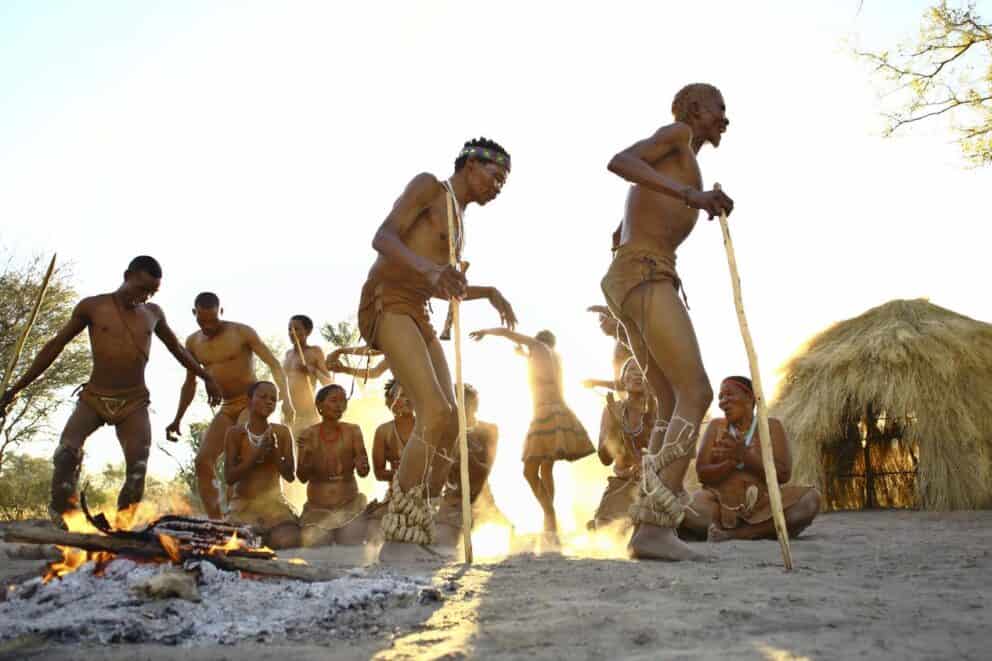
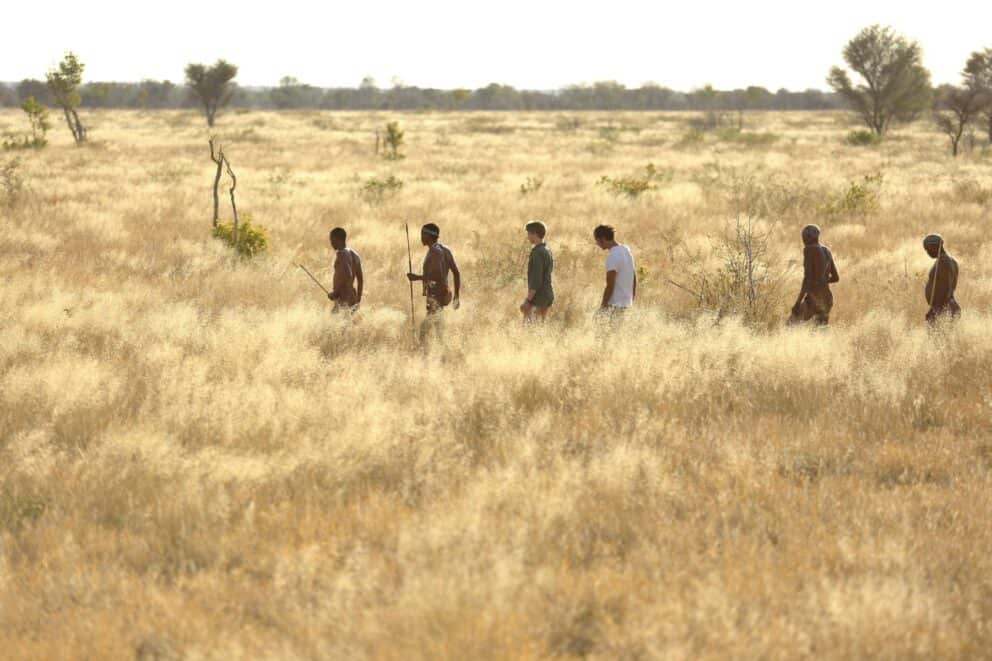
Representing the world’s oldest continuous human lineage, the San hold thousands of years of survival knowledge and deep ecological wisdom. Some 10,000 years ago, the San were spread across Tanzania, Zambia, and Angola down to Cape Agulhas. As such, they are regarded as the oldest culture on Earth.
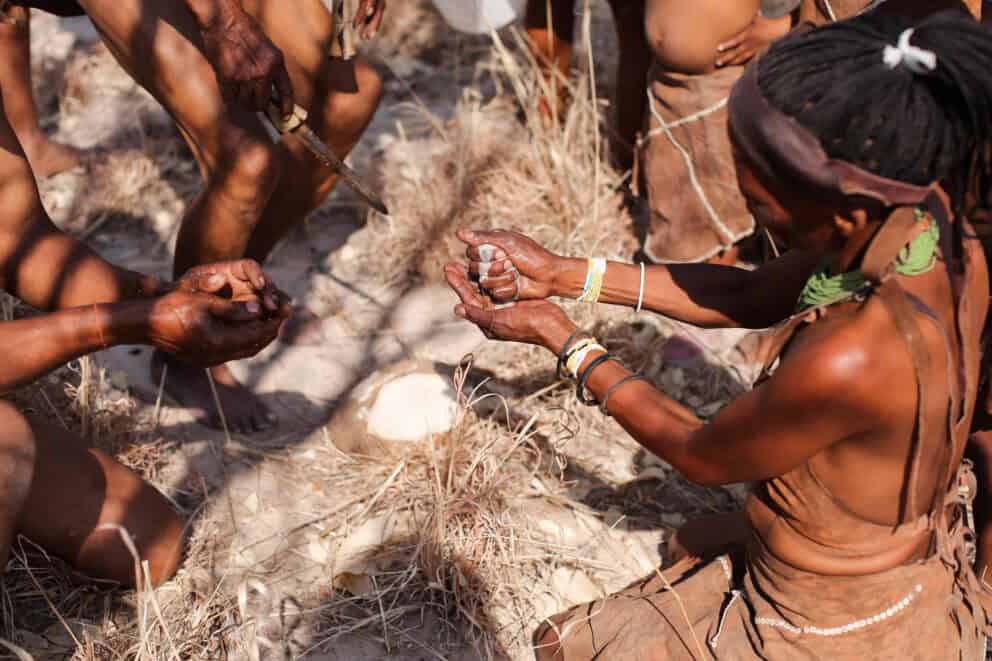
San villages range in sturdiness from nightly rain shelters in spring to formalised rings where people gather in the dry season around permanent waterholes. Water is essential to San life. During periods of drought, the San make use of sip wells to collect water. To make it, a deep hole is scratched where the sand is wet. A long hollow grass stem is inserted into the hole while an ostrich egg is used to collect the water.
When it comes to hunting, men and women embark on long, labourious tracking excursions, killing game with bows and poison-tipped arrows.
Cultural experiences with the San people offer some of the deepest insights into one of the world’s oldest hunter-gatherer societies in places like the Central Kalahari and the Makgadikgadi Pans.
You can engage in guided nature and tracking walks, learn traditional fire-making, taste indigenous veld foods, and explore dedicated heritage sites like !Khwa ttu located on the West Coast near Cape Town. At lodges like Feline Fields, the experience focuses solely on cultural immersion.
Rather than a standard two-hour walk, this San cultural experience is specifically designed to allow for genuine connection and cross-cultural exchange. You’ll learn how to read the subtle signs of the earth, source water from desert tubers, and understand the deep spiritual connection the San hold with nature.
The Himba (Kunene Region, Namibia)
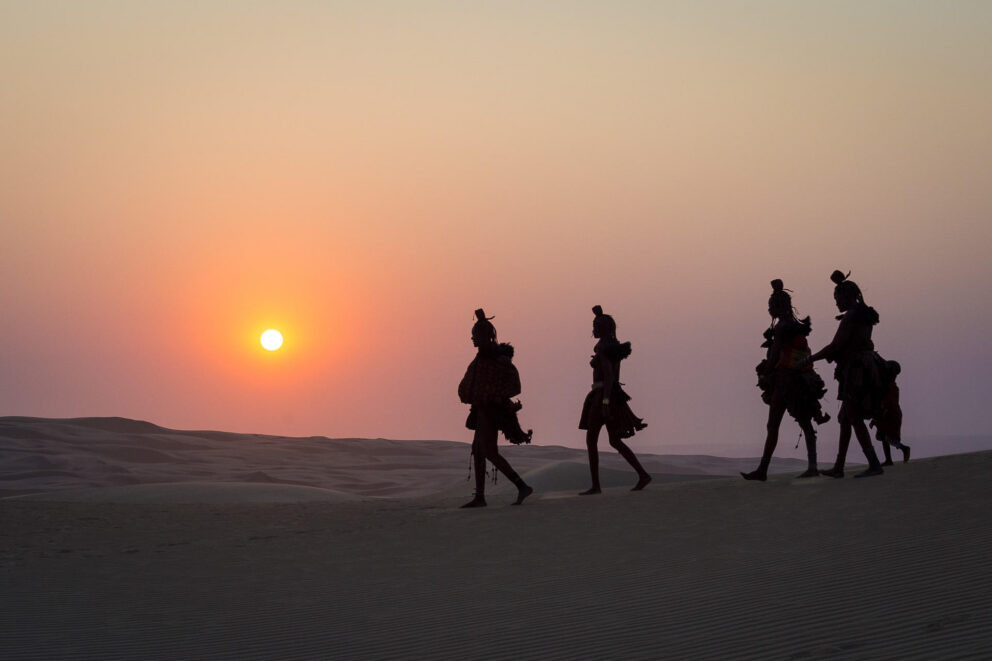
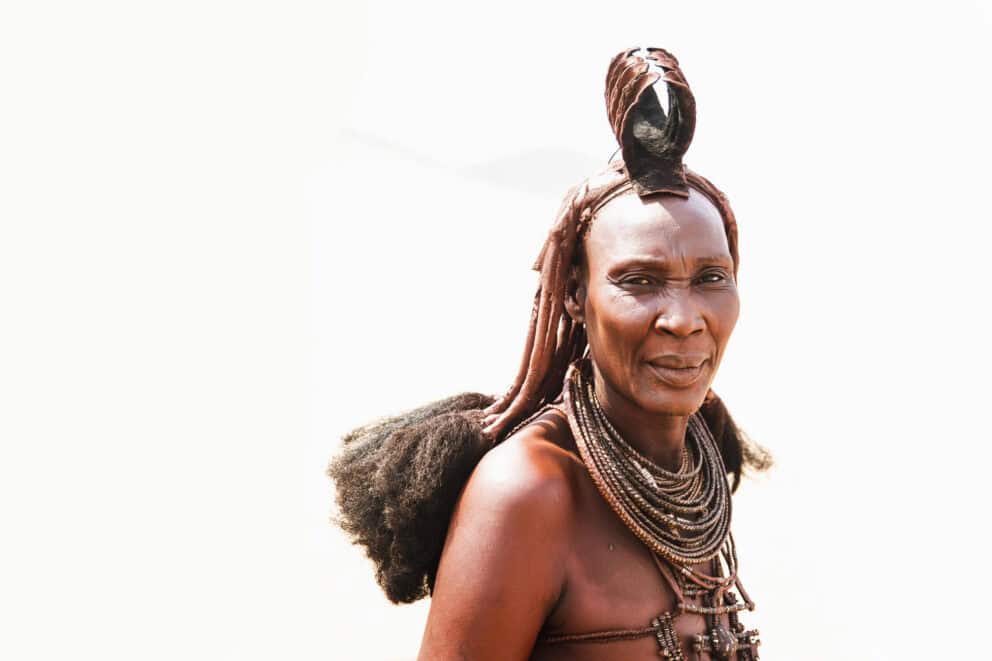
The Himba are a semi-nomadic, pastoralist people who have sustainably managed and thrived within the arid, rugged ecosystem of northern Namibia’s Kunene Region for generations. The Himba lifestyle centres around cattle livestock management – they breed fat-bellied sheep and goats and count their wealth in cattle.
The Himba are instantly recognisable for their visually striking and iconic otjize – a mixture of butterfat and red ochre pigment rubbed onto their skin and hair for protection against the harsh desert sun and insect bites. It gives their hair and skin a distinctive texture, style, and orange tinge and is often perfumed with the aromatic resin of the omuzumba shrub. Hair artistry among the Himba is a profound form of self-expression, with intricate styles signalling age, marital status, and social identity.
Cultural experiences with the Himba typically take place within the remote Kunene Region, centred around hubs like Opuwo or Epupa Falls. You can witness daily routines and learn about okuruwo (a sacred ancestral fire) and observe the application of the otjize to gain a genuine understanding of how this community preserves its ancient customs in a modernised world.
At Wilderness Serra Cafema, a luxury camp in the Hartmann Valley of the Kunene Region, you have the opportunity to visit a remote, uncommercialised Himba community to learn about their traditions. A stay here also directly supports the Himba, with the camp supporting the Marienfluss School, as well as a clinic. Fresh water is delivered to the community three times a week, with the lodge even setting up a shop for those wishing to sell their traditional crafts to visitors.
The Zulu (KwaZulu-Natal, South Africa)
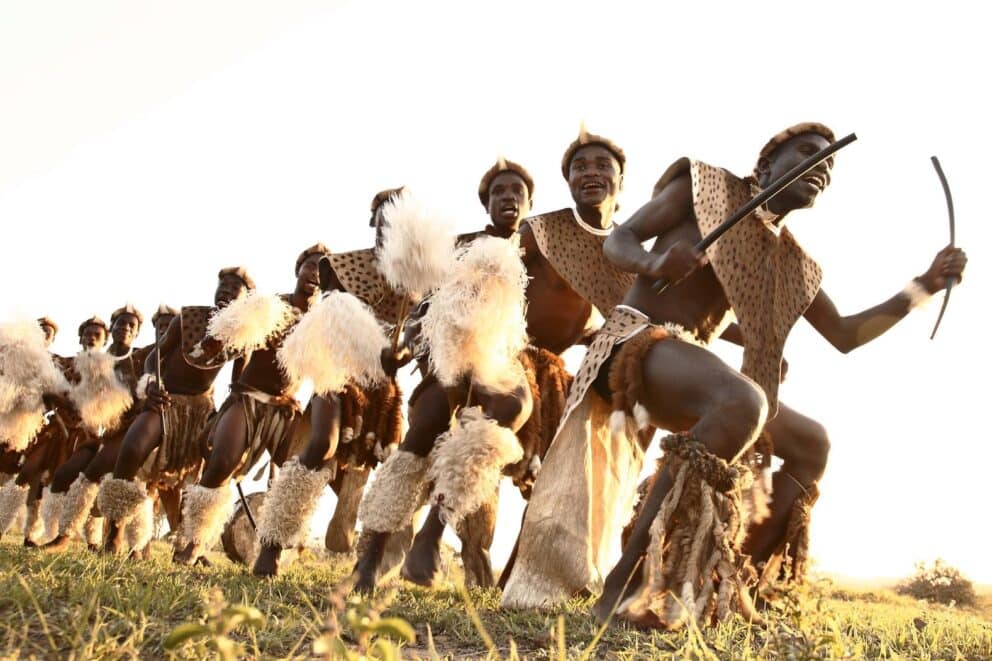
The Zulu nation, historically associated with great leaders like King Shaka, is South Africa’s largest ethnic group, predominantly centred in KwaZulu-Natal. Originally a minor clan, the Zulu people originated from Nguni communities who took part in the Bantu migrations, which took place over millennia. The language of the Zulu people is isiZulu, a Bantu language and the most widely spoken language in South Africa, where it’s one of the country’s 12 official languages.
Historically dynamic warriors and pastoralists, today, Zulu culture is deeply rooted in oral traditions, vibrant music, and communal unity. Beadwork is a vital cultural tool in Zulu tradition, with its creation dating back to the times of war. Historically, beads were derived from wood, seeds, and berries. Colours, patterns, and geometric shapes communicate messages of status, family, and origin. However, one must know the context to read the message correctly, as beadwork can convey different meanings depending on the area in which they were made.
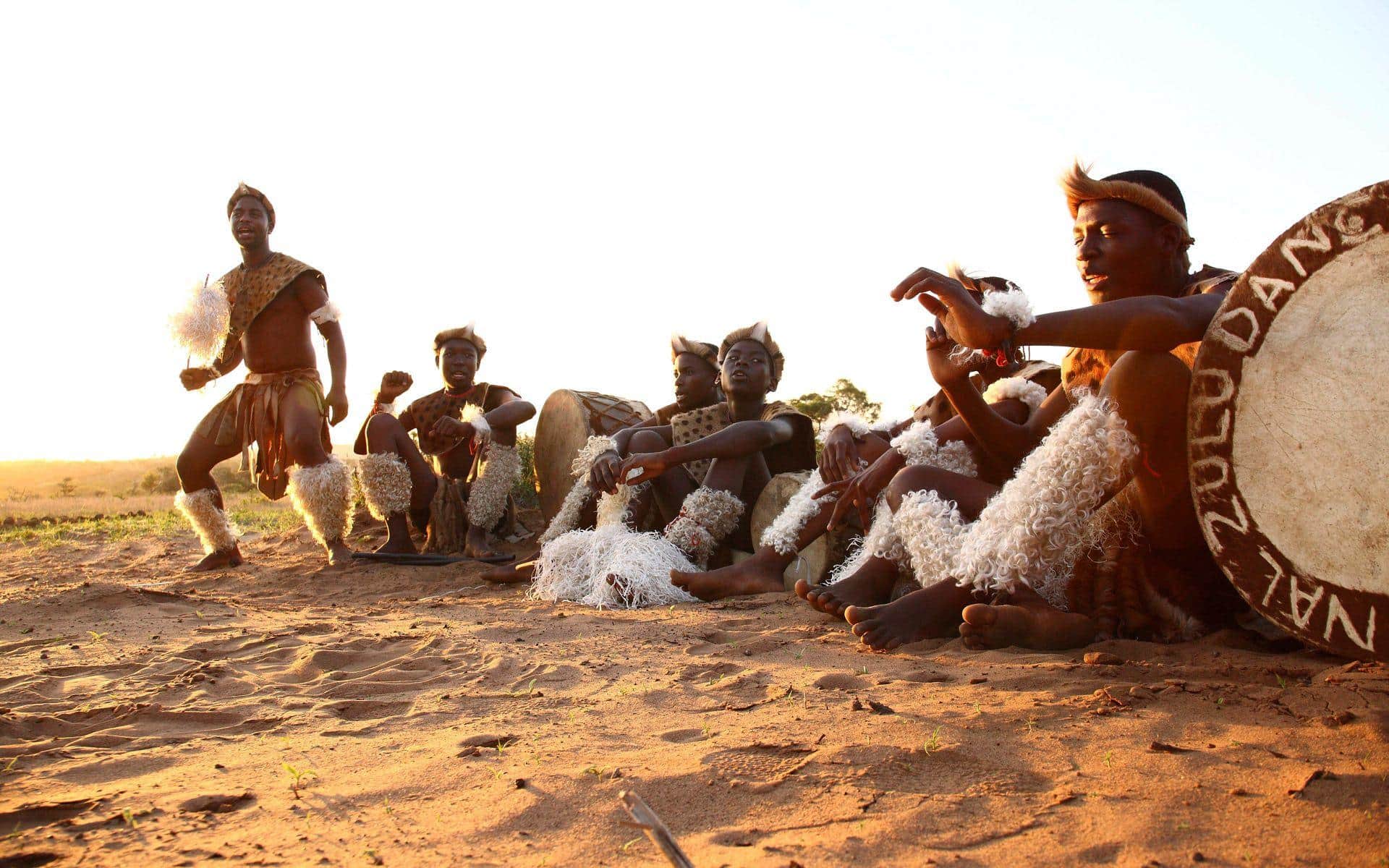
Travellers visiting KwaZulu-Natal can step into the living history of the Zulu kingdom. Engage with local hosts for authentic cultural evenings, witness powerful traditional dance and choral music, learn the complex language behind beadworks, and share regional dishes.
One such experience is the Zulu village visit with a stay at &Beyond Phinda Private Game Reserve.
You’ll be invited to a traditional Zulu homestead and given the rare opportunity to see the daily routines and lifestyle intersect with modern life. You can learn all there is about family structures and patriarchal and matriarchal responsibilities of the tribe, as well as discover how local homes are constructed and why cattle are so valuable and highly revered.
The visit includes time with a local sangoma to learn more about spiritual beliefs. Before leaving, you can go to the Mbhedula Craft Market to browse the beautiful crafts of Zulu artisans.
The Xhosa (Eastern and Western Cape, South Africa)
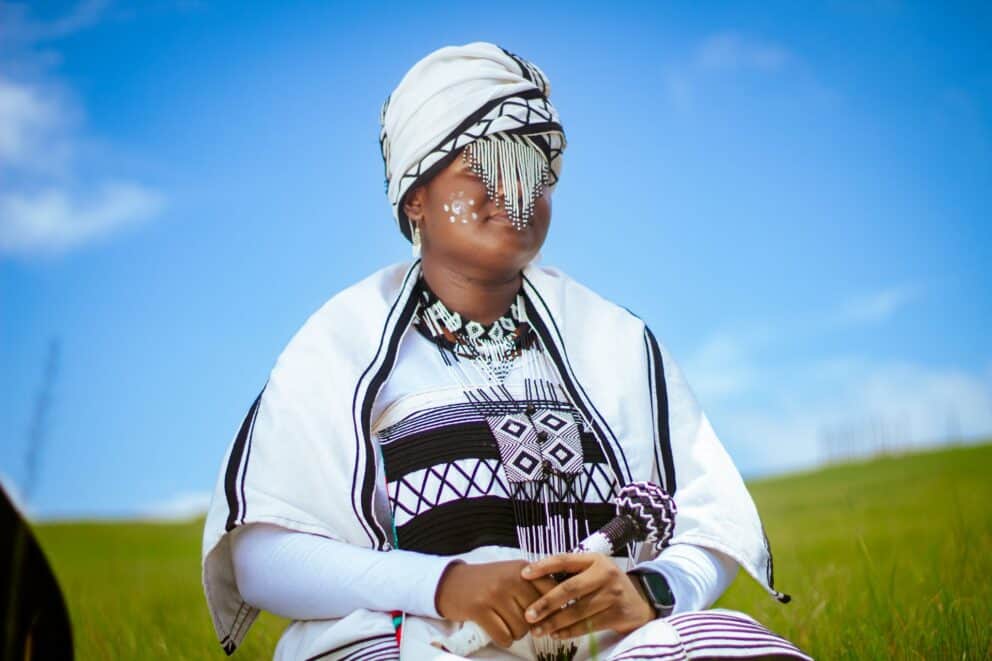
The Xhosa people, primarily residing in the Eastern Cape and parts of the Western Cape, are a nation defined by their deep spiritual heritage that spans centuries.
As the second-largest ethnic group in South Africa, the Xhosa culture is a vibrant mix of traditions, perhaps most famously known globally as the heritage of leaders and Nobel Peace Prize recipients Nelson Mandela and Desmond Tutu. Their language, isiXhosa, is celebrated for its melodic cadence and complex click consonants.
While globally referred to as a singular entity, “Xhosa” functions both as a specific clan and an overarching umbrella for a group of closely related communities sharing the same isiXhosa language family, with each group bringing a distinct variation to regional customs, dialect, and aesthetic traditions.
Beadwork also plays a significant role in Xhosa attire, with intricate patterns and specific colours used to communicate a person’s stage of life, gender, social standing, and geographical origin. Although beadwork has some cultural significance, with some motifs having specific meanings, the creator of the work has complete creative control and can draw meaning from individual preferences. Thus, meanings are not rigidly set.
For those seeking cultural immersion, the Eastern Cape offers a journey into the heart of the Xhosa world. You can visit traditional villages nestled in the rolling green hills of the Wild Coast or explore the historical significance of the Amathole Mountains. A staple of Xhosa culinary tradition you may encounter is isistambu (samp and beans), a hearty dish that signifies hospitality and sharing.
Engaging with Xhosa culture involves more than just observing; it’s about participation. Guests can learn basic greetings like “Molo” (hello) and “Enkosi” (thank you) to foster a genuine connection with local communities.
How Cultural Visits Integrate into Your Safari
You don’t have to choose between wildlife and culture. Most African culture tours blend smoothly into classic bush itineraries.
The key is choosing the right lodge or camp. You’ll need one that maintains genuine, community-led partnerships and prioritises non-exploitative tourism. Our safari experts know exactly which lodges and camps foster true community partnerships and can tailor your itinerary to ensure your travel makes a lasting, positive impact.
Return to the Roots of Storytelling
A trip through southern Africa is far more than a vacation; it’s a vibrant collage of authentic human moments. When you step away from the beaten path to listen, learn, and share with local communities, you leave with more than photos – you carry home a deeper connection to the global human story.
Are you ready to experience meaningful travel that honours both people and place? Speak to one of our safari experts today and start planning your adventure!

Written by Thaakiera Ackerdien
• Travel Writer
Discover the African Journey that’s Right for You
 Blog List

































Written by Thaakiera Ackerdien
• Travel Writer
Part of the South Africa Safari, Namibia Safari & Botswana Safari Collections