

 Email us



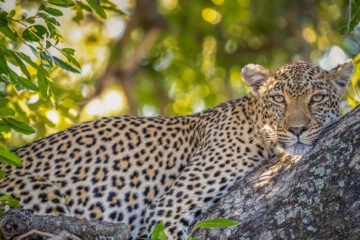

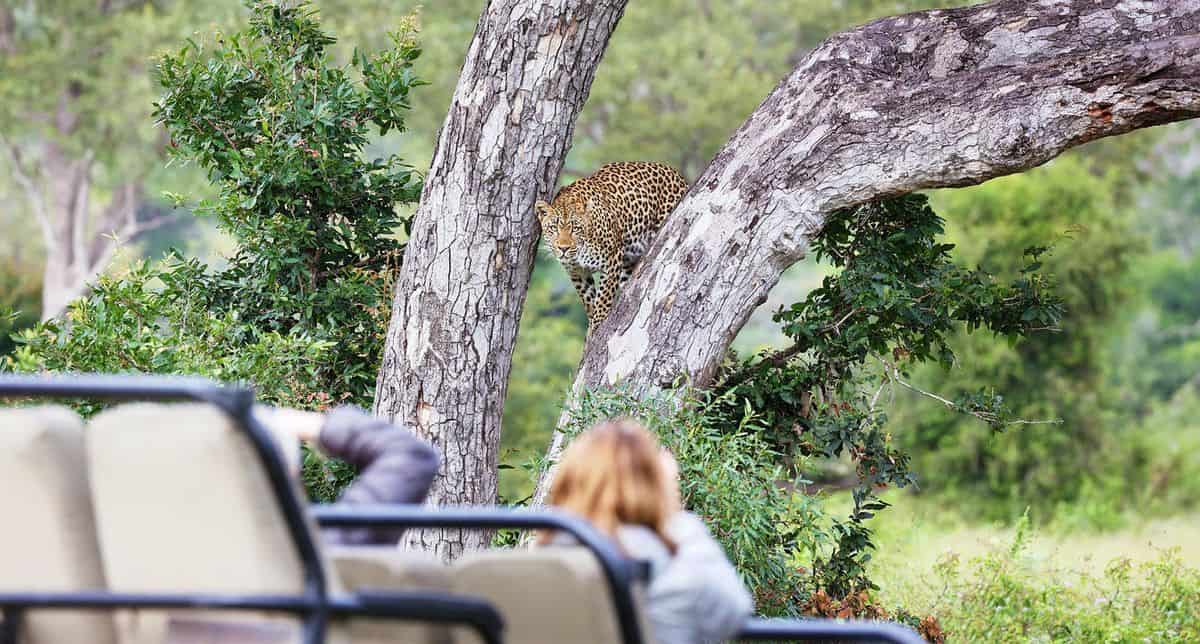
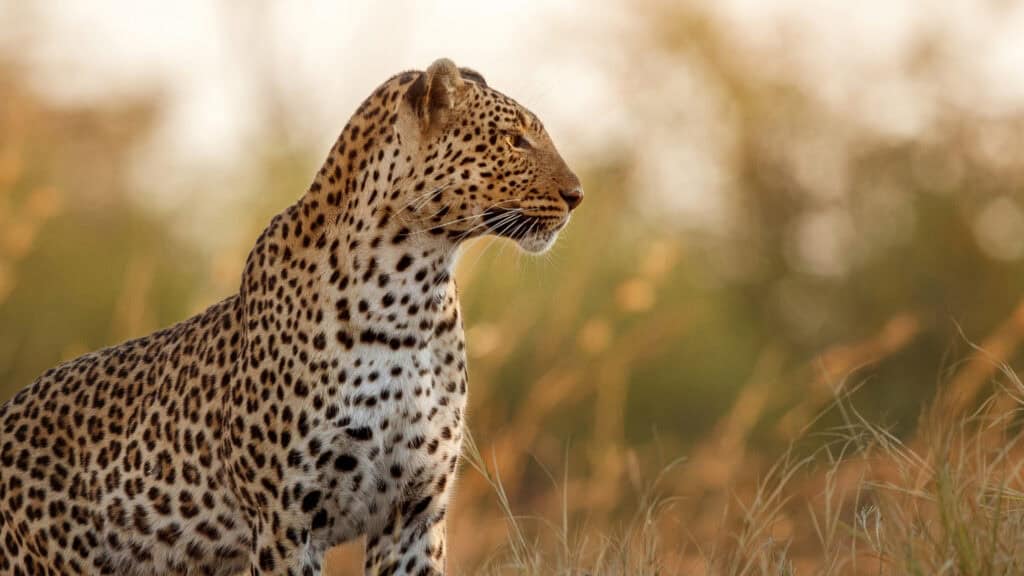
You’ve sat in a vehicle at dusk, engine off, watching a guide stare at the same tree for the third time in an hour. Maybe you saw one. Maybe the “leopard” turned out to be a very convincingly shaped branch. Either way, you don’t need anyone to explain that this isn’t a lion sighting.
You’re past this. What you actually want to know is whether the best places to see leopards in Africa still has something left in it for someone who’s already done this once or twice, and which ones now feel like standing in a queue with a very expensive camera.
Fair question. Here’s the honest version, not the brochure one.
What Actually Changes the Odds
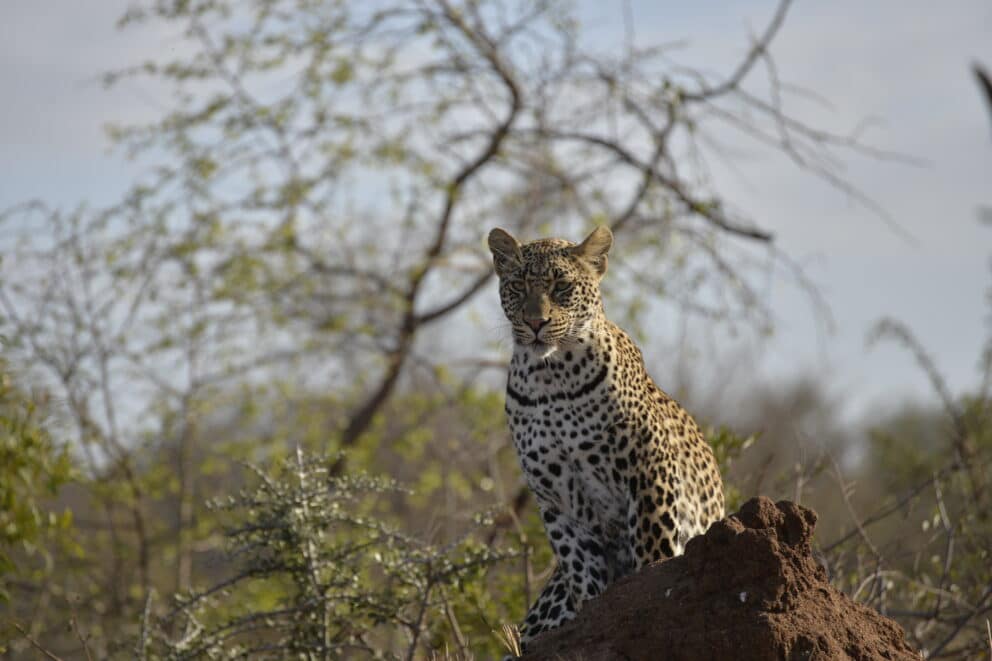
Four things move the odds on any given trip, and none of them are luck. Worth knowing not because the theory is new to you, but because most lodges won’t volunteer which of these four they’re actually weak on.
Density Decides Everything
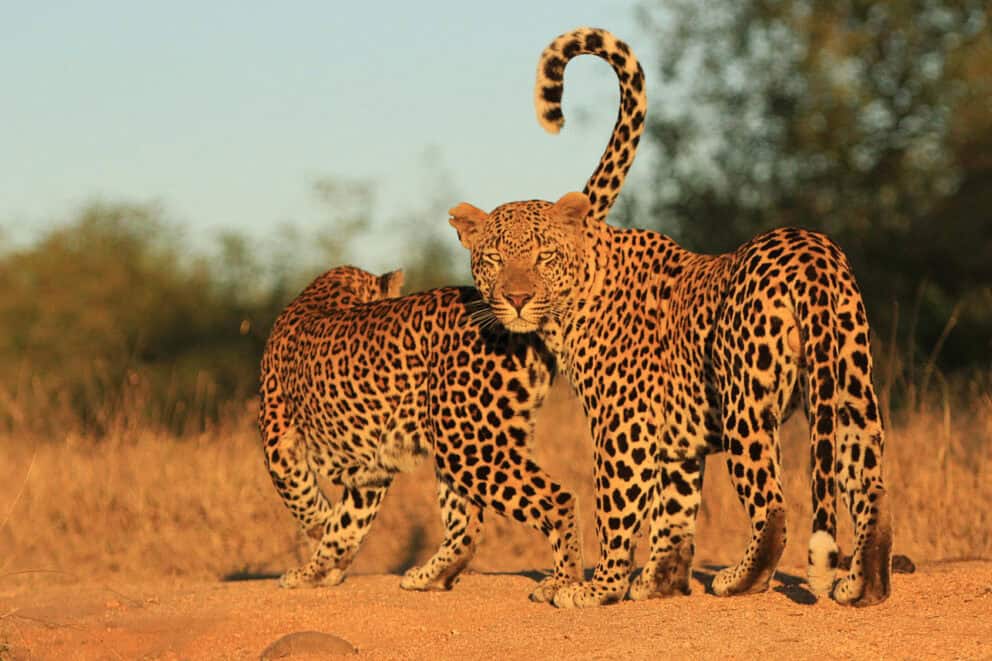
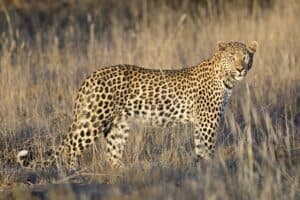
A 2025 camera-trap study across the Greater Kruger region recorded leopard density in Sabi Sand at 13.2 per 100 km² (among the highest ever measured in Africa), against as little as 2.6 per 100 km² in nearby areas covered by the same survey. That gap is the entire explanation for why some reserves deliver leopards most drives while others go three days without one. It’s also why the best African leopard spots keep showing up on the same shortlist. The number isn’t marketing, it’s measured.
Dry Season, After Dark
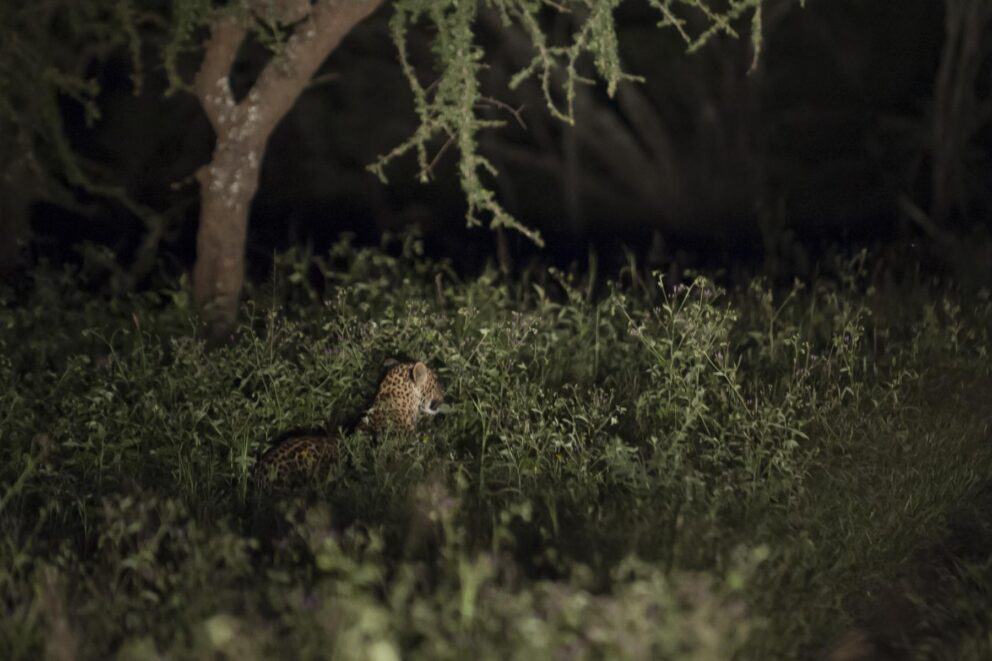
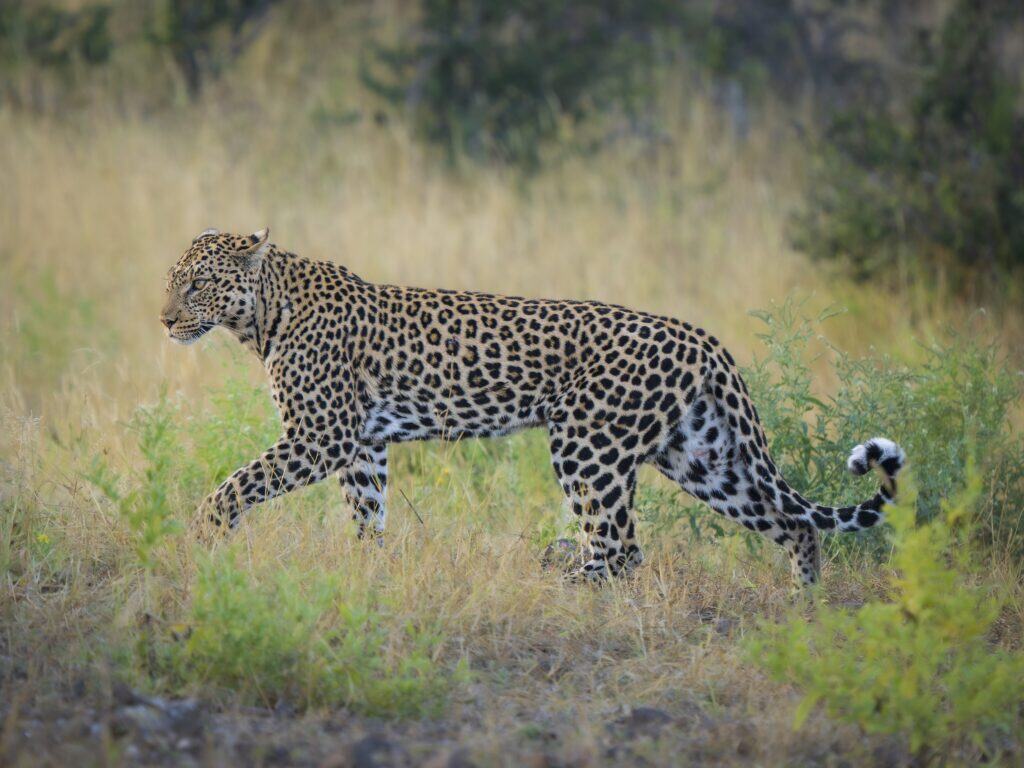
Dry season, roughly June to October, thins the bush and concentrates animals around what water is left. Leopards get more predictable, and July and August tend to open up the riverbeds they favour for daytime cover. But the real advantage, where it’s permitted, is the night drive. A leopard’s eyes hold a spotlight and glow amber before the rest of the animal resolves out of the dark, which is why so many serious sightings happen after the gates of a national park would already be closed.
The Wind Nobody Mentions
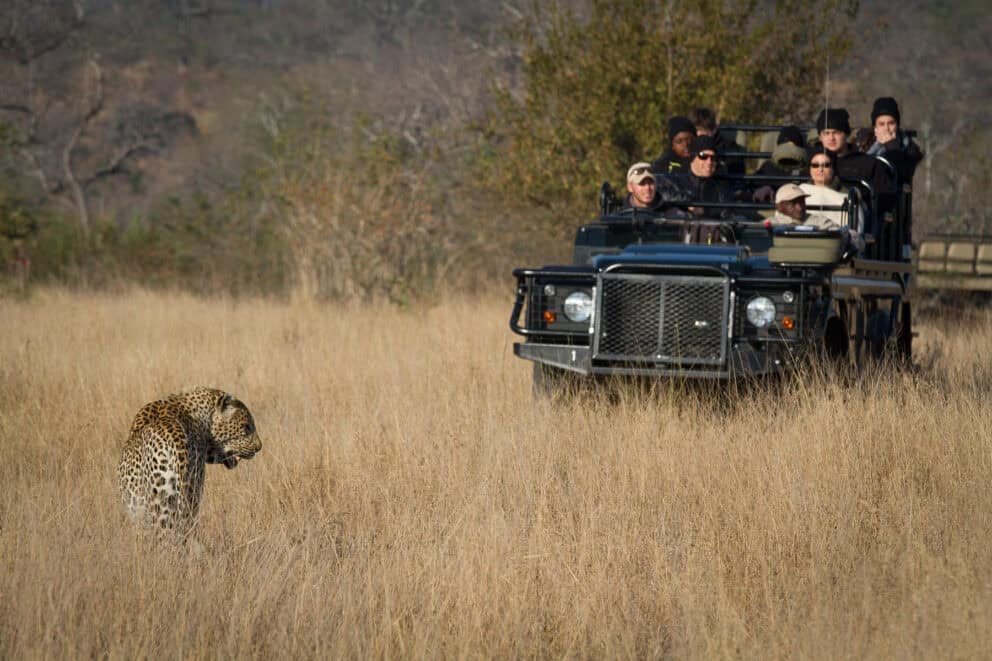
Leopards have a sharp nose. An experienced guide approaches a sighting with the wind in their own face, not at their back, so the vehicle’s scent doesn’t arrive before the vehicle does. Get this wrong and a leopard that’s been lying in the open for an hour is gone before you’re in position. It’s a small thing to ask a guide about directly, and their answer tells you more about their skill than anything on a reserve’s website.
Reading the Alarm Calls
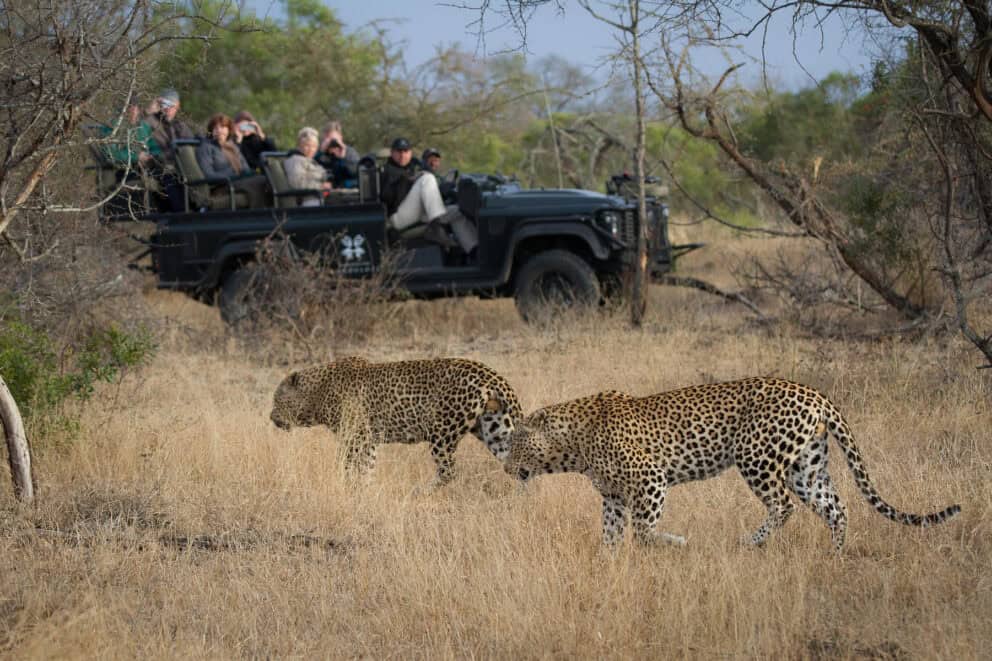
A baboon’s repeated “wahoo” bark from a treetop lookout, or an impala’s sharp snort, is often the first real clue a guide has. A tracker who can cross-reference two alarm calls from different directions frequently knows roughly where the leopard is before anyone’s seen fur. In private reserves, that intel also travels fast: guides run a shared radio network, and a sighting one vehicle finds gets relayed to every other vehicle nearby within minutes. That habit decides more sightings than any single piece of gear ever will.
Park or Concession
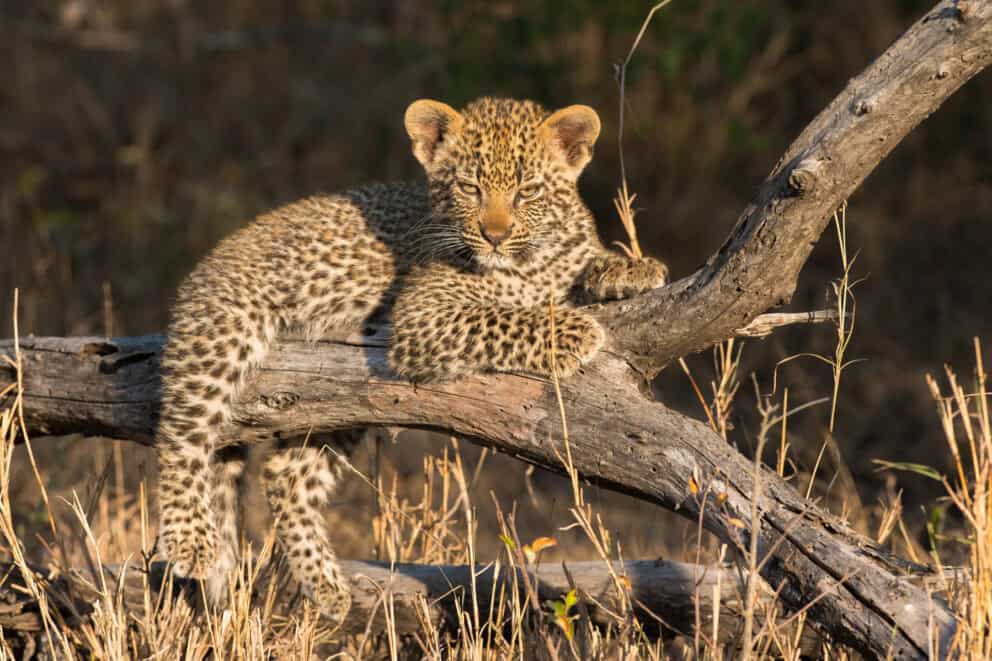
This is where most trips are won or lost, and it’s rarely about which reserve is named on the itinerary.
In a national park like Kruger, vehicles stay on marked roads, gates close at sunset, and a leopard resting fifty metres into the bush stays exactly that far away, sometimes shared with a dozen other vehicles once it’s found. It’s still a genuine safari. It just asks for more patience from a sighting than a leopard can usually spare.
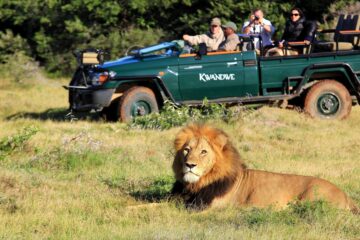
A private concession works on different rules. Guides can leave the road entirely. Sightings are typically capped at two or three vehicles, sometimes one. Night drives are standard, not an add-on. That’s the actual difference between watching a leopard through binoculars from a public road, and watching one from ten metres, off-road, undisturbed, doing exactly what it would do if you weren’t there. If this is a safari to see leopards in the wild rather than another stamp in the passport, that distinction is worth paying for, and it’s the reason a handful of camps can charge what they do.
How Many Nights You Need
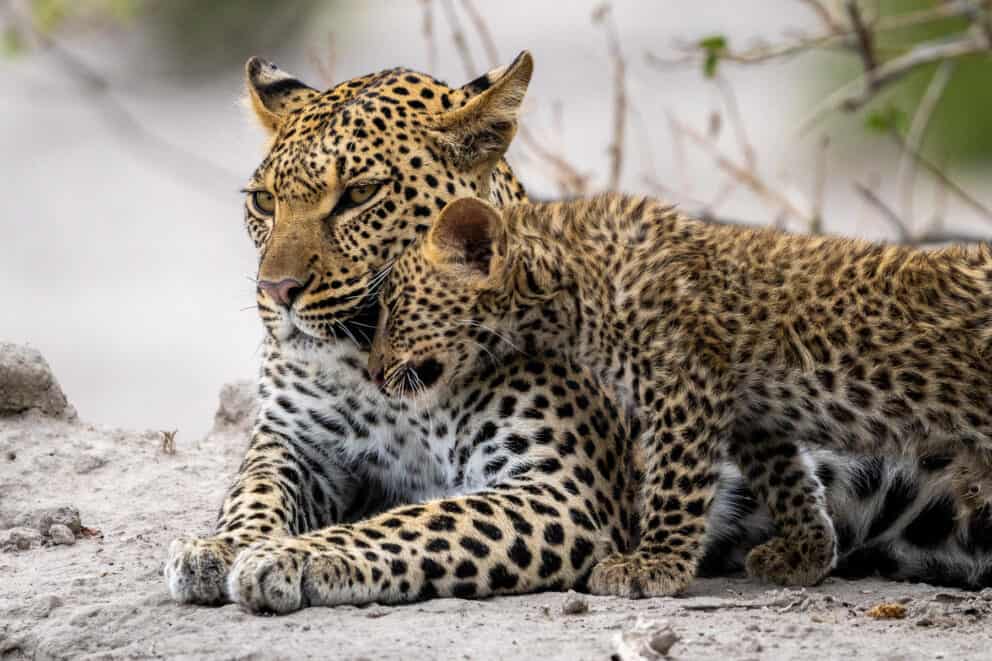
Two nights in a high-density reserve is the most common way a leopard-focused trip quietly underdelivers. It gives you four game drives and assumes the density numbers alone will do the rest. They won’t. Even in Sabi Sands, a resident leopard’s territory can take a day or two to intersect with yours.
Three nights is the realistic minimum. Four gives your guide room to follow up on a sighting of another vehicle reported the day before, instead of starting from nothing on every drive. If the leopard is the priority for this trip rather than a nice-to-have alongside it, the night count is worth planning around before anything else.
The Classic Four
Sabi Sands and Londolozi, South Africa
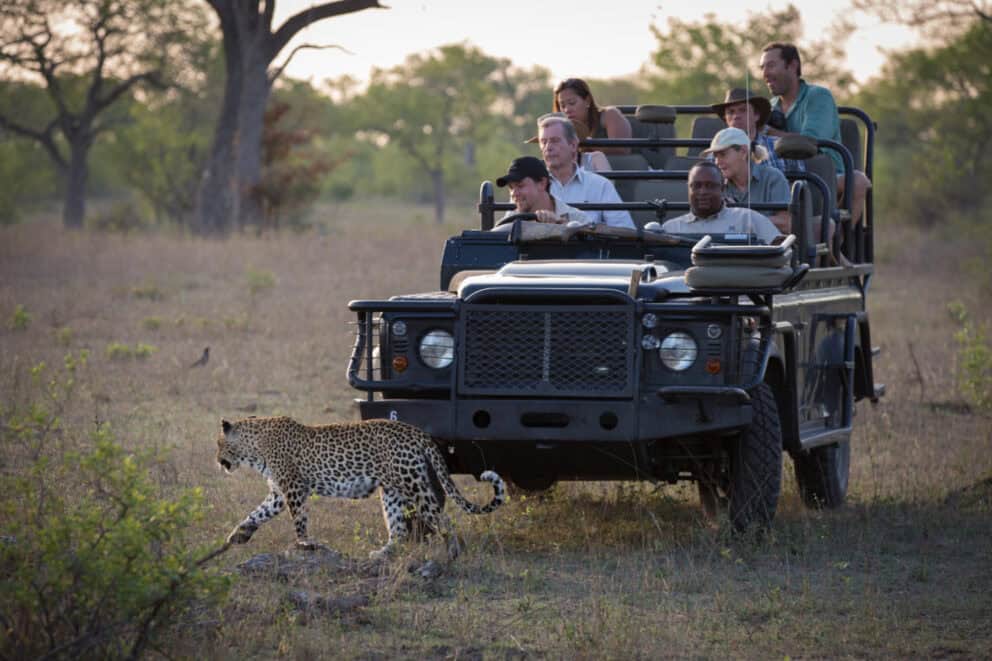
For leopards in South Africa specifically, Sabi Sands remains the benchmark, and the density figures above belong to this reserve. Decades of vehicle habituation mean resident leopards largely ignore game vehicles, and within Sabi Sands, Londolozi has tracked the same leopard bloodlines since the 1970s, a research relationship few reserves anywhere can match. If one leopard safari South Africa trip has to justify calling itself the best, this is the one that does.
South Luangwa National Park, Zambia
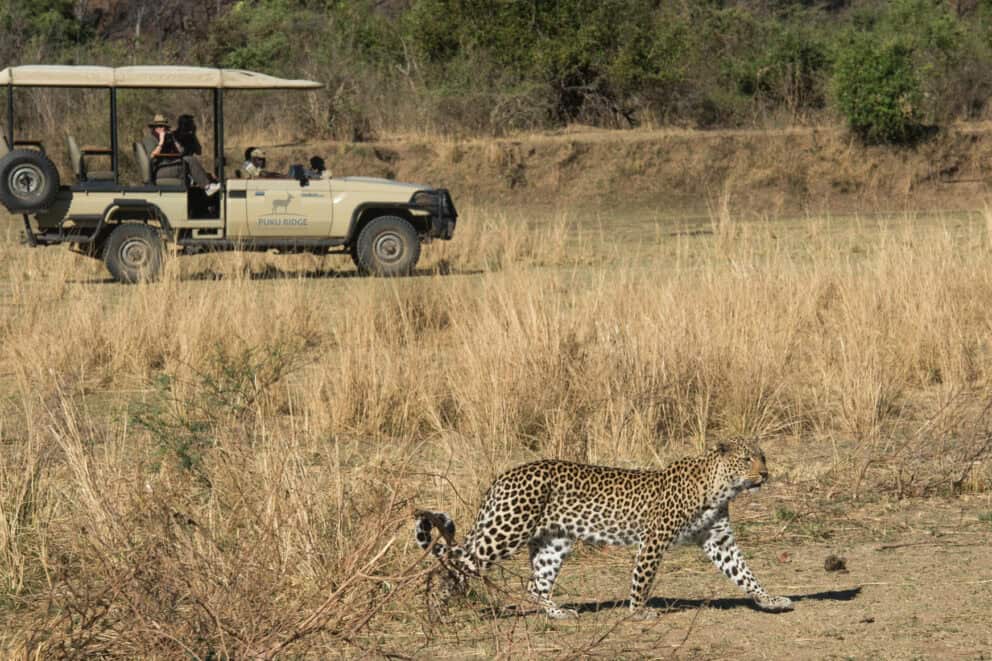
Locals call it the valley of the leopard, and the name predates modern tourism by decades. This is also where conservationist Norman Carr pioneered the walking safari in the 1950s, teaching early guides to read tracks and alarm calls on foot, the same skills a good tracker still relies on from a vehicle today. The Luangwa River’s ebony groves give leopards dense cover and a reliable prey base, and this remains one of the few parks where the night drive isn’t a bonus. It’s the reason people book the trip.
Moremi Game Reserve, Botswana
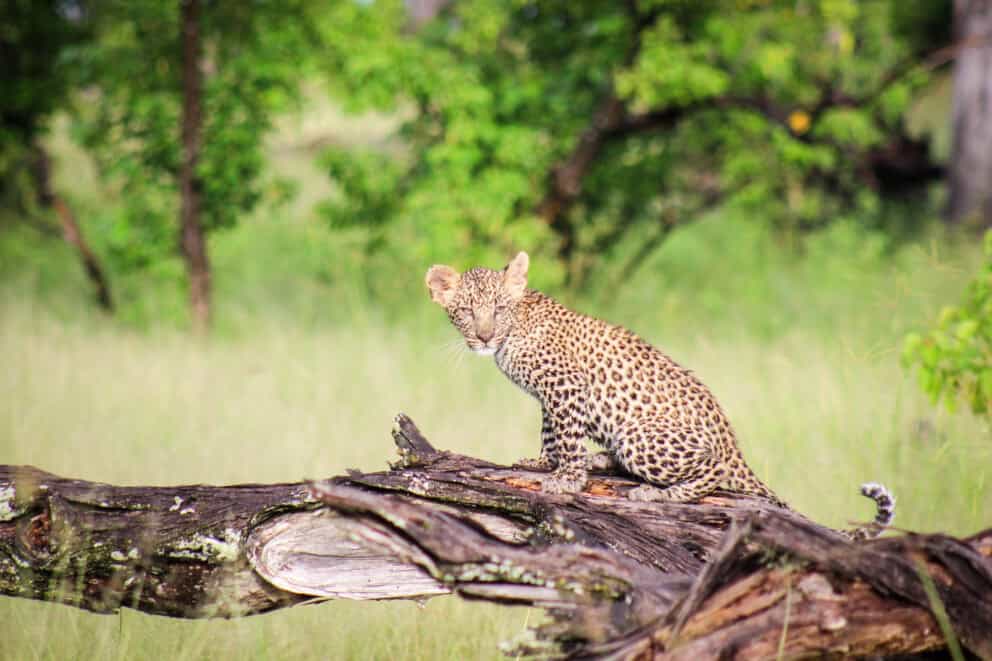
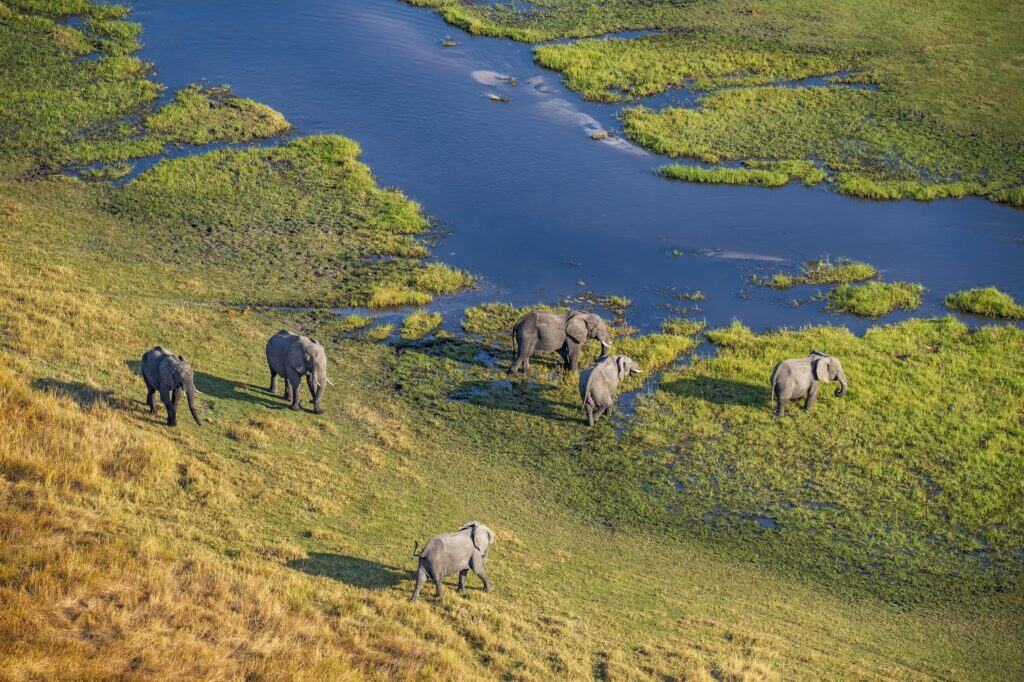
Set inside the Okavango Delta, Moremi‘s waterways draw predator and prey into the same stretch of mopane woodland and floodplain. Chief’s Island has built a genuine track record here, particularly for guests staying more than one night, since a resident cat’s territory can take a day or two to intersect with a short stay.
Serengeti National Park, Tanzania
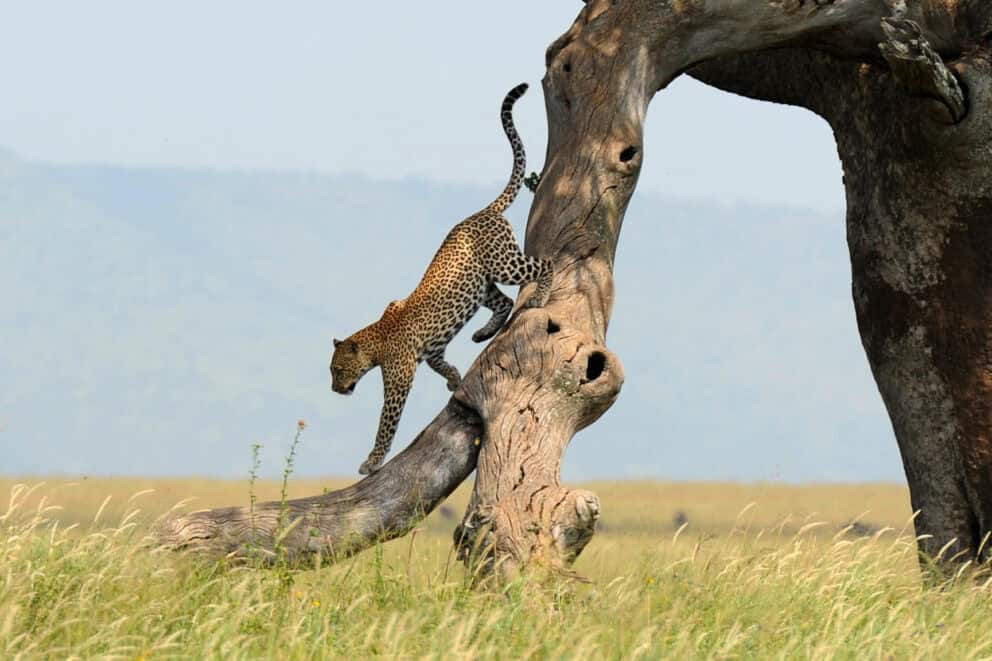
Away from the migration crowds, Serengeti‘s leopards concentrate hard around the Seronera Valley, where sausage trees and fig trees along the riverbank give reliable daytime resting platforms, reliable enough that guides scan the same handful of trees on every drive. During calving season, a leopard hauling a kill into one of those trees is one of the more striking sights an African leopard safari can offer, migration or not.
If You’ve Already Done Those Four
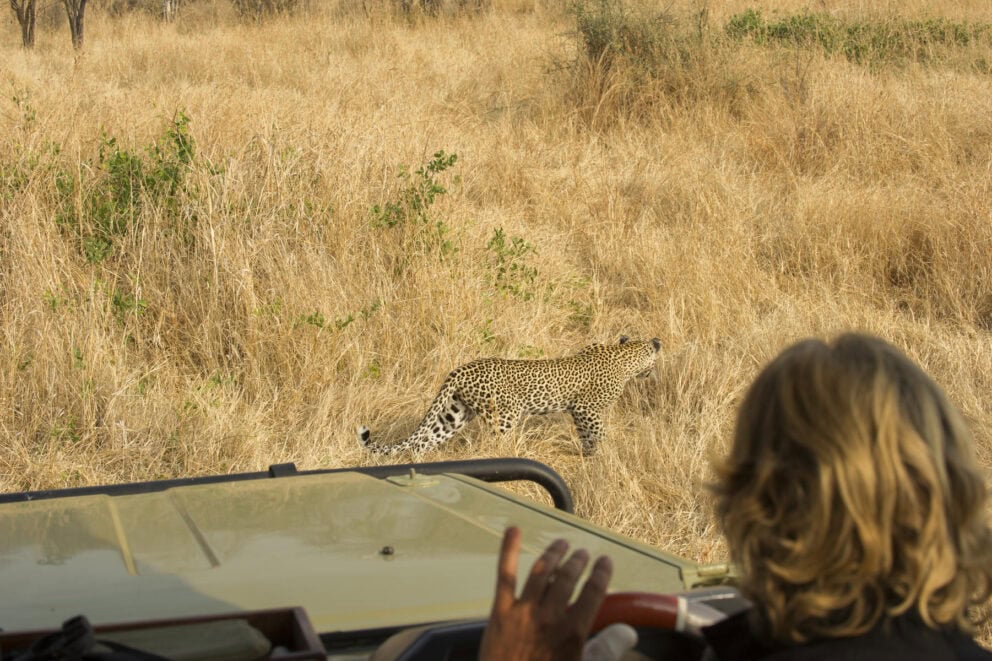
If those four are already checked off, two reserves are worth the detour precisely because they haven’t made every listicle yet.
Ruaha National Park, Tanzania is Tanzania’s largest national park and one of its least visited, with roughly 20,000 visitors a year against the Serengeti’s 350,000-plus. That gap is real, and it means fewer vehicles competing for whatever you find. Worth being honest here too: Ruaha‘s reputation rests on lions and sheer solitude more than proven leopard density, and the bush is thick enough that sightings can be patchy on a slow week. What you’re buying isn’t better odds. It’s very likely having whatever you do find entirely to yourself.
Phinda Private Game Reserve, South Africa was home to the Munyawana Leopard Project, a ten-year study run with Panthera and the University of KwaZulu-Natal that collared more than 60 leopards, still the most intensive leopard research ever conducted anywhere.
The population it protected has since stabilised at around 30 resident adults, and camera-trap monitoring continues today. Also worth being honest about: Phinda‘s headline sighting is cheetah, and leopards there remain genuinely elusive, even for guides who know the reserve well. What decades of research buy you is a ranger who can talk about individual leopards by name and territory rather than guessing, which matters more over a longer stay than raw odds do.
For the Serious Photographer
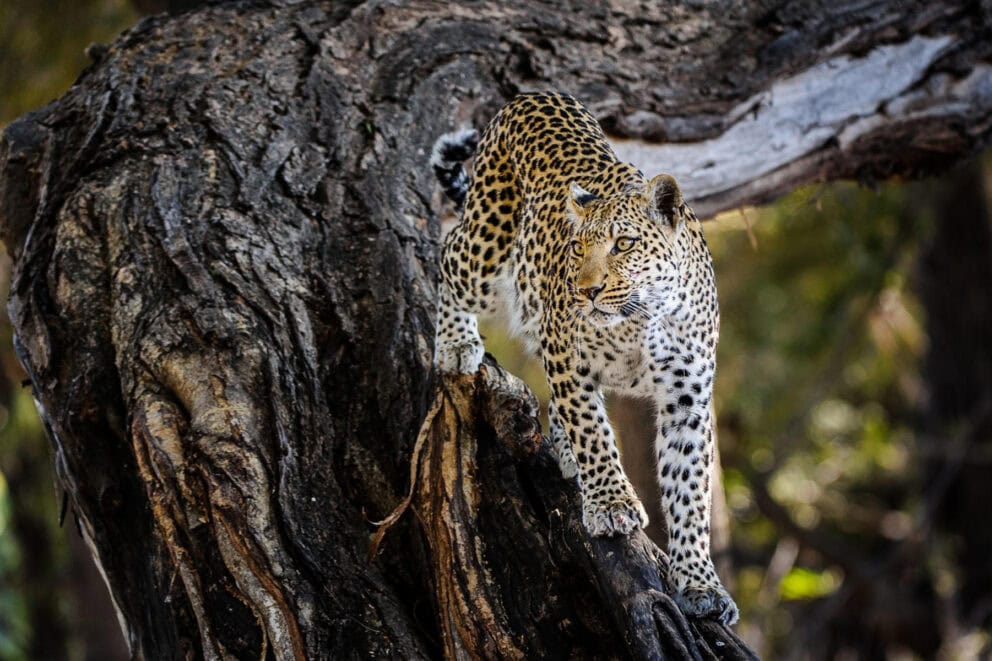
A leopard sighting is unforgiving on gear, and it has no patience for someone still deciding which lens to mount. A 100-400mm or 150-600mm zoom gives reach without forcing a lens change mid-sighting, which is exactly the moment the shot disappears into the undergrowth for good. Shoot as wide open as the lens allows, f/4 to f/5.6, since leopards favour dawn, dusk, and full dark, when the light is already working against you. Modern sensors handle high ISO well enough that a grainy frame beats a blurred one. And if the sighting is a single-vehicle private one, use the silent shutter. The leopard didn’t agree to be your soundtrack.
Where This Leaves You
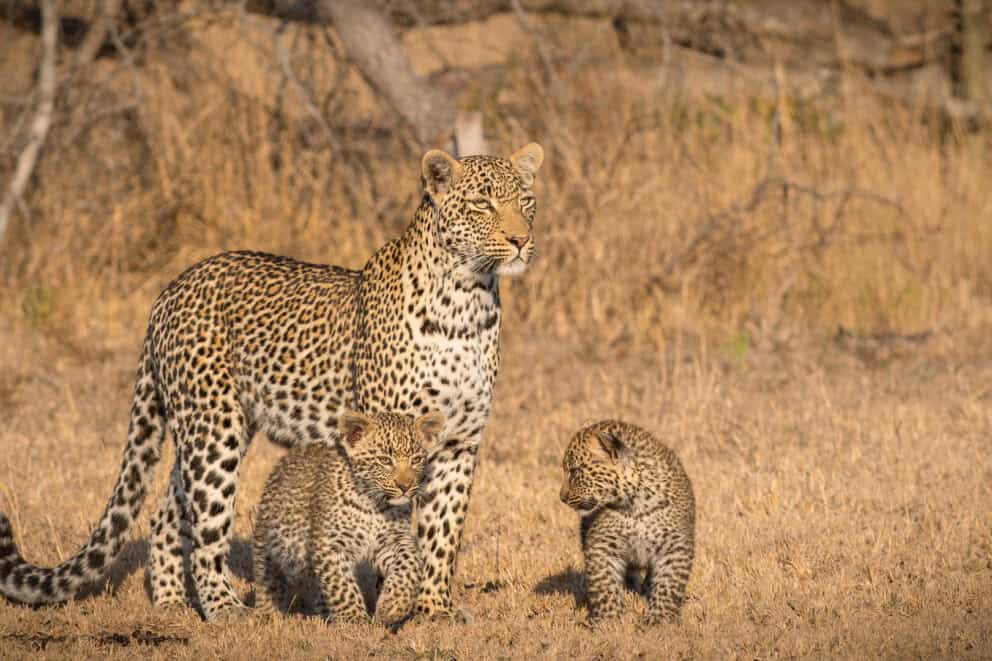
No reserve can promise a sighting, and nothing in this article changes that. What changes is whether the trip is built around density, access, and guiding quality, not around whichever name came up first in a search.
For a first leopard safari South Africa trip, the classic four still earn their reputation. For a second or third, Ruaha and Phinda offer something the well-worn circuit increasingly can’t: fewer vehicles, deeper local knowledge, and a sighting that still feels like it belongs to you.
If you’d like this mapped against your own dates, group size, and which reserves you’ve already covered, that’s a conversation worth having before anything gets booked.
Written by Yamkela Welaphi
• Travel Writer


Verified by Megan Warrington
• Africa Safari Expert
Discover the African Journey that’s Right for You
 Blog List























Written by Yamkela Welaphi
• Travel Writer
Verified by Megan Warrington
• Africa Safari Expert
Part of the South Africa Safari, Botswana Safari, Tanzania Safari & African Big Cats Safaris Collections