

 Email us


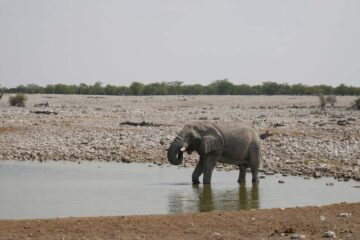
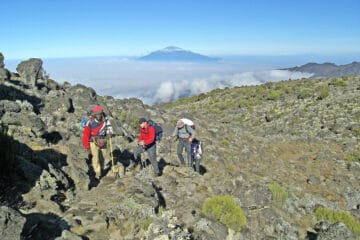
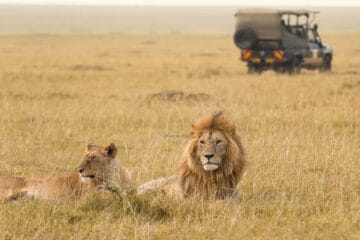
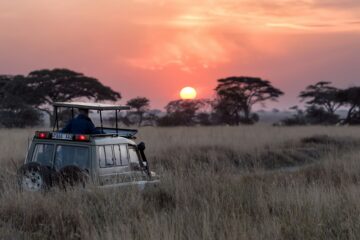


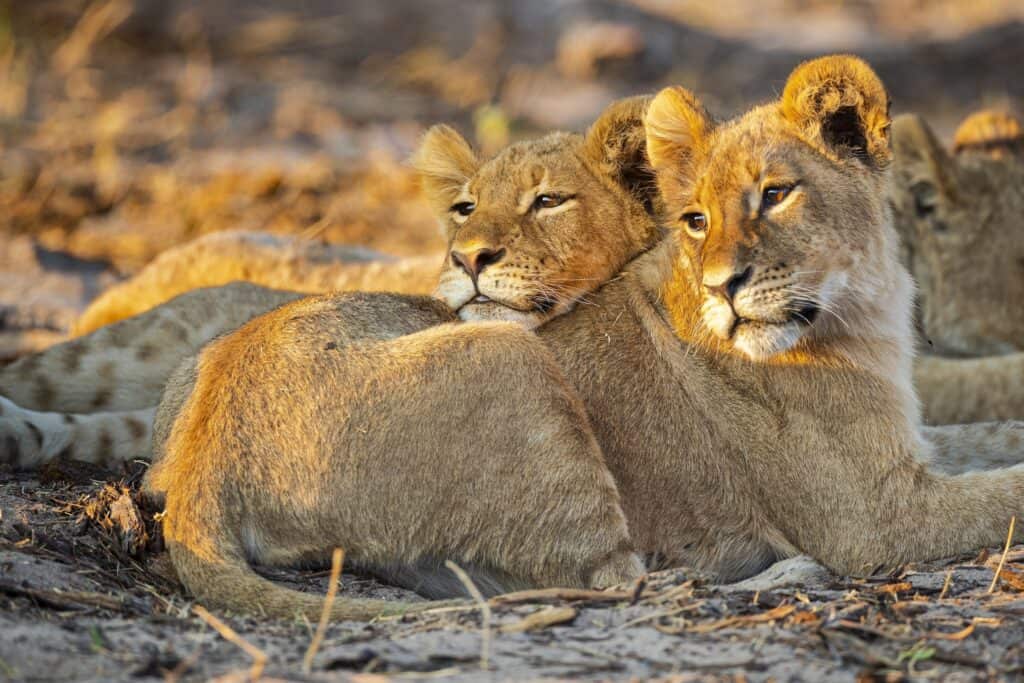
In South Luangwa, your guide stops mid-step and raises a hand. In the sand ahead are lion tracks, pressed in so recently that the edges are still crisp.
This is what Zambia does best. It puts you on foot, moving at the pace of the animals you’re tracking, beside a guide who has spent years learning to read this ground.
If that excites you, this Zambia safari guide is for you. Perhaps you’ve already been on safari in South Africa, Kenya or Botswana and you’re wondering what comes next. Or perhaps this is your first safari and you’d like it to be an adventure from day one.
Zambia suits both, as long as you know what to expect. It’s quieter, more hands-on and less polished than the better-known safari countries.
It also asks more of the planning. Camps are small, many are open only in the dry season, and light aircraft link most of the parks. That’s where we come in.
Why Zambia Is Best Explored on Foot
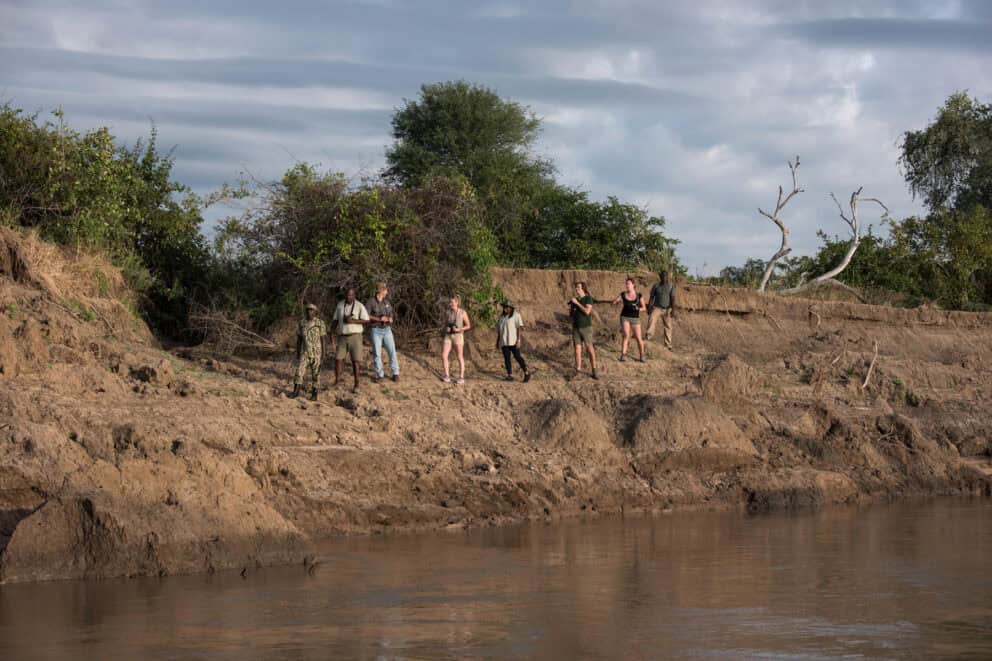
South Luangwa is widely credited as the birthplace of the walking safari. Conservationist Norman Carr began leading guests through the valley on foot in the 1950s, and walking has been at the heart of a Zambian safari ever since.
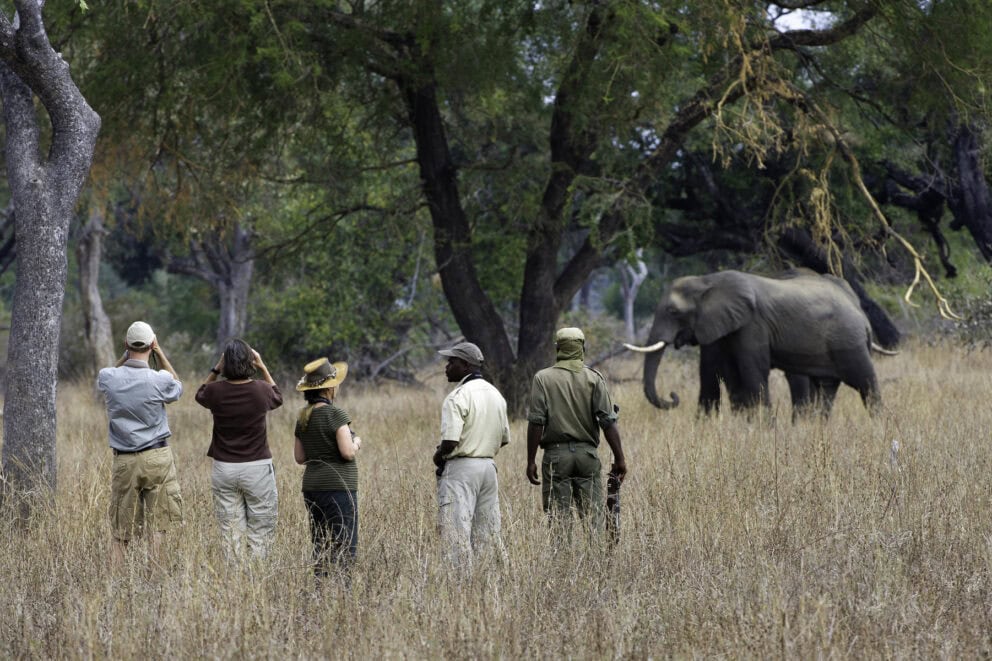
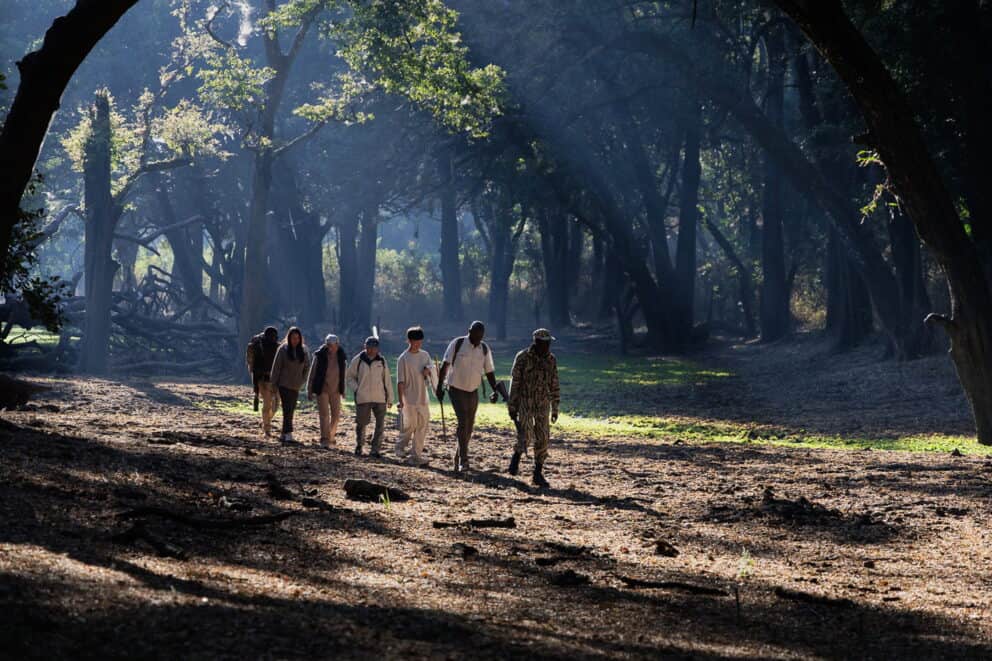
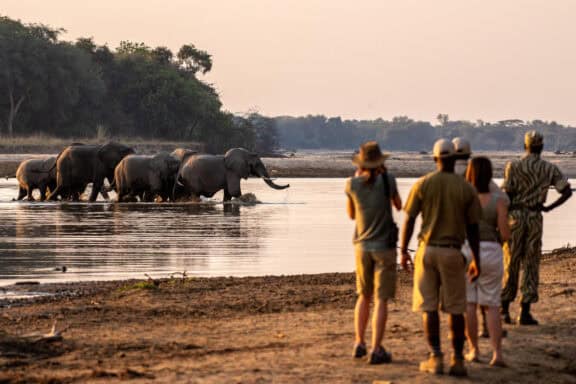
A walk usually starts just after sunrise, while the air is still cool. Your guide leads, an armed wildlife scout walks alongside, and you follow in single file.
You’ll stop often. Your Zambian safari guide kneels to read a set of tracks pressed into the sand overnight. You catch the sharp smell of wild sage crushed underfoot. You hear a hippo grunt from a lagoon long before you see the ripple. On foot, the small things become the main event, and the big things feel very big indeed.
Is a Walking Safari Safe?
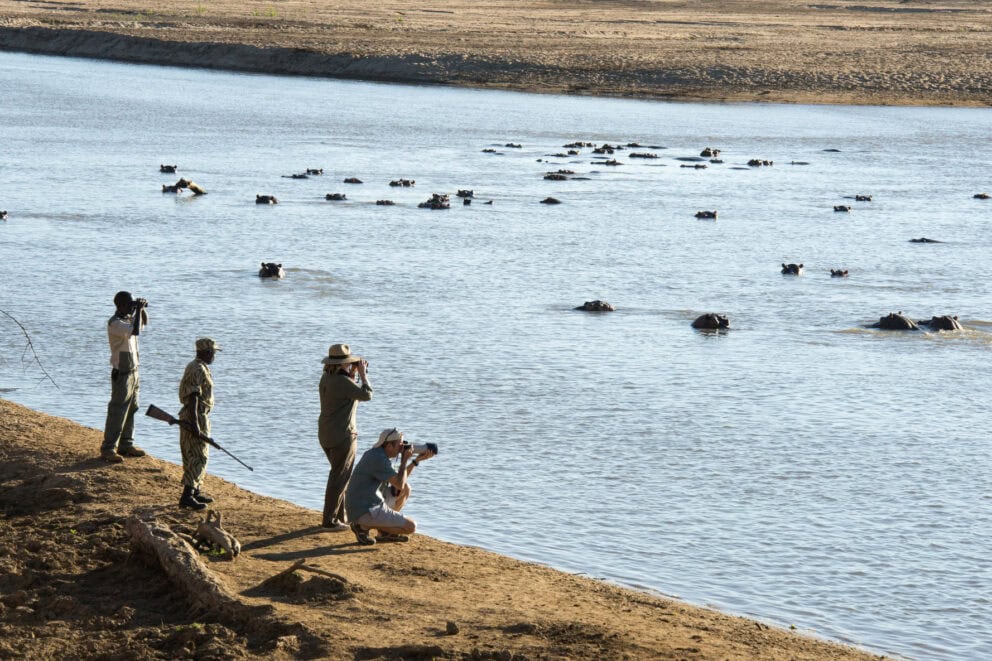
Walks follow firm rules. Stay in line. Keep quiet. Do exactly what your guide asks the moment they ask it.
Zambian walking safari guides go through years of training and demanding exams before they lead guests on foot. No walk is risk-free, and nobody honest will tell you otherwise. But this is a discipline with more than half a century of practice behind it. That experience shows on game drives too: guides who have learnt to track on foot tend to read the bush better from a vehicle.
Do You Need to Be Fit?
Not especially. Most walks last a few hours at an easy pace, with regular stops to look, listen, and drink the coffee your guide has carried in a backpack. Comfortable closed shoes in a muted colour are worth packing. A training plan isn’t.
What Zambian Camps Are Really Like
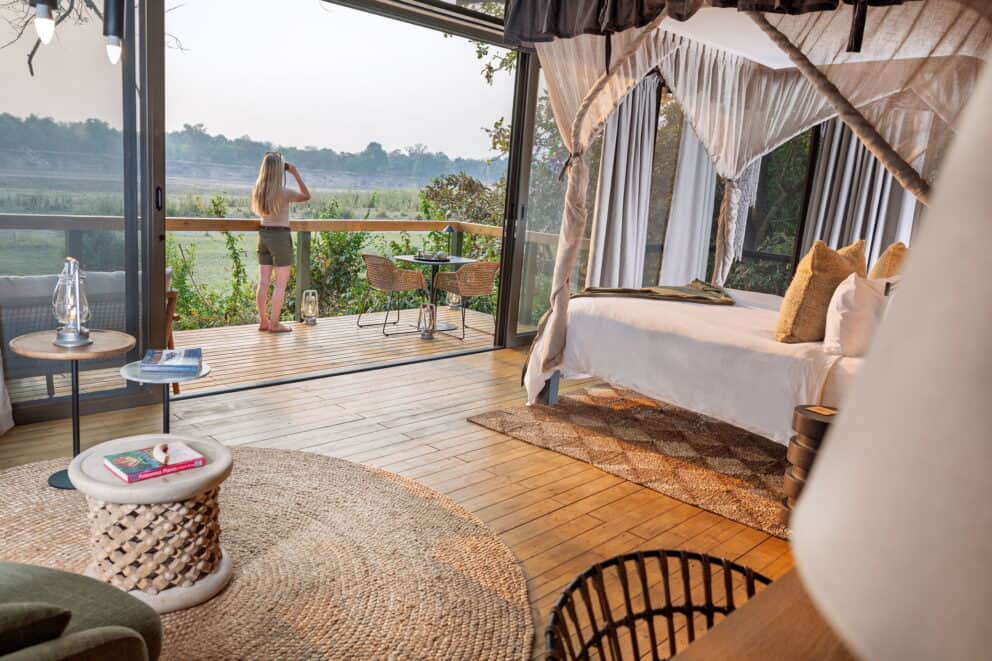
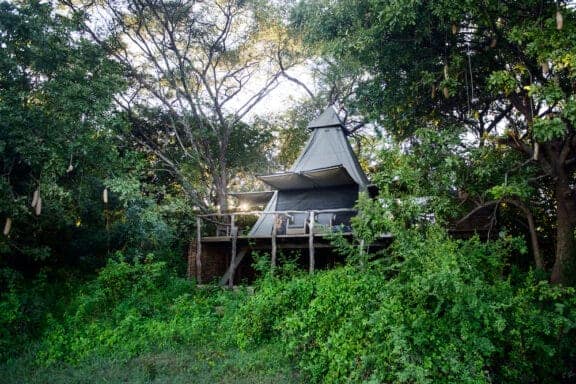
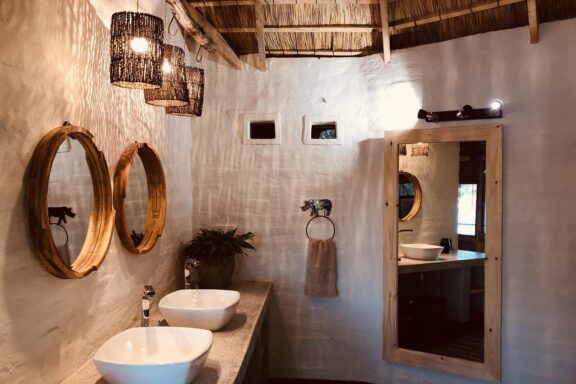
Even the most luxurious camps here are remarkably open. Think canvas walls, thatched roofs, open fronts with no glass, and, in some camps, bathrooms open to the sky. At night you’ll hear lions calling and hippos grazing just beyond your tent.
For most guests, that’s the magic of Zambia. If you’re a little nervous about it, tell us. We’ll choose camps that suit your comfort level and make sure nothing comes as a surprise.
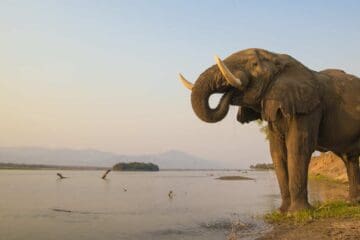
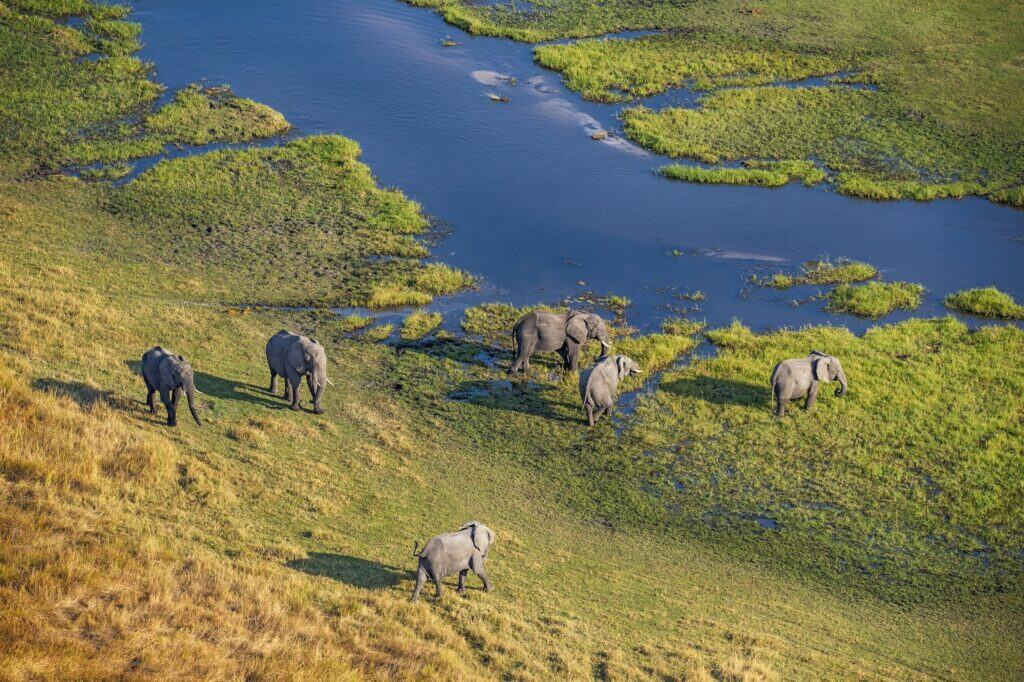
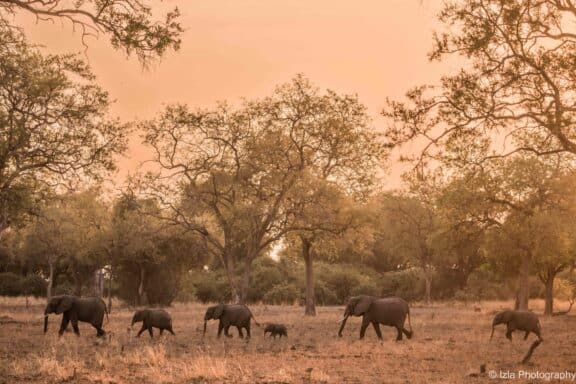
Many camps also sit just outside the national parks, in conservation areas along their borders. There are no fences, so wildlife moves freely between the two, and elephants often wander through camp.
Reaching the park itself might mean a short boat crossing over the river. When the water is too high for that, it can mean a drive of up to 45 minutes to the gate. Guides usually make the most of it with a full-day outing and a packed lunch, but it’s worth knowing if a drive takes longer than you expected.
Where to Go: Zambia’s Parks and What Makes Each One Different
Each of Zambia’s best-known parks offers a different way to be in the wild. Choose by what you want to feel.
South Luangwa: Walking by Day, Leopards by Night
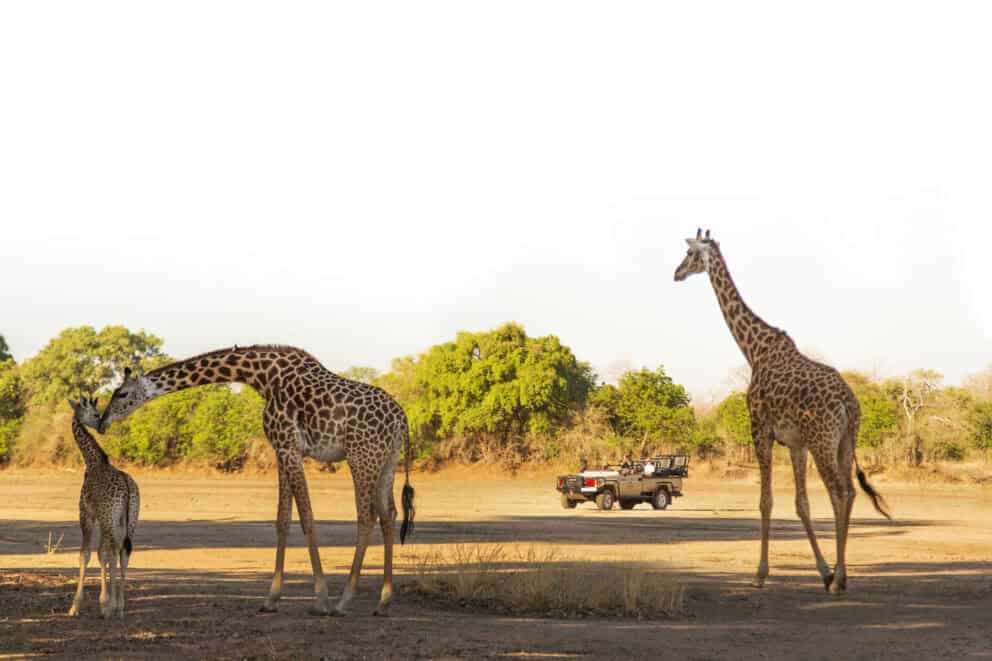
The Luangwa River twists through this valley in tight loops, leaving oxbow lagoons that pull wildlife in throughout the dry months.
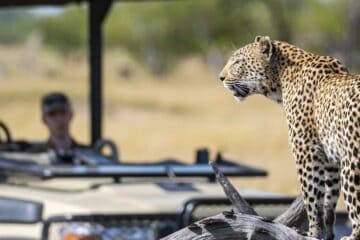
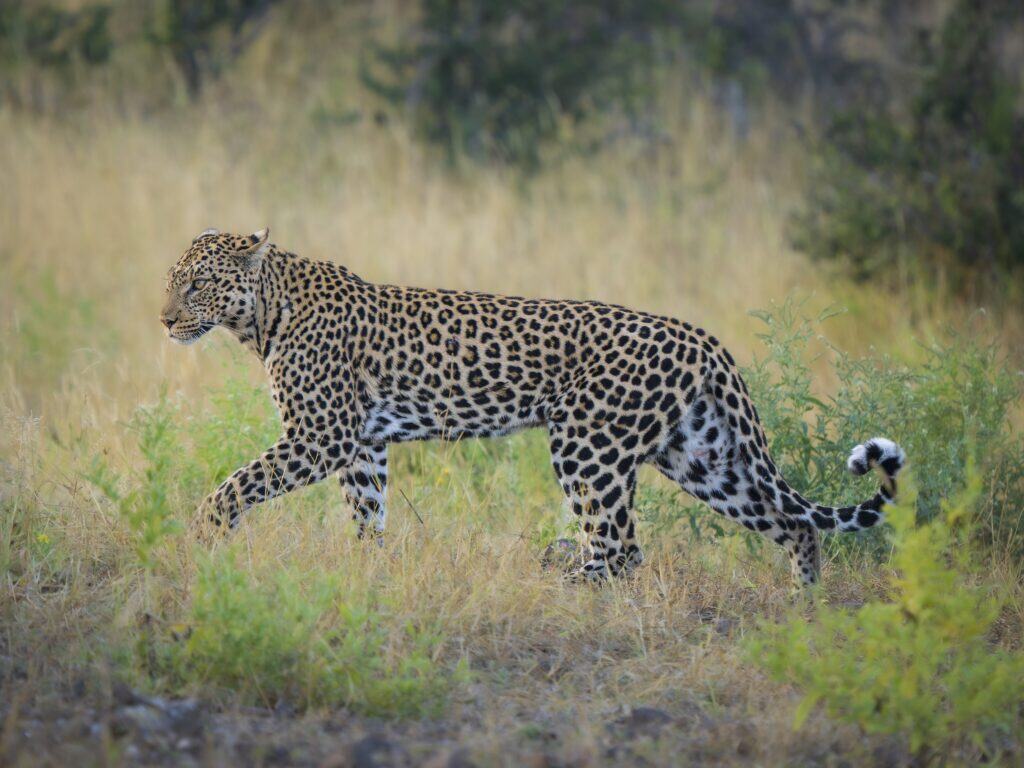
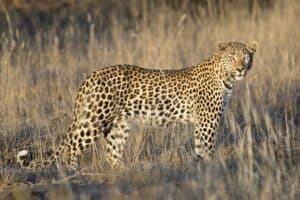
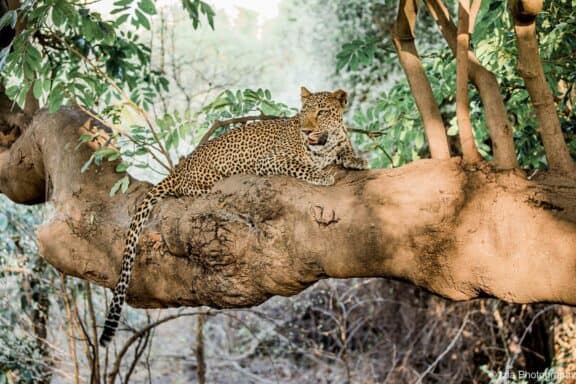
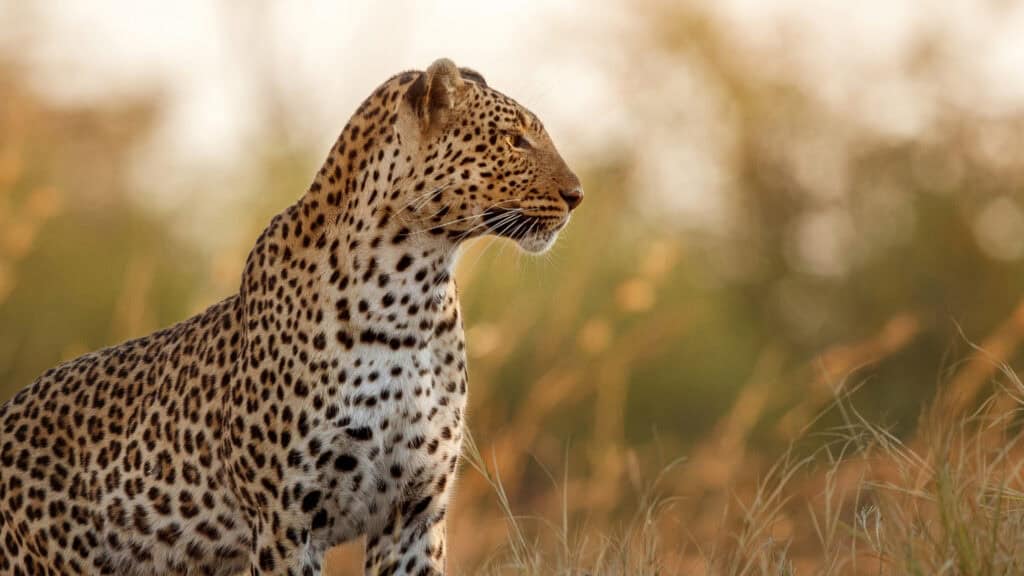
Mornings are for walking. Evenings are for night drives, when a spotlight picks out a leopard easing along a riverbank, a genet frozen on a branch, or a hyena trotting past on business of its own.
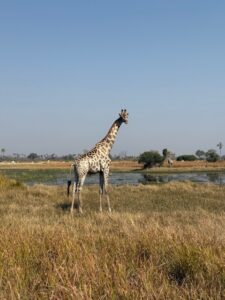
The valley also has residents you won’t easily find elsewhere. Thornicroft’s giraffe lives only here. Cookson’s wildebeest is a subspecies found almost entirely in the Luangwa Valley, and Crawshay’s zebra, with its fine, close-set stripes, is the local zebra.
South Luangwa is busier than the Lower Zambezi, but it’s still far quieter than Kruger or the Masai Mara. Photographers have extra reason to come: some operators here are known for their photographic hides.
Puku Ridge Camp has just eight tents, overlooking a lagoon in a quiet corner of the park. It was rebuilt from the ground up in 2019 and is run with Chiawa Safaris, the family behind one of the Lower Zambezi’s longest-standing camps. Walks head out from Puku Ridge with a guide and an armed scout, and the minimum age is 12, so the mood stays calm. Choose it if walking is the reason you’re coming.
Shawa Luangwa Camp sits on the eastern bank of the river in the Nsefu sector, the area where Norman Carr opened Zambia’s first safari camp. Guide Jacob Shawa chose the site and gave the camp his name. Drives at Shawa Luangwa are in solar-powered electric vehicles, so you hear the bush rather than an engine, and much of the team comes from neighbouring villages. It suits you if a quieter safari with a lighter footprint matters as much as the sightings.
Get inspired by our South Luangwa safari tours.
North Luangwa: Zambia’s Most Remote Park
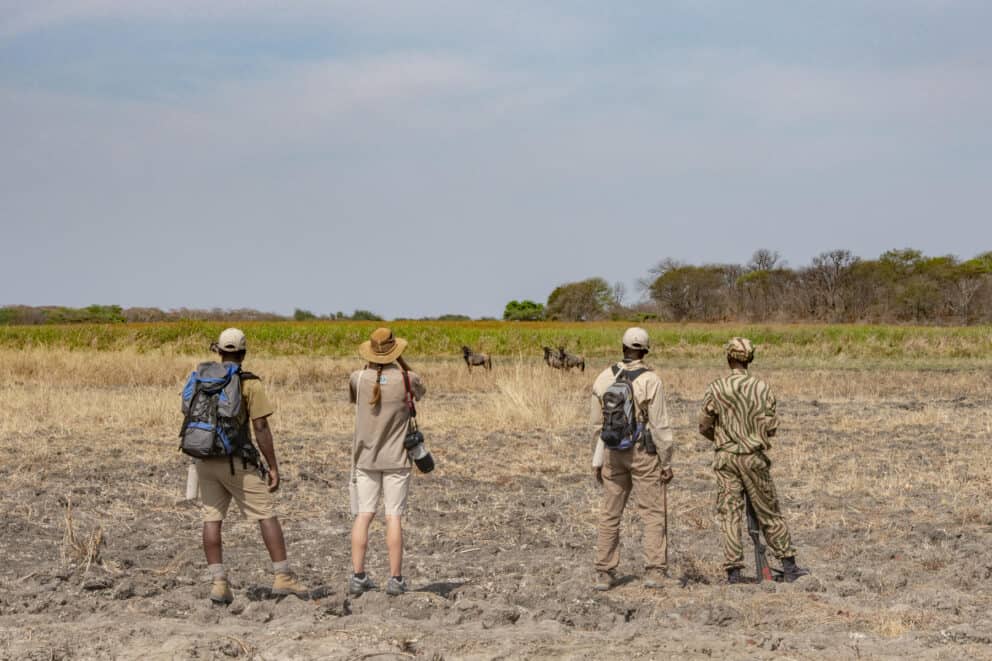
Upriver from South Luangwa lies its far wilder neighbour. North Luangwa National Park covers around 4,600 square kilometres of woodland, floodplain, and escarpment, and it’s one of the most secluded parks in Africa. There are no scheduled flights, just charters and long road transfers. The few people who come here come mostly to walk.
North Luangwa is also home to Zambia’s only black rhino. They were poached to extinction in the 1990s and brought back from 2003, and they’ve been breeding here ever since. The rhinos are protected by the Frankfurt Zoological Society’s North Luangwa Conservation Programme, working with Zambia’s Department of National Parks and Wildlife. This is a conservation success story, not a rhino safari. Sightings aren’t something to plan a trip around, and if seeing a rhino matters to you, the guided walks at Mosi-oa-Tunya are the reliable way to do it.
North Luangwa is for seasoned safari-goers who want true isolation and don’t mind rough edges. If you’d like the walking without quite so much remoteness, South Luangwa next door delivers it.
Lower Zambezi: The River at Eye Level
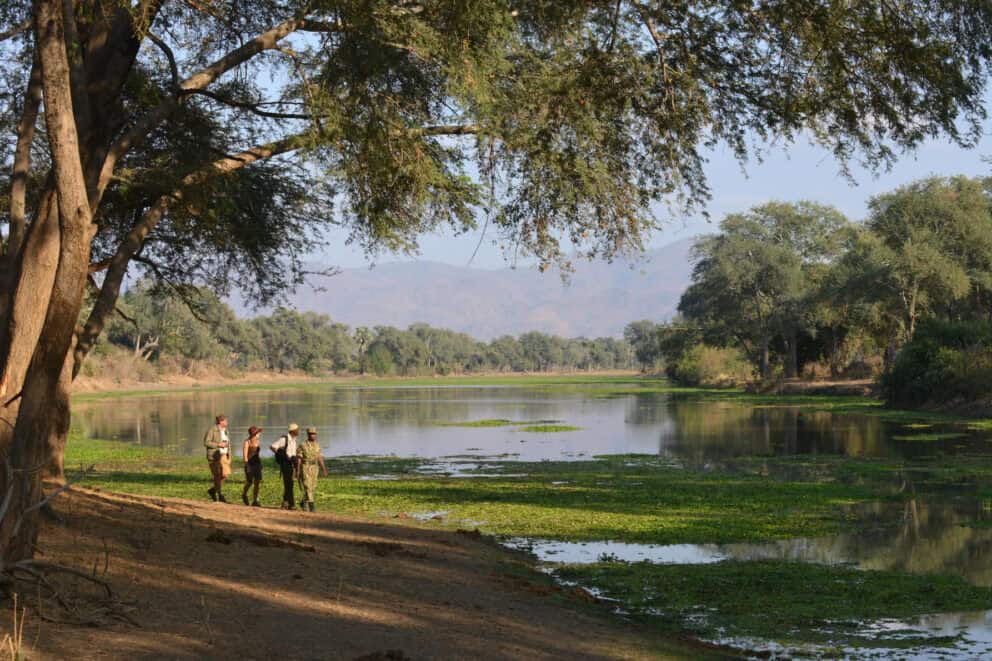
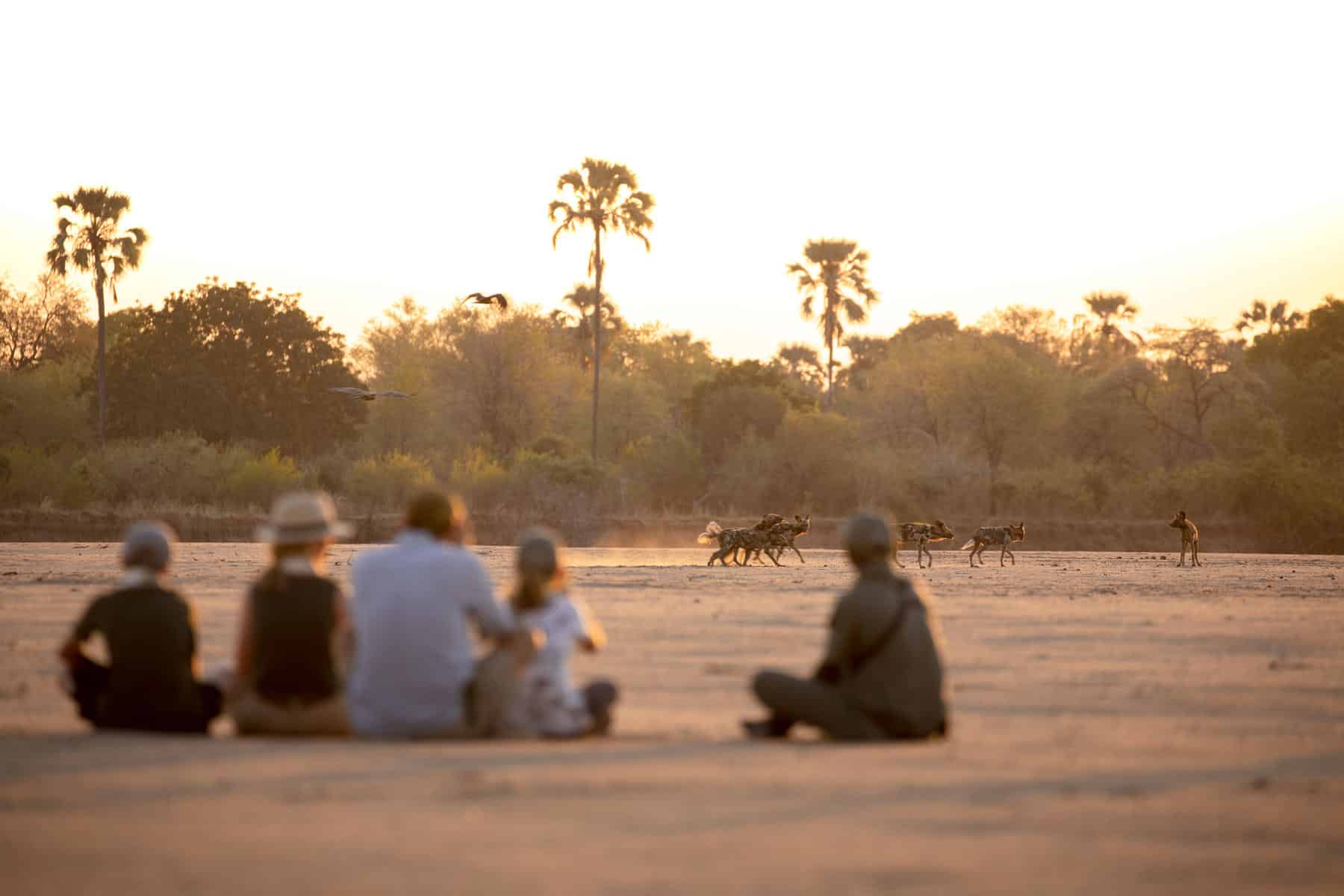
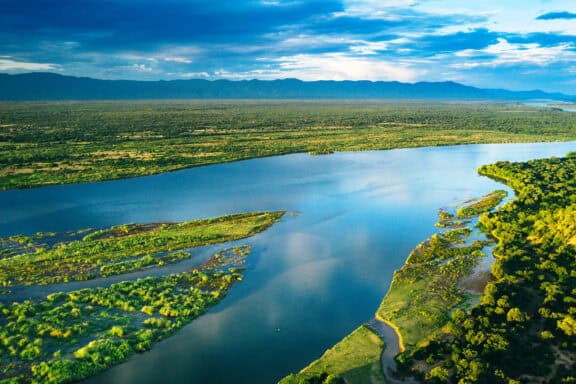
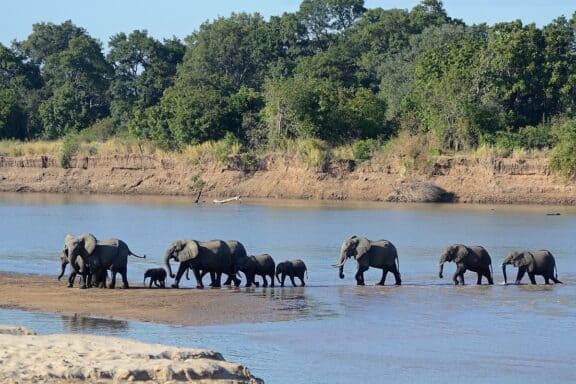
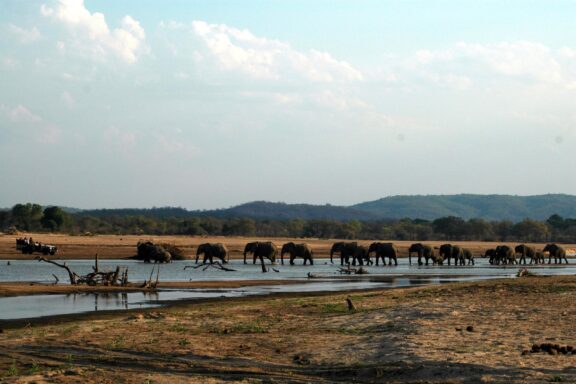
If you’ve been to Mana Pools in Zimbabwe, you’ll recognise this place straight away. The Lower Zambezi National Park faces it across the river, and the cast is much the same: elephants wandering between tents, hippos snorting in the shallows, and lions and wild dogs on the floodplain.
What sets the Zambian side apart is how few people share it. There are fewer camps than at Mana and very little self-driving, so the river feels remarkably private. Two animals you won’t find here are the rhino and giraffe.
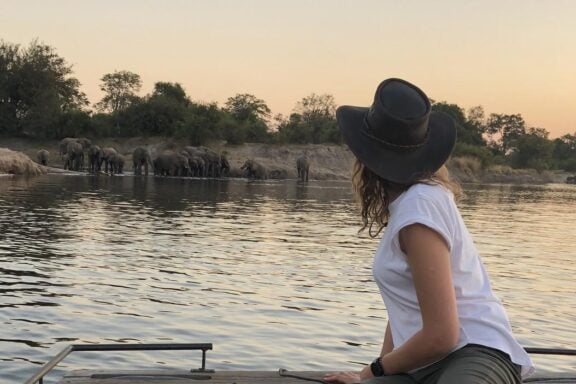
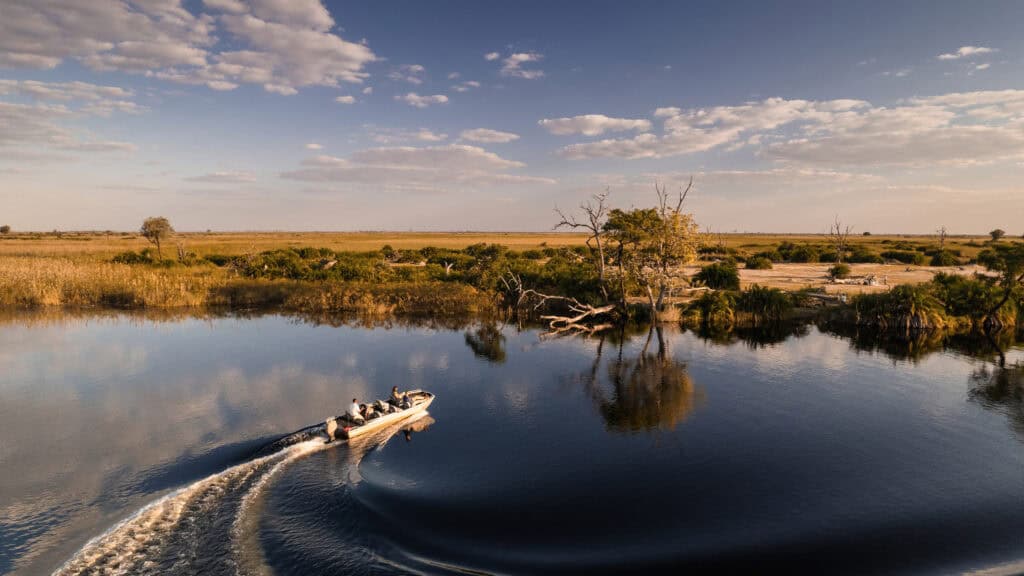
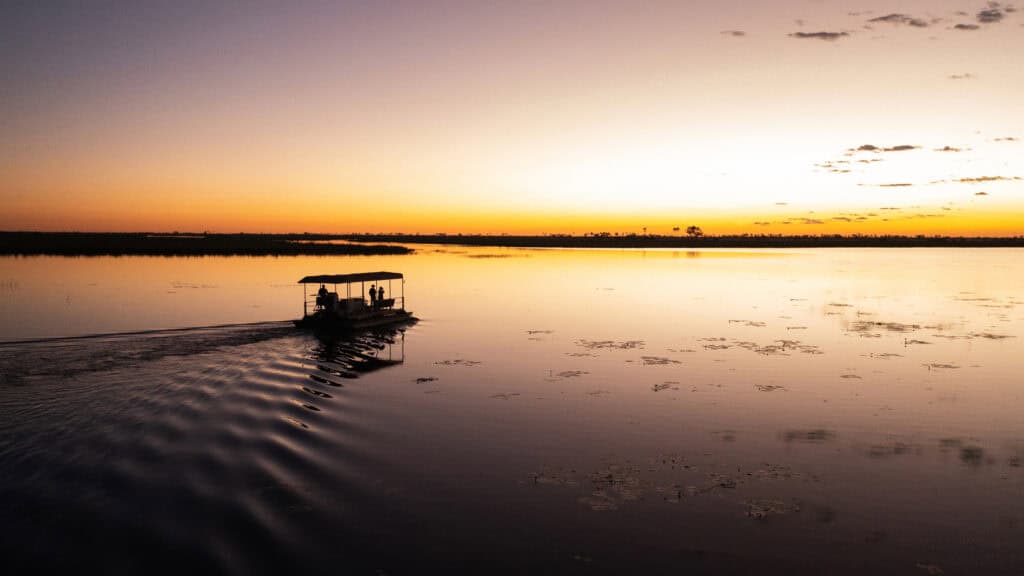
Much of the magic happens on the water. Most camps take you out in small motorboats. Canoeing is more conservative here than at Mana Pools and depends on water levels and your guide. Where it’s offered, drifting down a quiet side channel close enough to hear an elephant tearing grass from the bank is unforgettable. Catch-and-release tiger fishing, walks, and game drives fill the rest of your days.
Sausage Tree Camp has been on this stretch of river since 1996. Every booking comes with its own guide and vehicle, so the day runs at your pace. Full-day canoe trips with a picnic lunch are open to guests aged 15 and over. Families with children aged eight or older can take Kigelia House, a private two-bedroom house. It’s the right fit if privacy and flexibility matter to you.
One rule on the water never bends: hippos have the right of way.
Get an idea of what a Lower Zambezi safari tour could look like.
Kafue and the Busanga Plains: Lions in the Open

Kafue is Zambia’s largest national park. At around 22,400 square kilometres, it’s bigger than Wales, and most of it sees very few visitors.
It’s also the best value of Zambia’s main parks. If you’d like walking, boating, and game drives but the budget won’t stretch to both South Luangwa and the Lower Zambezi, Kafue delivers all three.
In the far north lie the Busanga Plains. During the rains, they flood. From around June, the water drains away, leaving wide golden grassland dotted with red lechwe and puku and lions that hunt across it in full view.
This is the part of Zambia where timing matters most. Camps on the plains open for a short window, usually from about June or July to October, and there are only a handful of them. Space goes early.
One thing to prepare for: tsetse flies are common in Busanga. Some camps are deliberately set away from the woodland edges where tsetse gather, but expect them on drives.
Leave the rest to us. Our Africa safari experts know which camps open when and how to fit Busanga in alongside the rest of your trip.
Chisa Busanga Camp sits on a small, tree-covered island out on the plains. Chisa is the Nyanja word for “bird’s nest”, and the camp’s rooms take their shape from the weaver-bird nests hanging in the surrounding trees. Each Nest is raised above the ground, and one has a lift. Like Shawa Luangwa, it’s a Green Safaris camp, so it runs entirely on solar power, and the game drives are in electric vehicles.
Liuwa Plain: Africa’s Other Wildebeest Migration

Liuwa Plain holds a secret few travellers discover… a lesser-known wildebeest migration away from the crowds of the famous Great Migration in Tanzania.
Far out in western Zambia, Liuwa Plain is a vast, flat sweep of grassland and shallow pans. It’s one of Africa’s oldest protected areas, set aside by the Lozi King Lewanika in the 1880s, and it’s now managed by the conservation organisation African Parks.
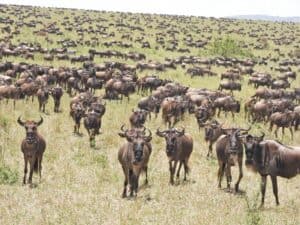
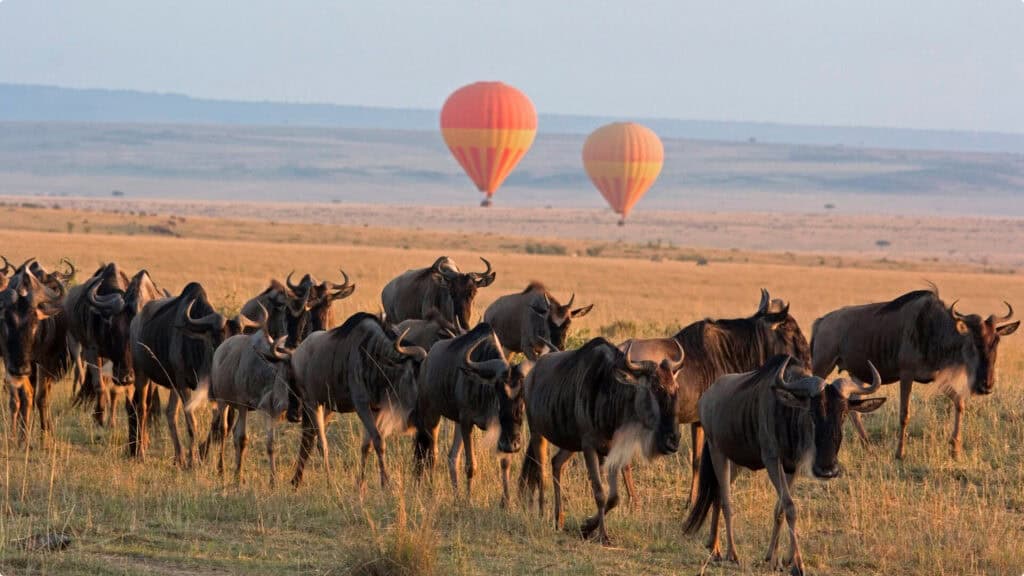
When the first rains arrive, usually around November, tens of thousands of blue wildebeest stream onto the plains to graze the fresh grass and drop their calves, with zebras, red lechwe, and tsessebe alongside. It’s widely described as Africa’s second-largest wildebeest migration.
The spectacle usually peaks from late November into December, and the herds stay on the plains until around May. Unlike in the Serengeti or the Masai Mara, you may well have them to yourself.
Where herds gather, predators follow. Liuwa’s spotted hyenas live in unusually large clans and hunt as a pack, and lion, cheetah, and wild dog all work the plains, too.
Because its best season is the opposite of Busanga’s and the walking camps’, Liuwa rarely slots neatly into a classic dry-season trip. Think of it as a journey in its own right, ideally for seasoned safari-goers and photographers, and plan it well ahead.
King Lewanika Lodge, run by Time + Tide, is the only permanent lodge in the park. It has six villas, including one for families, and it’s open from about mid-October to mid-July, so it’s there for the whole migration. Children aged six and older are welcome. Guests can also track the herds into remote corners of the plain with a guide and spend a night out under the stars. Choose it if you’d rather see a great migration in near-solitude than from a line of vehicles.
Mosi-oa-Tunya: Rhino Walks and the Falls
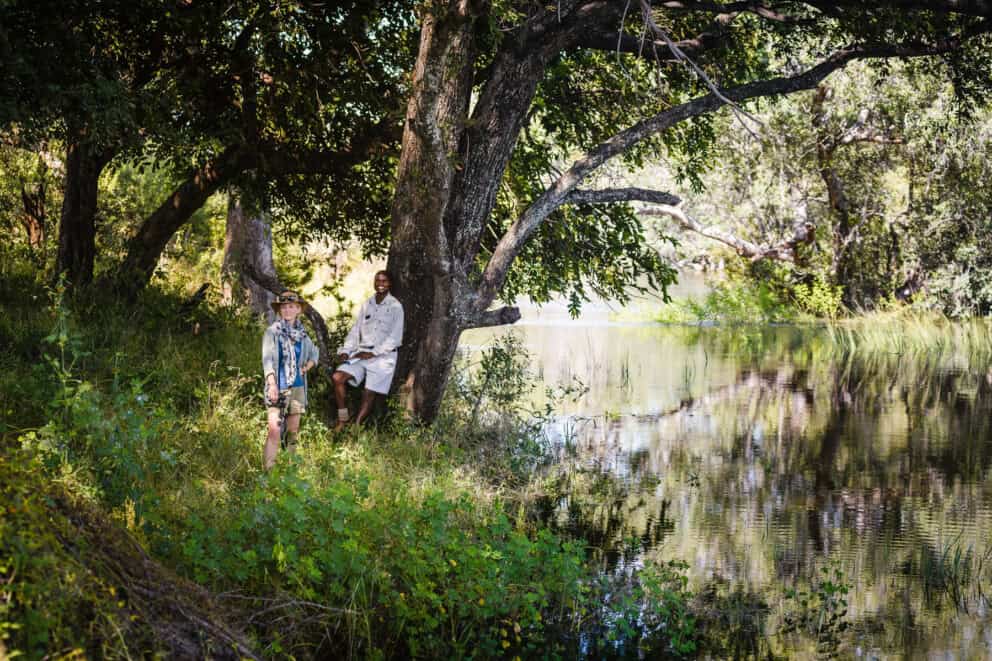
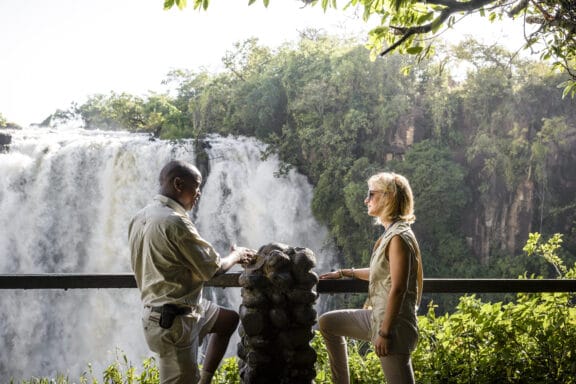
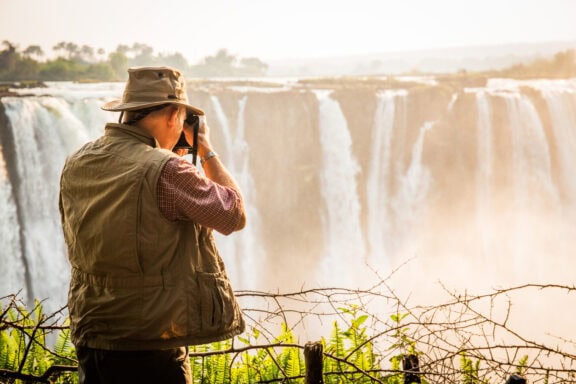
Mosi-oa-Tunya means “the smoke that thunders” – you hear Victoria Falls well before you see them. From about February to May, the river is in full flood, and the spray climbs high above the gorge. From around September to December, the flow drops sharply and parts of the Zambian side can run almost dry.
The national park beside the Falls is small, yet it holds something rare: white rhinos. This is the only place in Zambia where you can walk – with a guide – to see white rhinos (at a respectful distance). If they’re on your list, make sure Livingstone is on your route.
Livingstone is also where many Zambia trips begin or end, and it has two very different places to stay.
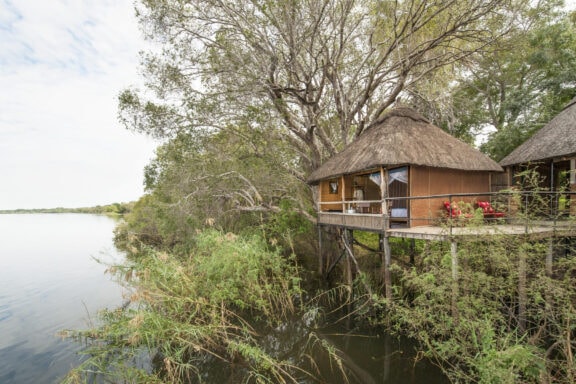
Sanctuary Sussi & Chuma lies inside Mosi-oa-Tunya National Park, about 12 km/7.4 mi upstream of the Falls. Its 12 tree houses stand on stilts among ebony trees, linked by wooden walkways, each with its own viewing deck. Families can take one of the two Chuma houses, which come with two bedrooms, a plunge pool, and their own chef, guide, and vehicle. Pick it if you want the park and the Falls on your doorstep.
Sindabezi Island Lodge is on a private island on the Zambezi with five open-sided, thatched chalets, running entirely off the grid. It’s open all year and can be booked exclusively for a small group, with sister lodge, Tongabezi, a short boat ride away. After a day of spray and noise at the Falls, an island this small and still is a welcome place to come back to.
Explore ideas for your Livingstone safari tour.
More Things to Do in Zambia
Some of the most memorable activities in Zambia happen around the edges.
Devil’s Pool. When the water is low, roughly mid-August to January, you can swim to the very lip of Victoria Falls from Livingstone Island, with a guide holding firm rules.
White-water rafting. The rapids in the gorge below the Falls are serious. They’re best from around August to December, when lower water opens up more of the river.
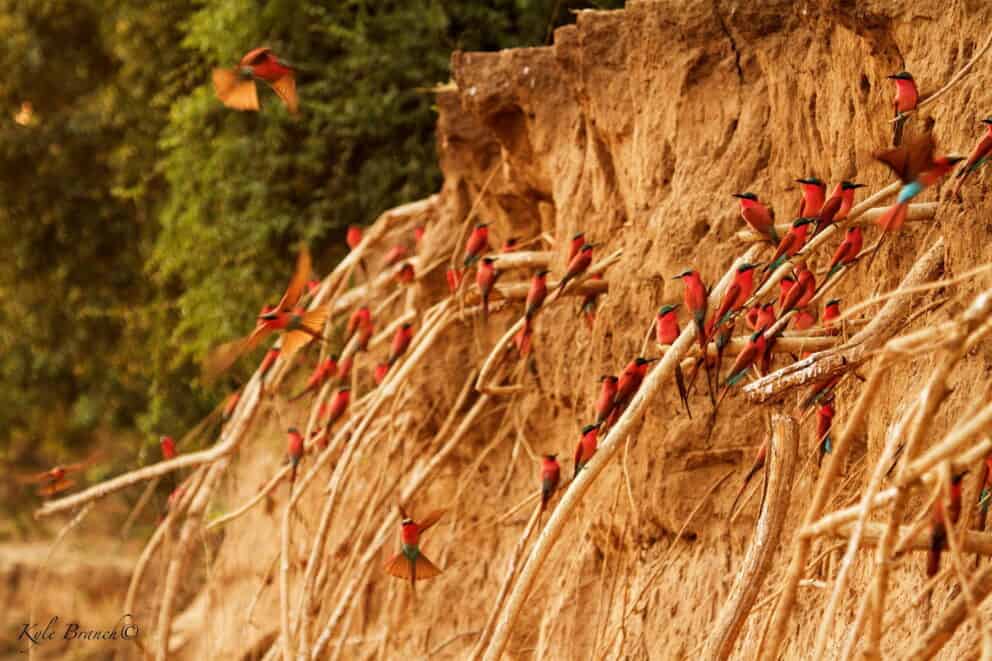
Birdwatching. Zambia has recorded more than 750 bird species. In the Luangwa Valley, from about August to November, carmine bee-eaters nest by the thousand in the riverbanks, a flash of pink against red earth.
Community visits. Near South Luangwa, local hosts welcome visitors into village life. It’s a chance to understand the valley through the people who call it home.
Zambia Travel Tips
When to go: June to October is the core safari season. June and July are cool and dry, with chilly mornings and superb walking. August and September bring the best game viewing of the year, as animals crowd around the remaining water.
October is still excellent for wildlife, but it’s very hot. Valley temperatures can pass 40°C, walking camps begin to close, and most camps are open-sided without air-con. If you need air-con, Mfuwe Lodge is a camp inside South Luangwa that has it throughout.
April and May are shoulder months. They’re good value, but the grass is still long and game viewing hasn’t reached its peak. May can also fill up surprisingly early, as some camps are still finishing their pre-season work, so book ahead.
From November to March, the bush turns green and the birding is superb, but many camps close. Roads in the camps that stay open can be muddy into May, so drives may follow the same few tracks. Some herds also stay out of reach until later in the season. It’s a beautiful time to visit, but it’s a different trip, not simply a cheaper version of the dry season.
Luggage. Light aircraft mean soft-sided bags and strict weight limits. If you’re arriving with hard cases, ask us about storing them before you switch to a duffel.
Connections. Flights between the parks run on set schedules, and those schedules change. These flights can also stop at multiple airstrips before they get to your final destinations.
Health and paperwork. Zambia is a malaria area, so see a travel clinic well ahead. Visa rules vary by passport and do change, so check before you fly.
What to wear. Leave dark blue, purple, and black at home, as they attract tsetse flies. Opt for khaki, olive, and beige colours. An open vehicle at 6 am in July is colder than you’d think, so pack a warm layer.
Zambia or Botswana? An Honest Answer
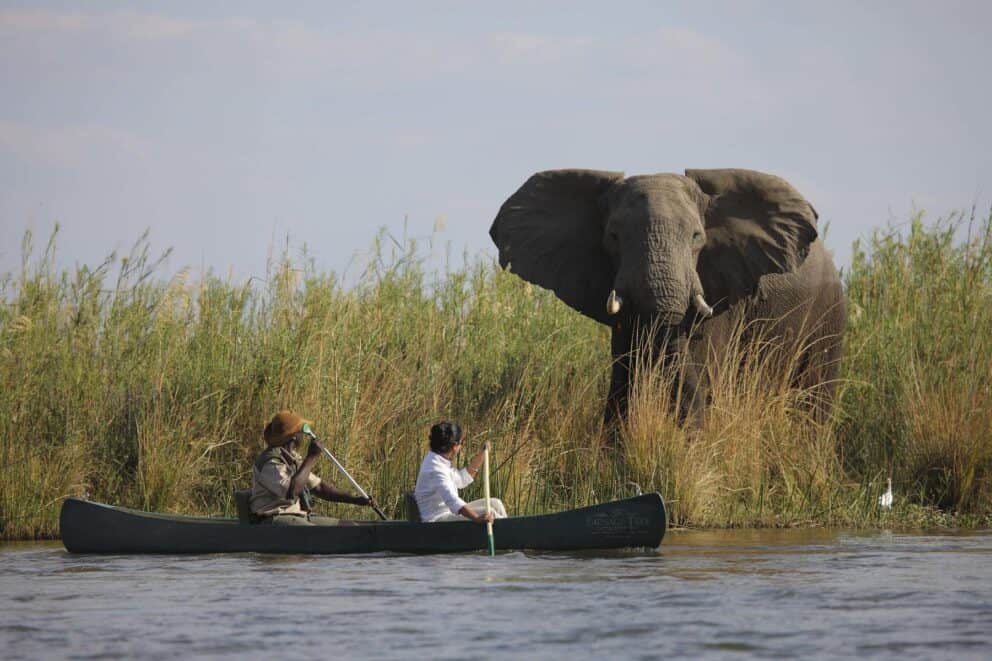
Botswana, especially the Okavango Delta and Chobe, is known for its waterways, large elephant herds, and polished camps. If gliding through papyrus channels in a mokoro tops your list, Botswana may suit you better.
Zambia is quieter and more on foot. If you want to walk at dawn, paddle past elephants, and see the bush after dark, it’s hard to beat. It also tends to have better availability in the shoulder months, and camps of a similar standard often cost less.
You don’t have to choose. Chobe is a short road transfer from Livingstone. Plenty of our guests combine both.
Your Zambia Safari Guide, in Short
Zambia isn’t the easiest safari to put together. The good news is that you don’t have to. That’s our job.
Tell us how you’d like your days to feel, whether that’s on foot at first light or on the river at sunset. Our Africa safari experts will plan a safari that’s aligned to the type of experience you’re dreaming about.
Speak to an Africa safari expert, and let us plan your Zambia safari for you.
Written by Yamkela Welaphi
• Travel Writer
Discover the African Journey that’s Right for You
 Blog List






















Written by Yamkela Welaphi
• Travel Writer
Part of the Zambia Safari & Walking Safaris Collections