

 Email us







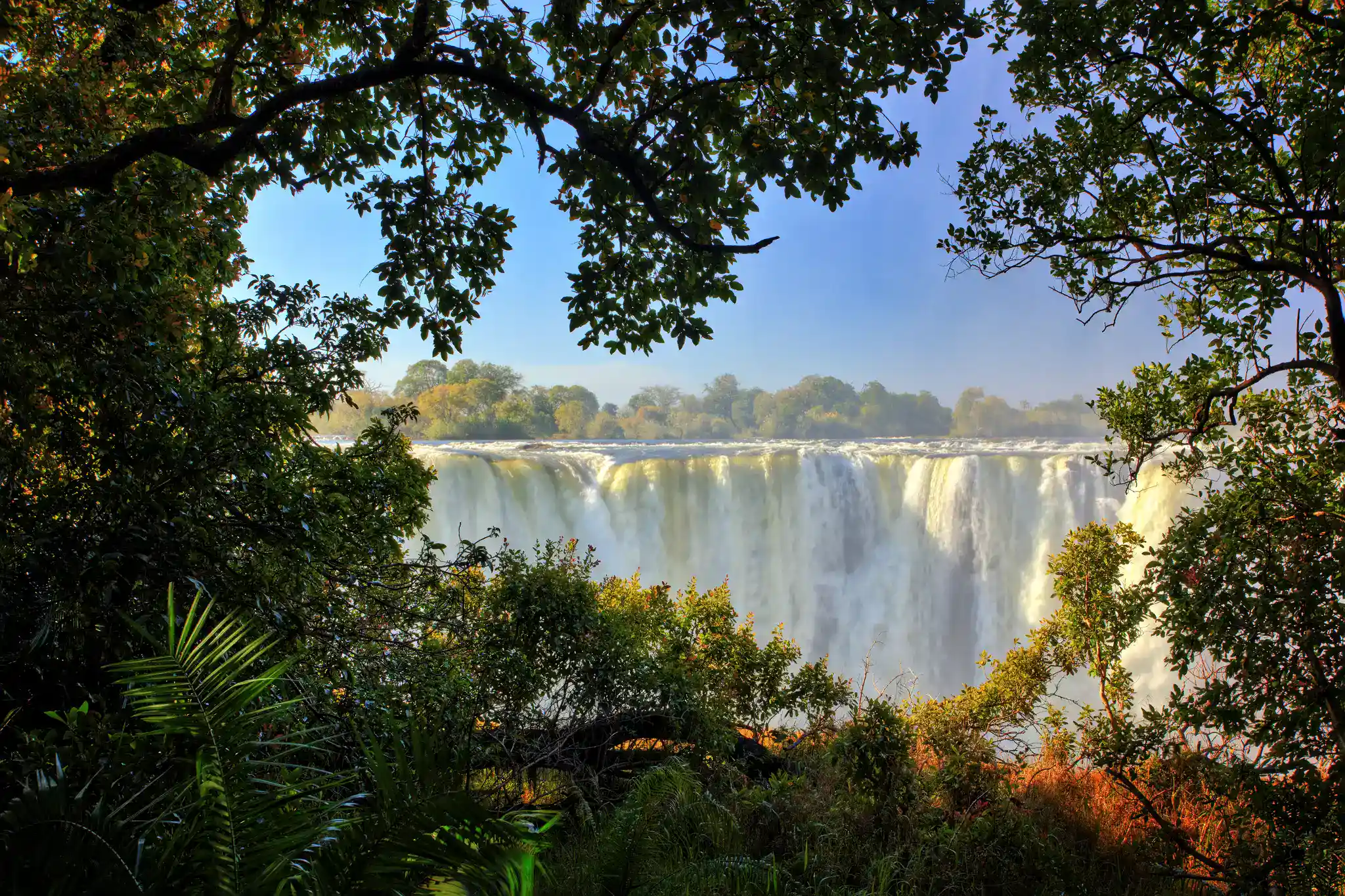
You hear a waterfall before you see it.
The sound grows louder with every step until the river finally comes into view. Sometimes that means following a forest path beneath a thick canopy. Sometimes it means climbing into the mountains, where the air cools as you gain height. However you arrive, the water has a way of drawing your attention to everything around it.
That is one reason waterfalls in Africa continue to attract people looking for more than a traditional safari. They offer time outdoors in places where rivers have cut through mountains, nourished forests, and sustained communities for generations. They also remind us that some of Africa’s most remarkable landscapes are found far beyond the game drive.
From the Zambezi River on the border of Zambia and Zimbabwe to the high cliffs of South Africa‘s Drakensberg and the coffee-growing hills of eastern Uganda, waterfalls in Africa tell very different stories. Some are among the largest on Earth. Others are better known by the communities who have lived beside them for centuries. Together, they show how rivers continue to influence the landscapes around them.
Why Waterfalls in Africa Deserve More Than a Quick Stop
A waterfall is rarely the beginning of the story.
At Victoria Falls, the Zambezi River creates enough spray to support a rainforest that survives throughout the year. At Tugela Falls, reaching the top of the escarpment is every bit as important as standing beside the water. Around Sipi Falls, local guides lead walks through coffee farms before the first cascade appears.
Each place offers something different because each river behaves differently. Some waterfalls plunge into narrow gorges with tremendous force. Others spread across wide shelves of rock before continuing downstream. Some are surrounded by dense vegetation, while others are framed by open mountain scenery.
This variety makes it easy to spend an entire day in one place without feeling the need to rush. You notice changing weather, birds moving through the trees, and the sound of water echoing against rock long before you think about taking another photograph.
Victoria Falls: Where the Zambezi River Takes Centre Stage
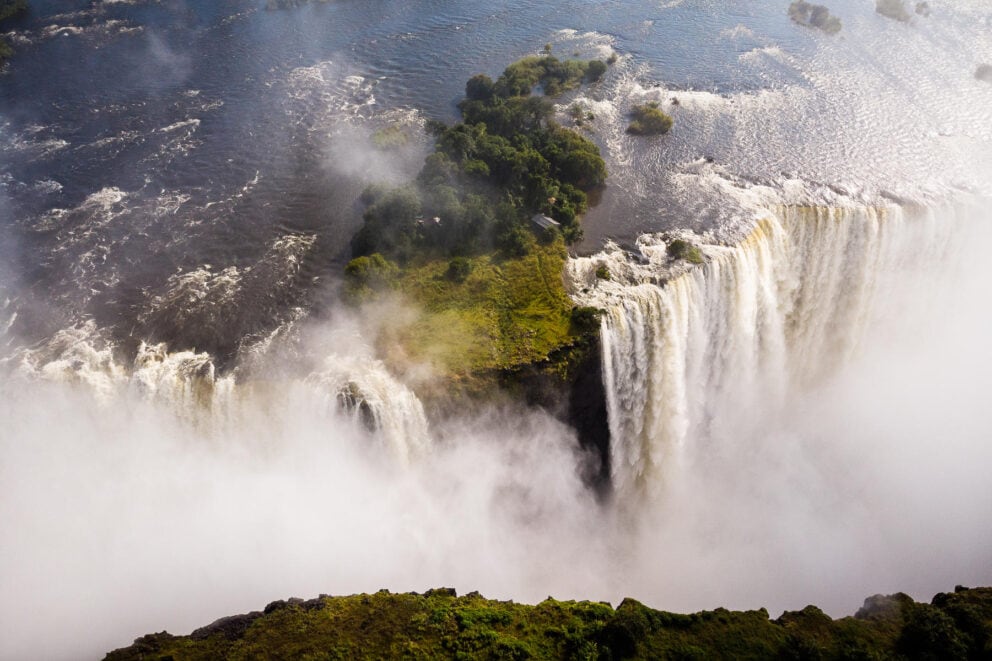
Among the famous African waterfalls, Victoria Falls remains the benchmark.
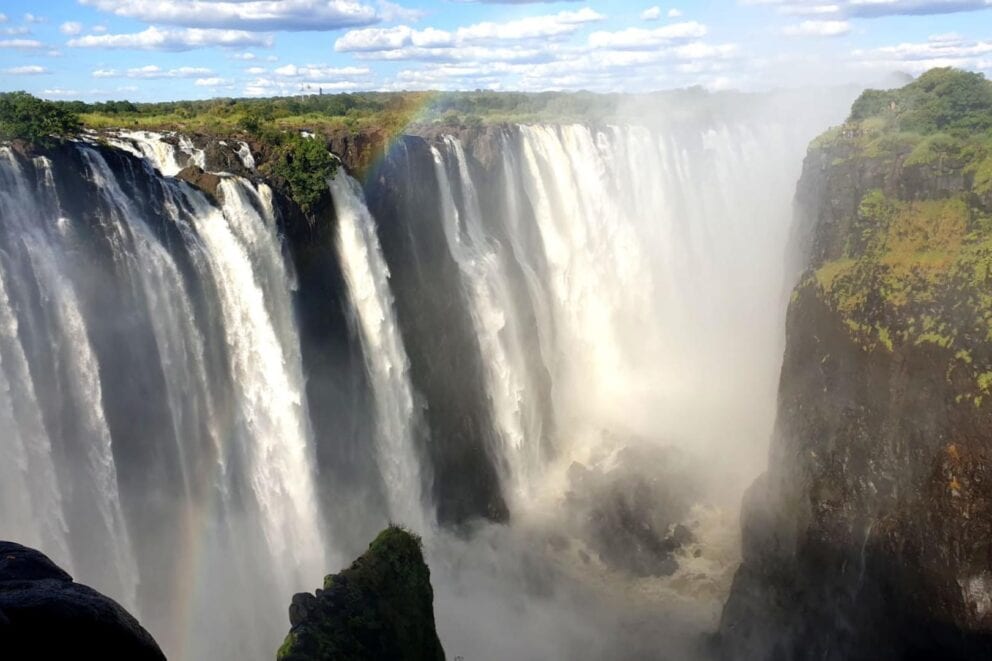
For much of its course, the Zambezi River flows calmly across a broad basalt plateau. Then the river reaches the edge of Batoka Gorge and drops between roughly 80 m/262 ft and 108 m/354 ft, creating one of the widest continuous curtains of falling water in the world.
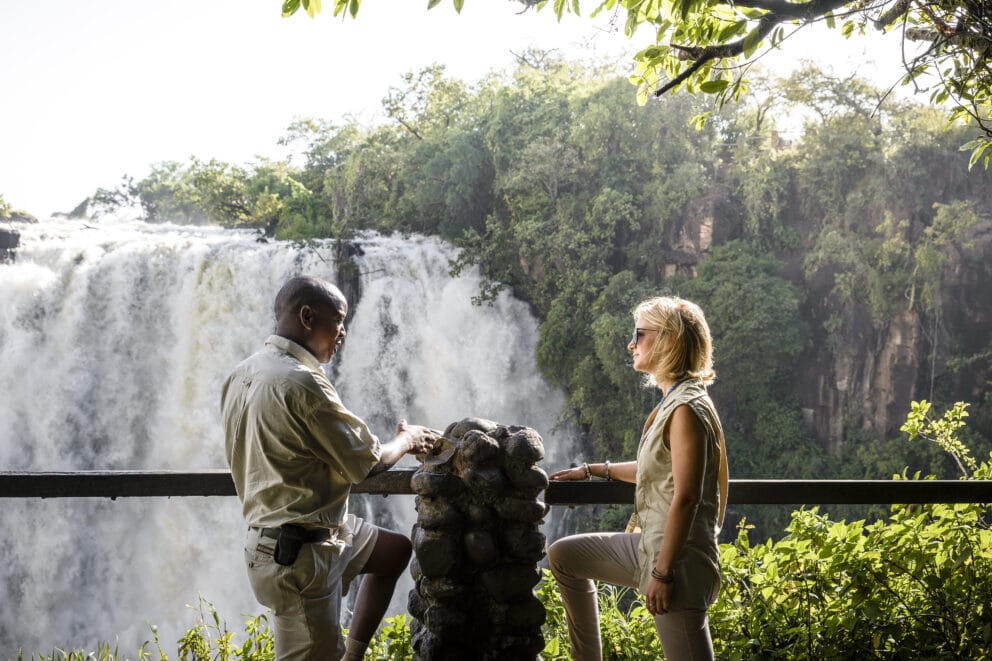
The difference between the calm river above the falls and the sheer volume of water entering the gorge below is striking. During the rainy season, the spray rises so high that it feeds a rainforest filled with palms, figs, and ferns. Local people named the falls Mosi-oa-Tunya, meaning “The Smoke That Thunders”, because the rising spray can be seen long before the gorge itself.
Walking the viewpoints offers a different appreciation of the Falls throughout the year. High water brings dense spray and powerful flow, while lower water levels expose more of the basalt cliff behind the water.
Away from the viewpoints, the surrounding area offers opportunities to explore the river from another angle. Canoe trips follow calmer sections of the Zambezi upstream, while guided walks explain how volcanic activity, erosion, and the river itself created one of Africa’s best-known natural landmarks.
Tugela Falls: Africa’s Highest Waterfall
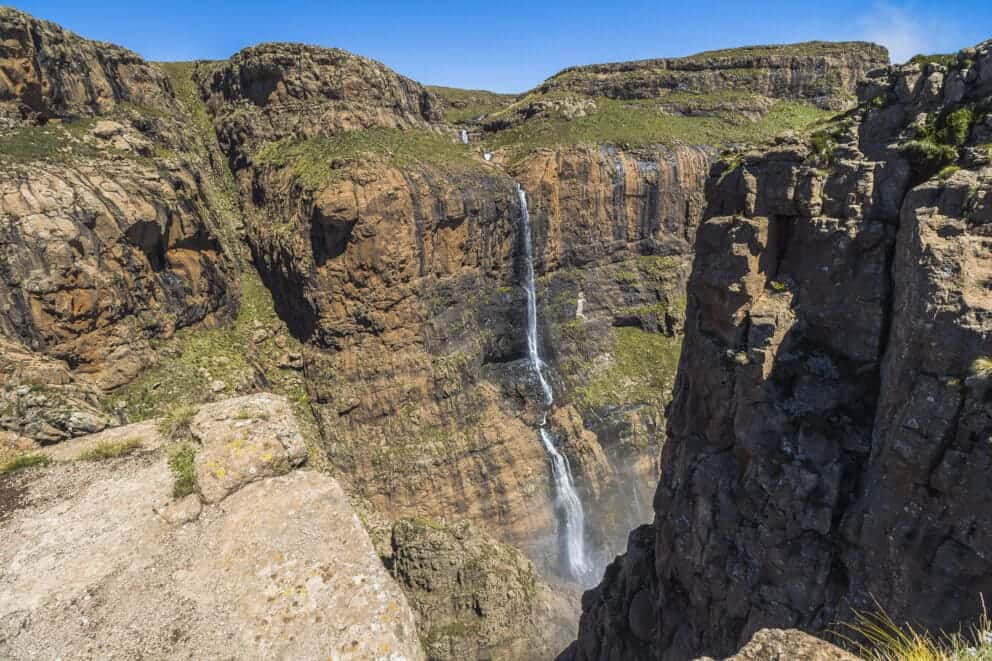
If Victoria Falls is defined by the volume of water, Tugela Falls is defined by elevation.
The popular trail to the top begins at the Sentinel Car Park, climbing onto the high plateau. By the time the escarpment comes into view, the landscape below stretches across grasslands, cliffs and distant valleys.
The Tugela River descends in five separate drops with a combined height of about 948 m/3,110 ft. Although measurements have been debated over the years, Tugela Waterfalls is widely recognised as Africa’s highest waterfall and one of the tallest on Earth.
Unlike Victoria Falls, Tugela isn’t experienced from a series of viewpoints beside the river. Much of its appeal comes from the walk itself and the changing views across the Drakensberg before the waterfall finally appears.
Sipi Falls: Where Coffee Farms Meet Mountain Streams
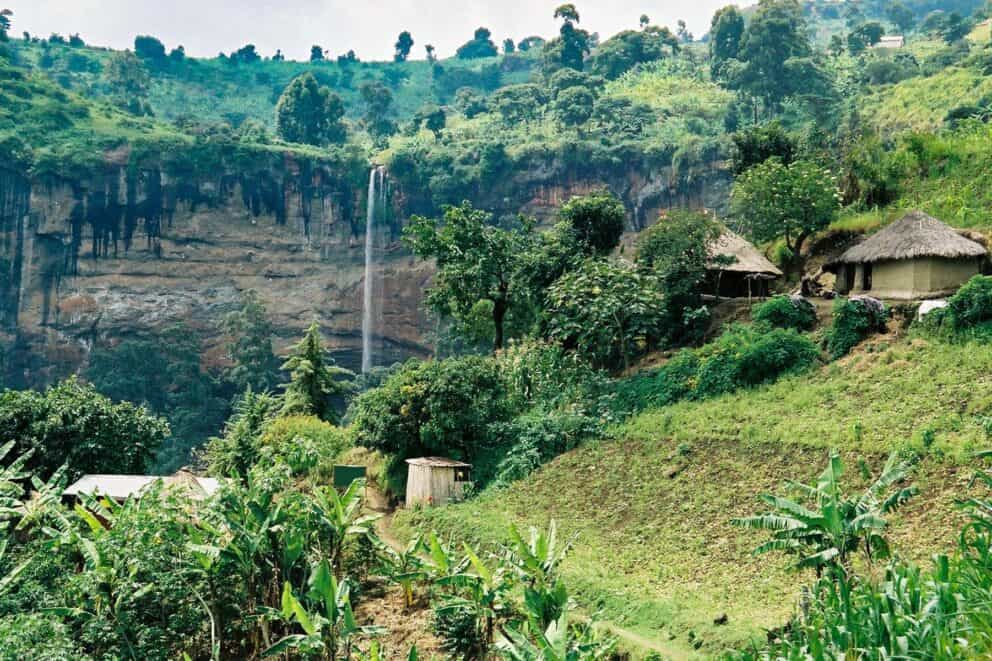
While Victoria Falls and Tugela Falls are recognised around the world, Sipi Falls offers a different experience.
Set on the lower slopes of Mount Elgon in Uganda, Sipi Falls is made up of three separate waterfalls connected by walking trails that pass through villages, banana plantations, and Arabica coffee farms. The scenery changes as you walk, with cultivated fields giving way to rocky paths, river crossings, and pockets of indigenous vegetation.
Many guided walks include a stop at a local coffee farm, where growers explain how the beans are picked, dried, roasted, and brewed. It’s a simple addition to the day, but it offers a better understanding of the people who have lived alongside these rivers for generations. The waterfalls and the surrounding farms have long been part of the same landscape.
The highest of the three waterfalls drops almost 100 m/328 ft into a pool below, while the others are linked by quieter footpaths that encourage you to take your time. Some sections are ideal for photography, while others simply invite you to stop and listen to the sound of the river moving through the valley.
Sipi Falls shows that an African waterfall doesn’t need to be the biggest on the continent to leave an impression. Sometimes the setting is just as meaningful as the water itself.
Other Waterfalls Worth Visiting
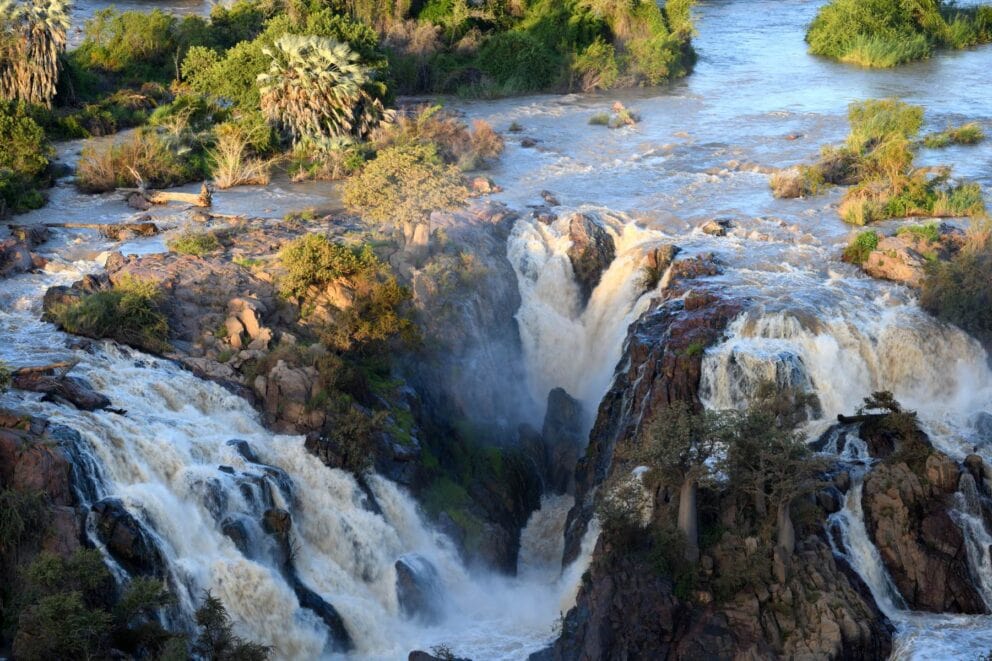
The best-known African waterfalls are only part of the story.
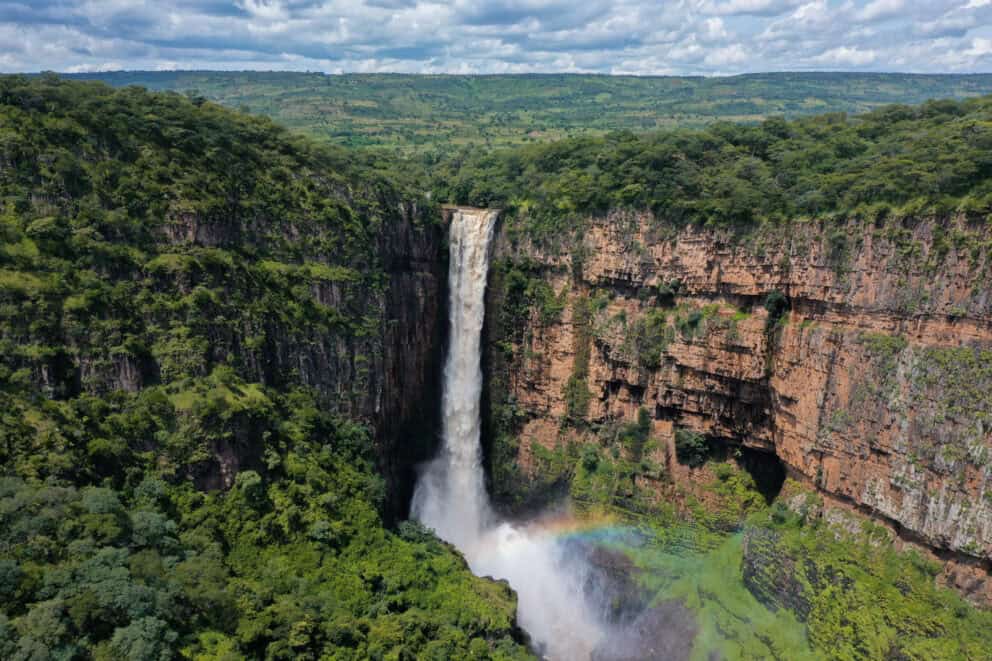
Kalambo Falls between Zambia and Tanzania drops more than 220 m/722 ft in a single plunge, making it the second-tallest uninterrupted waterfall in Africa. Archaeological discoveries in the surrounding area also point to one of the oldest known sites of human activity on the continent.
On the border of Namibia and Angola, Epupa Falls offers something completely different. Here, the Kunene River divides into multiple channels before flowing over a series of rocky ledges lined with makalani palms. Instead of one dramatic drop, the river creates dozens of smaller cascades that change with the seasons.
These places show just how varied African waterfalls can be. Every river follows its own course, creating landscapes that differ from one country to the next.
When to Visit Waterfalls in Africa
The best time to experience waterfalls in Africa depends on what you’d like to see.
During or shortly after the rainy season, rivers carry more water, creating stronger flow and larger plumes of spray. This is when Victoria Falls is often at its most powerful, although the mist can limit visibility from some viewpoints.
Later in the dry season, lower water levels expose more of the cliffs behind the falls and make many walking routes easier to explore. Clearer conditions are often better for photography, while cooler winter temperatures in South Africa create comfortable hiking conditions around Tugela Falls.
If your plans already include a safari, adding a few days at one of Africa’s waterfalls offers a different way to experience the continent. Time spent tracking wildlife can be balanced with mountain walks, river trails, and quiet afternoons beside the water.
Waterfall Location Key Highlight Best Time to Visit Agent Insider Tip
Victoria Falls Zambia and Zimbabwe Widest continuous curtain of falling water on Earth (Mosi-oa-Tunya) Feb – May (High water/Peak flow) Visit the Zimbabwean side during the late dry season (Oct–Nov), as the Zambian side can dry up significantly. Tugela Falls South Africa Africa's highest waterfall, dropping 948 m (3,110 ft) down the amphitheatre wall. Dec – Mar (Summer rainfall season) To stand at the top, start your hike from the Sentinel car park via the Free State province. Sipi Falls Uganda Three scenic cascades woven through lush volcanic slopes and Arabica coffee farms. Year-round (June to Aug and Dec to Feb are driest) Budget a half-day for the full three-falls hike. Be prepared for muddy paths, but the local coffee tasting at the end is worth it. Kalambo Falls Zambia and Tanzania One of Africa's tallest uninterrupted single-drop falls (220 m / 722 ft). May – Sep (After the rains, when access roads clear) Great for history buffs; the surrounding gorge is an incredibly rich, active archaeological site tracking early human history. Epupa Falls Namibia and Angola A labyrinth of dozens of smaller desert cascades lined with unique makalani palms. Apr – Jul (Right after the rainy season brings optimal river flow) Perfect for photographers looking for stark, dramatic contrasts between rushing water and arid, desert landscapes.
Waterfalls That Add Another Dimension to an African Safari
The waterfalls in Africa aren’t simply places to tick off an itinerary. They show how rivers continue to influence forests, mountains, and the people who live nearby. Every waterfall tells a different story, whether that story begins with the Zambezi River, the cliffs of the Drakensberg, or the coffee-growing communities around Mount Elgon.
From world-famous landmarks to lesser-known cascades, waterfalls in Africa offer another way to experience the continent’s natural beauty. They reward curiosity, encourage time outdoors, and remind us that some of Africa’s most memorable places are found outside of the famous savannahs.
If you’re planning a safari, we can help you include the waterfalls that make the most sense for your itinerary. We’ve stood in the mist at Victoria Falls, hiked the ridges of the Drakensberg, and explored many of these places ourselves – our recommendations come from first-hand experience.

Written by Yamkela Welaphi
• Travel Writer
Discover the African Journey that’s Right for You
 Blog List



























Written by Yamkela Welaphi
• Travel Writer