

 Email us





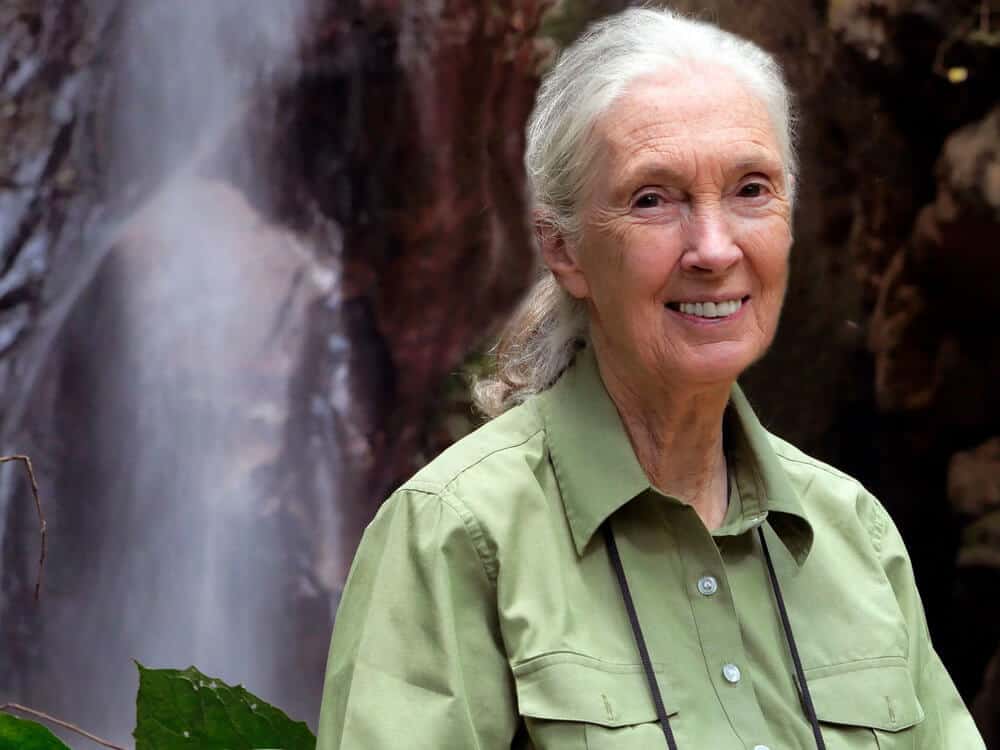
Perhaps you first met Jane Goodall in a schoolbook, a documentary, or a quote pinned to a noticeboard. However she arrived in your life, the news of her passing on 1 October 2025 lands close to the heart. She made science feel human – binoculars in hand, patience in her voice, compassion in her method, Dr Goodall helped us see that the forest is full of relationships, not just facts.
According to the Jane Goodall Institute, Dr Goodall passed away of natural causes in California while on a speaking tour of the United States. She was 91 years old, and she fought for the planet until the very end.
Her life was certainly one worth celebrating. Dr Goodall’s legacy lives on through her organisations, outreach programmes, and her sheer impact on the fields of zoology and conservation. Let’s take the opportunity to look back at her life and the achievements she’ll be best remembered for.
A Different Kind of Science

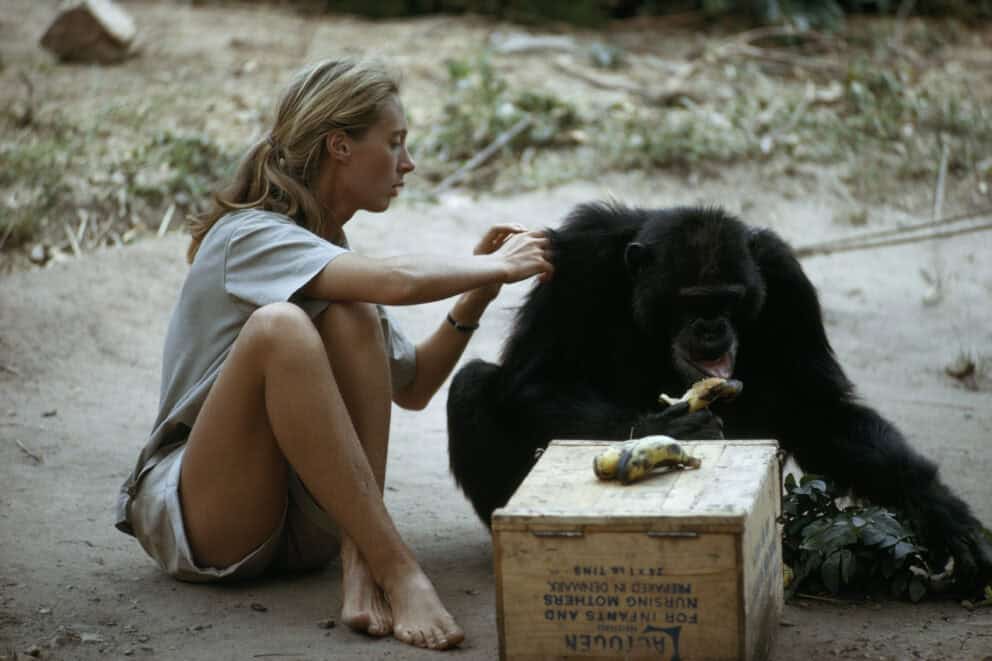
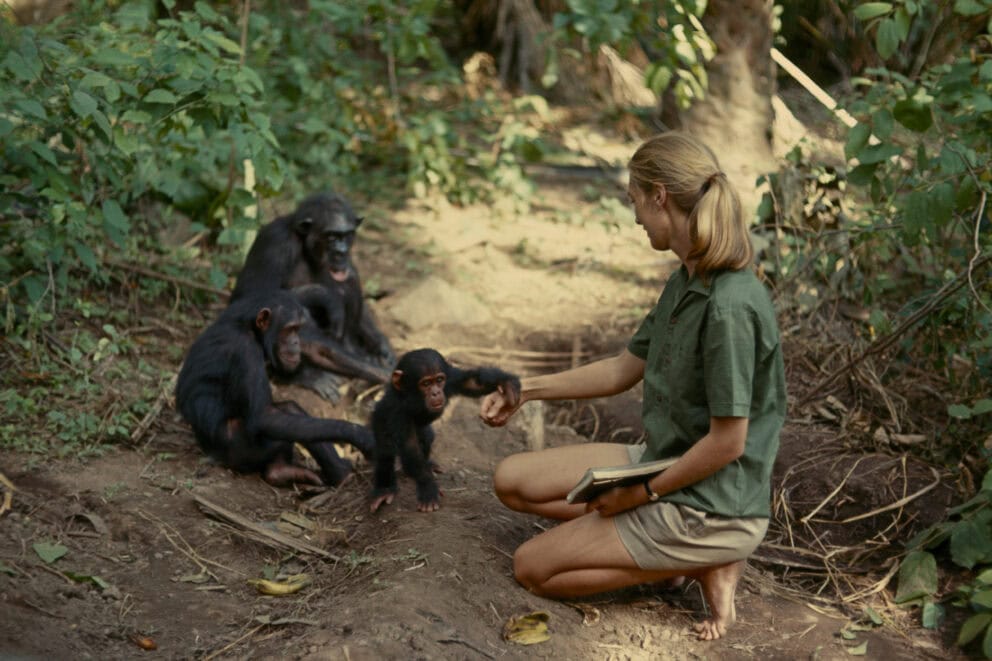
Jane Goodall arrived in East Africa as a young woman with a notebook, a pair of binoculars and a dream. Guided by paleoanthropologist Louis Leakey, she began long-term fieldwork in 1960 at Gombe, a steep, forested finger of land on the eastern shore of Lake Tanganyika in what is now Tanzania. There, on a ridge above the lake, she chose to do something radical for the time: watch the animals as individuals, learn their rhythms, and earn their trust.
Her approach was simple, humane and rigorous. She gave the chimps names rather than numbers. She noticed quirks of personality. She listened. In doing so, she overturned a core assumption in science: that only humans made and used tools.
Goodall recorded a chimpanzee – David Greybeard – selecting a twig, stripping its leaves and fishing for termites. The discovery spread around the world and rewrote textbooks. It also changed field biology itself, showing that deep, patient observation can reveal social worlds that quick visits easily miss.
A Pioneer of Women in Science

At a time when field biology was overwhelmingly male, Jane Goodall walked into the forest and quietly rewrote the rules. She began without a university degree, was admitted directly to a PhD at Cambridge – a rare step – and faced critics who dismissed her habit of naming chimpanzees as “unscientific”.
She proved them wrong with meticulous notes, long-term data and discoveries that changed primatology. Just as important, she modelled a different way to lead research: patient, empathetic, collaborative, and unafraid of living and working in tough, remote conditions. Her visibility on screen and on stage gave girls and young women a mirror they had rarely seen – an authority in science who sounded like curiosity and care.
From Researcher to Advocate

By the late 1980s, Goodall had moved from full-time fieldwork to a life on the road – speaking, teaching, and urging practical action. She understood that research alone would not save forests or the communities who depend on them. Conservation had to include people’s needs as much as wildlife’s, and that belief became the backbone of her next chapter.
She founded the Jane Goodall Institute in 1977 to protect chimpanzees and their habitats, to continue the research at Gombe, and to build community-centred conservation across the chimpanzee range. The Institute’s work has been notable for putting local people at the heart of solutions – improving livelihoods, supporting education and healthcare, and creating opportunities that reduce pressure on forests.
In 1991, she launched Roots & Shoots, a youth programme that began with a small group in Tanzania and grew into a global movement. The idea was disarmingly simple: help young people identify problems in their own communities – people, animals or the environment – and then support them to act. Today, Roots & Shoots groups operate in scores of countries, proof of Goodall’s conviction that hope is a discipline, not a mood.
Honours followed: a damehood, a United Nations Messenger of Peace appointment, and, in 2025, the US Presidential Medal of Freedom. Yet, Goodall treated awards as tools – ways to open doors, bring attention to a campaign, or secure a meeting for a project that needed help. What mattered to her were results you could point to on a map.
Meanwhile, Gombe National Park has gone on to become the longest-running study of wild chimpanzees on Earth. It is a living archive, with decades of family trees, behavioural notes, and genetic data that continue to shape primatology.
The Jane Goodall Institute and the Power of “With”
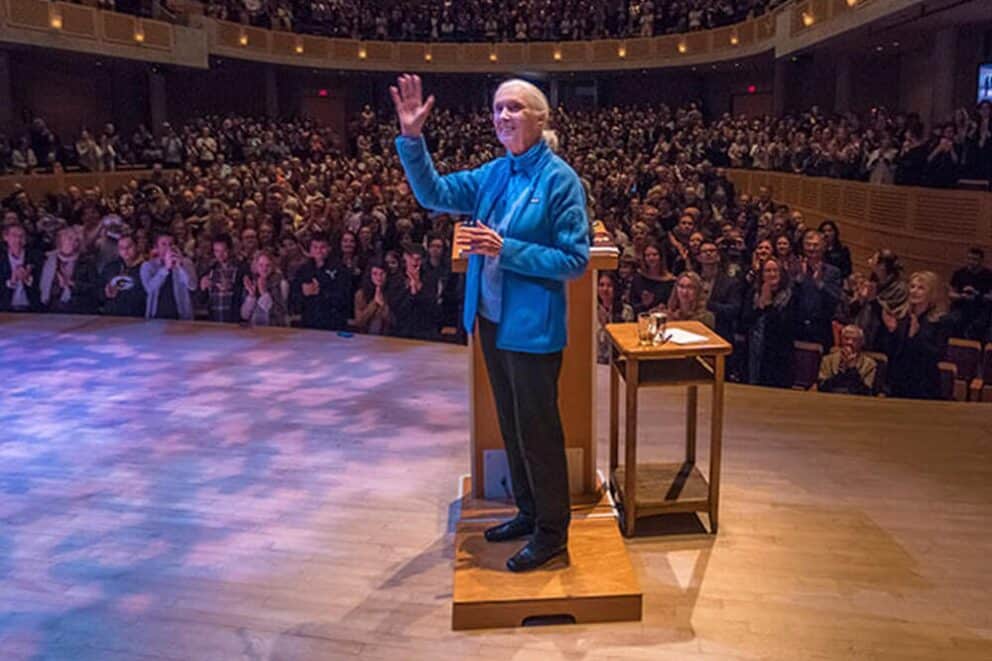
Dr Goodall liked to say that real change happens when we work with people. The Jane Goodall institute embodies that, partnering with local leaders, schools and governments to protect forests and improve lives. They use science – satellite imagery, long-term monitoring, and health and education metrics – to guide decisions and support law enforcement against trafficking. Crucially, the organisation also reduces the root drivers of poaching by creating lawful, dignified alternatives.
Roots & Shoots brings the same philosophy to youth, allowing classrooms to become launchpads for community projects. A recycling initiative links to clean-up days, which link to tree-planting, which links to deeper questions about waste and water. Young people learn that their choices ripple outward. In this way, The Jane Goodall institute and Roots & Shoots are less about a single species and more about a way of living – practical, hopeful, contagious.
See Dr Goodall’s Impact With Your Own Eyes
If you want to experience the living legacy of Jane Goodall in Africa, consider these paths:
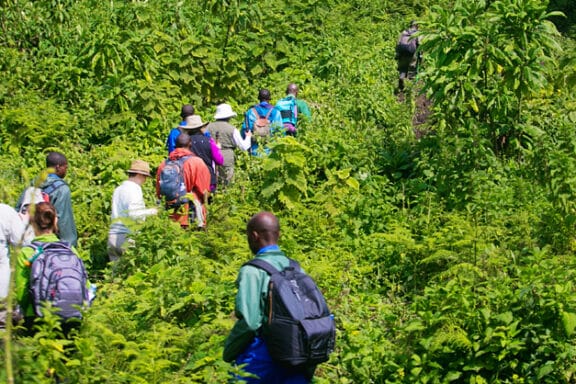
- Gombe National Park, Tanzania: With strict permits and expert trackers, travellers can trek to observe habituated groups at a respectful distance.
- Mahale Mountains National Park, Tanzania: Accessed by boat along Lake Tanganyika, Mahale offers a different forest and a different rhythm, with high standards of guiding and conservation practice.
- Sanctuary support and responsible travel: While most are not tourist attractions, many accept donations or have limited, carefully managed educational visits. Ask about welfare standards, release policies, and community programmes before you go.
- Lodges and operators that align with Goodall’s values: Look for evidence of long-term community partnerships, local employment, science-led wildlife management and transparent conservation fees. Responsible travel, practised at scale, is part of the solution.
In all cases, ethical primate viewing means small groups, quiet behaviour, no physical contact, and deference to park regulations. The goal isn’t to “tick off” an encounter; it’s to witness a thriving forest and ensure it remains thriving after you’ve left.
How You Can Continue Her Mission
Dr Goodall’s message never shied from the facts: forests are falling, climate change is accelerating, and species are under pressure. Her legacy tells us what to do next:
- Protect habitat. Support organisations and policies that keep forests on the ground.
- Back local leadership. Choose projects and partners that invest in people’s futures alongside wildlife.
- Use your influence. Parents, teachers, businesses, travellers – each can move a lever in their own sphere, from reducing demand for wildlife products to funding education and health.
- Teach the next generation. Goodall built Roots & Shoots because she believed young people are natural problem-solvers. Help them start, and then get out of their way.
Looking Ahead
The story of Jane Goodall is not only about a scientist who revealed the minds of chimpanzees; it’s about a person who insisted on the dignity of all living things – and our responsibility to act accordingly. That is why she mattered, and why she still does. The forest is not quiet without her. It carries her work forward.
What should we do with her legacy? Keep going! Support the teams who are already at work, travel in ways that sustain the places you visit, and tell better stories about nature – stories rooted in respect and evidence. And, when you think of Jane Goodall, remember that the line between “us” and “them” is thinner than we were taught.

Written by Micky Baker
• Travel Writer
Discover the African Journey that’s Right for You
 Blog List
























Written by Micky Baker
• Travel Writer
Part of the East Africa Safari Collection