

 Email us




South African National Parks (SANParks) has released encouraging results from the June 2026 annual African penguin census conducted at the Boulders Beach colony in Simon’s Town.
The census recorded 790 breeding pairs of African penguins, showing a positive rise from the 698 pairs in 2025. This means that the Boulders colony now supports approximately 2,528 individual penguins, making up roughly 8-9% of South Africa’s total population.
The survey was conducted using standardised international methods by a collaborative team that included SANParks, the Department of Forestry, Fisheries and the Environment (DFFE), the City of Cape Town, Cumic Rangers, SANCCOB, and local volunteers.
While the species still faces immense global pressures – with fewer than 10,000 breeding pairs remaining in the wild overall – and a single year’s increase doesn’t mean a full population recovery, this trend offers a welcome sign of resilience and stability for Cape Town’s iconic birds.
And, continued efforts – including indigenous shrub planting – are underway to encourage this positive development
1,000 Indigenous Shrubs Planted at Boulders Colony
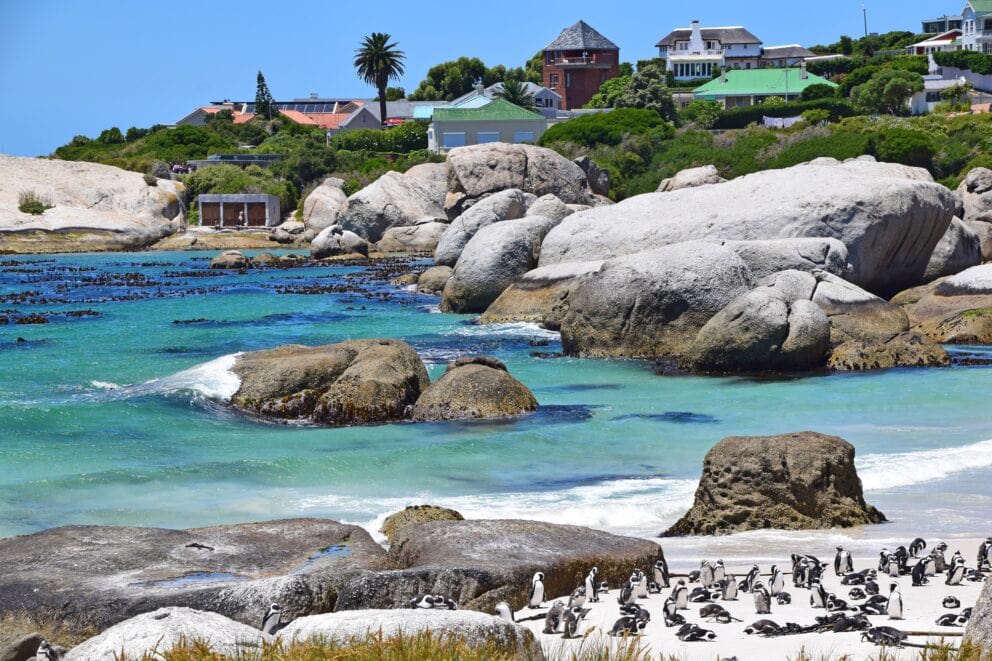
In a continuous effort to safeguard the habitat of the critically endangered African penguin, SANParks, alongside the SANParks Honorary Rangers (Table Mountain Region), has launched a major vegetation restoration project at the Boulders Penguin Colony in Table Mountain National Park.
Teams have replanted 1,000 Tetragonia decumbens (commonly known as dune spinach or sea spinach) shrubs across the Boulders colony to help restore the colony’s natural habitat. According to conservationists, this will contribute to a healthier, more resilient environment that helps support African penguins and other coastal wildlife.
The seeds were harvested directly from Boulders and carefully germinated at the Cape of Good Hope Nursery prior to replanting. These indigenous plants act as natural anchors that bind and stabilise coastal sand dunes, curtailing severe soil erosion and allowing other coastal fauna to thrive.
Meet the Most Famous Penguins in Africa
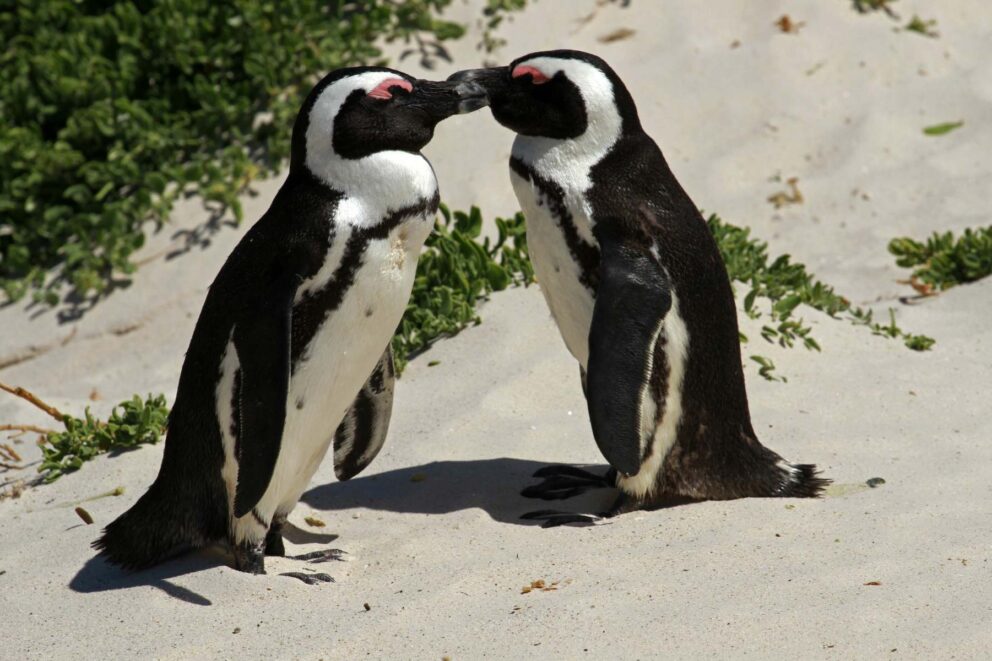
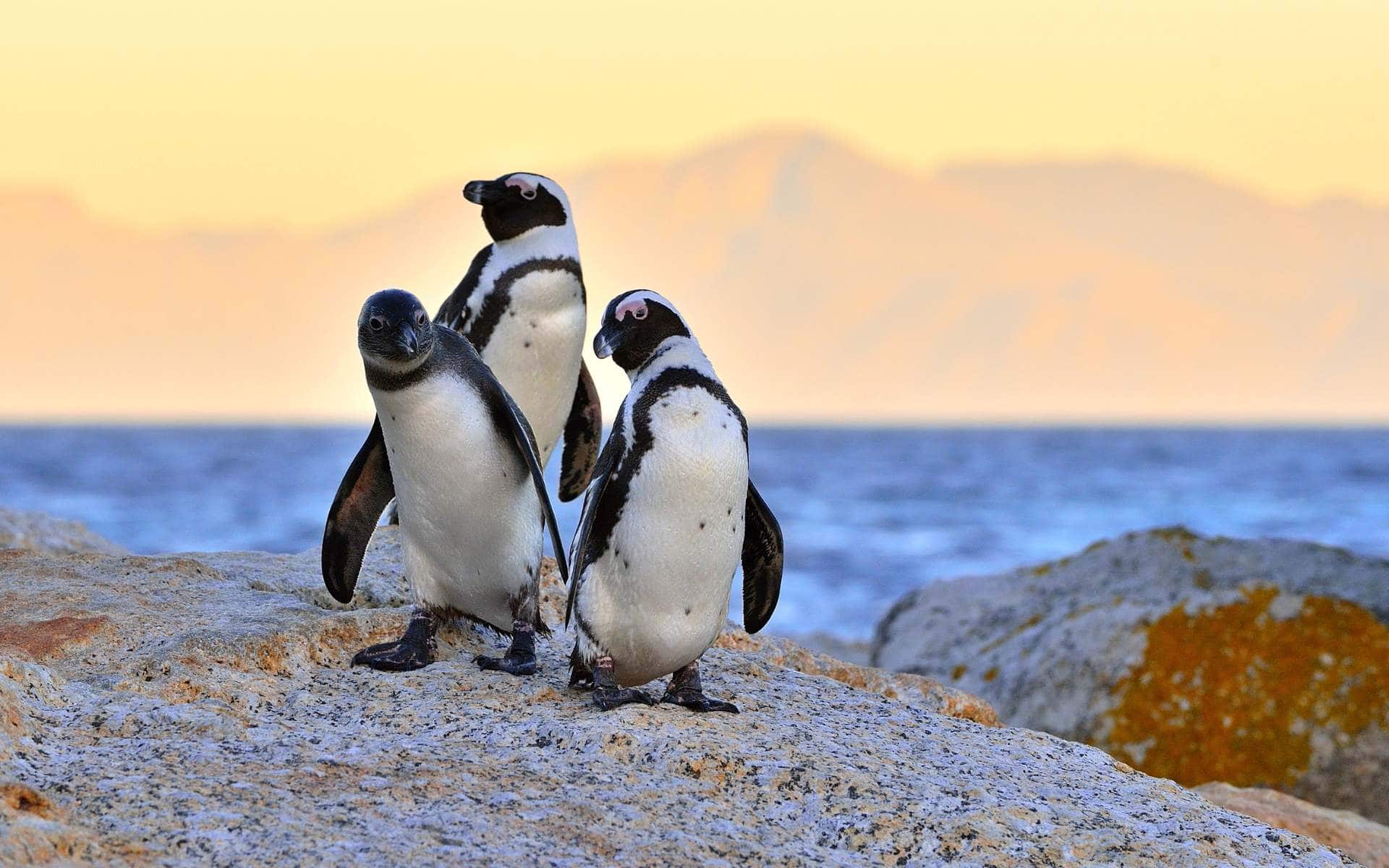
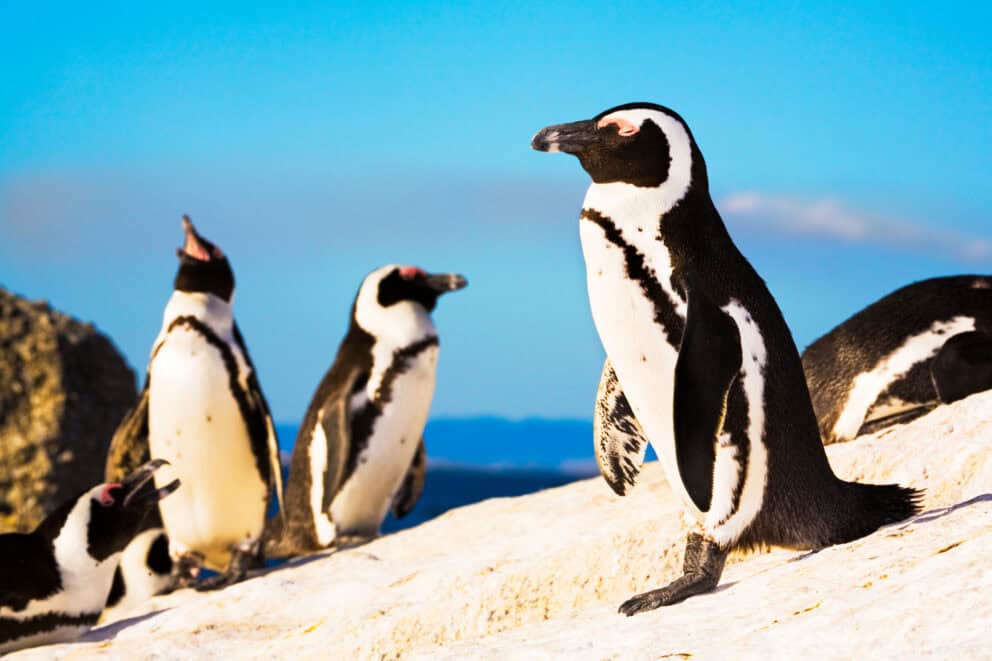
Of the planet’s 18 penguin species, only one is found in Africa: the iconic and adorable African penguin. These tuxedo-clad, slick-feathered seabirds are instantly recognisable by their pink eye patches and distinctive black masks. Seeing them in the wild is an unforgettable experience for the whole family, especially given their critically endangered status.
These well-dressed South African penguins stand at about 70 cm tall and can weigh up to 3.5 kg/7.7 lbs. They’ve traded flight for supreme swimming abilities, diving up to 130 m/426 ft deep for up to four minutes to hunt for food.
If you want to see them in action, consider a marine safari. You might catch a glimpse of a group of them floating together at the surface in a raft. They bob tightly together, which helps them stay safe from ambush predators lurking below.
If you visit during the breeding season, you’ll quickly find out why they were historically nicknamed the “jackass penguin” – they communicate with an incredibly loud, donkey-like bray that kids and adults find equally hilarious.
Even sweeter? These famous penguins are monogamous and partner up for life, returning to the exact same nesting sites year after year. They use these unique vocalisations to locate and recognise each other among other birds.
Mapping the African Penguin Habitat: Where Can You See Them?
If you’re planning a journey to connect with these dapper birds, you might wonder exactly where the penguins are in South Africa. While the coast might be the obvious answer, you’ll find them concentrated in specific colonies along the South African and Namibian coasts.
The main colonies include:
- Algoa Bay (Bird Island) – Historically the largest colony. It’s the second largest colony in South Africa, protecting roughly 1,722 birds.
- Dassen Island – Just off the West Coast near Yzerfontein. It currently holds the largest single colony of African penguins in the world, with over 2,000 breeding pairs.
- Robben Island – Just offshore from Cape Town. You can reach it by a boat tour from the V&A Waterfront. Along with its historic significance, it also supports roughly 931 breeding pairs.
- Dyer Island – Located near the whale-watching hotspot Gansbaai, this island also sits in a heavily dynamic marine zone and supports 903 breeding pairs.
- Stony Point (Betty’s Bay) – a beautiful mainland colony looked after by CapeNature. It is one of the largest mainland populations, with roughly 1,200 breeding pairs nesting among historic whaling station ruins.
- Boulders Beach (Simon’s Town) – The world-renowned South African penguin beach. Interestingly, penguins only chose to start settling here in the 1980s, but it has quickly become the most popular and impactful place for their conservation and awareness.
If you want to see them out at sea, consider a marine safari from Simon’s Town, Cape Point, Hermanus, or Gansbaai. No sighting is guaranteed, but there are still many opportunities to see other marine wildlife and pelagic birds like Cape fur seals, sharks, dolphins, and whales (seasonal).
Understanding the Threat: A Man-Made Crisis
To truly connect with the story of penguins in Africa, we have to honestly look at the challenges they face. Towards the end of 2024, the International Union for Conservation of Nature (IUCN) officially uplisted the species from “endangered” to “critically endangered”.
Over the past few decades, there has been a devastating 97% decrease in their historic population. BirdLife International bluntly calls it a “man-made disaster”, driven by a severe lack of food. Climate change and intense competition from commercial fishing have depleted their main diet of sardines and anchovies right around their primary breeding grounds.
Today, fewer than 10,000 breeding pairs remain, with an estimated functional extinction by 2035. Although several conservation efforts have been working extensively to curb this decline, without a drastic intervention, there could be a catastrophic loss for our marine ecosystem. It would also deeply hurt South Africa’s ecotourism and the local communities that depend on it.
The Fight for the Future of African Penguins
Thankfully, passionate people are refusing to let these famous penguins slip away. Currently, the government enforces “no-take zones” around major colonies to block commercial fishing and preserve fish stocks. However, conservation groups argued that the zones didn’t overlap enough with where the penguins actually hunt.
To fix this, in 2024 BirdLife South Africa and SANCCOB teamed up to take legal action against the government. They successfully secured a landmark court-ordered settlement in 2025 to protect African penguins, with the agreement establishing a ten-year no-catch zone for commercial sardine and anchovy purse-seine fishing around six major penguin breeding colonies to reduce competition for food.
Simultaneously, global organisations like the Blue Marine Foundation have partnered with local trailblazers – like marine conservationists and filmmaker Zandi Ndhlovu – to create moving short films that share this vital story with the world.
Travelling Consciously: How Your Family Can Protect the Penguins
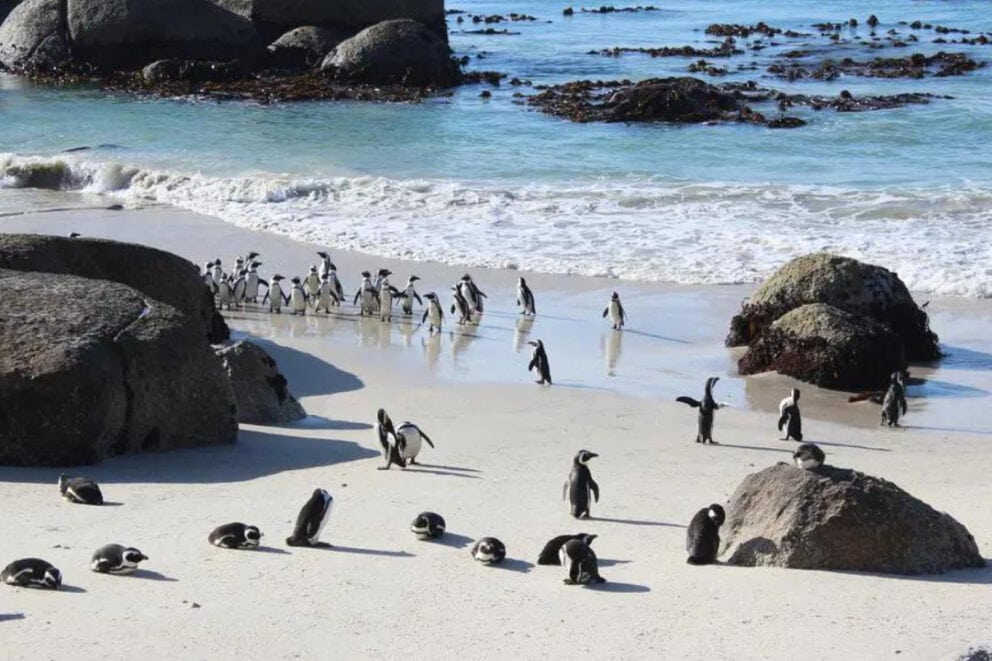
When you take your children or grandchildren to stand on Simon’s Town’s famous Boulders Beach, or any of the other African penguin habitats, you’re stepping into a fragile sanctuary. Responsible tourism is one of the most powerful tools we have to protect them.
Here is how you can ensure your visit leaves a purely positive mark:
- Keep a Respectful Distance: Social media is full of people getting too close or trying to feed them – please don’t follow their lead. Keep a safe distance to avoid causing them unnecessary stress or exposing them to devastating illnesses like avian flu.
- Follow the Rules: Stay on the designated boardwalks and look out for the educational signage placed around Boulders Beach by SANParks or Betty’s Bay by CapeNature.
- Become an Advocate: Use your voice! Share what you’ve learned on social media, support the Blue Marine Foundation, or sign the global petition to expand marine protections.
By teaching the next generation to respect these incredible creatures from a distance, we ensure that the story of the African penguin continues to be written for decades to come. Every little bit helps! After all, if Cape Town was to lose one of its most beloved wildlife attractions, it would be a tragic day for locals and tourists alike.

Written by Thaakiera Ackerdien
• Travel Writer
Discover the African Journey that’s Right for You
 Blog List
























Written by Thaakiera Ackerdien
• Travel Writer
Part of the South Africa Safari Collection