Email us




Completely hollowed out by urban burnout, Thaakiera found herself presented with an opportunity that felt less like a holiday and more like a profound leap of faith: a multi-day journey across the Lower Zambezi-Mana Pools and Kavango-Zambezi Transfrontier Conservation Areas.
From the stunning riverbanks of Lower Zambezi National Park to the rich forests of Mana Pools, this trip became one of the most spectacular things she has ever done.
This is her story.
I was running on absolute fumes, pushed to my limits by the relentless grind, when I was handed a lifeline in the form of a trip through Zambia and Zimbabwe. Looking at the map, the sheer scale of the proposal felt almost unreal: an ambitious expedition threading straight through the heart of both the Lower Zambezi Mana Pools and the Kavango-Zambezi Transfrontier Conservation Areas (TFCAs).
As someone who is short, not particularly fit, terrified of flying, and highly dependent on an asthma inhaler, stepping onto that plane alone felt monumental. I spent the weeks leading up to the trip worrying that my body and nerves would betray me. But a deep, instinctual part of me wanted to push my boundaries.
I had never travelled alone, let alone to a destination often described as ‘not for beginners’. That on its own made me incredibly anxious. On one hand, I felt a rush of joy at the chance to get away from the office. And on the other, I felt a deep, viscous sense of panic. As I boarded my flight to Lusaka, there was a sense of unknown. I honestly had no idea what to expect. I kept reminding myself that this is what I had been waiting for: a chance to escape to a different world.
The Reality Check in the Zambian Wilderness
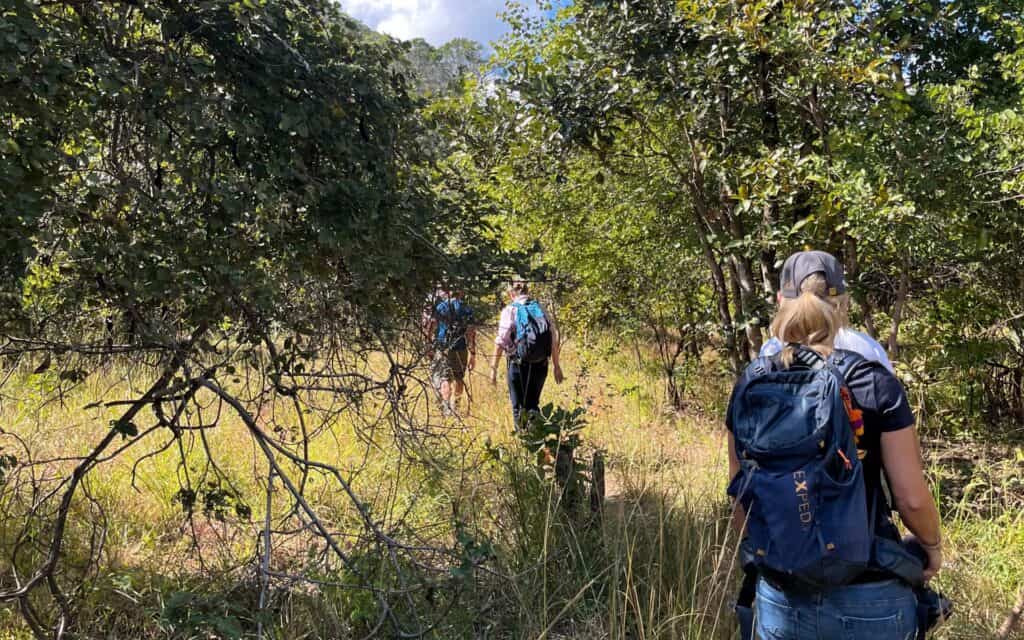
The physical environment of the bush wasted no time in breaking down my defences. After a soft landing in Zambia’s capital city of Lusaka, we headed straight out for a wilderness hike near Mpanshya, a settlement south east of Zambia in the Flamponje Community Forest Area. The trek was led by Ben, a remarkably fast-moving Swiss farmer who had introduced the sustainable art of “holistic grazing” to the local Zambian forests.
Everything in the bush felt so far away from home. Birds, monkeys, and what seemed to be millions of butterflies mostly populated this foresty area; it felt like a release. Gone were the endless deadlines and notifications of urban living. I had found my escape, finally, in the depths of the wilderness, where there was no Wi-Fi for miles.
The physical element was challenging, and I at times cursed myself for not being fit enough. But it was worth it. The trails around Mpanshya were gorgeous. Winding gravel trails covered in swaying woodlands, accented by trickling streams and endless birdsong. The air was clean, and all was still except for the gentle breeze that ruffled through the thick canopies.
We settled in front of a warm, crackling fire, with a braai going – a hearty meal after a day spent exploring forgotten woodland trails. This is the spirit of the safari, it seemed. No matter where you go in Africa, there is always a reflection hour. Time spent with your fellow travellers reminiscing about the day gone by. I only listened to my travel companions, finding I had little to add to their tales of adventure. It sounded wonderful, though, and I found myself dreaming of when I too could tell adventurous tales around the orange glow of a fire.
I had found my escape, finally, in the depths of the wilderness, where there was no Wi-Fi for miles.
That night, I climbed into my tent. My body was a bit sore from the physical exertion of the hike. But I was happy to be there.
Deeper into the Zambezi
As we drove deeper into the Lower Zambezi, the landscape began to cast a strange spell on my mind. Buildings became fewer and farther apart, with more open landscapes and bush nestled in between.
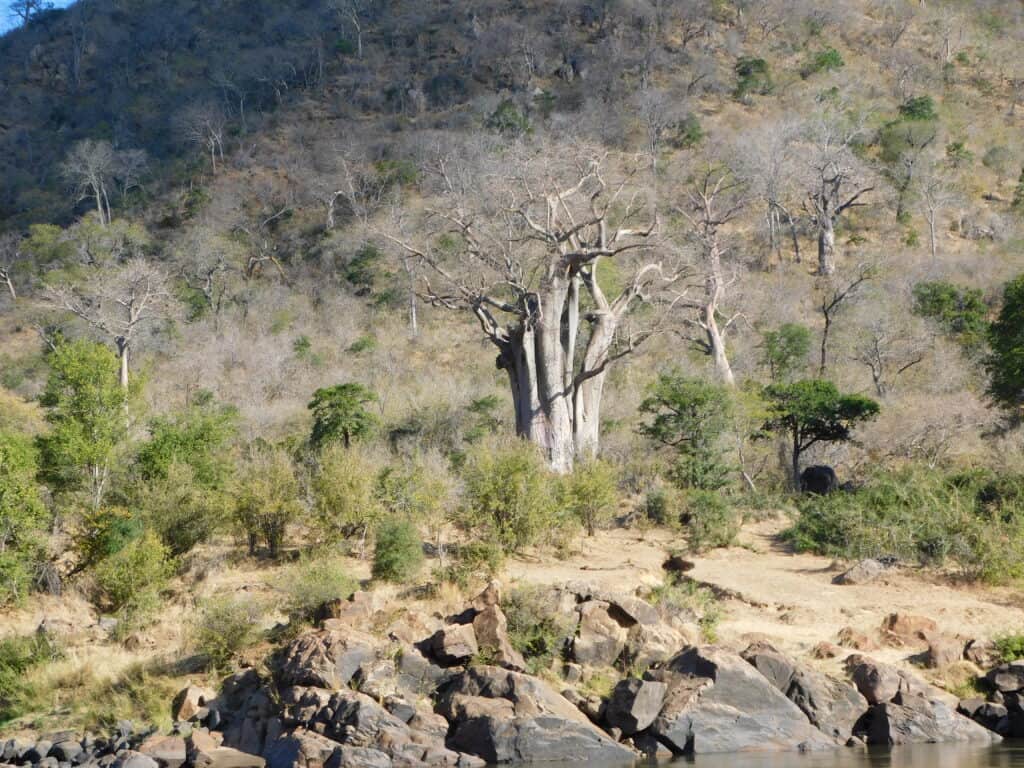
Giant baobabs towered over villages, dominating my view. It was my first time seeing them, and what a sight they are. Wide, swollen trunks as thick as elephants anchor them to the soil like giant wooden fortresses, while their twisted, leafless branches claw desperately at the sky like exposed roots searching for water in the heavens. I see now why they are held in such reverence. It might just be their size and stature alone, or perhaps their otherworldly appearance. Our guides informed us that many of the massive baobabs we saw were between 1,000 and 3,000 years old.
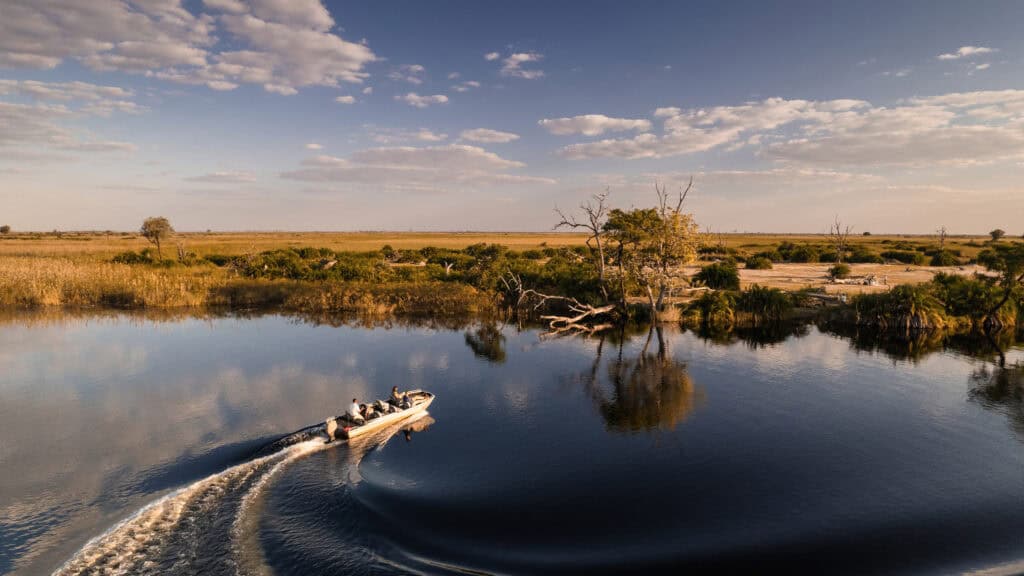
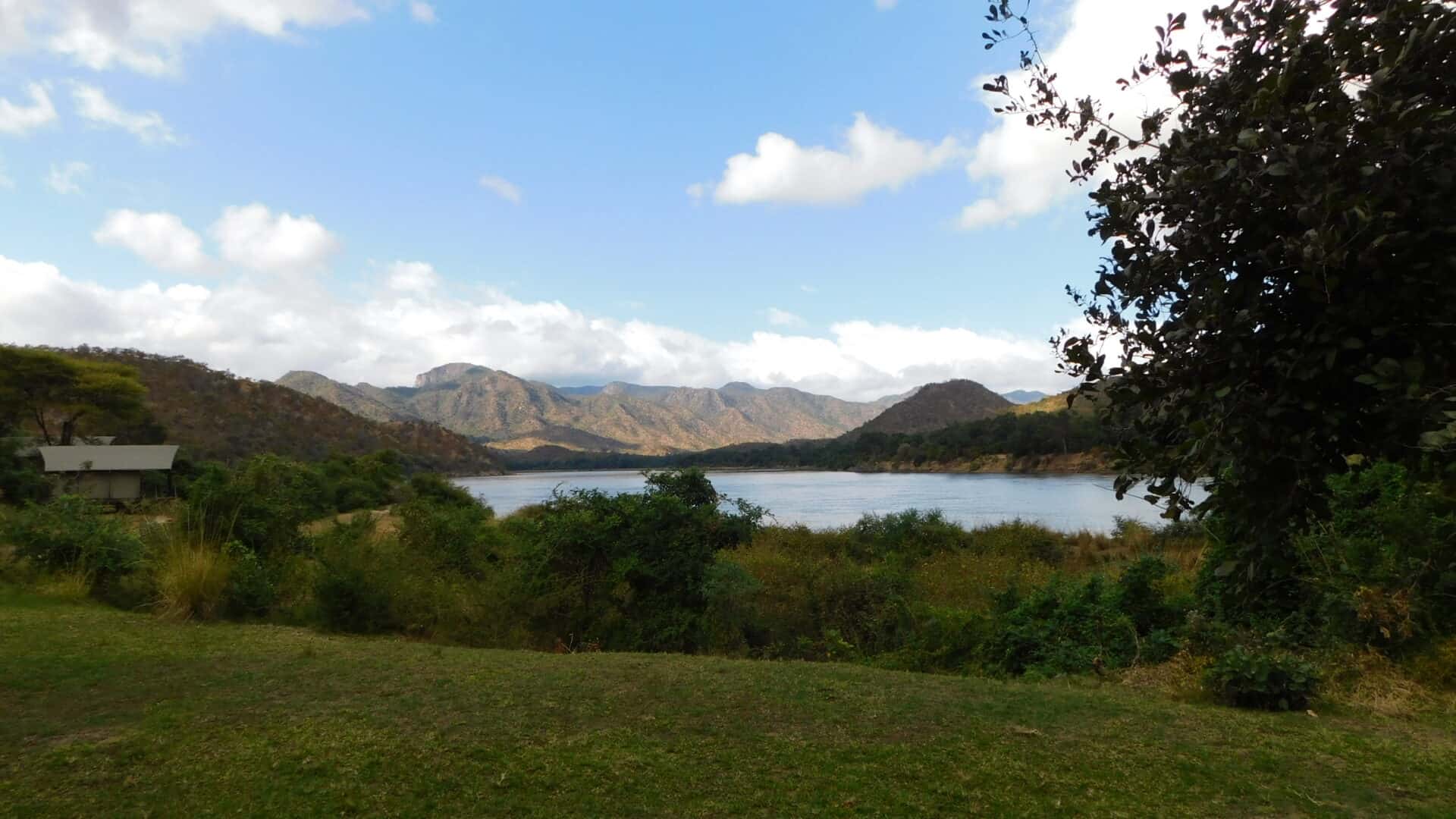
After hours of driving, we finally made it to the Zambezi River bordering Lower Zambezi National Park, our gateway to Mpata Gorge. Our guide promised that there would be plenty of wildlife to see – this is what I had been most looking forward to. I didn’t care much about where I slept; I really just wanted to see the animals.
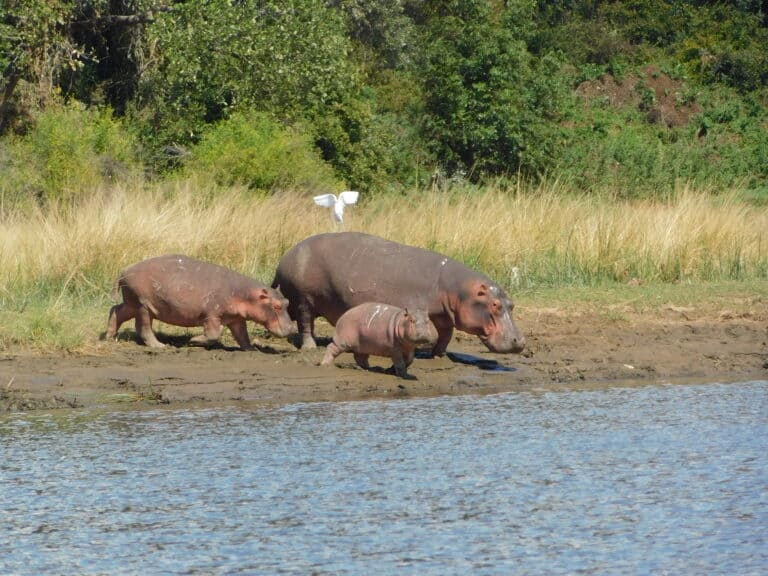
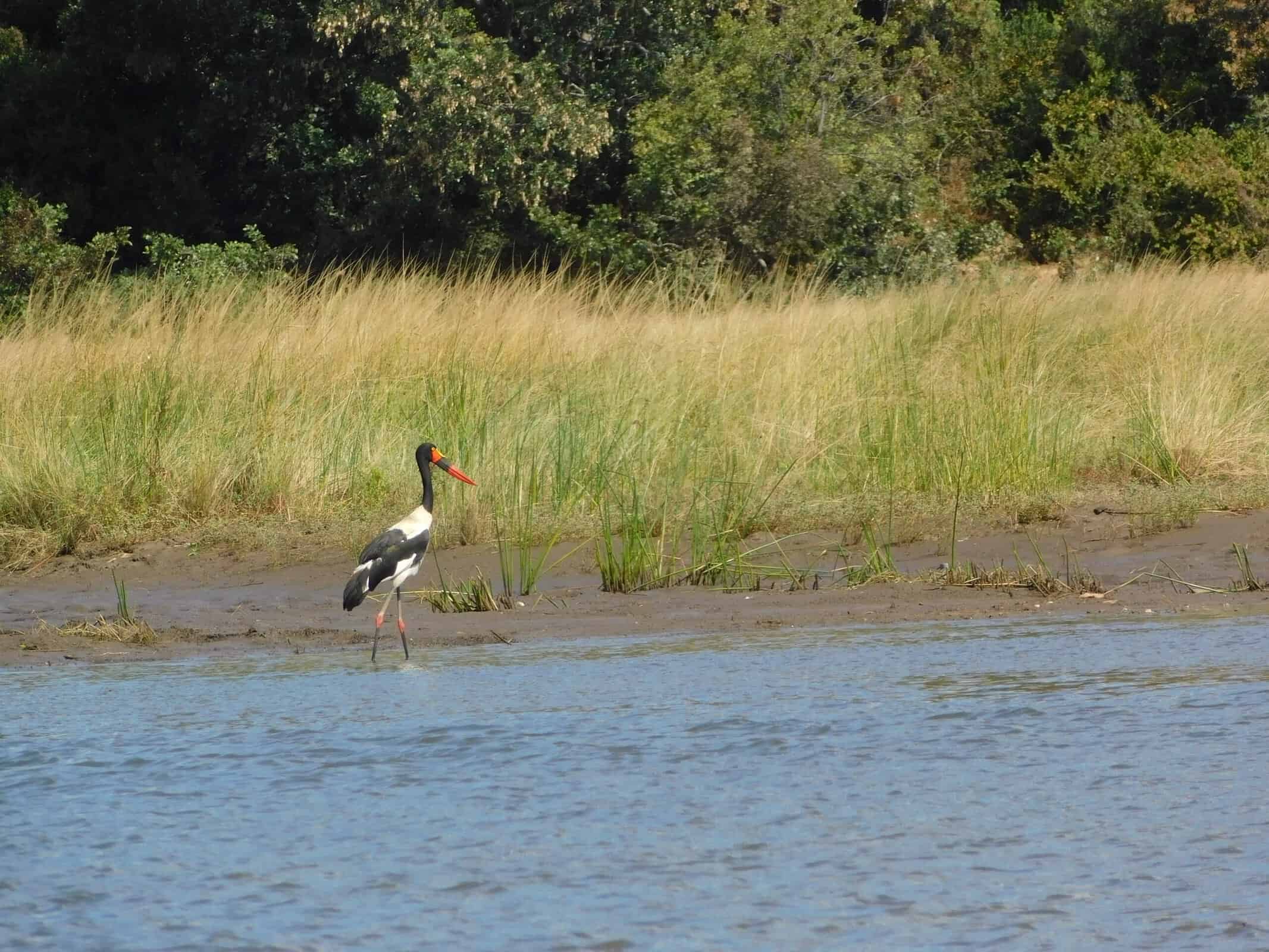
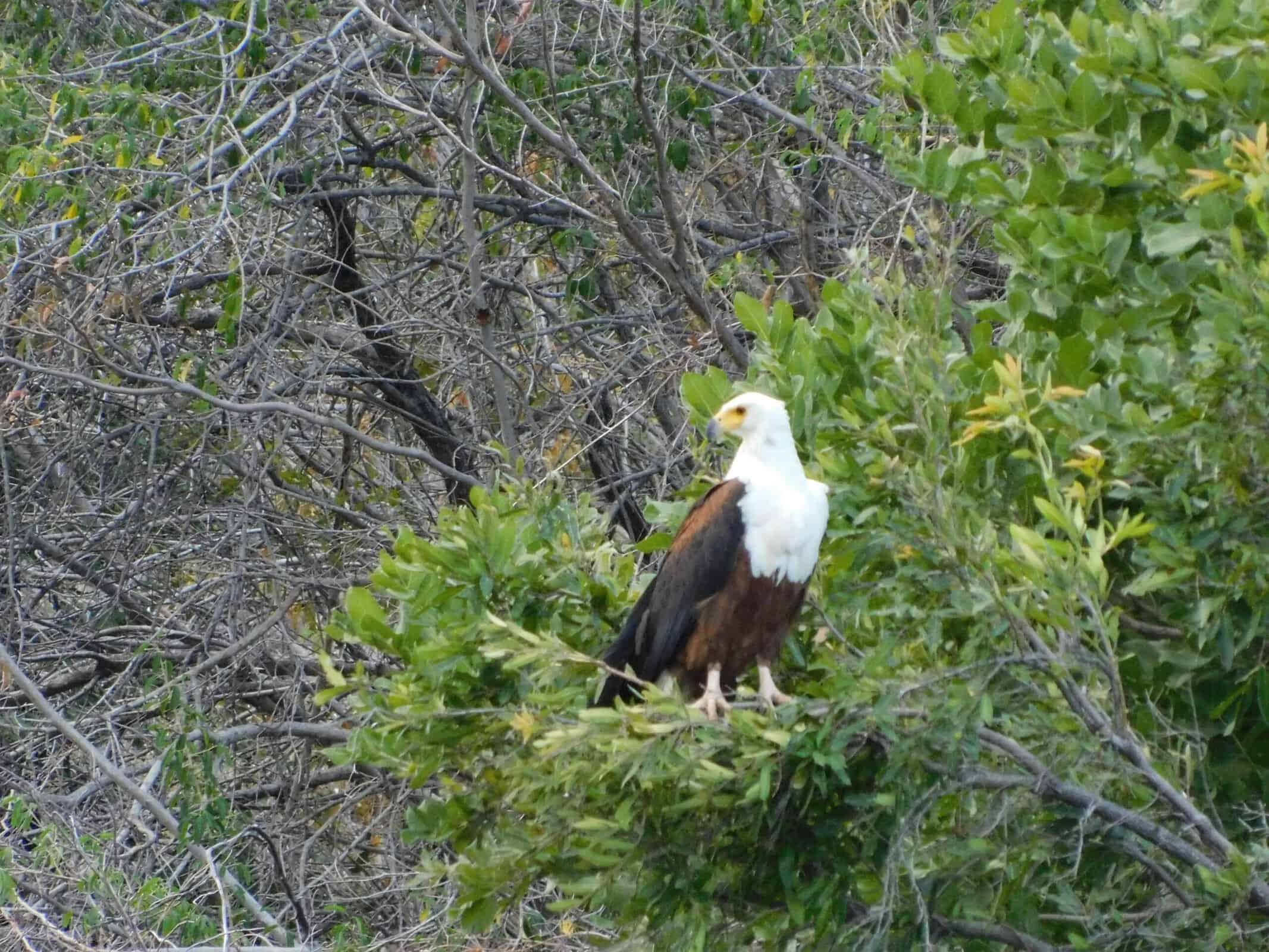
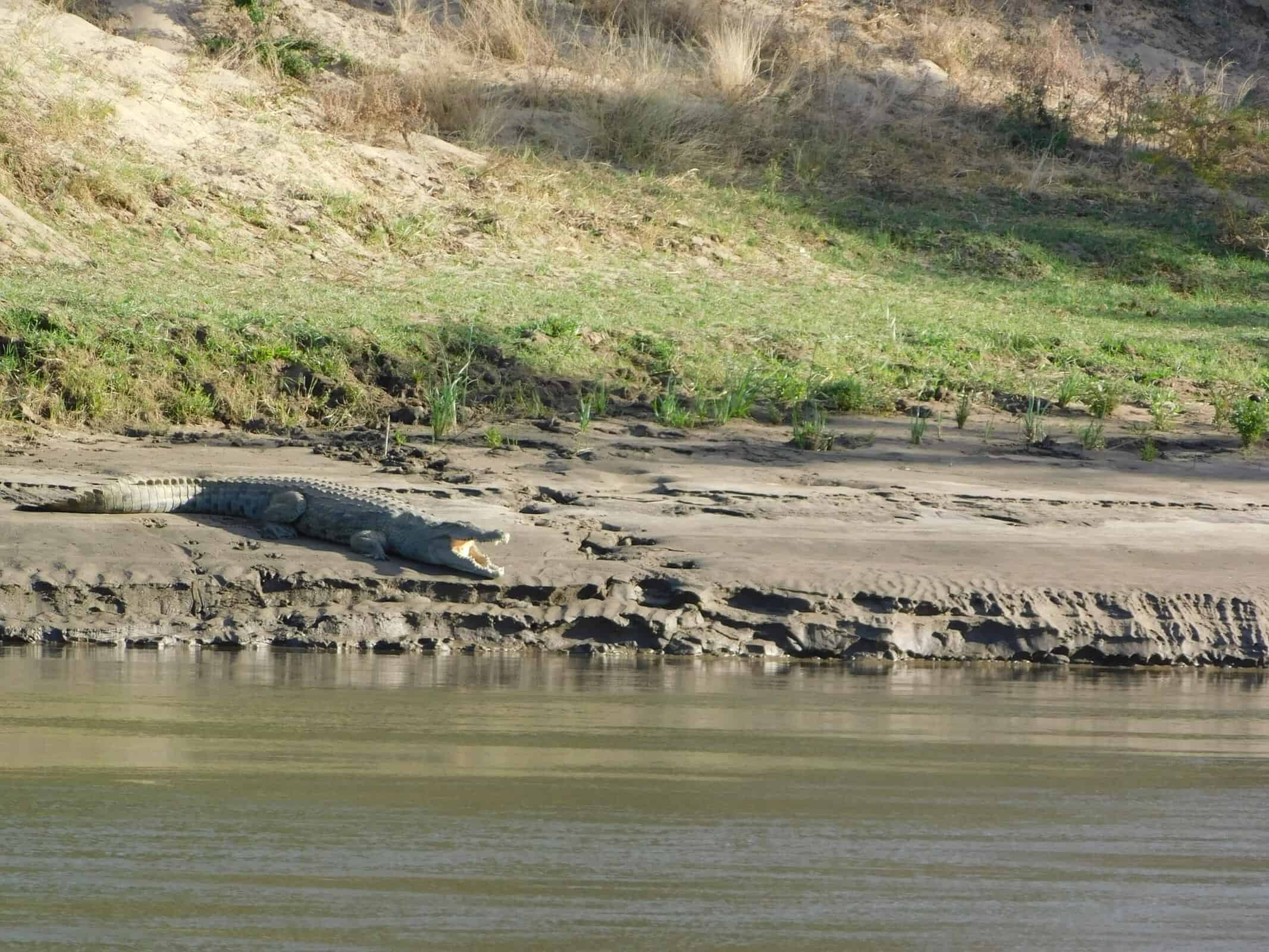
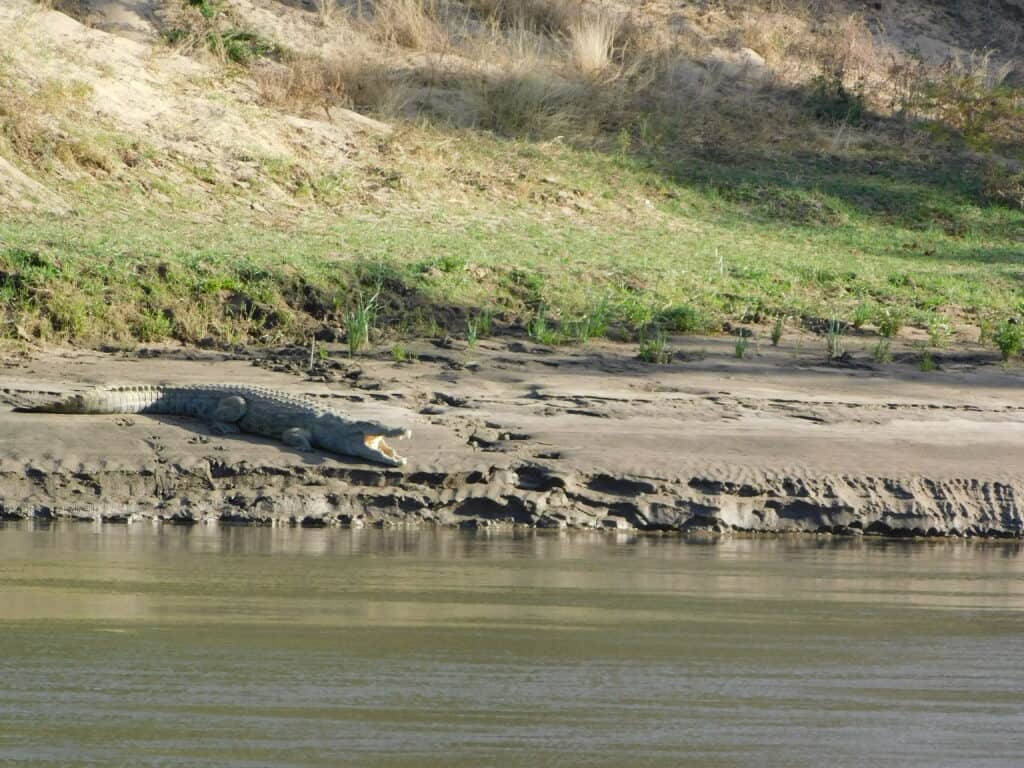
Just off its shores, we saw several hippos basking in the sun or floating in the shallower waters, with just their eyes and ears visible above the surface. Crocodiles, who quickly dove in when we came by in a boat, and many, many birds. Several species of ibises, egrets, African fish eagles, and a couple of saddle-billed storks.
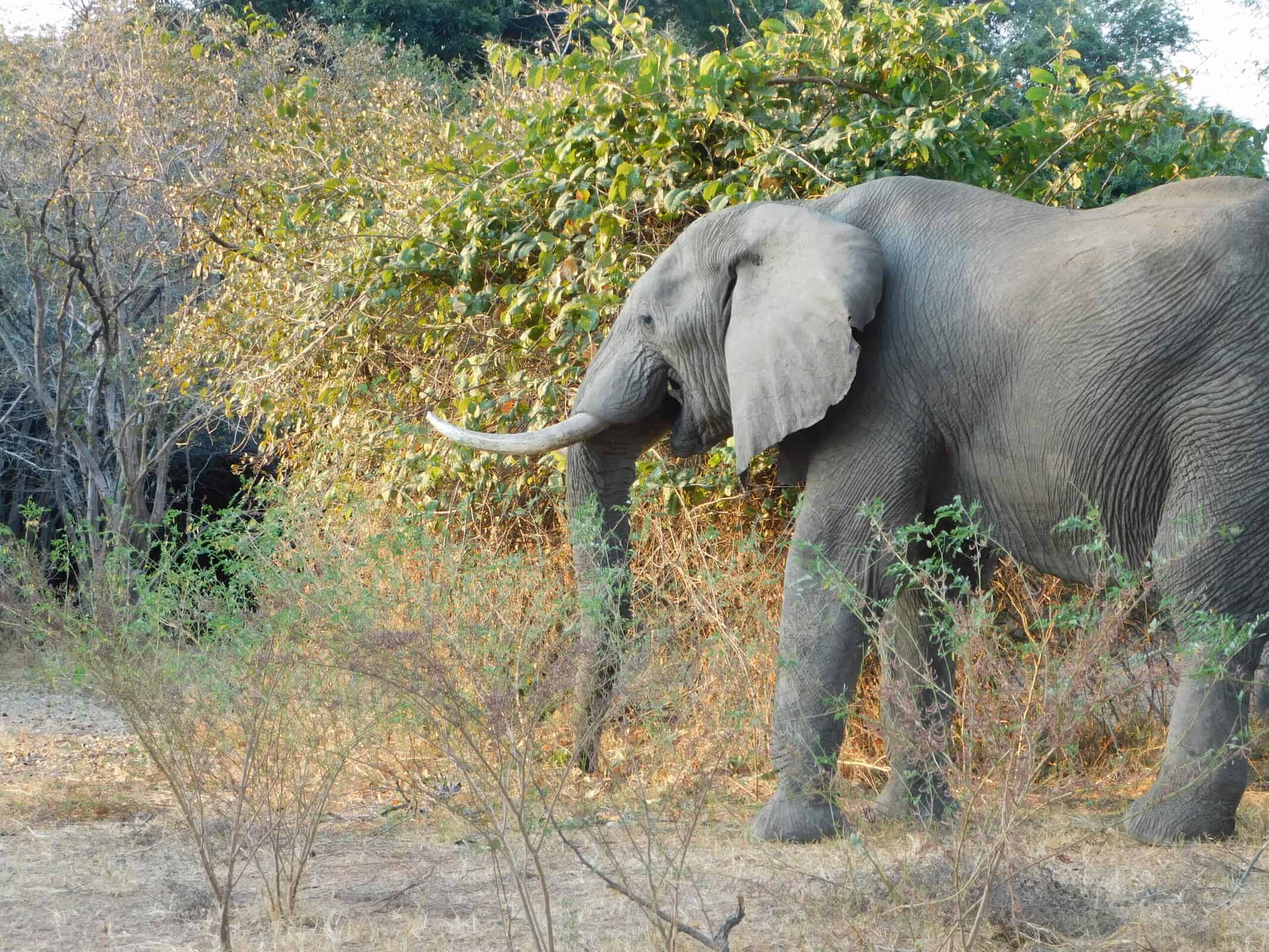
However, my all-time favourite sightings were the elephants, and it was here that I saw them for the very first time. Watching them at the river’s edge is truly captivating. They seem acutely aware of every single thing surrounding them. Our hushed breaths mingled with the silence of the boat bobbing in the river. The gush of a breeze as it moves through the bush and the cool waters tunnelling through the gorge. I found myself transfixed by the calculation and immense intelligence behind their deep, amber eyes, which regarded me with curiosity. Perhaps they could sense my reverence for them.
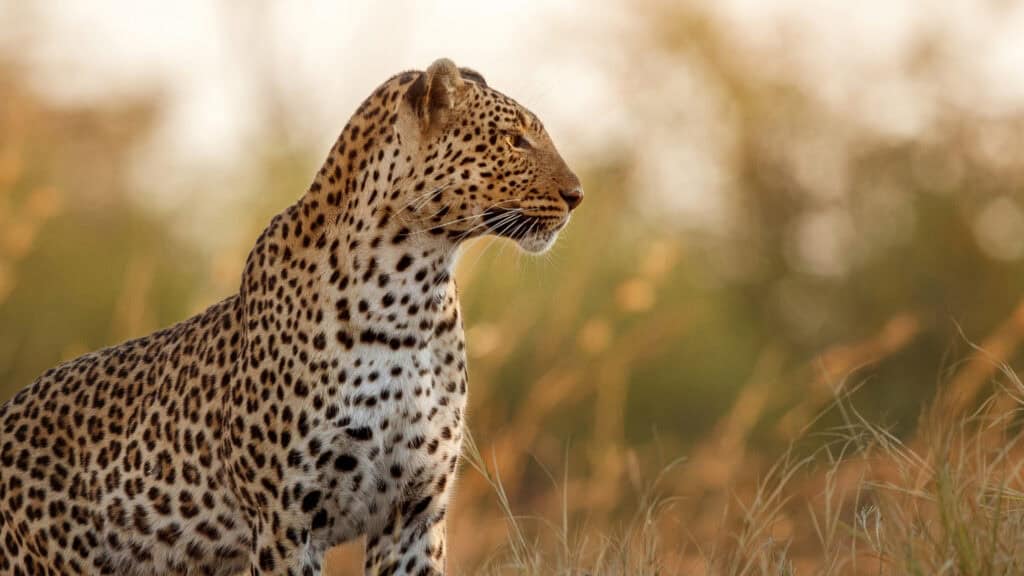
Soon after, on our sunset cruise through the gorge, we even caught a fleeting glimpse of a leopard moving along the riverbank. Although it moved too quickly to capture on camera. I had already seen two of the Big Five! Just three days into my trip.
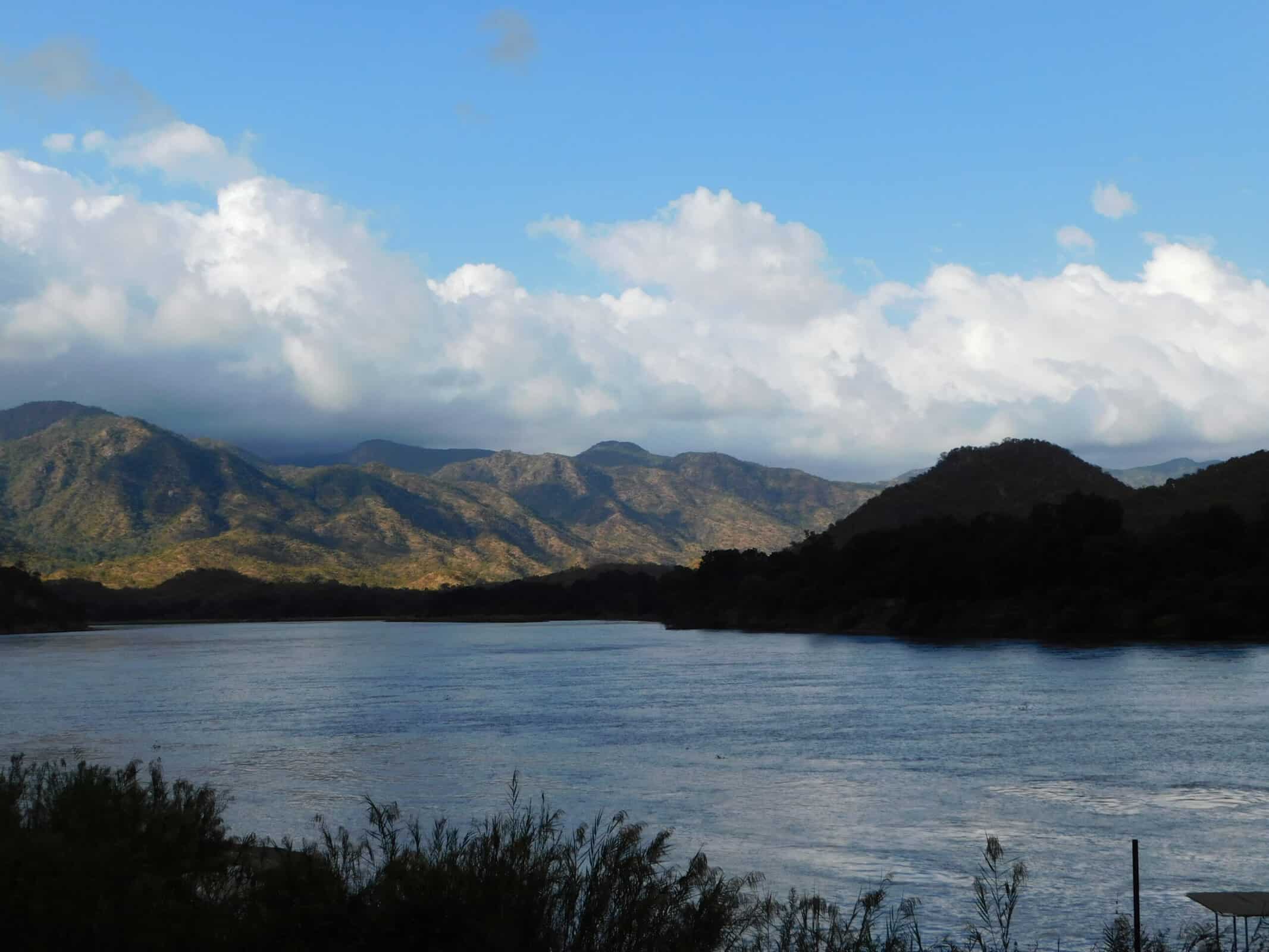
As I would come to learn over the following days, the river was the lifeblood of these lands. It sustains vast wetlands, wildlife, and millions of people – in both Zambia and Zimbabwe – who rely on it for fishing and farming. Moving along its banks in a boat is almost a mystical experience; it feels as if it might even be alive – and it is certainly teeming with life.
Wide, swollen trunks as thick as elephants anchor them to the soil like giant wooden fortresses, while their twisted, leafless branches claw desperately at the sky like exposed roots searching for water in the heavens.
Moving Upstream
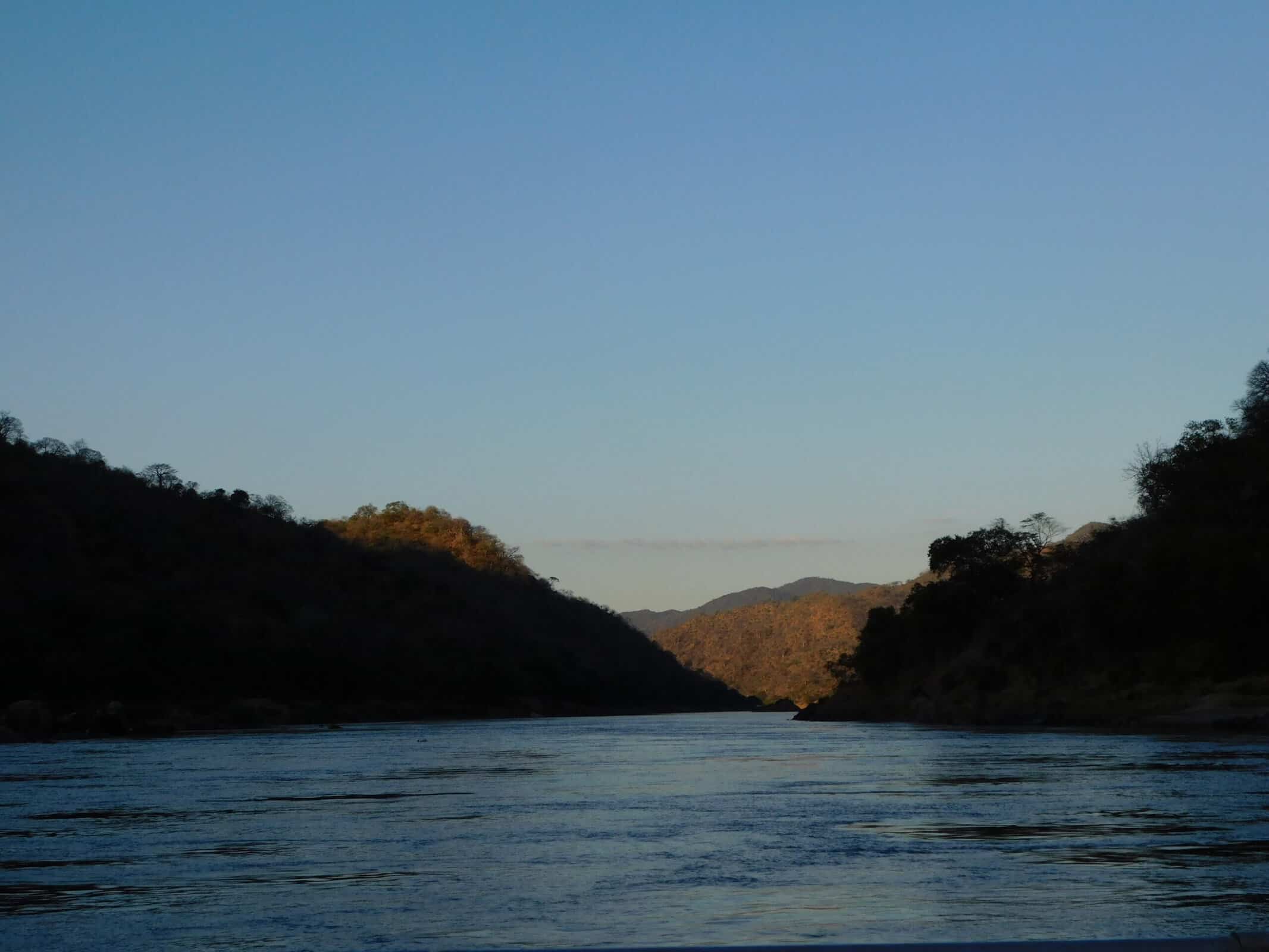
The next morning, still chasing a high from all the sightings, we rose early for a morning excursion upstream to our next pickup point in Lower Zambezi National Park. Once on the water, Mpata Gorge surrounded us. The hills rolled around the water like serpents, littered with the towering figures of ghostly baobab trees, who, by this time of year, had already lost most of their leaves and fruit.
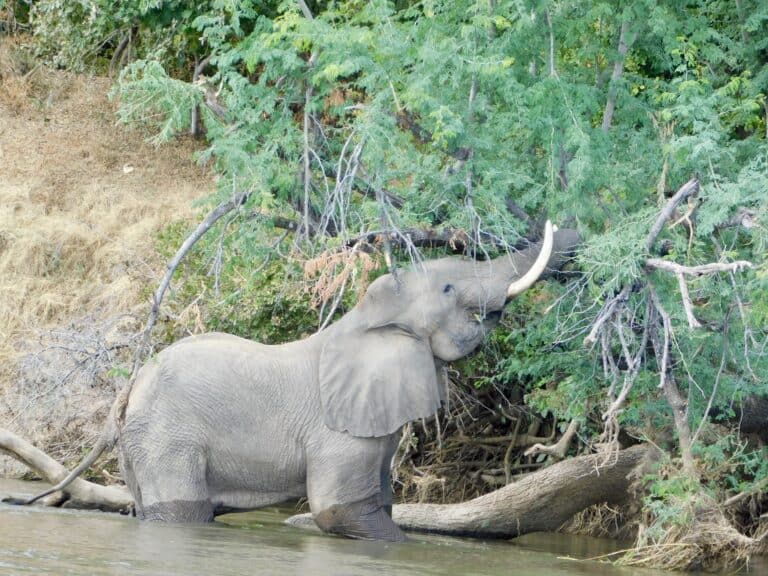
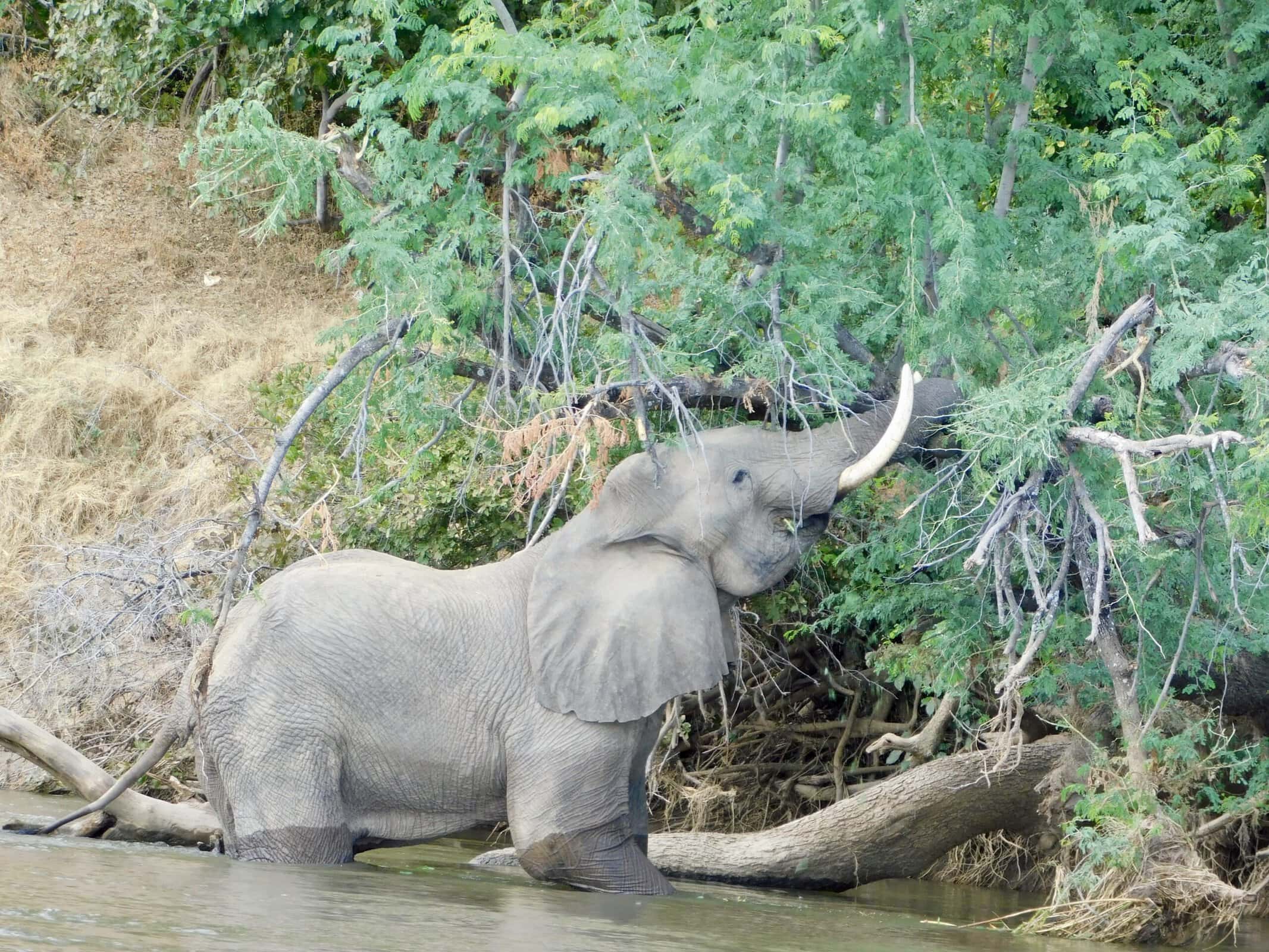
I saw several African fish eagles, whose haunting calls echoed out across the water, and an elephant standing knee-deep in the water, peacefully munching on a low-hanging tree – which I would later learn was the winterthorn, a tree highly favoured by elephants in this region. As we moved along the Zambezi, hippos were a near-constant companion. From what I’ve seen, they seem to be the most abundant creature in the Lower Zambezi-Mana Pools TFCA. At one point, I even remarked that I had seen enough hippos for one lifetime.
Up until now, we had only been on the edge of the wilderness, always near a town or village on the fringe of a national park. But the next few days would see us venture deeper into the wild.
Exploring Conservation Lower Zambezi
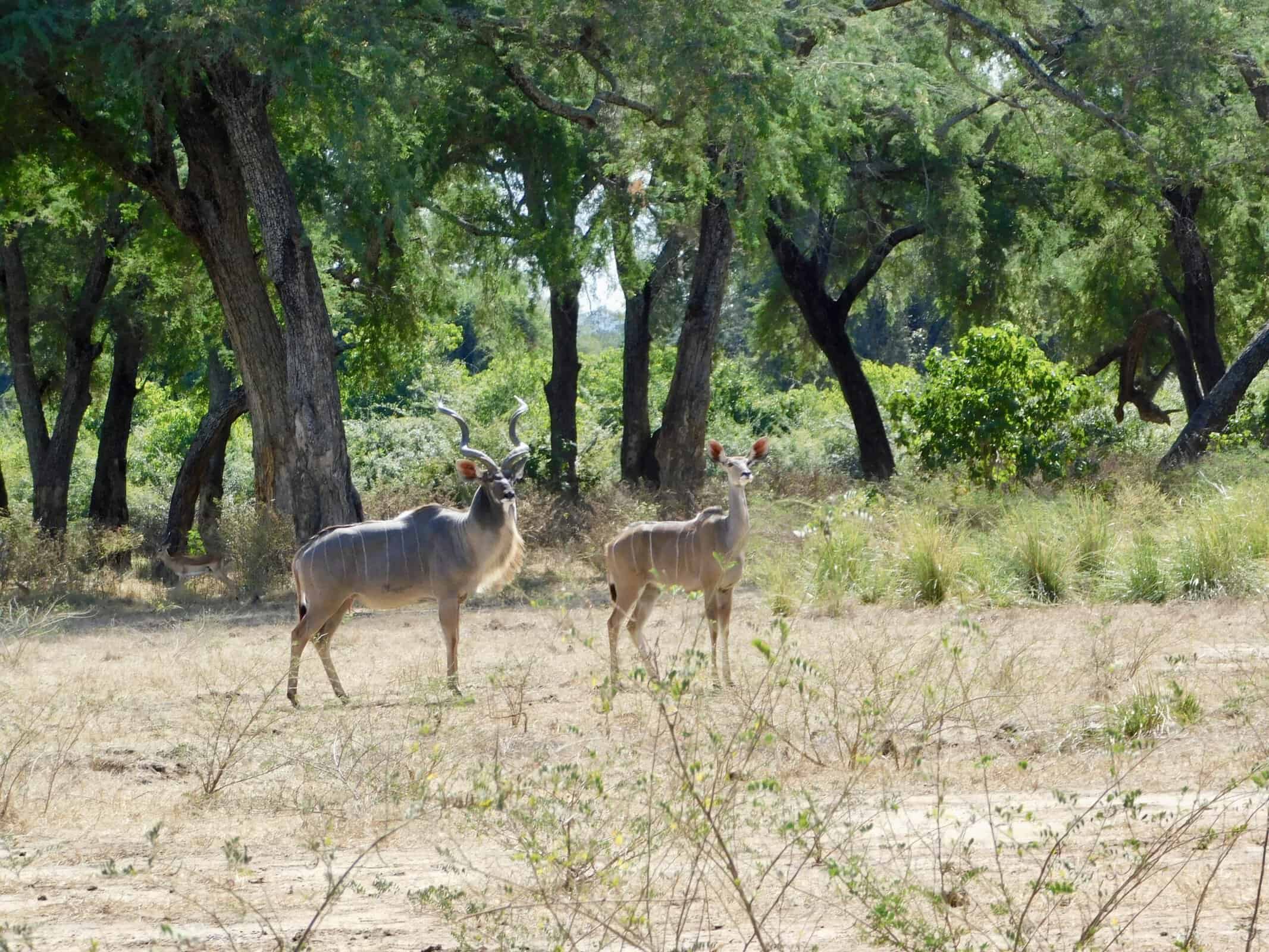
From the water, we headed into the park, where the dusty, bumpy roads took us through winterthorn forests and mopane trees, accompanied by an insane amount of impala and baboons.
Beyond the raw scenery, I immersed myself in the profound conservation work taking place in the area. We spent time learning from Conservation Lower Zambezi (CLZ), a non-profit organisation that has worked tirelessly since 1994 to safeguard the national park and its surrounding Game Management Areas.
In addition to protecting wildlife, CLZ also engages extensively with local communities and schools, educating about 3,500 children a year. During their visits, children and teachers participate in various lessons and activities that focus on conservation, including discussions and debates. It was incredible to see conservation work in action, and I would highly recommend a stop there on your next Zambia safari.
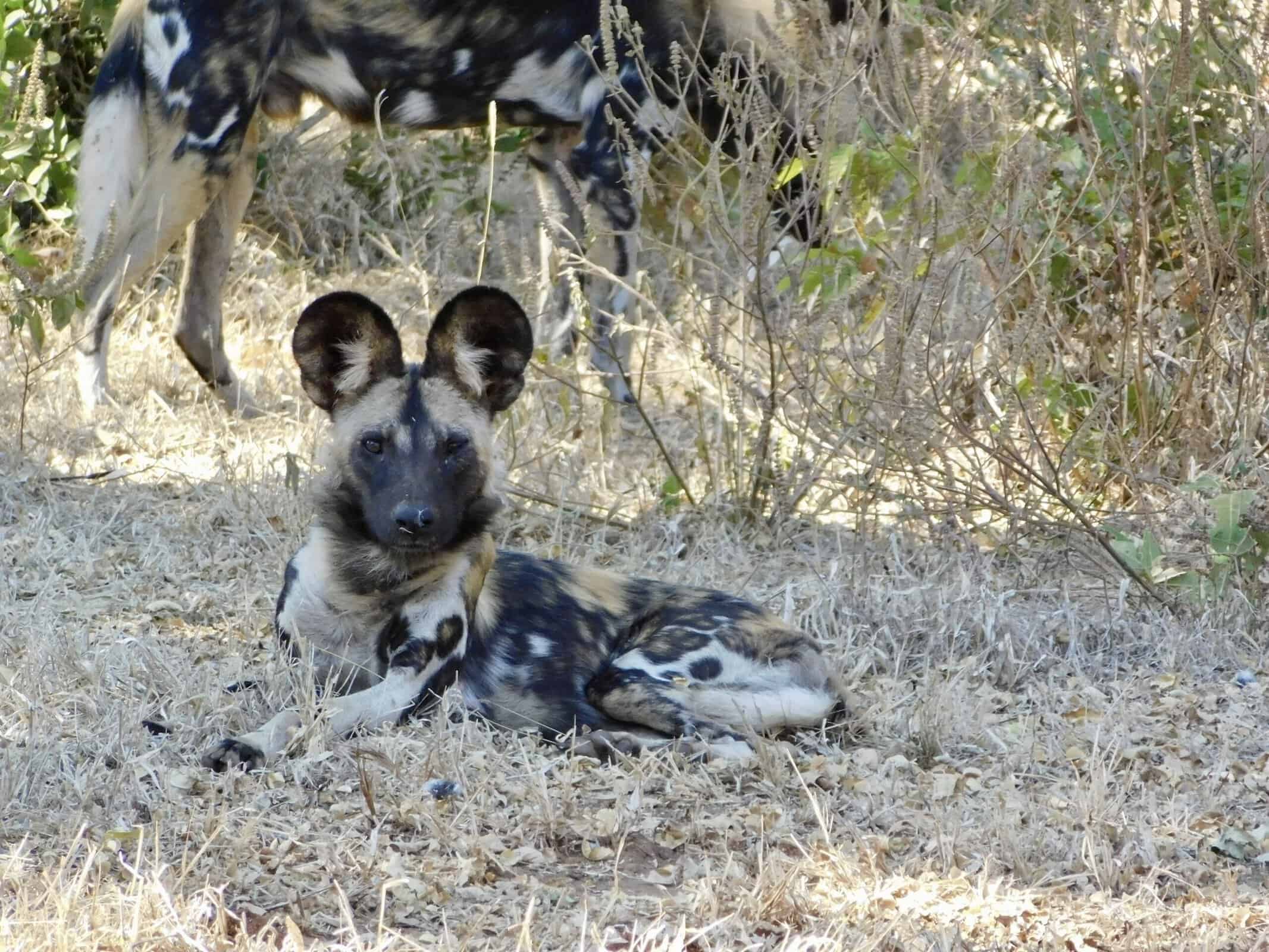
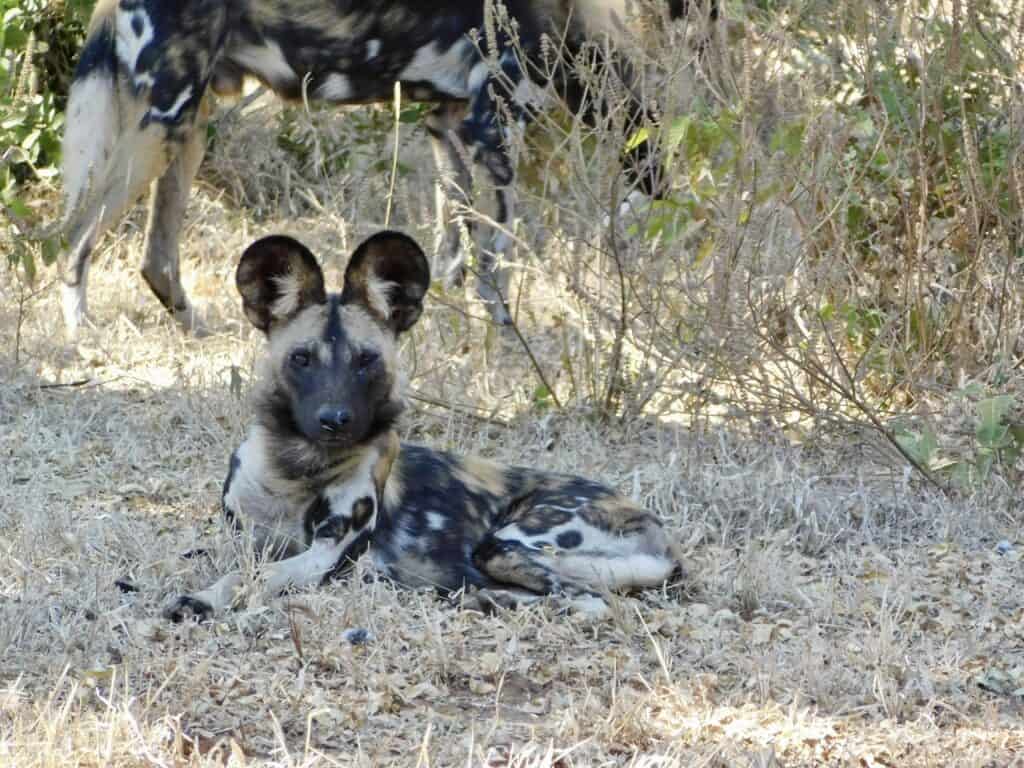
Just outside of their base outside Lower Zambezi National Park, we saw a pack of maybe 20 African wild dogs. Their noses were pink, perhaps from a recent kill, and I had just learnt about their collaring operations the day before, so it was incredible to witness them.
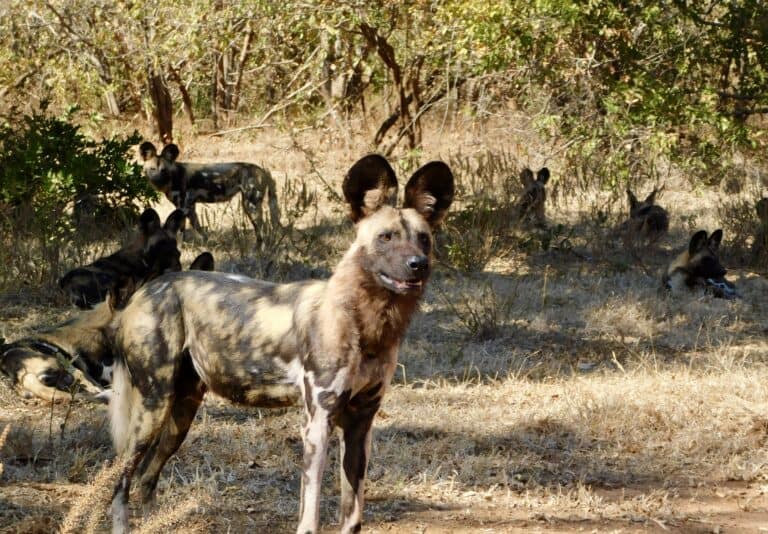
Just a moment before we saw them, the rest of the group told me that wild dogs are an incredibly rare sight given that they’re so endangered. So, it was an absurd stroke of luck that a pack was resting just around the corner. They are truly stunning, yet strange-looking animals. They look as if nature couldn’t decide on a single uniform, instead opting to paint them in an abstract tortoiseshell of mottled black, ochre, and tan. No two of them are alike; each is a walking piece of art.
They rested all together, piled up next to each other, bellies swollen from a recent meal. We sat maybe fifteen minutes with them, just observing and photographing this rare sight. And just as quickly as they appeared, they left. Signalled by their leader to keep moving. One by one, they melted into the bush. The only thing keeping them visible to us was the bright white tip at the ends of their tails.
They look as if nature couldn’t decide on a single uniform, instead opting to paint them in an abstract tortoiseshell of mottled black, ochre, and tan. No two of them are alike; each is a walking piece of art.
Meeting the Rhinos of Matusadona
After a K9 demonstration from CLZ, we eventually crossed the border at Chirundu, leaving Zambia behind to enter Zimbabwe’s Matusadona National Park on the southern shore of the gargantuan Lake Kariba.
Matusadona’s landscapes are defined by their dramatic topography. It’s undoubtedly one of the most visually striking and emotionally charged destinations in all of Africa. Crossing into it is like stepping into a living surrealist painting.
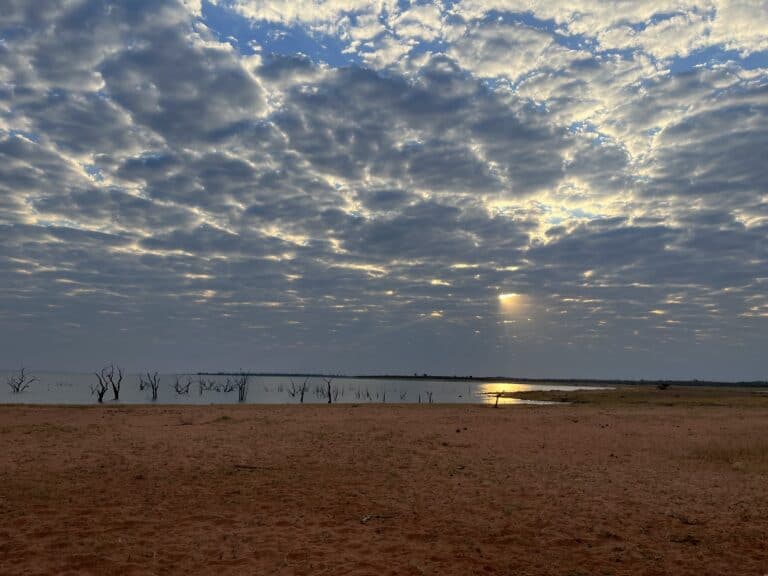
The park is fringed by the sun-bleached waters of Lake Kariba, its edges dotted with a vast, petrified forest of dead trees submerged in the shallows like skeletons. Behind its ghostly shoreline, the earth erupts into life; golden floodplains transition into lush woodlands framed by the rugged silhouettes of the Matusadona Mountains.
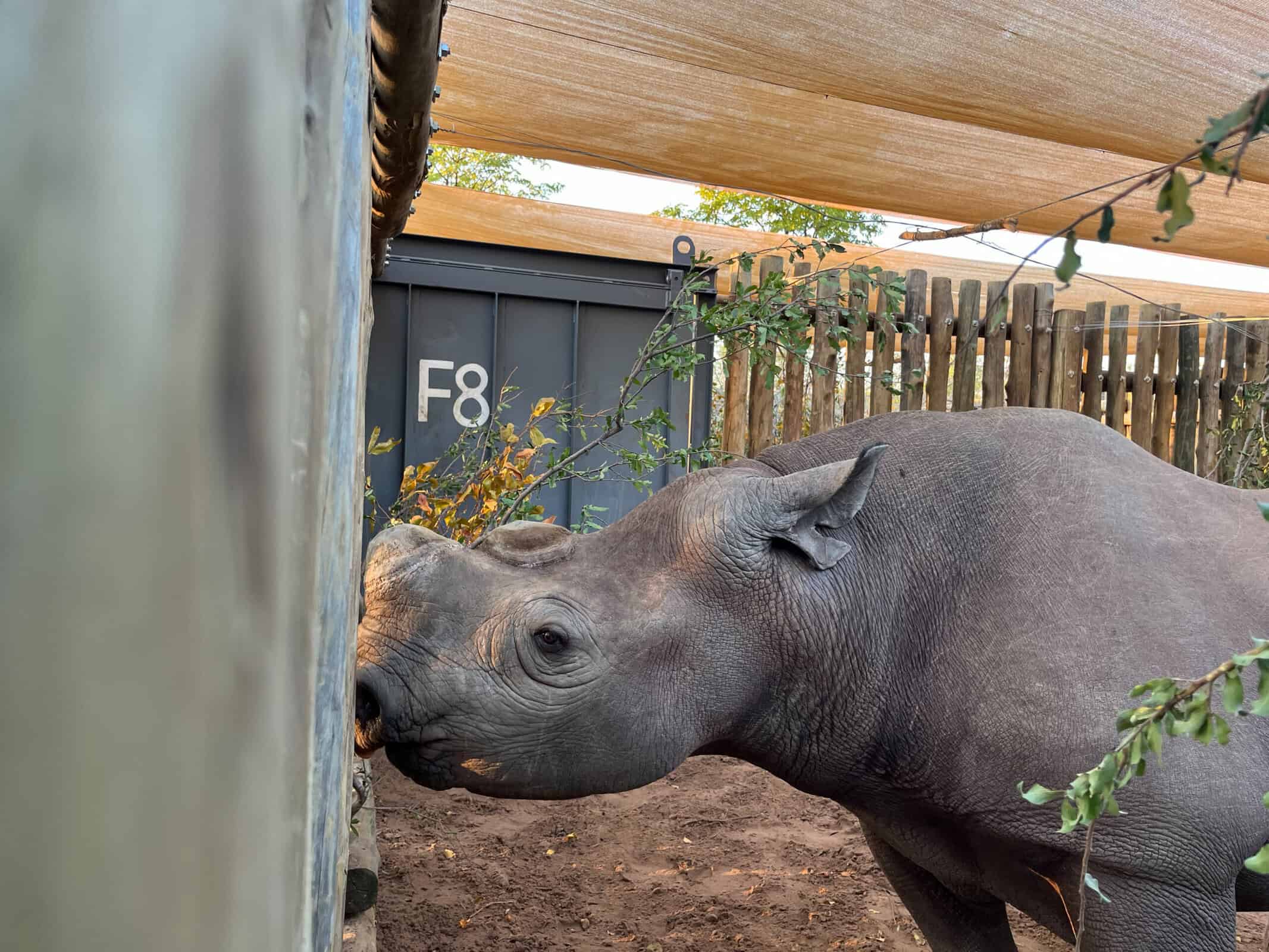
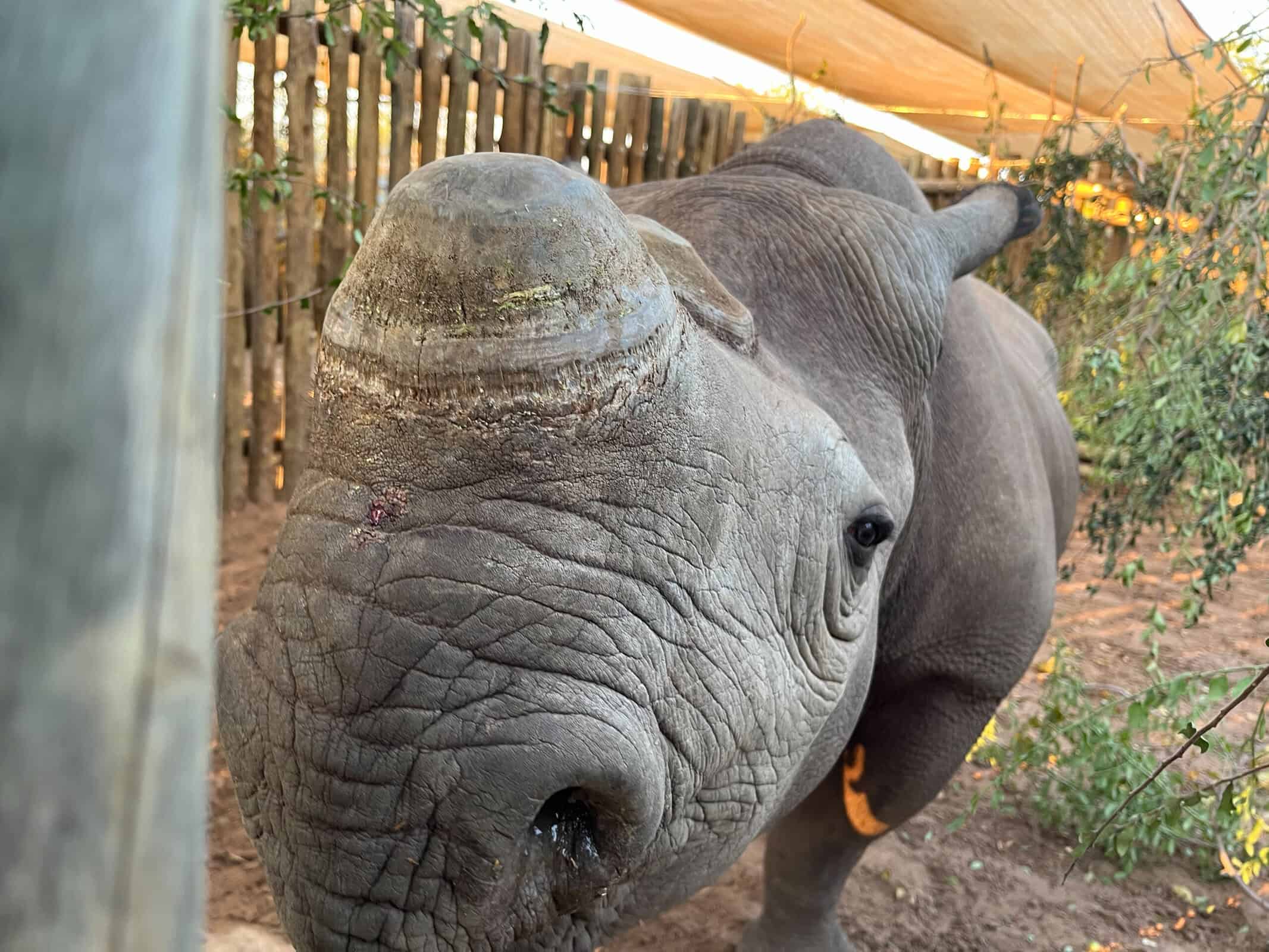
Until this point, I had only been on the river for boat cruises and had yet to go on a real game drive. I had seen plenty of hippos, birds, and crocodiles but was keen to see more of the landscapes and the wild land-dwelling animals. This is where Matusadona shines. Having been successfully rehabilitated by African Parks after decades of poaching, which had completely wiped out black rhinos, today the park has undergone a conservation renaissance.
A group of translocated black rhinos had arrived just before we did. They’re the direct descendants of the very rhinos evacuated decades ago during the height of the poaching crisis. Seeing these rhinos in their rightful place in the park makes exploring Matusadona an even more magical experience.
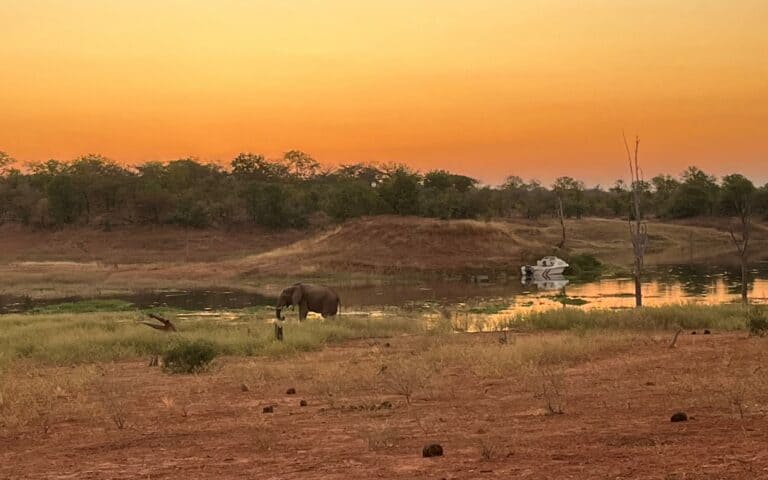
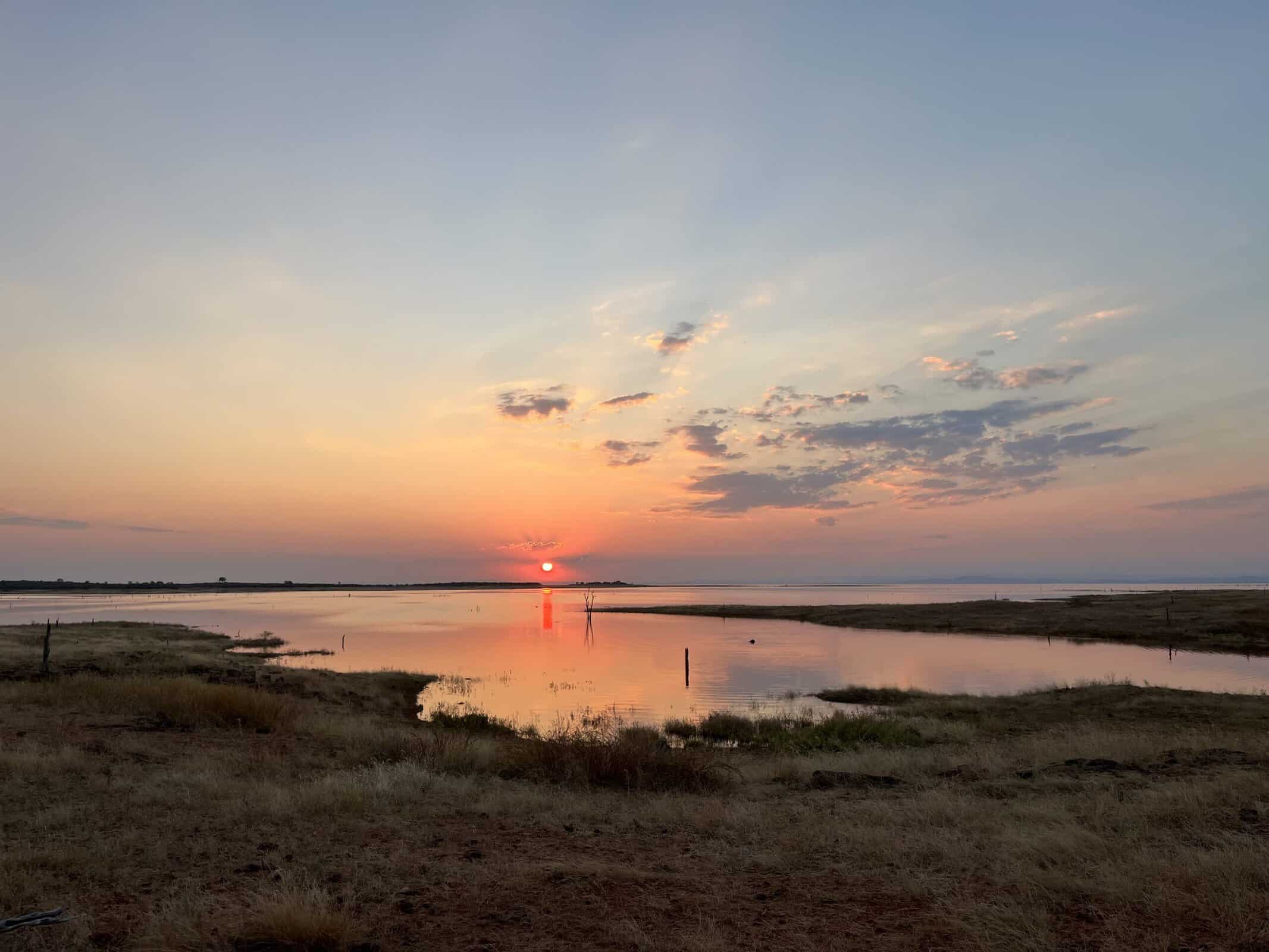
Following a lovely night watching elephants at sunset silhouetted by the amber sun dipping into the lake, painting it in dazzling strokes of orange and pink, we headed deeper into the bush.
Dinner was served directly in the dry riverbed under a night sky so free of city light pollution that the Milky Way shone with blinding brightness. I ate while listening to the literal roaring of lions and the trumpeting of elephants echoing just metres away in the dark.
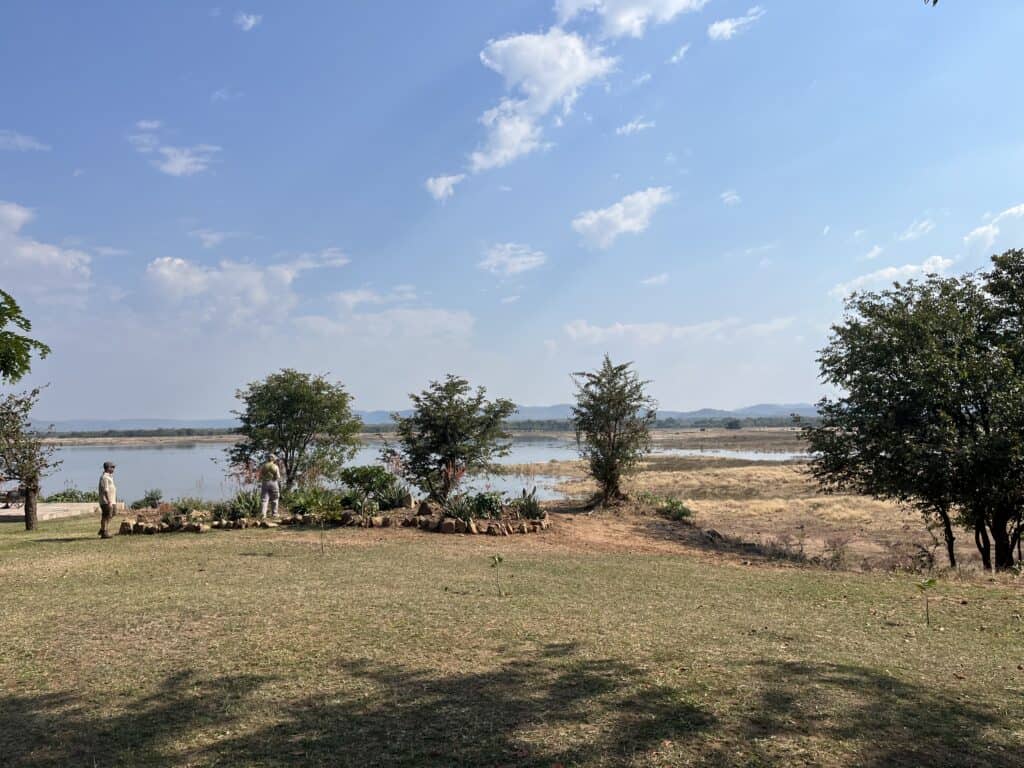
We spent the night on the shores of Lake Kariba, a massive body of water that stretches so far beyond the eye’s reach, it’s like a colossal inland ocean.
Walking and Canoeing in Mana Pools
Following an unbelievably amazing time in Matusadona, we crossed back over the lake and headed towards Mana Pools, in the north of Zimbabwe. By the time we reached it, I felt completely at ease. Here, the line between camp life and the wild is entirely blurred. Unbeknownst to my group and me, fruits are not allowed in Mana Pools at all, as the elephants are particularly drawn to them. So we had to leave all our fruits at the gate.
The lack of Wi-Fi throughout the trip made me a bit anxious at first, but I did feel relief at the freedom of it. No updates to monitor, no emails to catch up on or deadlines disturbing my psyche. I thought I would go crazy without it, but eventually it turned out to be a good thing. It forced me to be completely present and actually absorb my surroundings.
And Mana Pools is the perfect place to do that. Its remoteness and raw wilderness are truly exceptional.
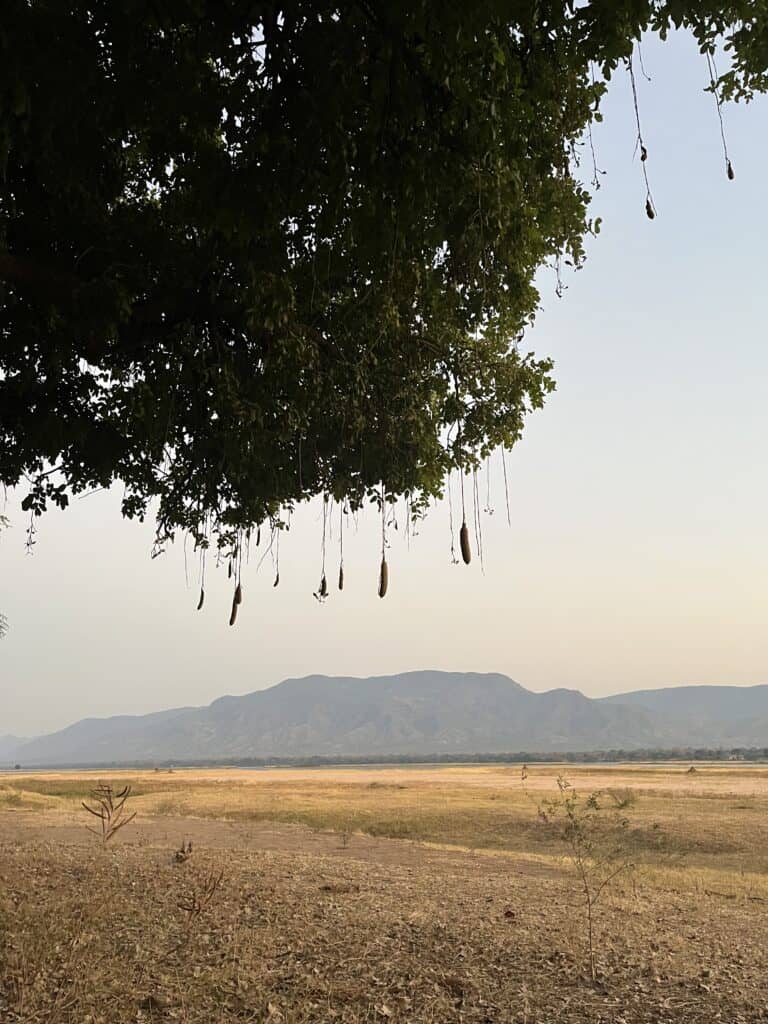
By silencing the digital static of the outside world, the sensory volume of the bush is turned all the way up. You start to notice the smaller things: the way the golden morning light filters through the canopy like stained glass in a cathedral, the sharp scent of crushed wild sage, and the dramatic nightly percussion of sausage-tree fruit dropping onto your tent roof like heavy wooden teardrops, accompanied by a distant chorus of grunting hippos.
Our morning activity was one I had anxiously awaited, a walking safari. At 5:30 AM, we set out on foot into the bush, greeted by the warmth of the rising sun that painted the browning grass in soft shades of gold. Steve, our guide, walked ahead, carrying a massive rifle purely as a precaution. Every snapping branch and crunching leaf beneath my boots made my heart leap.
Suddenly, our guide froze. He had found a fresh lion print in the dry riverbed. Seconds later, a low, piercing roar vibrated right through the air, sounding dangerously close. Much to my anxious delight, we moved towards the sound. My adrenaline began to surge and my heart pounded. Pushing through the bush, we saw him, a massive male lion tucked beneath a large shrub, his magnificent tawny mane glistening brilliantly beneath the dappled shade. He flicked his tail, seemingly oblivious to our presence, and calmly stood up and walked away.
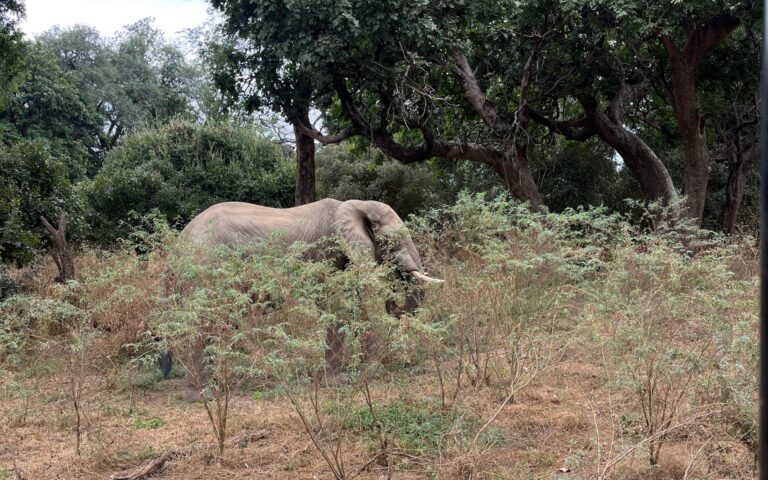
Back at camp, the wildlife simply coexisted with us. During lunch, a trio of massive, gentle elephants silently glided right through the camp. Despite their size, they move like grey ghosts, their padded feet whispering against the earth so quietly that you only realise they’re there once their shadow falls over your table.
My second day in Mana Pools was an absolute adrenaline rush. After an intense walking safari, it was now time to brave the river on a canoe safari. I had never been more scared of an activity. Somehow, walking on foot with lions was much less frightening. As I’ve said before, the Zambezi is a remarkable river, teeming with life. However, it’s also home to hundreds of hippos, which are among the most dangerous and unpredictable animals in the world.
Having grown up in Africa myself, I have heard many a horror story of people in remote areas being killed by them. So I wasn’t too keen on this activity but wanted to put myself out there and try it. We were accompanied by two guides, Steve and Peter, who did a brief safety demonstration and taught us how to use the paddles and such. Peter explained that hippos usually retreat into deeper water when they feel threatened, so it’s best to keep to the shallows so they can’t get underneath the canoe and flip you over.
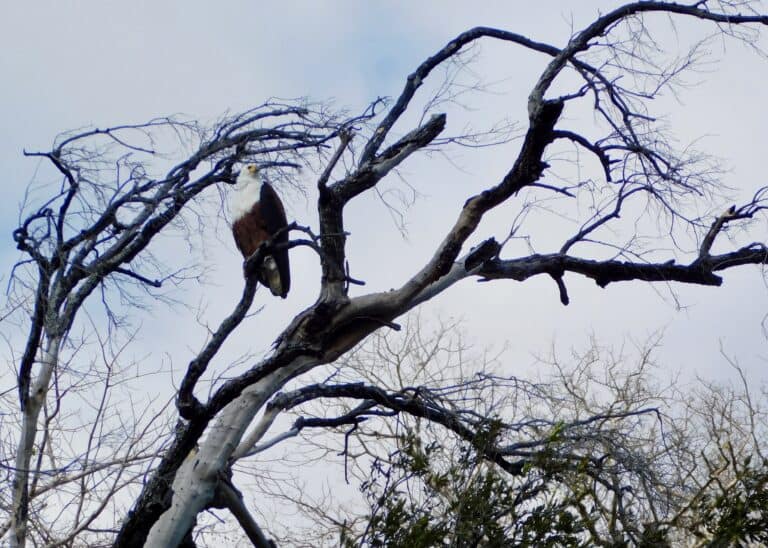
At first, the beauty of the river drew me in, acting like a gentle sedative. The water was a sheet of black glass, reflecting the shimmer of the sun and bouncing it back at me. The only sounds were the hypnotic drip-drip-drip of water falling from my paddle. We glided past sandbanks and small islands where ibises and fish eagles stood like statues.
After going a bit downstream, the illusion was shattered – we were reminded of who truly owns the river. A few metres ahead, the glassy surface bulged, and a pair of beady black eyes and two rounded pink ears broke the water’s tension, followed by a massive, wet snout. Not just one. There seemed to be hundreds.
Suddenly, the silence was obliterated by a guttural chuff-chuff-snort. Steve’s voice broke through my rising panic, quiet but firm: “Stay to the right, towards the shallow water.”
My eyes were wide with panic as more hippos, who had seen us approaching, entered the water. A massive bull splashed forward on a sandbank, occasionally stopping to glare at us, perhaps assessing if we were a threat. But they did exactly what Peter said they would: retreated into deeper waters. We stuck to the shallows and survived the two-hour activity.
This is the magic of canoeing the Zambezi. It strips away every ounce of human ego and leaves you utterly humbled. It’s terrifying because you’re completely vulnerable, but it’s also breathtakingly beautiful. For a few hours, you’re not just observing the wild but flowing right through it.
Photo Gallery
All photos by Thaakiera Ackerdien
The Reward
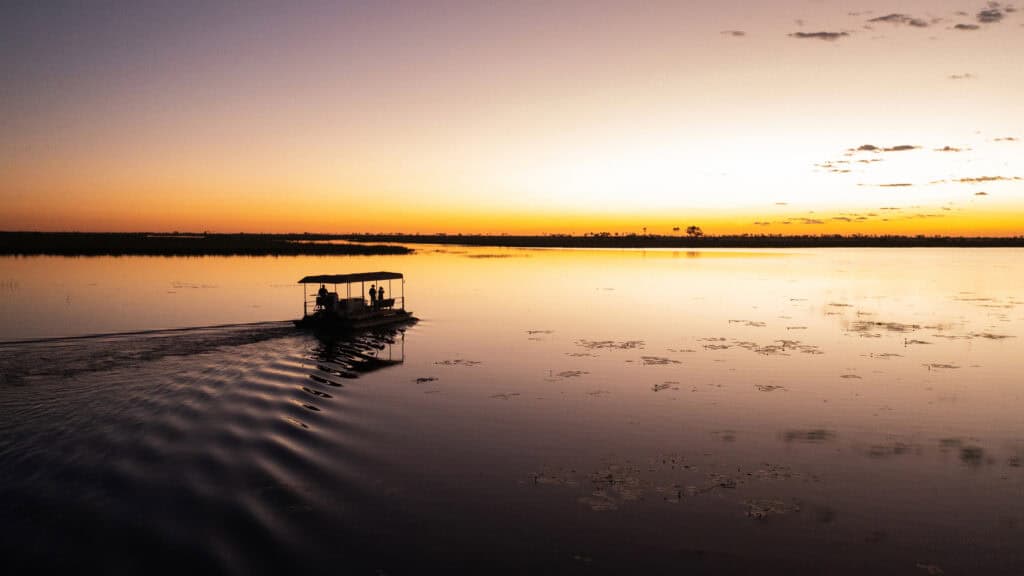
On our final game drive, the universe gave me the ultimate parting gift: a massive herd of elephants accompanied by a tiny baby elephant – literally the cutest thing I’ve ever seen in my entire life. We watched the sunset paint the Zambezi sky in brilliant hues of pink and orange, flanked by a herd of elephants on one side and a pod of grunting hippos on the other.
I left Cape Town as a burnt-out, anxious writer, convinced her body was a cage. I returned after conquering an untamed landscape, standing face-to-face with a wild lion, and staring down a massive bull hippo. The wilderness didn’t care about my weight, my imposter syndrome, or my physical limitations. By stripping away my control, the Zambezi didn’t just give me an incredible travel story – it completely reset my soul.
Sometimes, like on this expedition, a trip is about a quest for a deep, visceral connection, or perhaps it’s the realisation of a lifelong bucket-list dream. If you, too, are seeking a soul-resetting adventure that leaves a profound mark, the breathtaking destinations of southern Africa are waiting.
Discover Africa safari experts know exactly where to go to make your safari dreams come true.