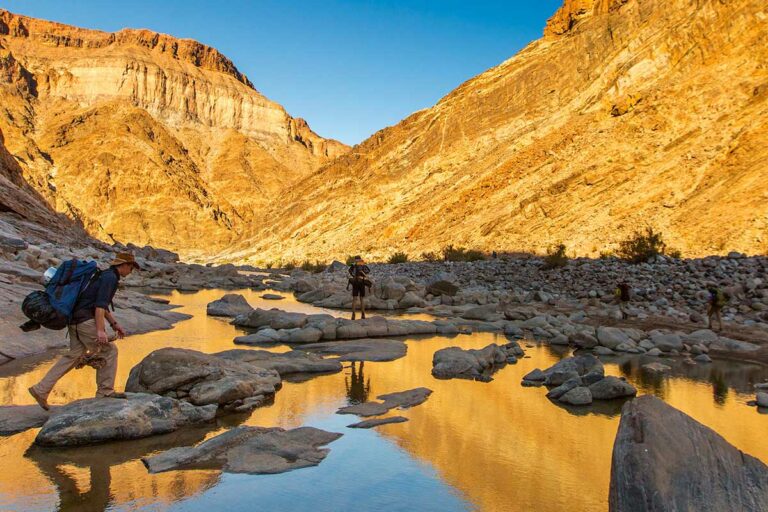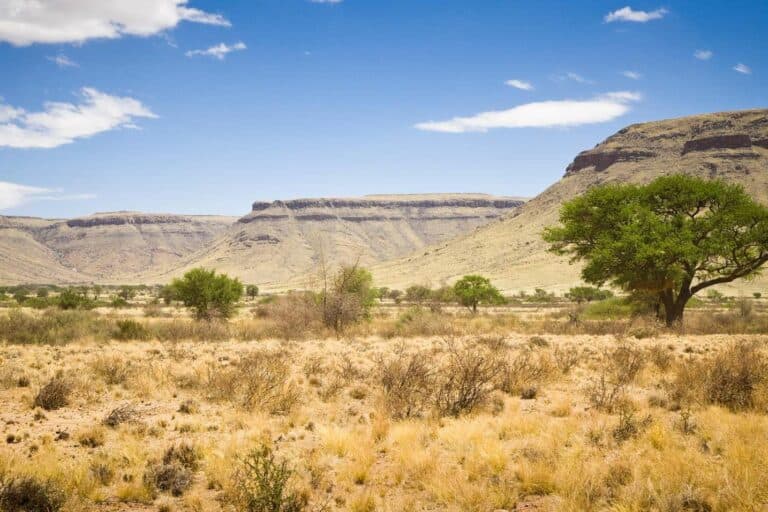




Tucked into Namibia’s far south lies a landscape shaped over millions of years, a place of quiet, scale, and raw beauty. Here, cliffs rise like ancient sculptures, and the desert stretches into horizons that seem endless, inviting you to pause and breathe.
Where Is the Fish River Canyon Located?

The Fish River Canyon, Namibia’s great geological icon, is Africa’s largest canyon, also known as the Grand Canyon of Africa. Nothing compares to standing at its rim, breathing in a horizon so wide and still that it feels like time slows just for you.
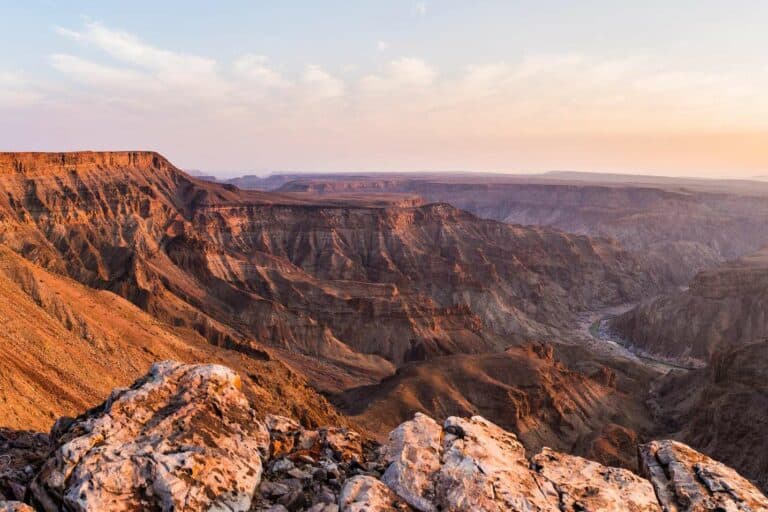
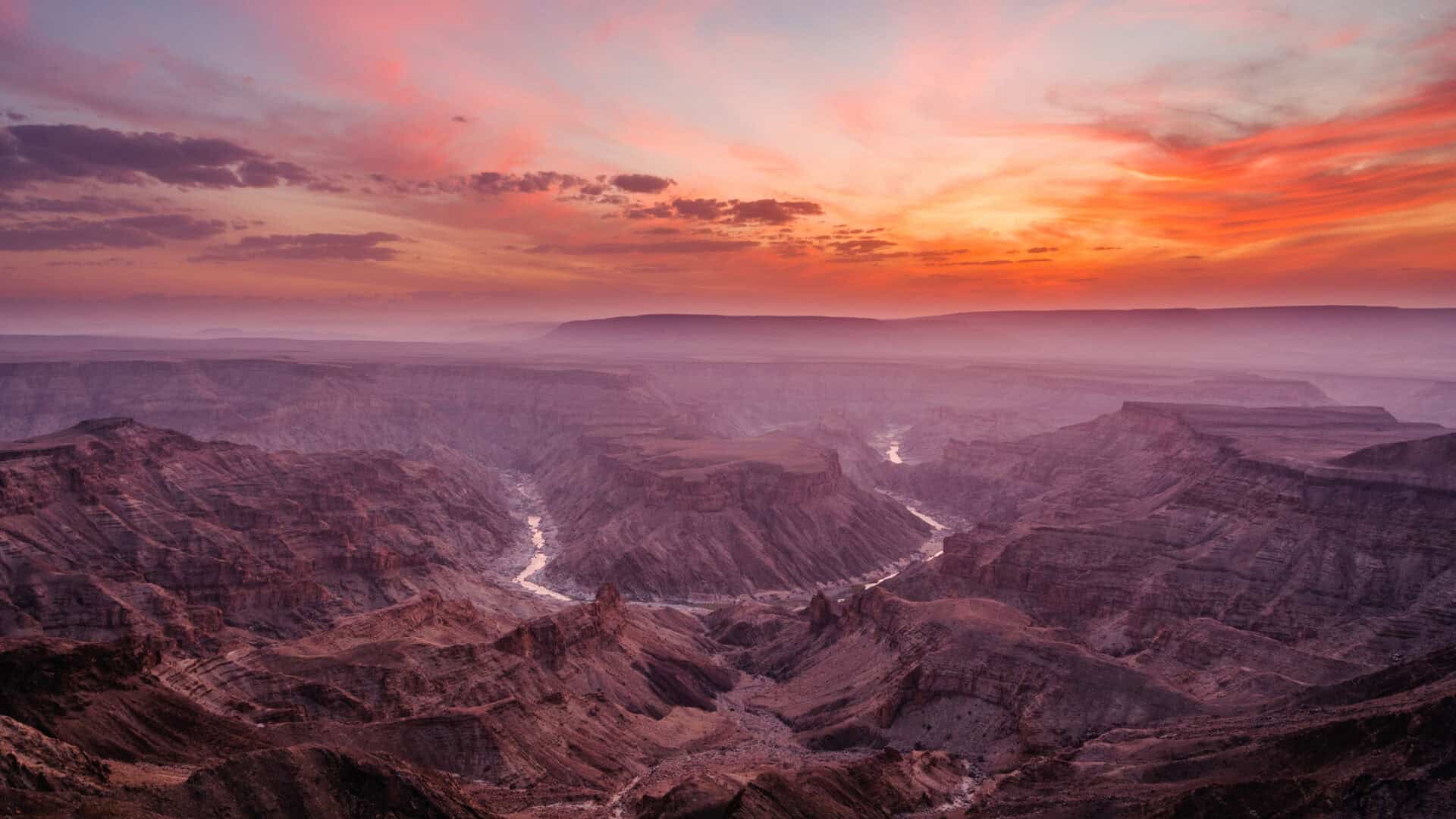
Photos can’t capture its scale. The canyon stretches for 161 km long (100 mi), drops 550 m deep (1,804 ft), and spans up to 27 km across (17 mi). But its true magic isn’t in the numbers; it’s in how the landscape makes you feel. Here, in the Namibia Fish River Canyon, you’ll find space to pause, breathe, and reconnect. The kind of deep quiet that wellness seekers dream about when the world feels too loud.
The canyon’s ancient geology tells a story more than 450 million years old. It’s a place where solitude is celebrated, not escaped. This is a landscape that restores you from the inside out.
Below, explore the must-see places, soothing experiences, and soft-adventure moments that make Fish River Canyon in Namibia one of the world’s most grounding destinations and an unforgettable complement to a classic safari.
Must-Visit Areas in Fish River Canyon

Soul-stirring viewpoints, ancient trails, and warm desert air. This is a region designed for slow, mindful travel. Here are the places where quiet meets wonder:
Hobas Viewpoint: Breathtaking Views
Hobas is where the canyon first reveals itself in all its drama. The viewpoint is famed for its panoramic sweep across layered cliffs and sculpted formations. A natural cathedral shaped by time and the patient flow of the Fish River.


From here, you see the geology that defines the Namibia canyon: deep chasms etched into stone, the soft colours of sunrise or sunset across the walls, and the vast emptiness that invites reflection.
You’ll pay a conservation fee at the Hobas Camp, and then follow a short road up to the viewing area. There are other viewpoints too. Quieter corners you can hike to if you’re craving even more solitude and immersion.
Ai-Ais Hot Springs: A Healing Escape
After a canyon walk, few things feel as comforting as slipping into the mineral-rich waters of Ai-Ais Hot Springs. Tucked into the southern end of the canyon, these warm pools are known for their soothing, therapeutic properties.
It’s the kind of place where you can float beneath bare mountains, feel your muscles loosen, and let the heat unravel whatever tension you carried in. For a traveller seeking an escape for wellness, this is the canyon’s softest luxury. A natural spa born from the earth itself.
When’s the Best Time to Visit Fish River Canyon?

The dry winter months from May to September offer the most comfortable conditions. Days are clear and warm, around 28°C (82°F), while the evenings bring cool desert air and can get quite crisp. It’s the perfect season for hiking, photography, and quiet contemplation without the intensity of summer heat.
In high season, you’ll still feel the canyon’s spaciousness; this is a place where crowds never take over. That means whether you’re exploring a trail or sitting alone at the edge of the gorge, you’ll have the stillness you’ve come seeking.
Animals Found in Fish River Canyon

Although the canyon is famous for its landscapes, wildlife moves quietly through this semi-arid realm. The area forms part of the Ai-Ais/Richtersveld Transfrontier Park, shared by Namibia and South Africa.
Look closely and you may spot:
- Hartmann’s mountain zebra
- Klipspringer balancing on rocky ledges
- Steenbok, kudu, duiker, baboon, and oryx
- The elusive caracal, often seen only by the luckiest travellers
It’s subtle, understated wildlife – the kind that enhances the silence rather than breaks it.
How to Get to Fish River Canyon

Reaching the Fish River Canyon, Namibia, becomes part of the journey itself. Some travellers head south from Windhoek by private transfer, a scenic seven‑ to eight‑hour drive through changing landscapes.
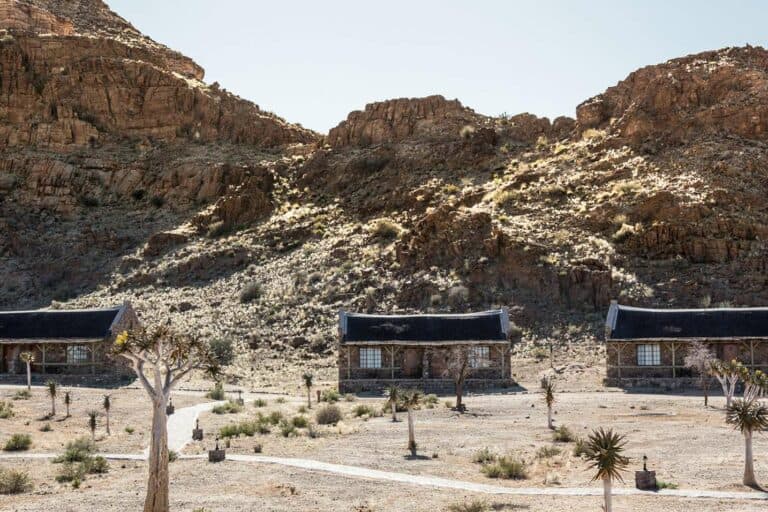
If you prefer to fly, there’s a private airstrip near the canyon where charter planes can land, about 4 km from Fish River Lodge, which sits right on the rim of this magnificent gorge. From there it’s a short transfer to your accommodation, letting you skip long road travel and arrive feeling calm and ready to explore.
The drive from Keetmanshoop remains a popular option too, with its wide desert vistas setting the tone for what’s ahead.
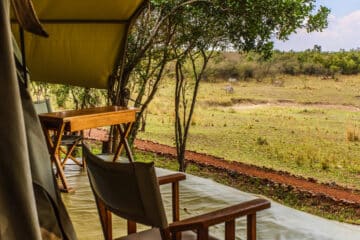
Once you arrive, remote luxury lodges offer sweeping canyon views, wholesome meals, spa treatments, and an atmosphere of complete stillness. Ideal for those longing for space and serenity.
Experiences You Can Have in the Fish River Canyon

Here, days unfold slowly and naturally. You might:
- Hike along rim trails at sunrise and feel the canyon warm beneath the light.
- Sit in silence at a private viewpoint, journaling or simply just soaking up the sights.
- Enjoy a guided geology walk to learn Fish River Canyon facts and hear stories of its transformation.
- Spend afternoons floating in thermal springs.
- Watch stars spill across one of the darkest skies in southern Africa.
It’s wellness woven through the landscape, not an activity list, but a way of being.
Combining Fish River Canyon With a Classic Safari

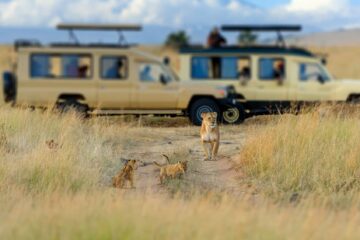
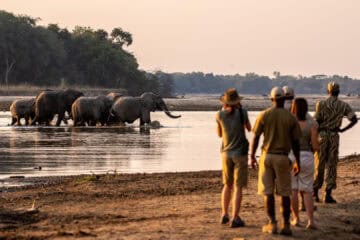
Many travellers pair the canyon with Namibia’s icons: Etosha’s wildlife, the dunes of Sossusvlei, or the Skeleton Coast’s raw beauty. This combination offers the best of both worlds: soul-touching wildlife encounters in Etosha followed by the deep quiet of the Fish River Canyon, Namibia.
Think of it as a journey from energy to exhale. The thrill of a safari, then the grounding calm of Africa’s largest canyon.
Ready to Answer the Canyon’s Call?

Fish River Canyon has a way of settling the soul. If you’re feeling called toward the quiet horizons, let’s begin the conversation. The canyon will do the rest.