

 Email us




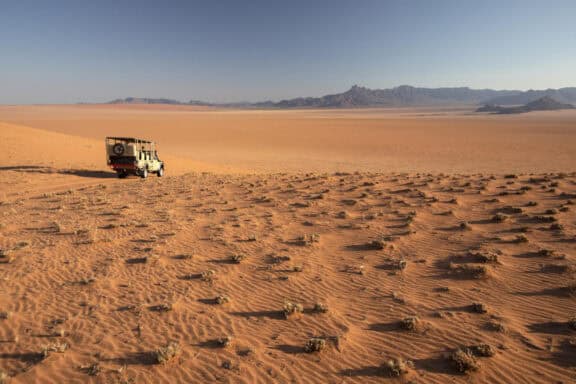
The Namib Desert’s arid landscape stretches along the southwestern African coast from Angola through Namibia all the way into South Africa. While it may not be the largest desert in the world, it is certainly the oldest, with an average rainfall of just 2 inches (5 cm) per year.
It’s surprising then that this harsh environment actually sustains complex plant and animal life, including some species that are found nowhere else on the planet. Keep reading to find out more about the different strange creatures you can expect to find in the Namib Desert:
1. Namib Desert Beetle
This little insect has evolved to be able to harvest water out of thin air. A few times a week, a heavy fog rolls inland from the coastal areas of the Namib Desert. When this happens, the beetle will climb to the top of a sand dune, lift its abdomen into the air and spread its wing casings. Tiny bumps on these surfaces collect condensation, which trickles down into the beetle’s mouth. Scientists are using biomimicry to try and duplicate this process to trap moisture in water-stressed areas around the world.
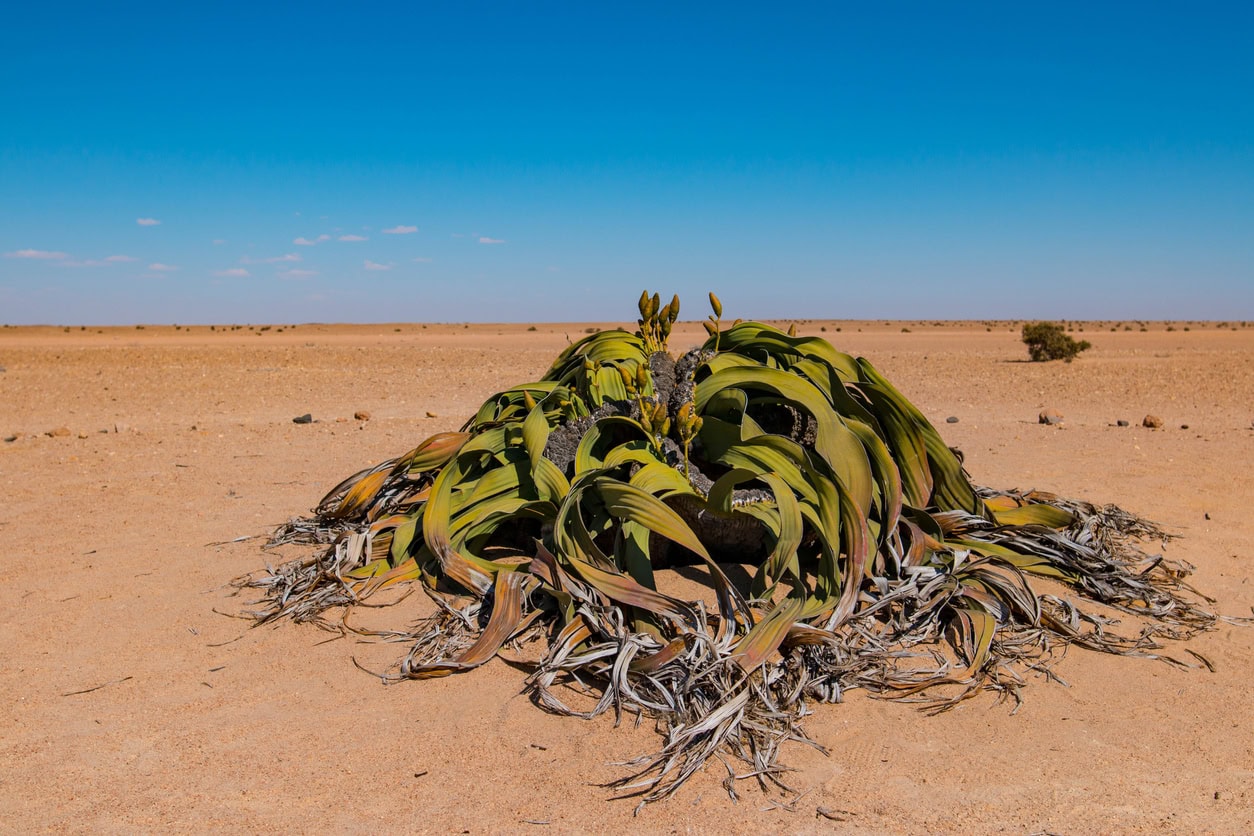
2. Welwitschia Mirabilis
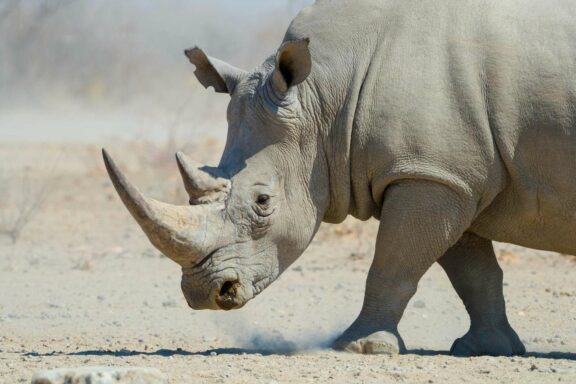
This unique plant can survive for up to 2000 years. Its continuously growing two broad flat leaves grow close to the ground, and can become segmented and torn by weathering and leaf-eating animals like oryx and rhinos. The plant has a long tap root that can reach up to 3 m deep, and a shallow but very dense network of roots that absorb moisture from fog and dew. Welwitschia mirabilis can grow to an impressive size, even in the harsh desert conditions, and are mostly found a bit further inland, about 50 to 60 km from the Atlantic.
3. Peringuey’s Adder
This venomous viper species is well known for its ability to sidewind, an effective way to negotiate soft, unstable dune sands. This snake buries itself in the sand to escape the heat and lay in ambush for its prey, usually small rodents, geckos, birds, and a variety of lizards. Its eyes are positioned on the top of its head, allowing it to see its prey from a partially buried position. The Peringuey’s adder has strongly keeled scales that give it an almost furry appearance.
4. Namib Sand Gecko
This species of gecko has translucent skin, mostly a dull brown or gray color, which helps it blend in with its desert environment. Also commonly known as the web-footed gecko, it has evolved webbed feet that help it both climb sand dunes and dig burrows to escape the desert heat. These webs also act as a sort of snowshoe to stop the gecko from sinking into the fine desert sands. Being nocturnal, this gecko has huge, lidless eyes, which help it hunt its prey at night.
5. Dune Lark
The desert-adapted Dune Lark is Namibia’s only endemic bird species. It doesn’t drink water, instead it gets its moisture from feeding on seeds and desert insects. Females build a cup-shaped nest mainly from the grass leaves of the Namib dune bushman grass, which is then lined with feathers and reptile skin.






6. Desert Elephants
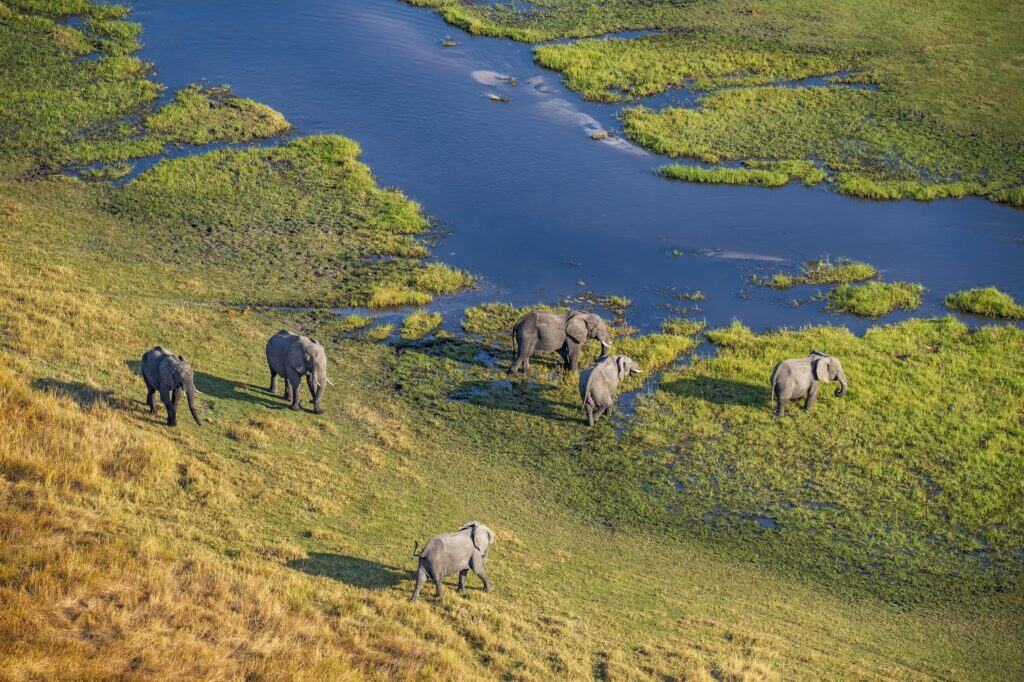
While not a distinct species, the desert-adapted elephants of the Namib Desert have longer legs, leaner bodies, and wider feet than other African elephants. These traits allow them to subsist on sparse vegetation and navigate the soft desert sands, and they can go for several days without drinking water. Due to the extreme weather conditions, desert elephants roam mostly at night.
7. Oryx
Also known as the gemsbok, this large antelope has adapted to live in the harsh conditions of the Namib Desert. Oryx have an unusual circulation system in their head, and this enables them to cool the blood flowing to their brain through the capillaries in their nose while breathing. They’re also known to dig shallow holes in shady ground which they then lay down in to offload body heat to the cooler sand. This also reduces the body surface exposed to drying desert winds.
8. Brown Hyena
This efficient scavenger is incredibly resourceful. Adapted to surviving in the arid Namib Desert, it feeds on carcasses left by other predators but will also feed on insects, rodents, desert melons, and abandoned seal pups along the coast. This varied diet allows it to go for long periods without any water as it derives moisture from its prey. Brown hyenas are nocturnal animals and can travel up to 40 km per night in search of food.
9. Namaqua Chameleon
Rather than use its incredible color-changing abilities to just blend into its environment, the Namaqua chameleon will change its shades to adjust to the temperature; black in the cool desert morning to absorb heat, and a lighter gray color to reflect light in the hotter parts of the day. This chameleon will eat anything small enough to swallow, including locusts, crickets, beetles, lizards, and even small snakes. The Namaqua chameleon holds massive territories relative to their size, and conflict in overlapping areas will be fiercely disputed.
10. Namib Golden Mole
Unlike most other moles, this species of mole can’t form tunnels in the desert sand. Instead, they use their broad claws to paddle through the sand and up to a depth of 50 cm, where the conditions are somewhat cooler. This nocturnal creature forages for distances up to 6000 m in a single night, not bad considering it can fit in the palm of your hand. The Namib Golden mole eats a wide range of food, including crickets and beetle larvae, web-footed geckos, termites, ants, moths, spiders, and legless lizards.
The Namib Desert exemplifies nature’s resilience with its diverse species adapted to its harsh conditions. From the moisture-harvesting Namib Desert Beetle to the temperature-adjusting Namaqua chameleon, these creatures showcase nature’s innovative survival strategies. A Namibian safari offers a glimpse into this rich biodiversity, revealing how life thrives even in the most challenging environments and teaching us about adaptability and perseverance.
Discover the African Journey that’s Right for You
 Blog List



















Written by Johnieka Holtzhausen
• Travel Writer
Part of the Namibia Safari Collection