

 Email us





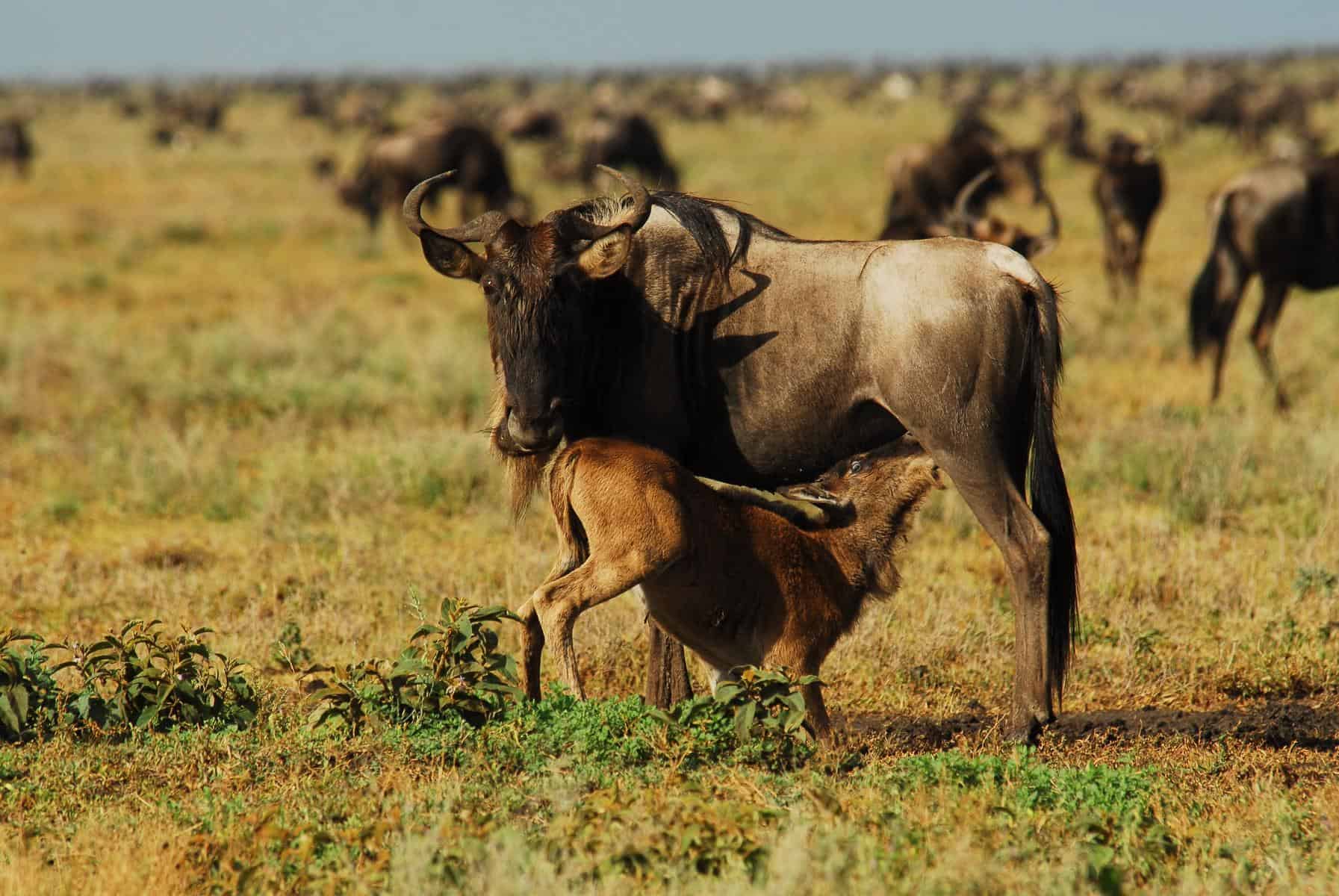
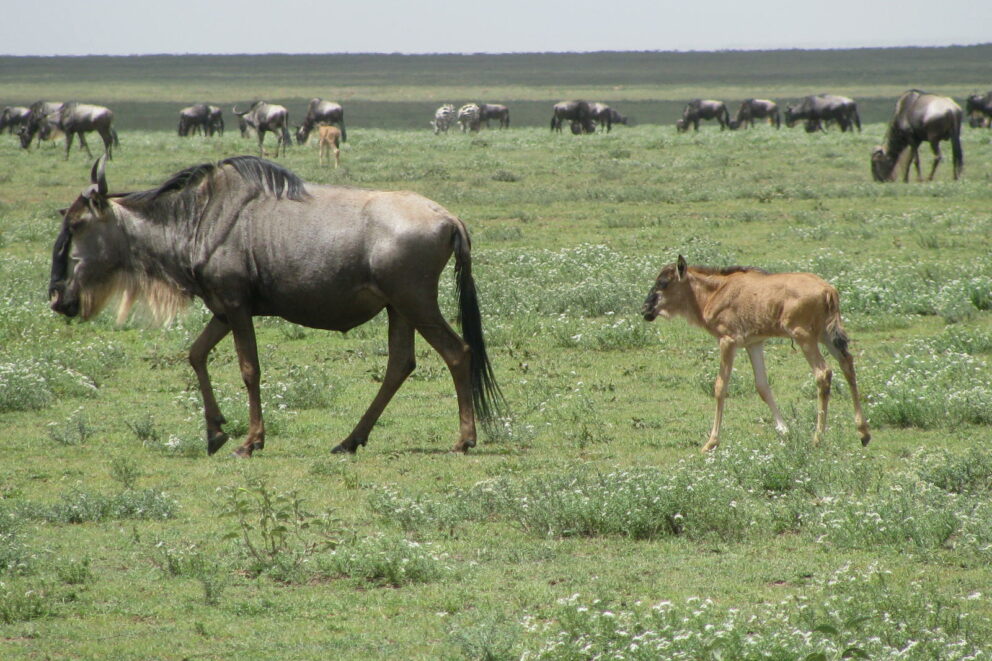
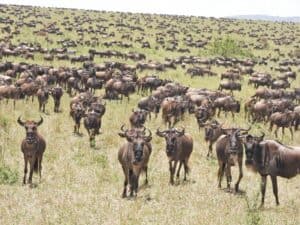
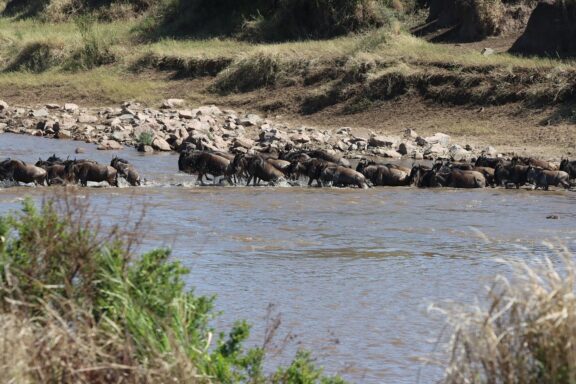
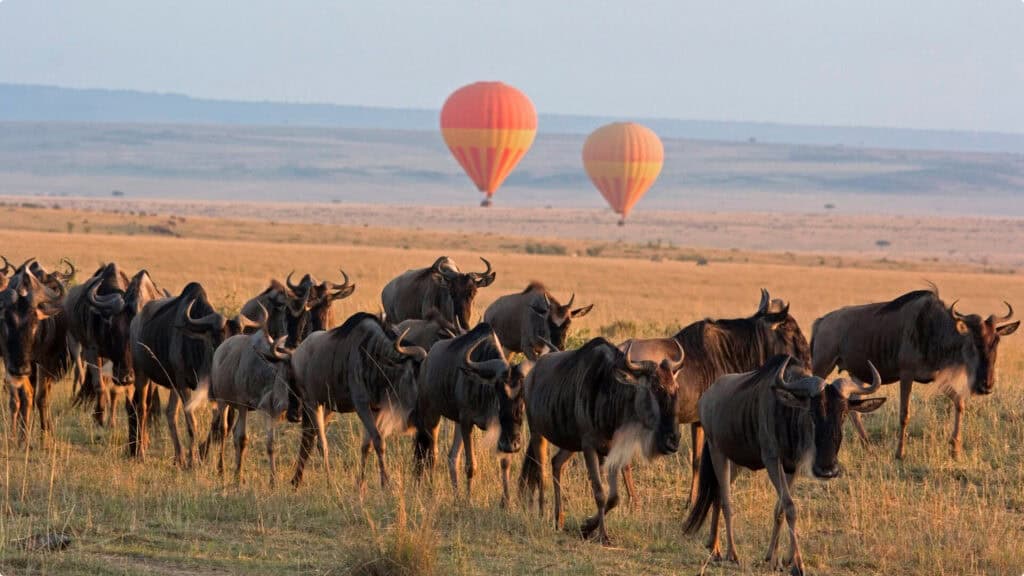
As one of nature’s most intriguing spectacles, the Great Migration is often hailed as one of the greatest shows on earth. However, aside from its peak during the river crossings, where huge herds of wildebeest brave the waters of the Mara River, there is another much-sought-after period: calving season.
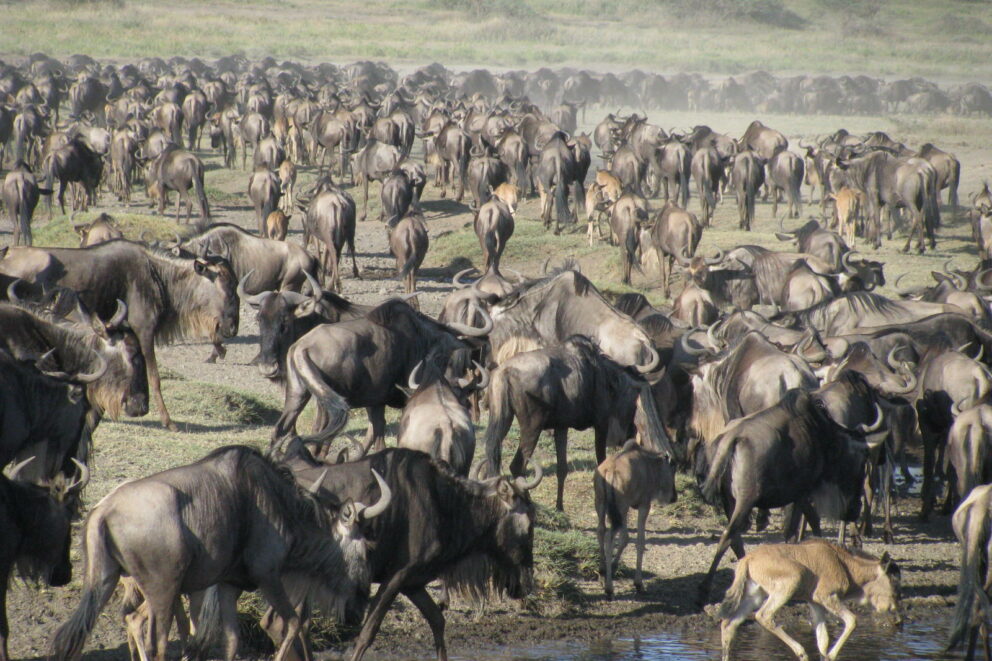
Occurring annually between December and March, the Great Migration’s calving season takes place in Tanzania’s southern Serengeti.
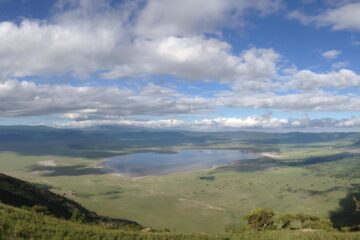
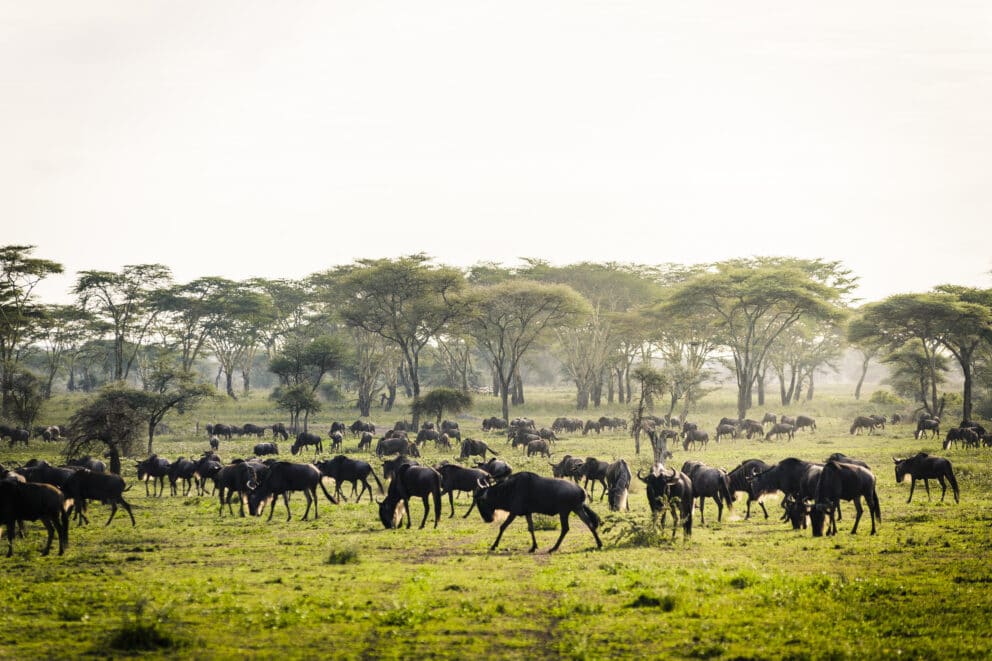
The wildebeest herds have also been found as far south as the Ngorongoro Conservation Area, spreading across its plains to feast on lush and fresh grasses brought about by the rainy season. Fresh grasslands provide the herds with the best conditions for raising their newborn calves.
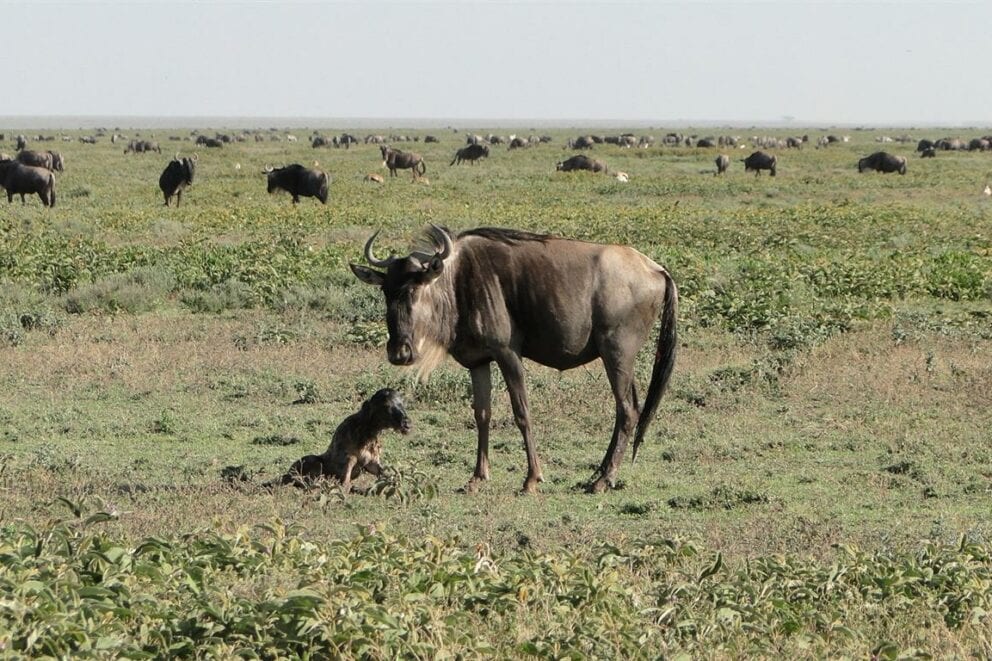
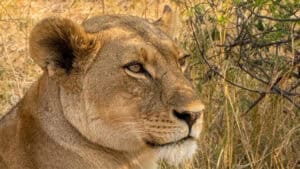
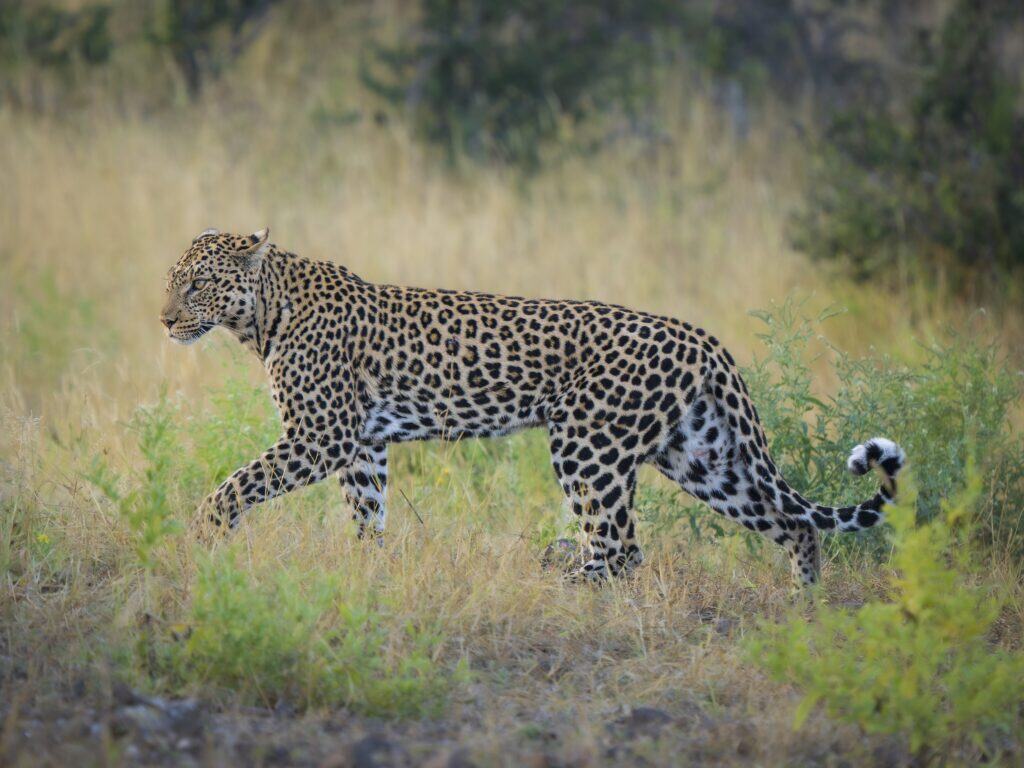
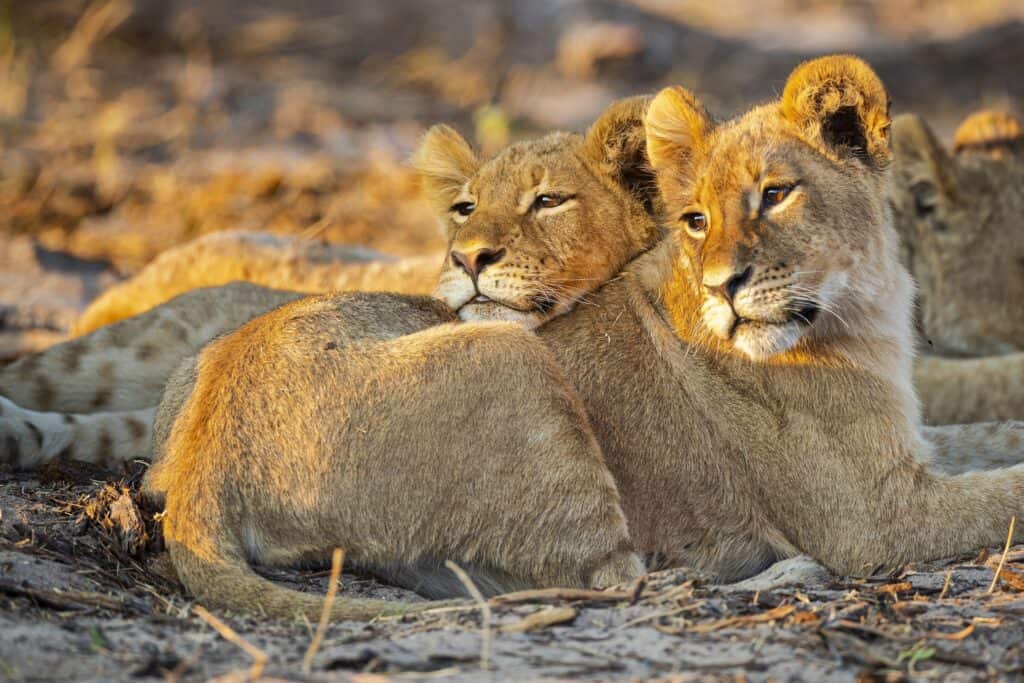
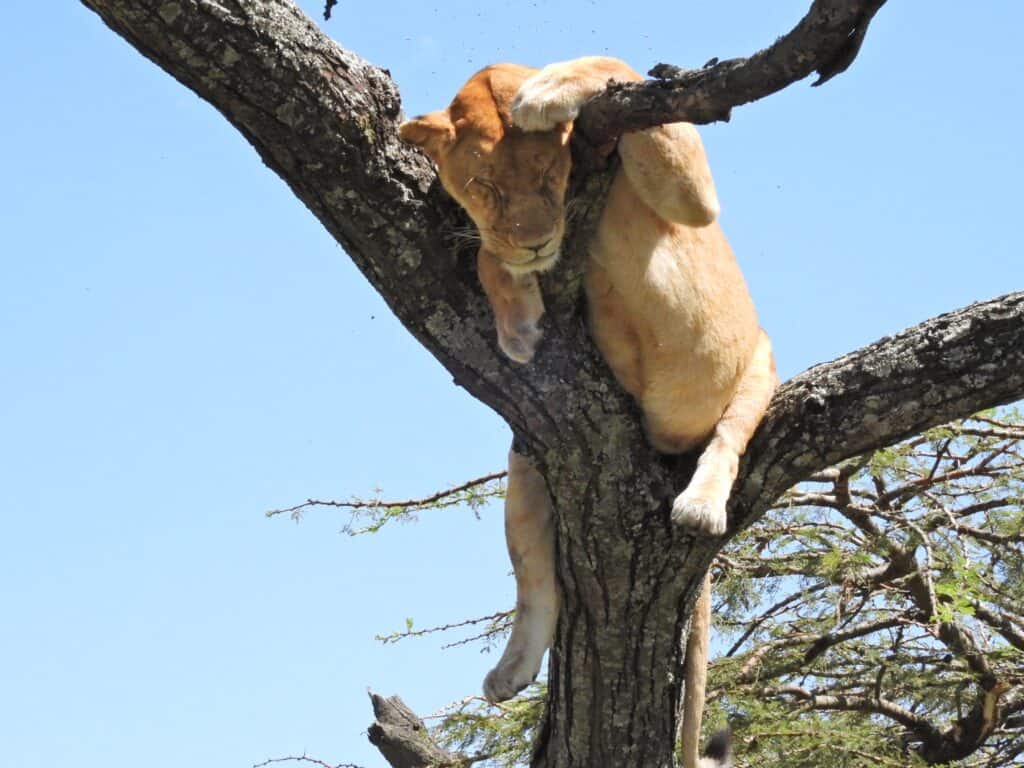
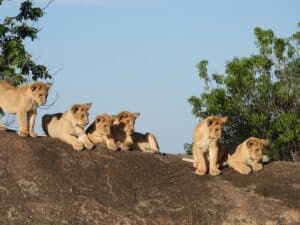
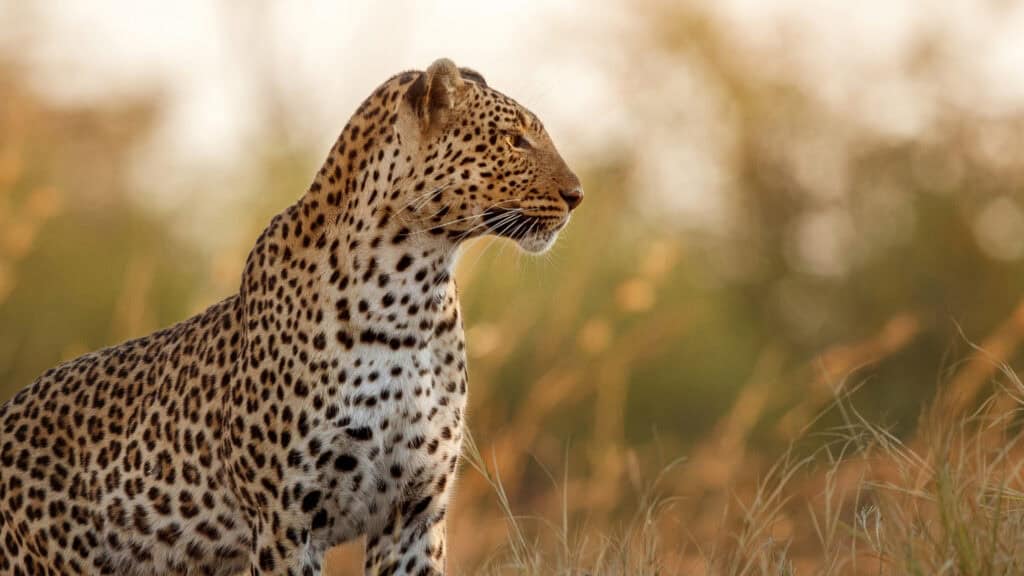
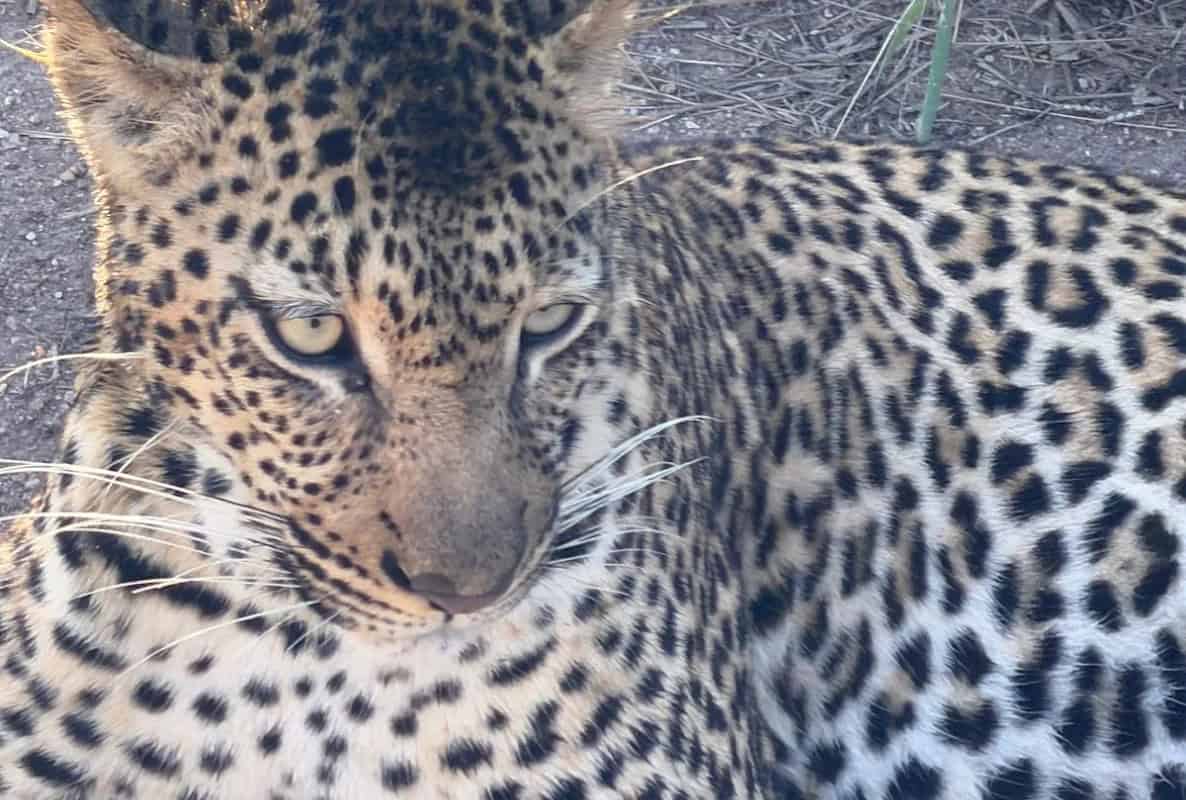
Although there is technically no starting point to the Great Migration, it’s somewhat reasonable to call calving season the “start” of the migration. During this time, over 400,000 calves are born, with more than 8,000 being born each day. The arrival of the newer and weaker herd members also springs nearby predators into action, making calving season a perfect opportunity to witness predator-prey interactions. Big cats – lions, leopards, and even cheetahs – prowl the open plains of the southern Serengeti, along with spotted hyenas and black-backed jackals.
If you’re interested in a Great Migration safari, particularly during calving season, you’ll need to stay somewhere close to the action! Read on to find some of the best camps and lodges to witness the Great Migration’s calving season.
1. A&K Sanctuary Kichakani Serengeti Camp (South)
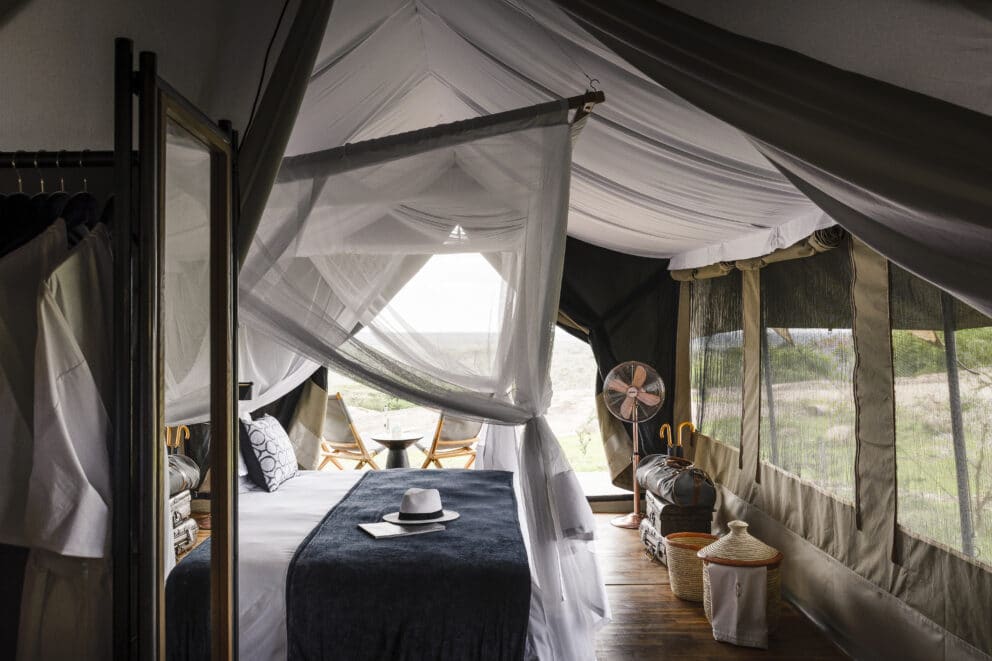
As we have explored in our previous blog, Top 10 Places to Stay in Kenya and Tanzania to See the Great Migration, A&K Sanctuary’s Kichakani Serengeti Camp is one of the best camps to see the Great Migration from all angles. Relocating to the south during calving season, this camp is positioned to witness wildebeest calving and offers exceptional wildlife viewing opportunities.
Kichakani is Swahili for “in the bush”, which is where you will be when staying at this camp, surrounded by the grandeur of Serengeti National Park. Whether it’s pitched in the north or the south, wildlife action is nonstop, with your surroundings teeming with wildebeest, zebra, antelope, and the predators that follow them.
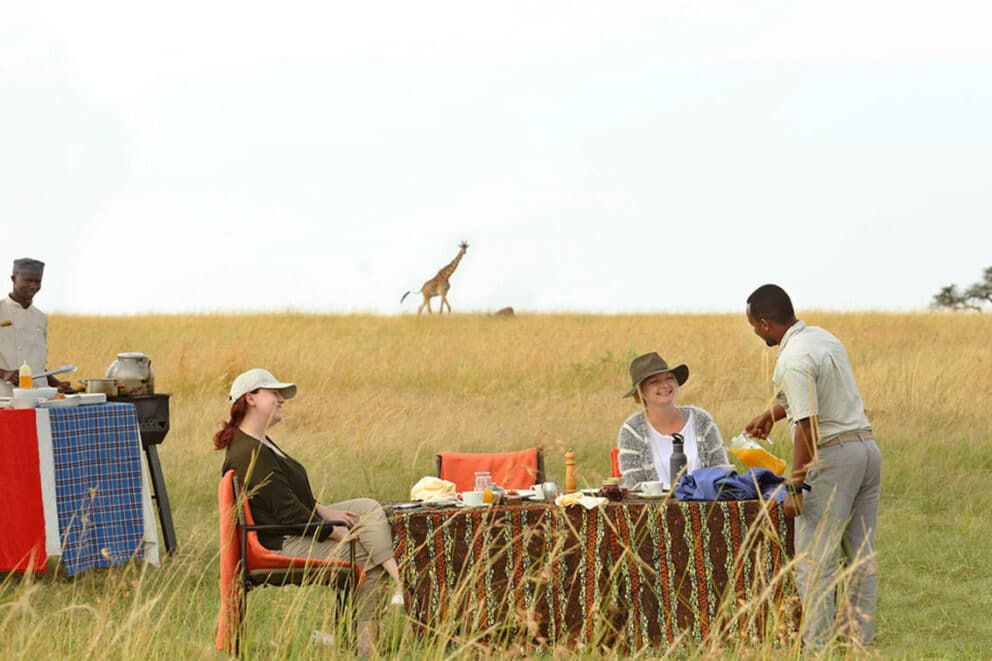
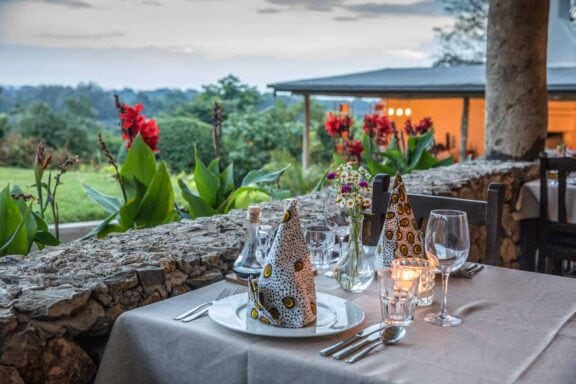
Beyond wildlife encounters and game drives, foodies will be particularly pleased by the camp’s sumptuous, safari-style cuisine, served daily in the wilderness. Indulge in their delicious dishes, such as the chef’s signature spinach crepe with sautéed mushrooms, thyme-infused Brown’s Farm ricotta, and caramelised onions.
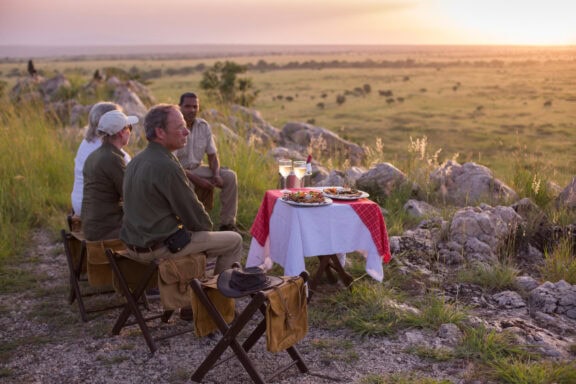
Each day starts with either a continental or English breakfast served in camp before your morning game drive. Lunch is enjoyed back at the camp or can be a picnic-style meal in the bush if you’re out game-spotting (picnic lunches can also be arranged on request). As the day winds down, sundowners are a delightful daily ritual, followed by a three-course dinner in the elegant mess tent.
2. Ndutu Safari Lodge
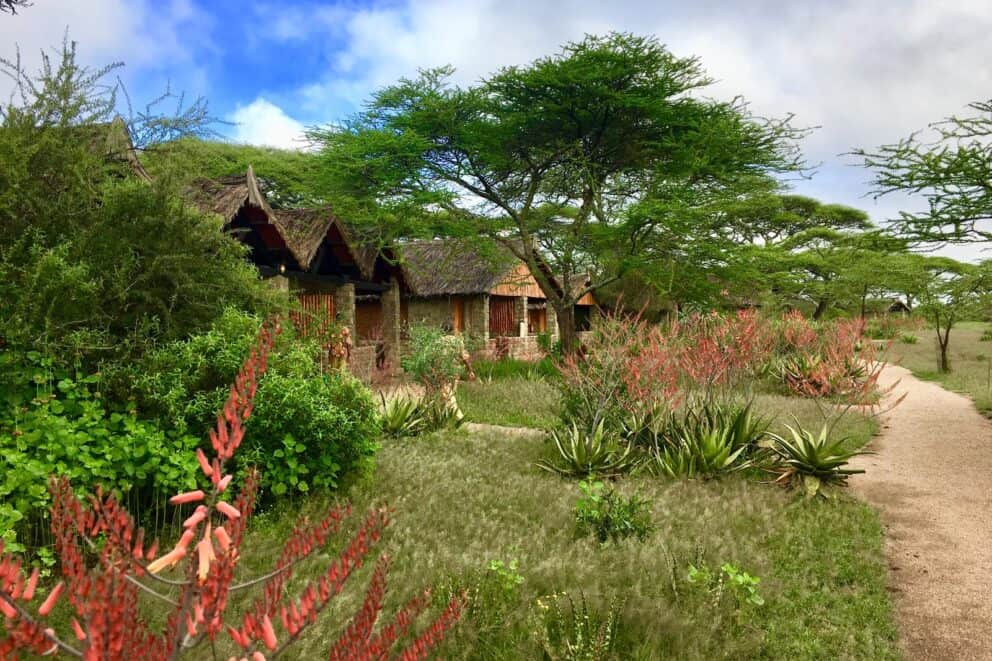
Ndutu Safari Lodge is located in the Ngorongoro Conservation Area at the edge of the southern Serengeti overlooking Lake Ndutu. Traditionally, wildebeests and zebras tend to calve in this area, which peaks around February, making Ndutu Safari Lodge one of the best lodges to witness the calving season.
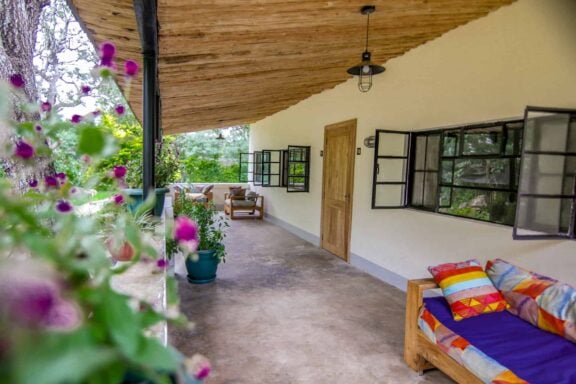
The lodge consists of 34 en-suite cottages, each built from local stone and thatch material, complete with a private veranda overlooking the plains of the Serengeti. It makes for a comfortable base from which to watch migrating herds while they typically traverse the area between December and March.
Beyond the endless cycle of migrating herds, Ndutu is also a well-renowned area for birdwatching safaris in Tanzania. Its diverse habitat is made up of short grass plains, shallow soda lakes, and acacia woodlands, attracting over 300 species of birds. Gazing from your lodgings overlooking Lake Ndutu, you can witness the spectacular display of pink feathers from lesser and greater flamingos, which stop here during their migration.
“What an incredible experience… We knew that people really want to see the river crossings, but we were convinced to travel during end January, early February. We arrived on the plains at Ndutu almost as the herds arrived so we could not have timed it better. It’s impossible to comprehend without seeing it for yourself.” – Chris, USA
3. Olakira Migration Camp (Dec – Mar)
Offering an upgraded migratory camp experience, Asilia Africa’s Olakira Migration Camp allows for stargazing without leaving the comfort of your tent. When night falls, their unique mesh-covered stargazing tents provide an opportunity to sleep under the stars of the Milky Way.
During river crossing season – between June and October – the camp is in the Bolongonja area in the northern Serengeti, giving it a perfect vantage point from which to view dramatic river crossings. From December to March, it relocates to Ndutu, in the Ngorongoro Conservation Area, where you can witness thousands of newborn wildebeest calves take their first steps.
Newborn calves are a prime target for predators, making this area ideal for an action-packed photographic safari. If you’re an avid photographer, consider enhancing your experience by booking a private photographic vehicle, which has been customised to ensure you have the best opportunities to capture epic moments in the wild.
4. Mwiba Lodge
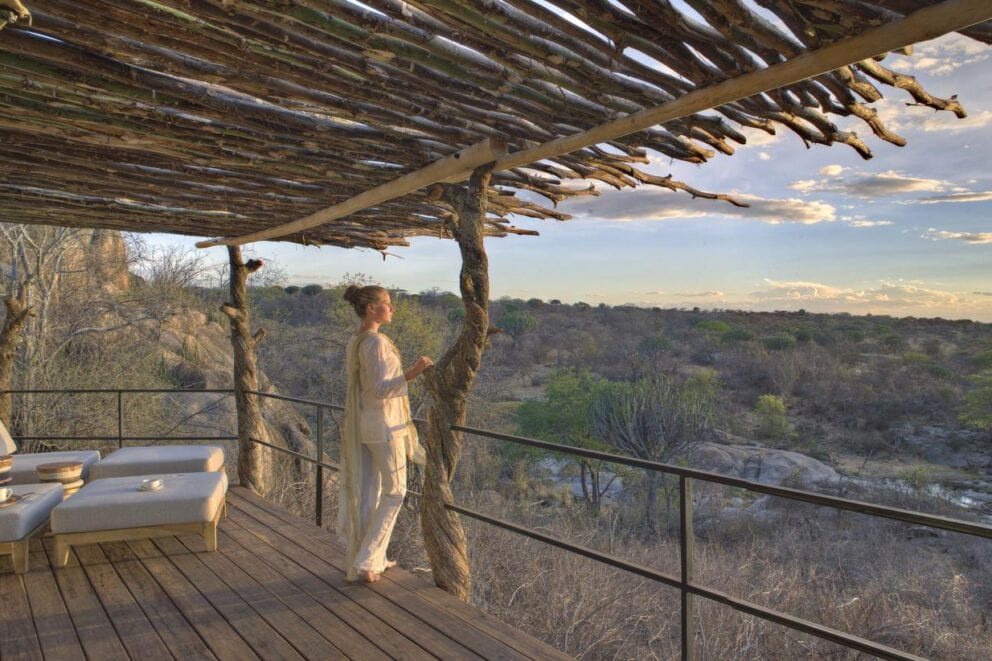
For those seeking the exclusivity of a private reserve, Mwiba Lodge is for you. Situated on a private expanse of over 51,000 hectares to the west of the Serengeti National Park, the lodge and its surrounds provide travellers with front-row seats to the calving season – without crowds!
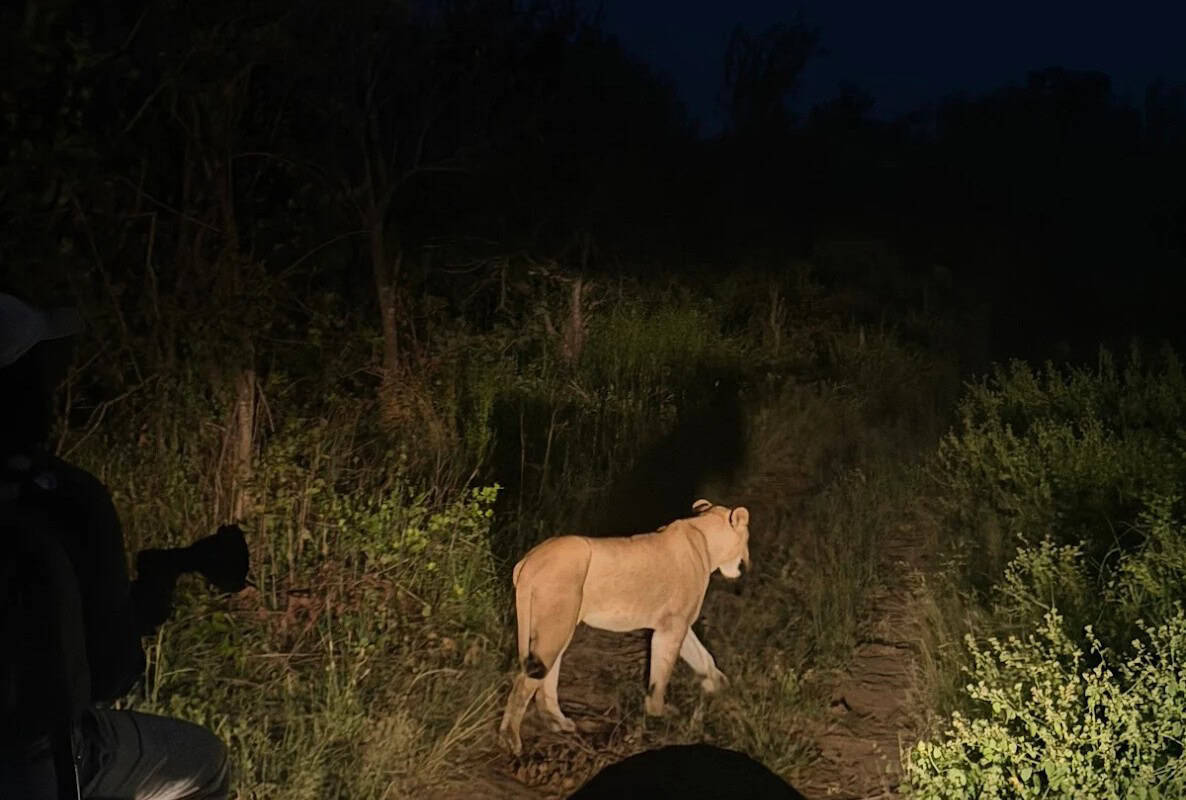
During this period, large herds of zebra and wildebeest settle in the area to calve, turning it into somewhat of a nursery for young animals. As this lodge is in a private reserve, safari vehicles aren’t restricted to traditional game drive rules, so driving off-road and night drives are permitted.
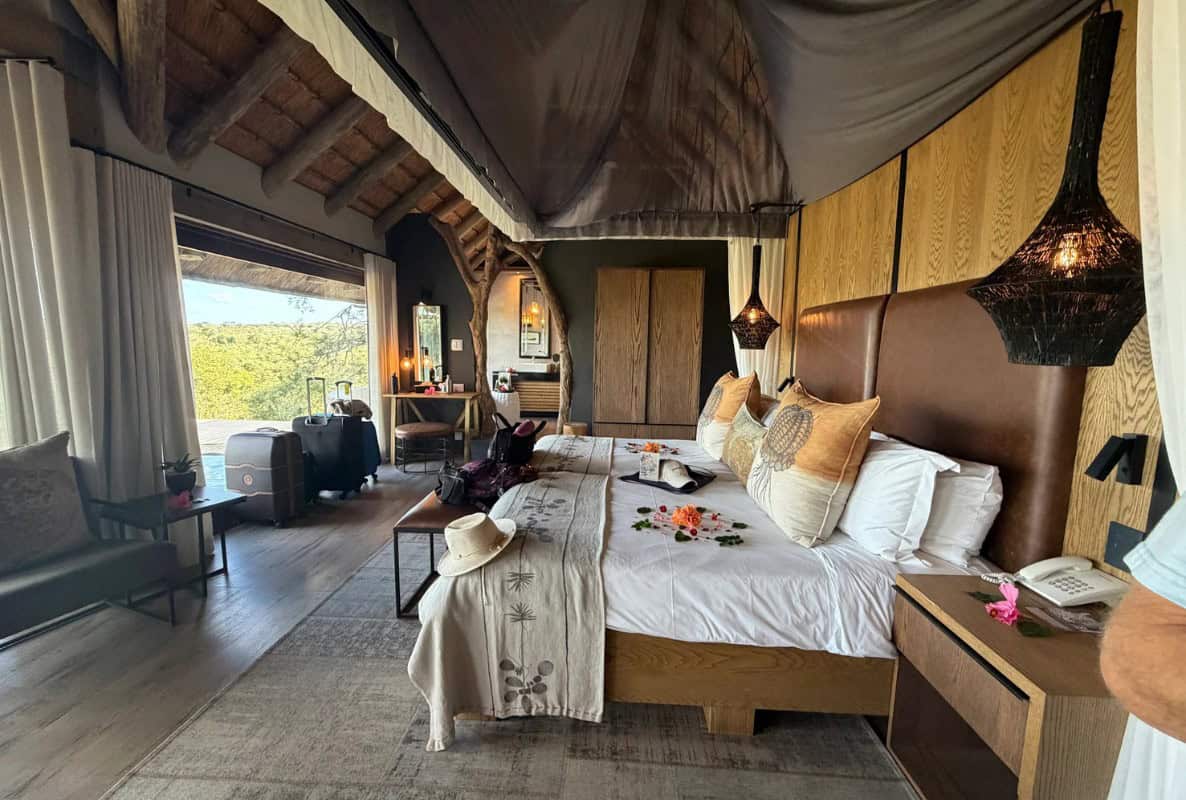
Beyond the births of a new generation of wildebeest, the lodge itself is sculpted into the natural rock landscape, with views overlooking a waterhole frequented by wildlife. Each of its ten suites features a private deck overlooking the river, a large soaking tub, an outdoor rain shower, and a personal minibar. A pool complements the main deck overlooking the waterhole, so you can cool off, cocktail in hand, while gazing upon the wildlife below.
5. Lemala Ndutu Mobile Tented Camp
For an intimate, authentic safari experience, Lemala Ndutu Mobile Tented Camp is an unbeatable choice during the Great Migration’s calving season. This seasonal camp relocates strategically throughout the year to stay as close as possible to the migration’s path. Between December and March, it’s perfectly positioned in the Ndutu region of the Ngorongoro Conservation Area, giving travellers an incredible vantage point from which to witness the calving season.
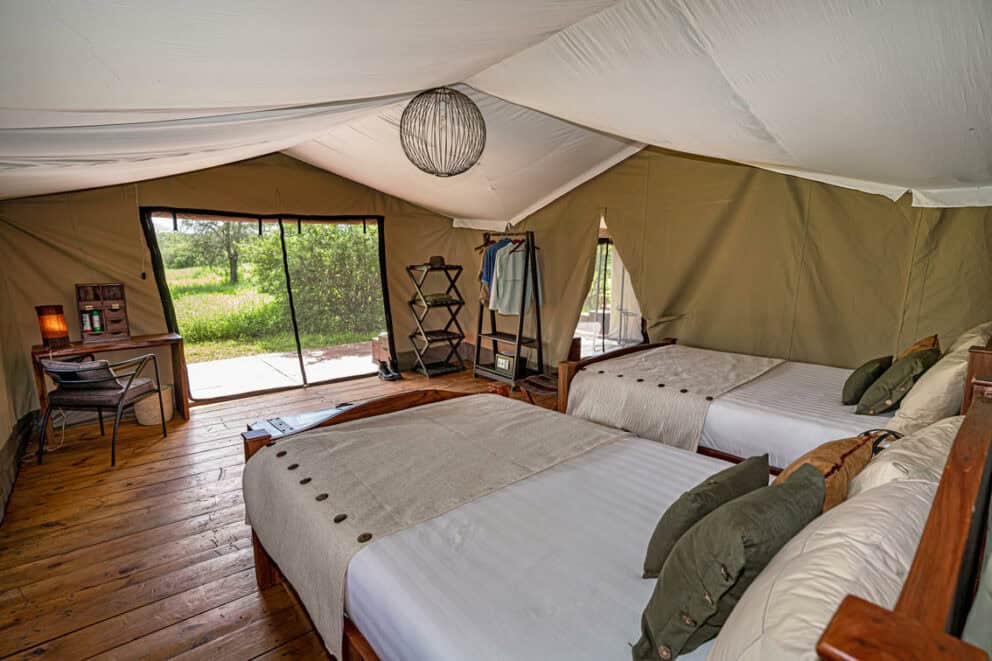
With just nine spacious en-suite tents in a classic mobile tented style, the camp offers an exclusive and personal atmosphere. Each tent is set along the edge of a permanent marsh, attracting a steady stream of wildlife to watch.
Lemala Ndutu leans into its wild, nomadic spirit – it’s designed for those who want to feel closer to nature. The camp’s eco-conscious design and minimal environmental footprint make it a great option for travellers looking for a sustainable safari experience.
This region is also particularly rich in predator activity during calving season, with big cats being drawn in by the thousands of newborn wildebeest and zebra calves. The open landscape of the southern Serengeti and Ndutu plains offers exceptional visibility, making it a favourite among wildlife photographers.
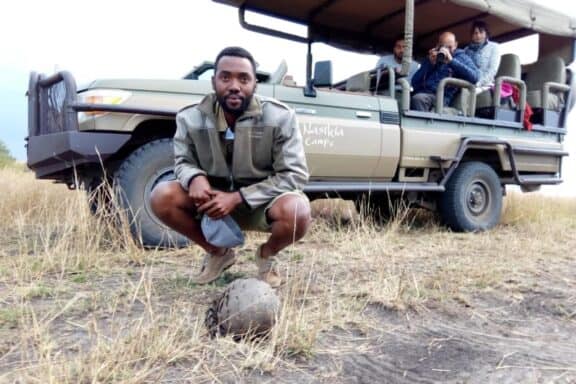
Guides at Lemala are known for their deep local knowledge and excellent tracking skills, helping guests get up close to the migration herds and elusive predators alike. Game drives often run at flexible hours, maximising the chances of exceptional sightings throughout the day.
If your dream is to experience the Great Migration at its most tender moment, Lemala Ndutu Mobile Tented Camp is one of the best places to be. This rustic-chic safari experience places you right at the centre of some of the calving season’s most unforgettable scenes.
Whether you’re an avid wildlife photographer, a first-time safari-goer, or simply want to see a different side of the Great Migration, the calving season is a remarkable time to visit Tanzania’s Serengeti and Ngorongoro Conservation Area. To see the latest sightings of the migration, check out our handy HerdTracker tool.

Written by Thaakiera Ackerdien
• Travel Writer
Discover the African Journey that’s Right for You
 Blog List


























Written by Thaakiera Ackerdien
• Travel Writer
Part of the Tanzania Safari & Great Migration Safaris Collections