

 Email us



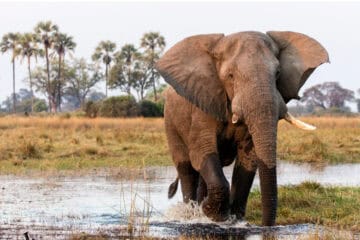
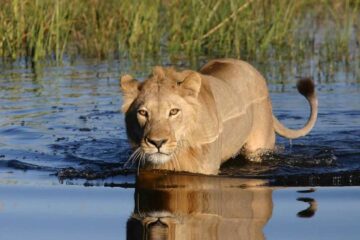


You can spend months planning an Okavango Delta safari, debating which camps feel right or how many nights to stay. Then someone mentions a helicopter flight over the Okavango Delta, and suddenly the conversation changes. Suddenly, you’re not just planning a trip; you’re mapping out an adventure of a lifetime.
Because the Delta was never really meant to be understood from one angle alone.
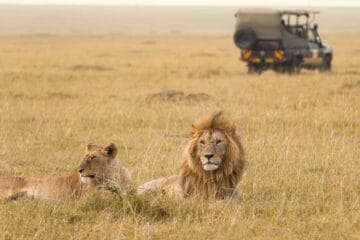
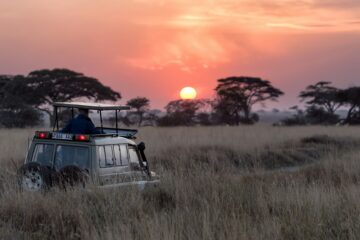
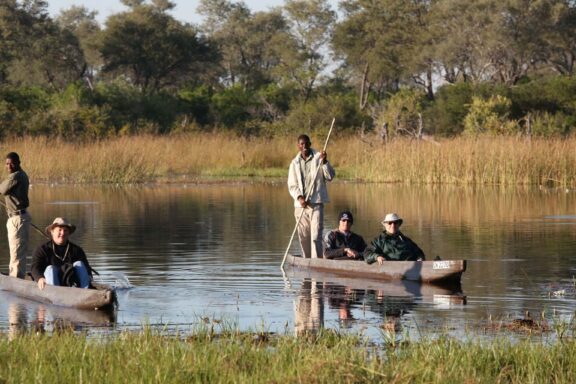
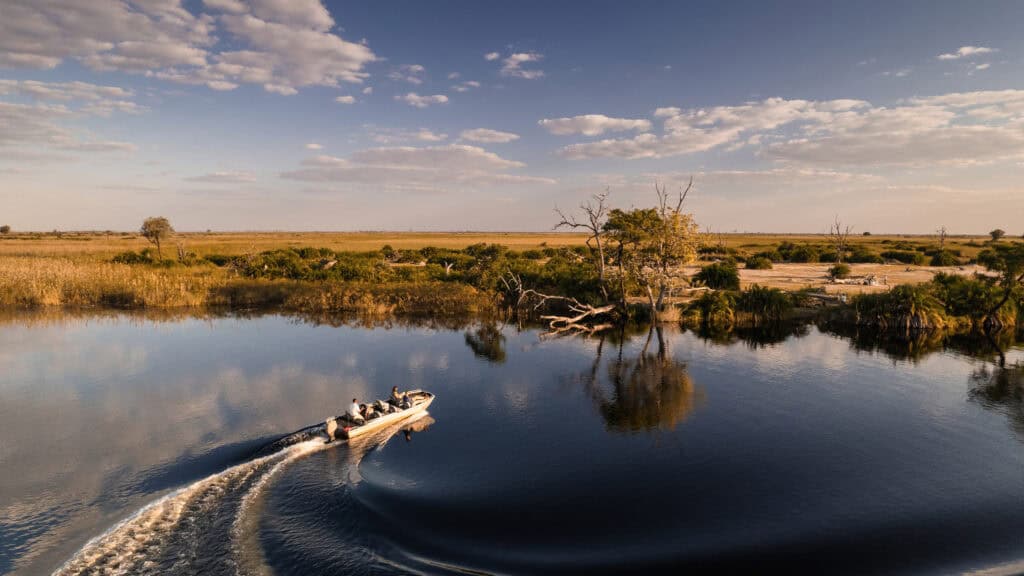
On a mokoro, you notice dragonflies skimming the water and reed frogs clinging to papyrus stems. On a game drive, your attention narrows to tracks in the sand or movement in the trees ahead.
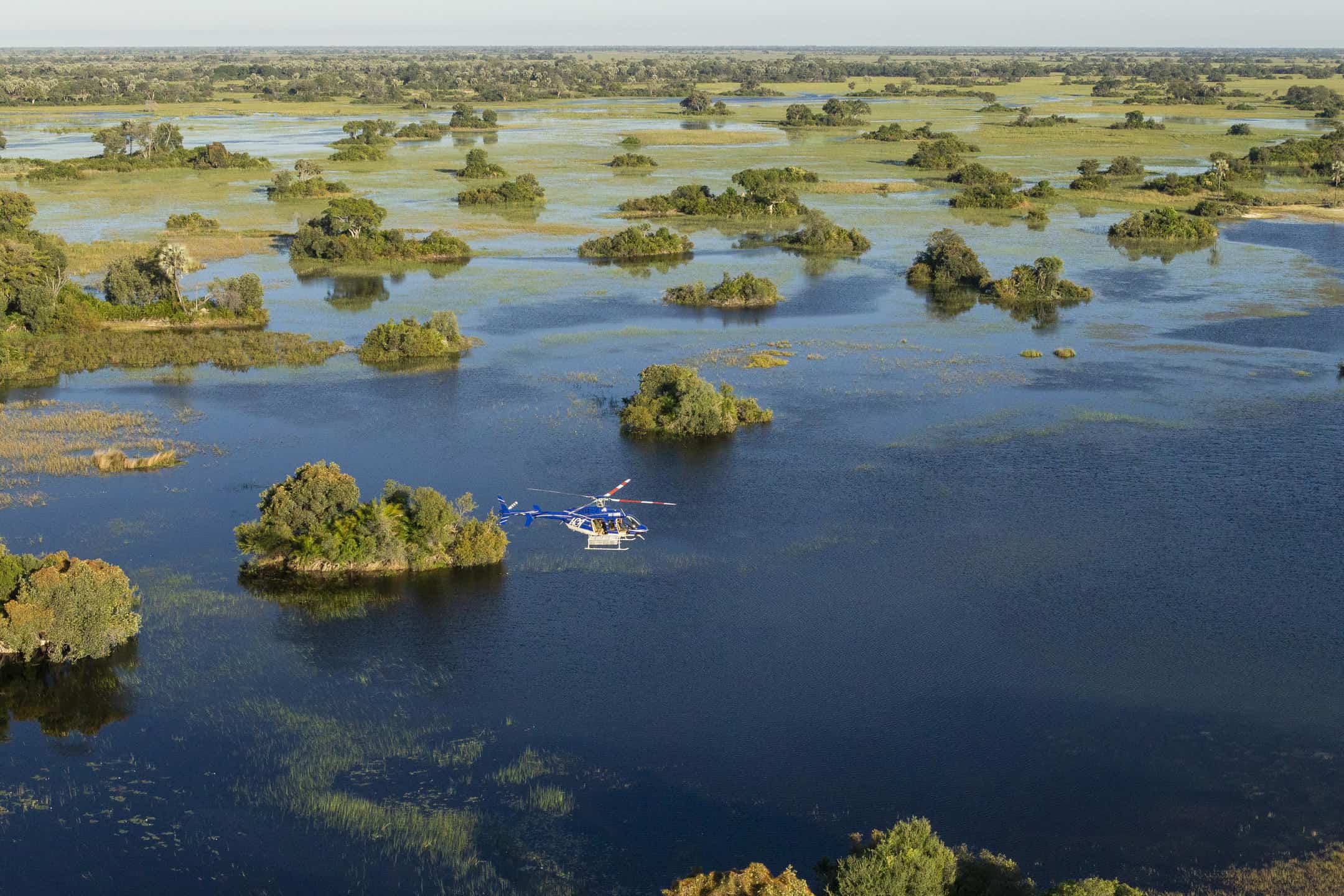
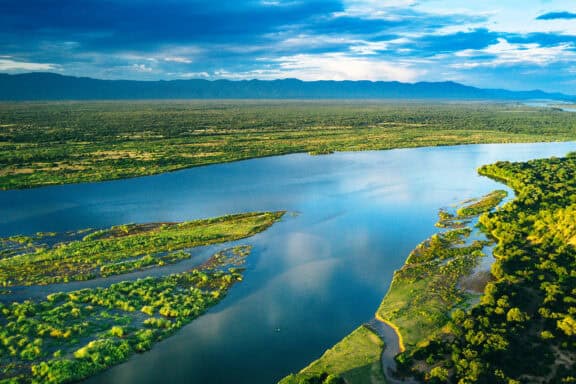
From above, the pieces begin to connect. Channels branch through islands, wildlife moves between pockets of dry land, and the sheer scale of northern Botswana comes into focus.
For many travellers, a helicopter flight over the Okavango Delta becomes far more than an optional extra. It becomes the moment that changes how they see the Delta altogether.
What Does a Helicopter Flight Over the Okavango Delta Actually Involve?
There are two ways most travellers experience helicopters in Botswana.
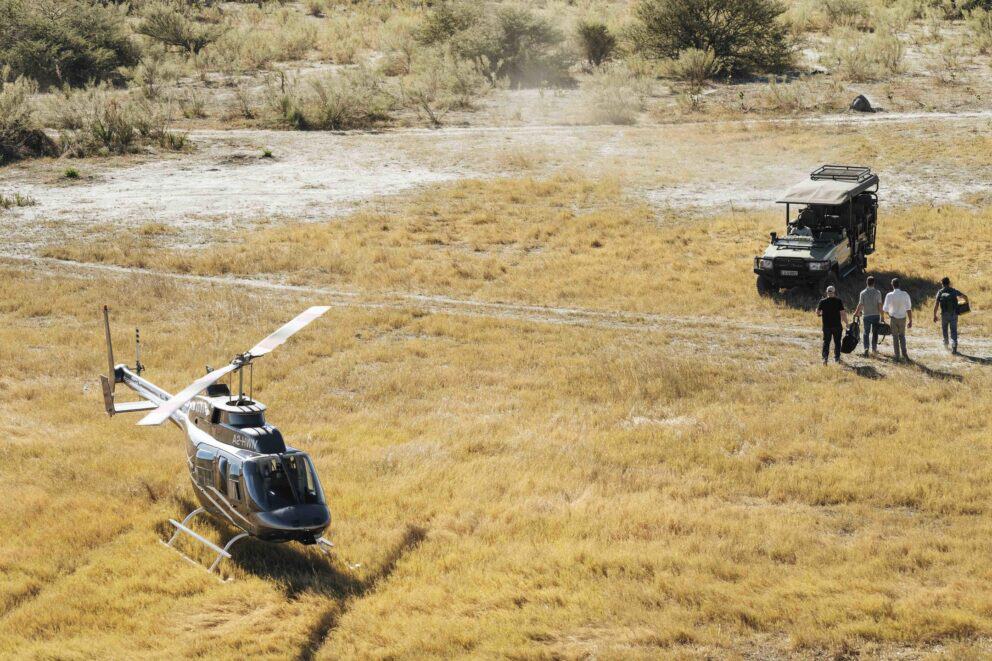
The first is a scenic flight designed purely to showcase the landscape from above. The second is a transfer between camps that replaces a traditional fixed-wing flight and road transfer.
Increasingly, travellers are choosing the latter.
Instead of driving to an airstrip, waiting for luggage to be loaded and flying to another airfield before climbing back into a vehicle, helicopters can often collect guests directly from camp and deliver them to their next destination while offering remarkable views along the way.
This is one of the reasons safari planners increasingly recommend helicopter transfers to clients staying in camps on opposite sides of the Delta. Rather than losing half a day to logistics, guests gain additional game drives, longer breakfasts overlooking the floodplains, or simply more time at camp.
That matters for luxury travellers, as the most valuable currency on safari is often time.
Why a Helicopter Flight Over the Okavango Delta Feels so Different
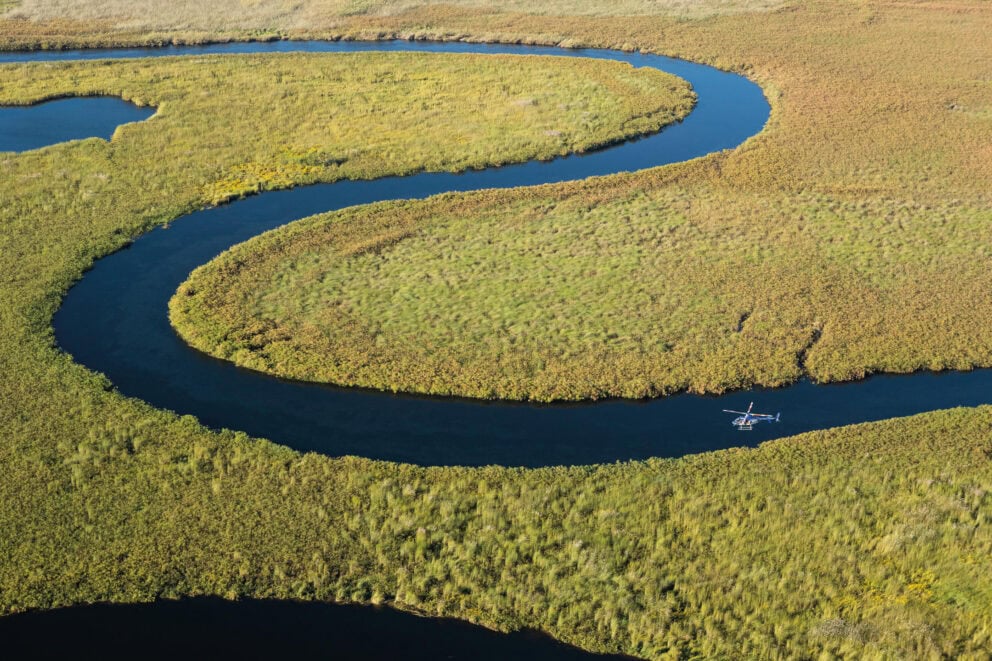
The Okavango is beautiful from the ground. From the air, it becomes easier to understand how the whole ecosystem fits together.
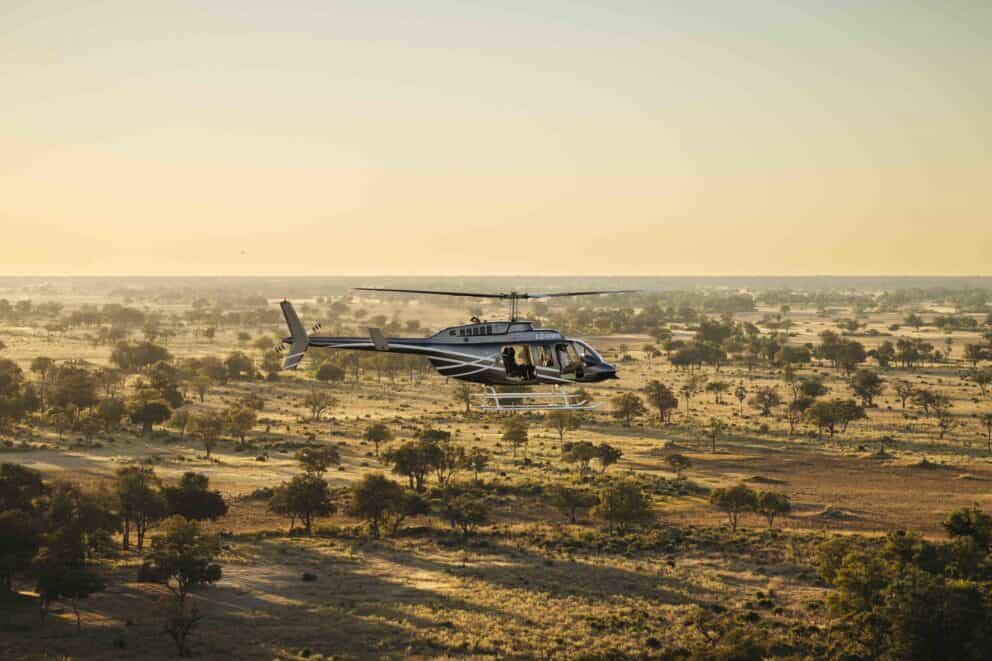
Unlike fixed-wing aircraft, helicopters can fly lower and move more freely across the landscape. During scenic flights, doors are often removed, creating uninterrupted views and making photography considerably easier.
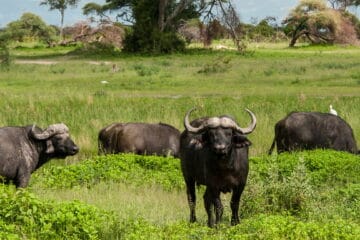
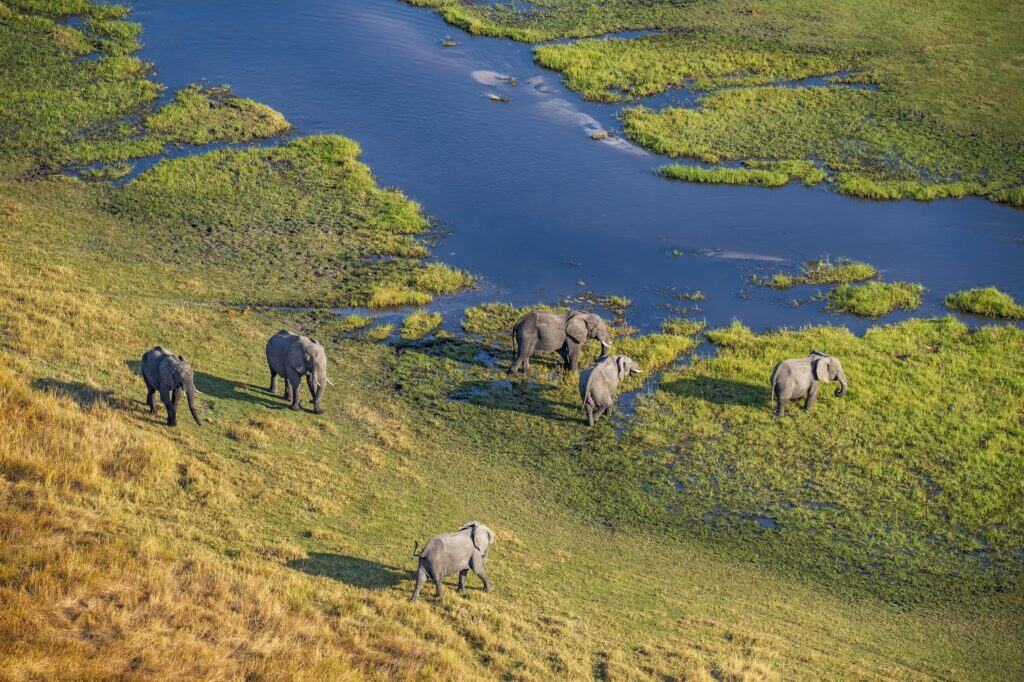
An Okavango Delta helicopter experience reveals details that are difficult to appreciate from camp level. Hippo paths become visible as pale ribbons cutting through floodplains. Buffaloes move between islands that appear isolated from the ground. Water channels split and rejoin across the landscape like tributaries on a map.
Many guests describe the experience less as flying and more as hovering above a living map.
That perspective is what makes a helicopter safari feel fundamentally different from any game drive or boat excursion.
Why Safari Experts Recommend a Botswana Helicopter Tour
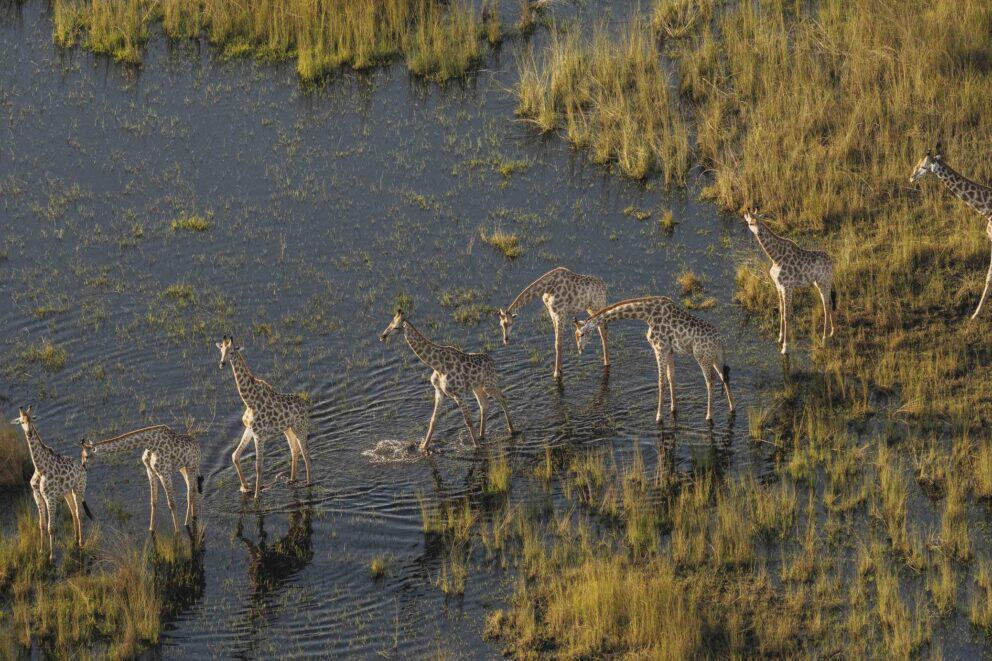
There are usually three moments when safari specialists suggest adding a Botswana helicopter tour to an itinerary.
The first is when guests are combining camps that would otherwise require multiple flights and lengthy transfers. The second is for milestone trips such as honeymoons, anniversaries, or significant birthdays where the experience itself becomes part of the celebration. The third is simple practicality.
If you only have seven or eight days in Botswana, reducing transfer times can make a meaningful difference to the amount of time spent on safari rather than in transit.
Helicopter Horizons recently shared plans to move towards a zonal pricing structure from 2027, simplifying route planning and bringing many shorter helicopter transfers closer to fixed-wing pricing. In practical terms, this opens up combinations of camps that may previously have felt difficult to justify.
The Infrastructure Behind Okavango Delta Helicopter Flights
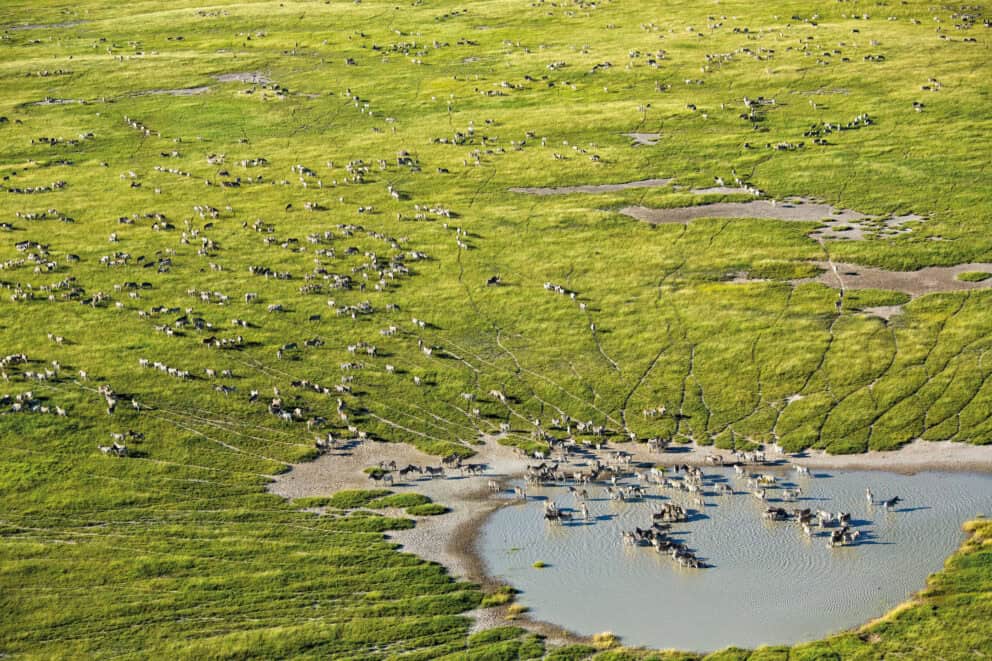
One of the reasons helicopter travel works so well in Botswana is the infrastructure behind it.
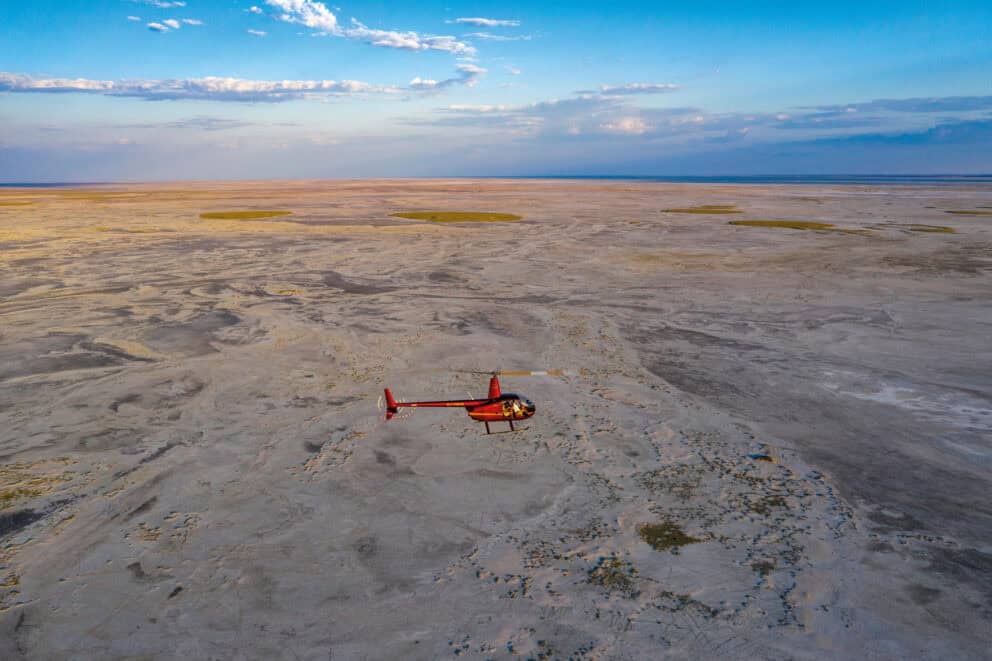
Helicopter Horizons has spent more than two decades operating throughout the Delta, Linyanti, and Makgadikgadi regions and now maintains a network of 35 helicopters positioned across northern Botswana.
Many of these aircraft are based directly in remote areas rather than larger hubs, allowing for more direct routing and greater flexibility when planning itineraries.
Most flights are operated using Robinson Raven 44 helicopters carrying a pilot and up to three guests, although larger helicopters can be arranged for families and private groups.
This network is one of the reasons Okavango Delta helicopter flights have become increasingly popular among travellers looking to maximise both access and flexibility.
More Than a Transfer Between Camps
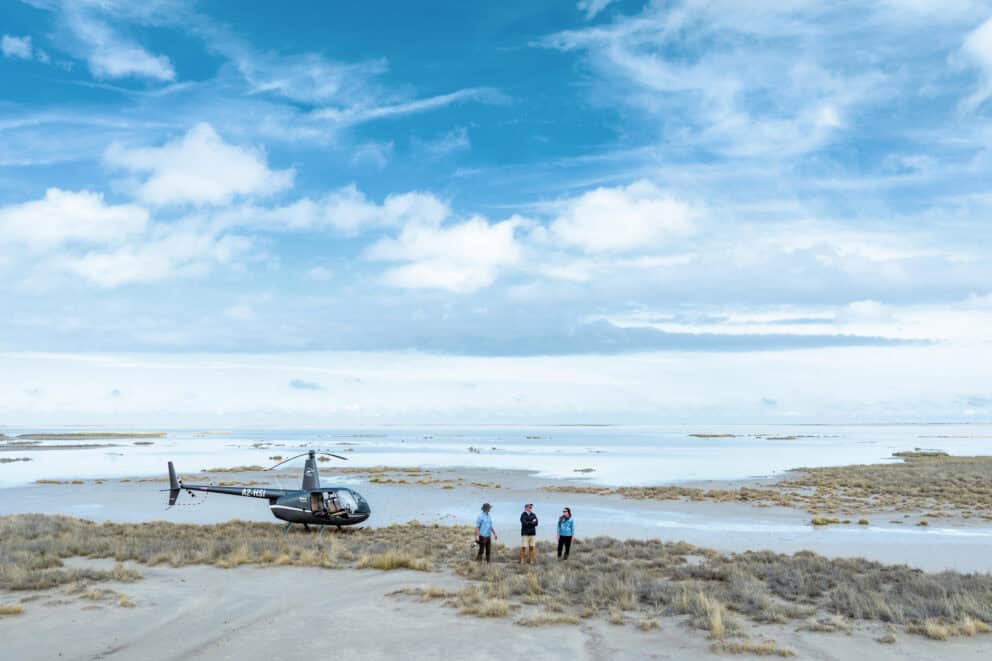
The most memorable part of the experience is not always the flight itself. Sometimes it’s what happens after landing.
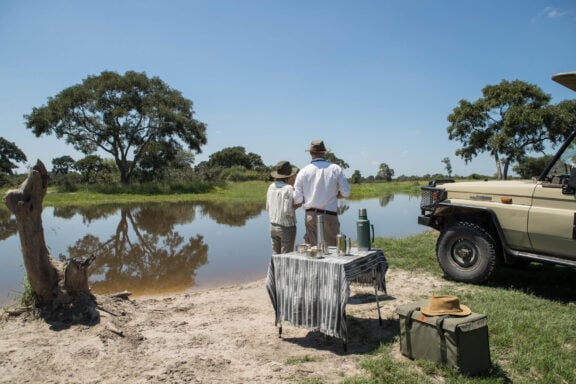
Longer scenic flights can include island stops where guests step out onto a patch of dry ground surrounded by water and grasslands stretching in every direction. A table appears beneath a tree. Drinks are poured. The engines fall silent.
Elsewhere, flights can incorporate visits to conservation initiatives including CLAWS, Life With Elephants, and Elephant Havens, offering insight into the realities of living alongside wildlife in northern Botswana.
These experiences add another dimension to an itinerary and remind travellers that the Delta is more than just a safari destination. It’s also a working landscape shared by communities, conservationists, and wildlife.
Is a Helicopter Flight Over the Okavango Delta Worth the Cost?
Pricing varies depending on flight duration, route, and whether the helicopter is shared or privately chartered.
As a broad guide, shorter scenic flights often start from a few hundred US dollars per person, while private transfers and longer charters naturally cost more.
At first glance, that can feel like a significant addition to a safari budget. The calculation changes slightly when you consider what a helicopter often replaces.
Instead of an airstrip transfer, a flight between camps, and another drive at the far end, guests may travel directly from camp to camp while enjoying one of the most remarkable views in Africa.
You aren’t simply paying for transport. You’re paying for access, perspective, and time.
For many travellers, that changes the conversation considerably.
Is a Helicopter Safari Worth Adding to Your Botswana Itinerary?
Not always.
If adding a helicopter means sacrificing additional nights in camp, many safari experts would probably recommend choosing the extra nights instead.
But if the budget allows for both, a helicopter flight over the Okavango Delta often becomes one of the defining memories of the safari. Not because it’s extravagant. Because it changes your understanding of the landscape below.
Travellers researching Okavango Delta helicopter flight options are often surprised to learn that these experiences work equally well as scenic excursions and practical camp-to-camp transfers.
Whether you choose a short scenic circuit, a longer aerial safari Botswana experience, or a direct transfer between camps, the perspective from above offers something that simply cannot be replicated from the ground.
If you’re considering a helicopter flight over the Okavango Delta as part of your safari, our safari experts can help you decide whether it makes sense for your itinerary and how best to include it alongside the Delta’s camps and experiences.
You can explore our Botswana safaris and Okavango Delta safaris to see where a helicopter experience might fit naturally into your plans.

Written by Yamkela Welaphi
• Travel Writer
Discover the African Journey that’s Right for You
 Blog List





























Written by Yamkela Welaphi
• Travel Writer
Part of the Okavango Delta Safari Collection