

 Email us




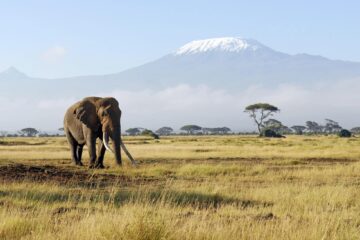
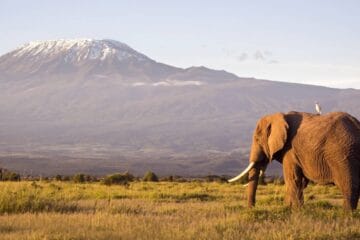

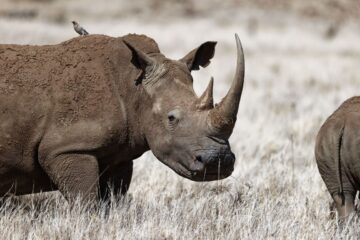
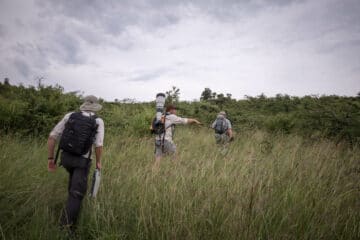



The northern white rhino, an animal which once roamed across Central Africa, now stands on the precipice of silence. The subspecies has been reduced to just two surviving individuals. They are now functionally extinct and have been since 2018 when the last male of the species died. Today, only two females remain, leaving their future dependent on advanced reproductive technology.
As we look at the last two northern white rhinos left in the world, the question remains: can cutting-edge science bridge the gap between extinction and a miraculous recovery?
History of the Northern White Rhino Population
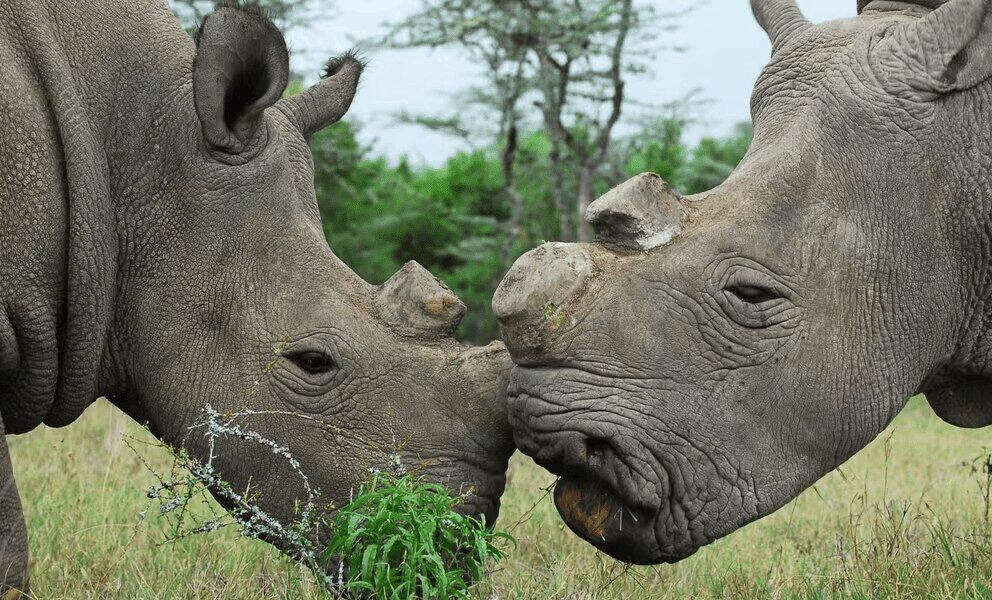
The history of the northern white rhino is a sobering lesson in how quickly a legacy can vanish. In 1960, the population was healthy, with over 2,000 rhinos thriving in the wild. However, a brutal combination of poaching, habitat loss, and civil unrest saw those numbers collapse to just 15 by the 1980s.
Despite extensive conservation efforts and a brief recovery to 32 individuals in 2003, the tide turned once again. By 2009, only eight remained, all living in captivity in the Czech Republic and the USA. In a final effort to spark natural reproduction, four of these rhinos were relocated to Africa in one of the world’s most complex animal translocations. It was a last-bid operation, designed to save them from total extinction.
Known as the “Last Chance to Survive” mission, it saw the movement of two males (Sudan and Suni) and two females (Najin and Fatu) from the Dvůr Králové Zoo to the Ol Pejeta Conservancy. This joint effort involved multiple players, including Fauna and Flora International, Back to Africa, and the Kenya Wildlife Service.
On a snowy night in December 2009, all four of them were shipped into massive wooden crates and flown business class to Kenya. At the time of the move, all four had suffered bent leg joints and misshapen horns, a result of the years spent standing on unyielding concrete zoo enclosures. In an agreement with the Kenyan government, the rhinos are never expected to return to the Czech Republic.
After the move, they were given around-the-clock care and surveillance. They were also dehorned to protect them from poaching and give their horns a chance to regrow into a natural shape. This was all done in the hope that their new natural surroundings, and the presence of other wild rhinos, would stimulate natural breeding. Unfortunately, the animals failed to naturally reproduce, and no successful pregnancies followed.
How Many Northern White Rhinos Are Left in The World?
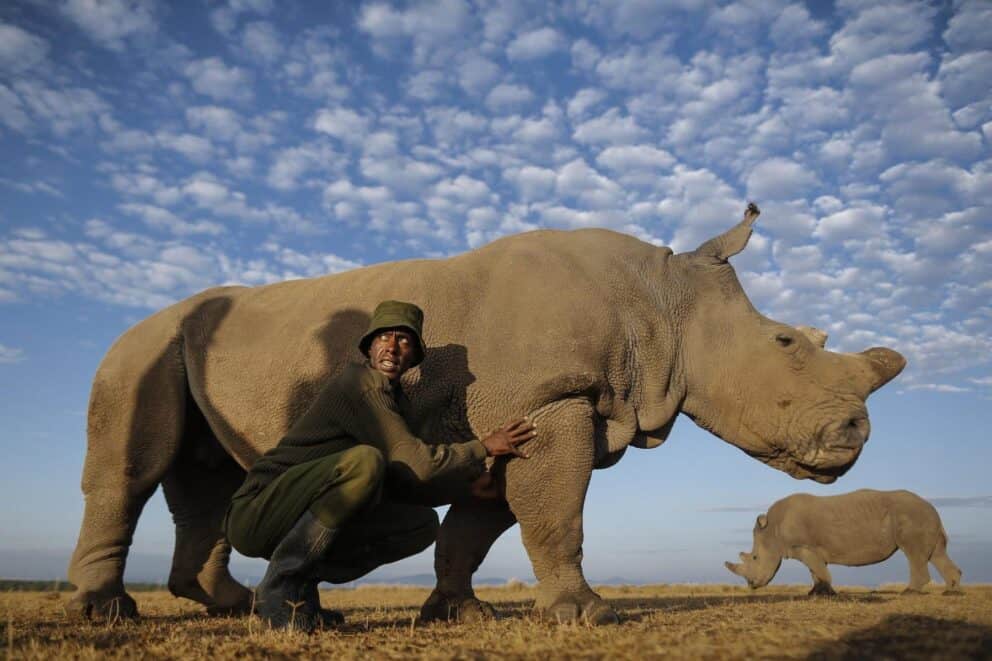
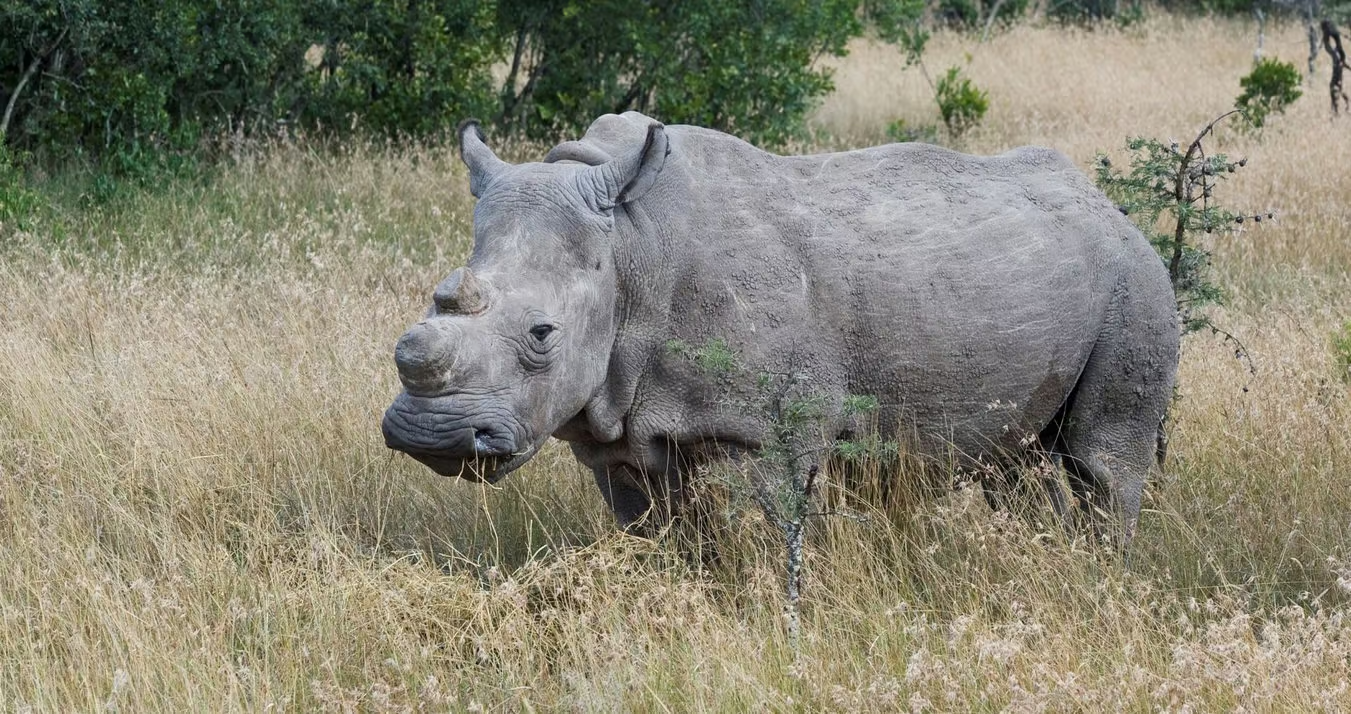
The odds of seeing a northern white rhino in the wild are virtually non-existent, despite the odd unconfirmed sighting here and there. Currently, there are only two northern white rhinos left in the world. Both are female – Najin and Fatu – and they live under 24/7 armed guard at the Ol Pejeta Conservancy in Kenya.
Suni, a male born in captivity at the Dvůr Králové Zoo in 1980, died from natural causes on the conservancy in 2014, while Sudan, who was caught from the wild in 1975, died in March 2018. Following the death of Sudan – the last male of the subspecies – Najin and Fatu are now the only living representatives of their subspecies. This makes the northern white rhino functionally extinct.
They now live in specifically constructed bomas, under the constant watch of specialists and staff.
Can Science Save the Rhino?
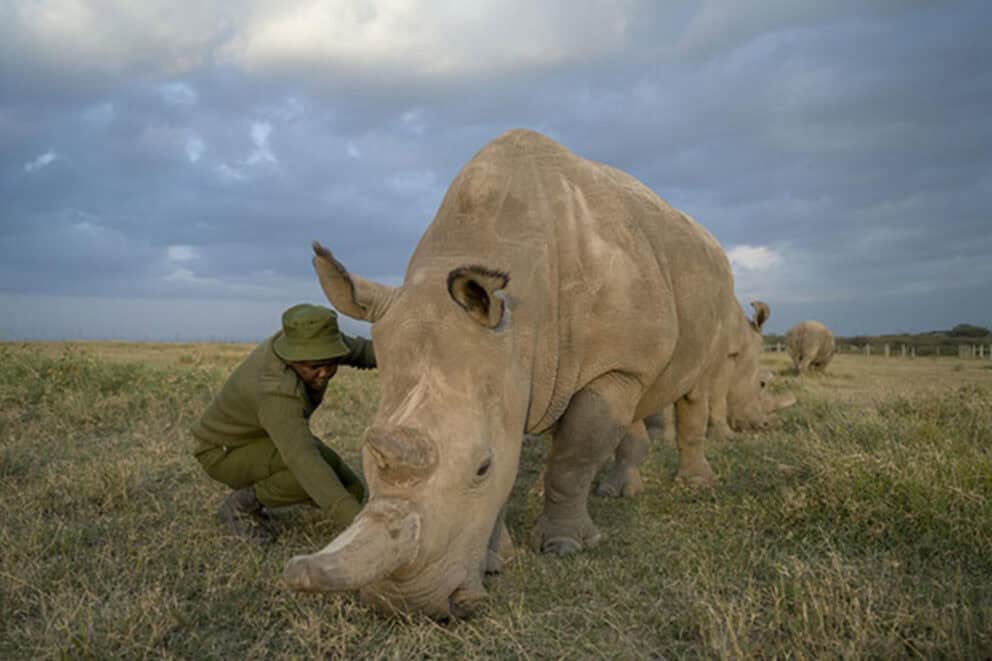
As natural reproduction has failed, saving the northern white rhino depends on science and experimental technology. Now that there are just two individuals left, a mother and daughter, some conservationists are hoping to use in vitro fertilisation (IVF) to help the animals reproduce.
So far, 38 viable northern white rhino embryos have been created using reproductive cells recovered from the two females – Najin and Fatu – and frozen sperm from deceased males. In 2021, Najin was retired from the egg-harvesting programme due to her age and health concerns.
According to the conservation group Save The Rhino, IVF is incredibly complex, and it’s unlikely that the methods required will be put in place before the last northern white rhino dies. In addition, each rhino subspecies has a unique physiology, and for IVF to work successfully, it needs to mimic the uterine environment of the animal.
However, BioRescue, an international project funded by the German Federal Ministry of Education and Research, is actively looking to rectify this. Through research and the good old scientific method, BioRescue is using advanced cellular and reproductive technologies to create a future for the subspecies.
Before attempting this on the northern whites, it took 13 attempts to achieve the first viable IVF pregnancy using embryos from southern white rhinos. However, 70 days into the pregnancy, the mother unfortunately passed away from an unrelated infection. Despite this tragic blow, it showed that the technique had worked, and an IVF rhino pregnancy was possible. The next step was now to use northern white rhino embryos.
Because Najin and Fatu are no longer able to reproduce, the plan is to implant these embryos into a southern white rhino, who will act as a surrogate to carry northern white rhinos. As of August 2025, BioRescue has produced three additional northern white rhino embryos, which were then transferred to surrogate southern white rhinos.
However, there are several practical concerns for any animal born this way. The loss of much of this sub-species’ former range and the limited availability of conservation programmes with expertise to manage rhino populations pose serious difficulties.
Concerns and Debates
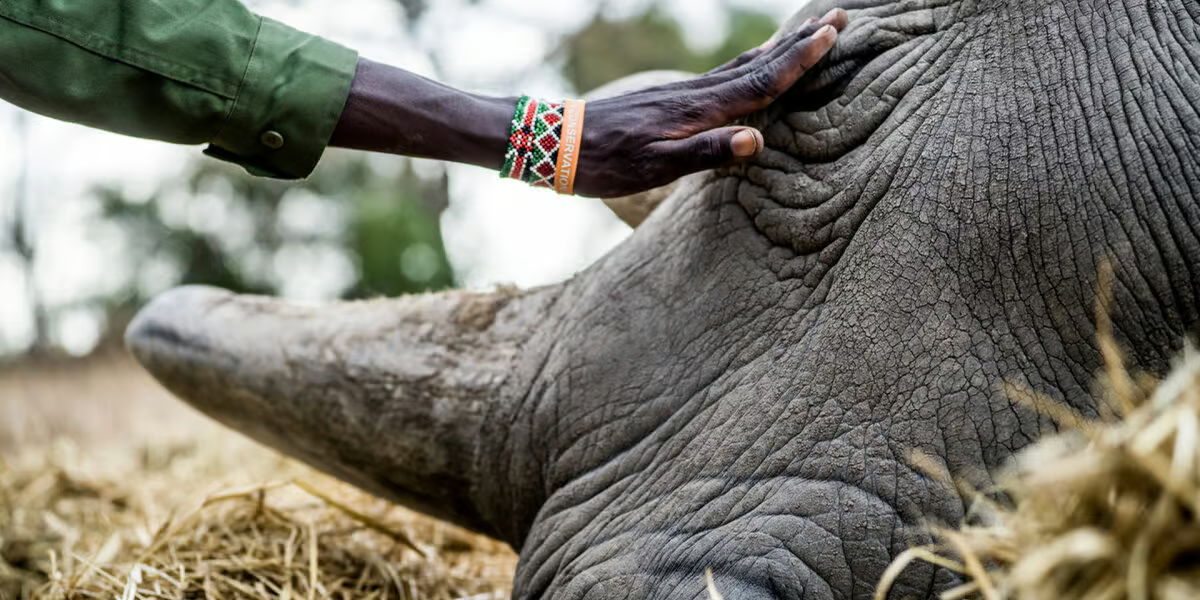
The effort to save the northern white rhino through IVF raises significant ethical and financial questions. Critics point to the immense cost of the experimental IVF programme, suggesting that these funds might be more effectively used for the conservation of other rhino species (or other endangered animals) that still have viable wild populations.
There is also the problem of limited genetic diversity. Even with the 38 viable embryos created, reviving a species from near-extinction typically requires at least 20 unique individuals to ensure long-term survival, a threshold that may be impossible to reach for this subspecies.
Furthermore, an ethical debate exists regarding the “wild” status of future generations. If northern white rhinos are born to southern white rhino surrogates and raised in strictly managed, captive conditions, conservationists question whether they can truly be considered a wild species or if they would simply be a biological representation of a lost legacy.
Northern White Rhino vs Southern White Rhino
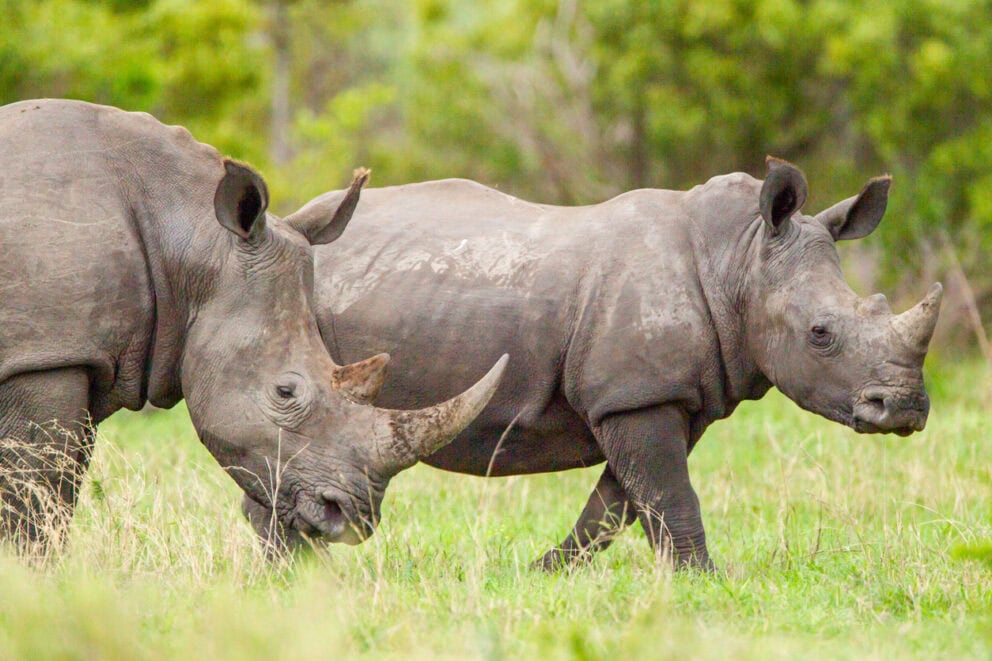
While they may look extremely similar to the untrained eye, the northern white rhino is a distinct entity from its southern counterpart. Limited research on the diminishing population throughout the 20th and early 21st centuries indicates that the northern white rhino is slightly smaller and has less prominent skin folding.
Their legs are also shorter relative to their body length, with a higher head carriage and a less concave skull. They also have a distinct lack of fine hair – a prominent feature of their southern counterparts.
Scientists say that the two subspecies split around a million years ago, with the southern white rhinos being based in southern Africa and northern whites living in Central Africa. They once roamed Uganda, Chad, pre-partition Sudan, the Central African Republic (CAR), and the Democratic Republic of the Congo (DRC).
While the northern white rhino is functionally extinct, their cousins in the south are somewhat of a conservation success story, with strong populations in South Africa and Namibia.
Witness the Last Two Northern White Rhinos
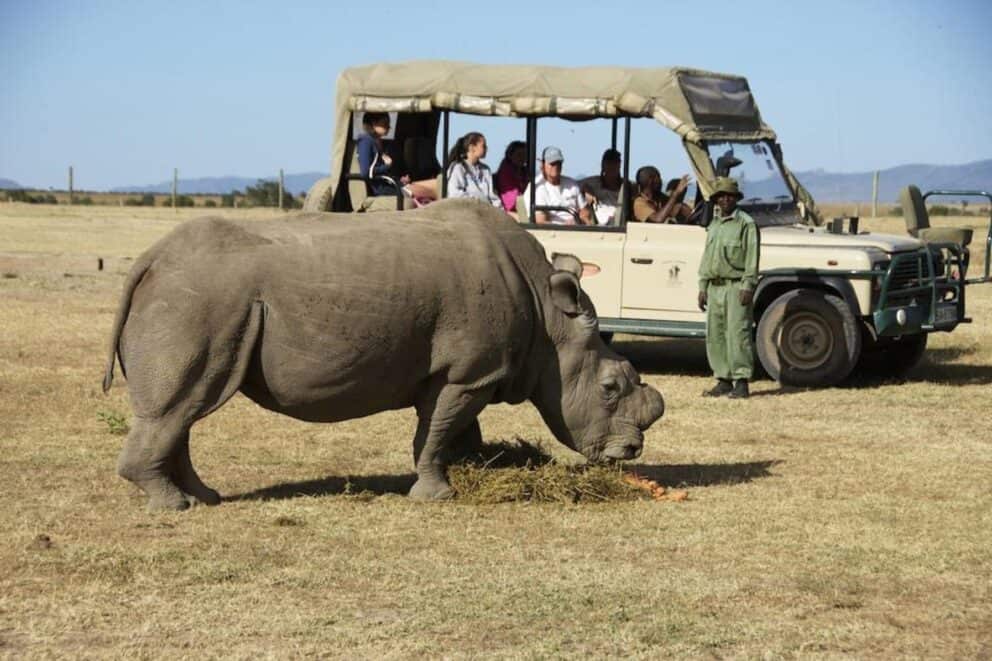
For those who seek to leave a positive mark on the world, visiting the last two northern white rhinos is a transformative experience.
Located in the shadow of Mount Kenya at the Ol Pejeta Conservancy, this is a rare opportunity to stand in the presence of a species at its most vulnerable moment. Your visit also directly supports the massive security and research efforts required to maintain this conservation dream.
Meeting Najin and Fatu offers a deeply impactful encounter. Witness how conservation and science are working to protect them and other species on the brink of extinction. Witness this miracle in person, learn their stories from their keepers, and carry on their legacy.
Speak to our safari experts today and plan your dream conservation experience.

Written by Thaakiera Ackerdien
• Travel Writer


Verified by Alice Lombard
• Destination Expert
Discover the African Journey that’s Right for You
 Blog List





























Written by Thaakiera Ackerdien
• Travel Writer
Verified by Alice Lombard
• Destination Expert
Part of the Kenya Safari & Rhino Safaris Collections