

 Email us










Whether you’re a seasoned twitcher looking to tick off elusive endemics or a baby birder just starting off, Africa birding safaris offer an experience unlike any other. Africa is a vast, living landscape filled with stunning wildlife – and its birdlife is no different. It’s a wonderland where over 2,000 species – roughly 20% of the world’s bird population – thrive across its biomes.
From the shrubby grasslands of the Masai Mara to the dense jungles of Bwindi, every horizon has a new lifer to add to your list of birds to see. Here are the best birdwatching destinations for Africa birding safaris.
Southern Africa
The south of the continent is probably one of the best places to start when considering where to go for your Africa birding safari. It boasts key areas, numerous endemics, diverse habitats, and easy access to the Big Six – martial eagle, lappet-faced vulture, Pel’s fishing owl, southern ground hornbill, kori bustard, and saddle-billed stork.
1. Okavango Delta, Botswana
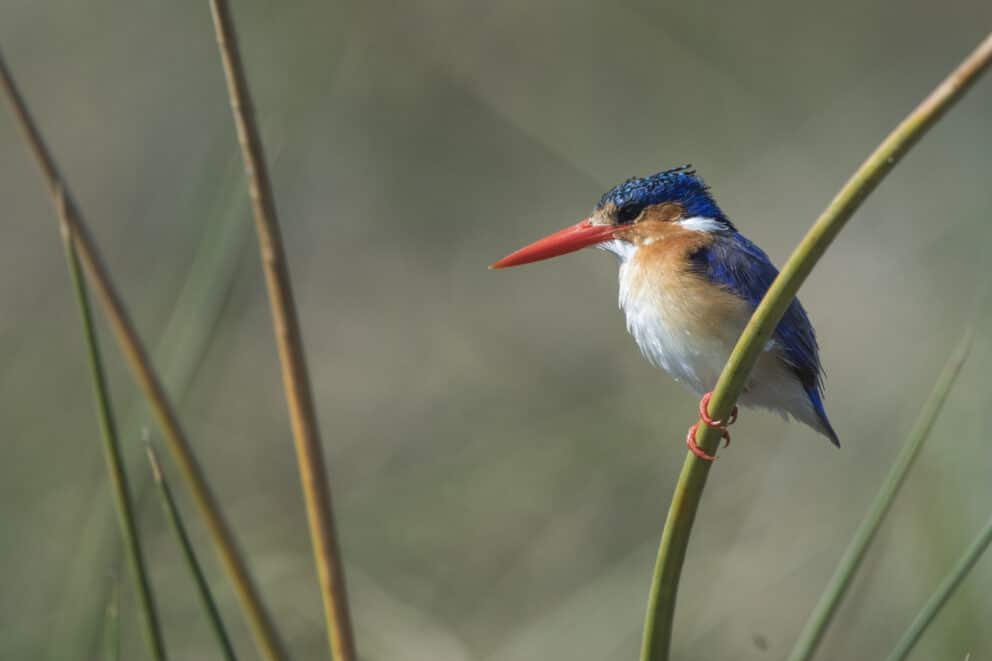
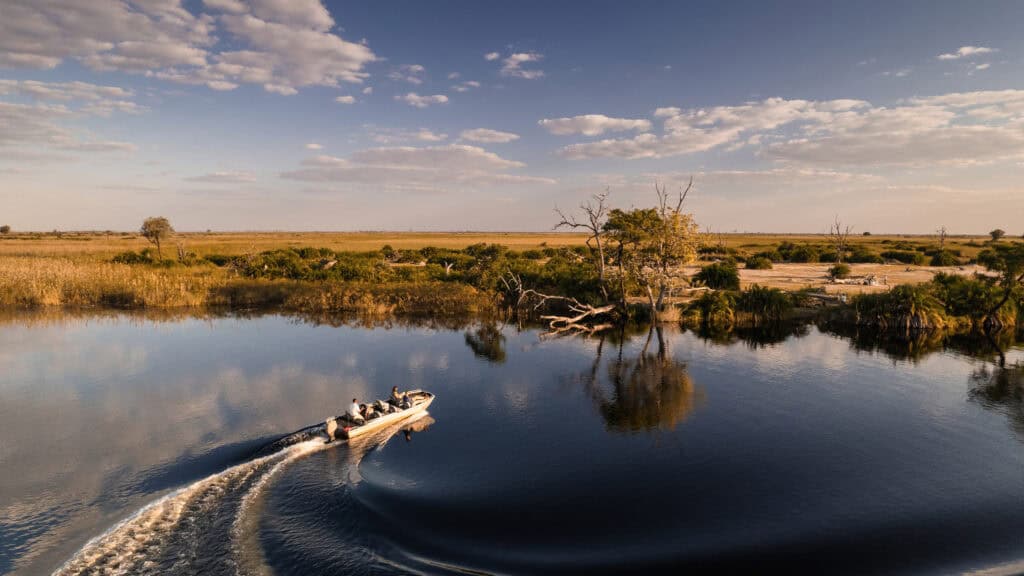
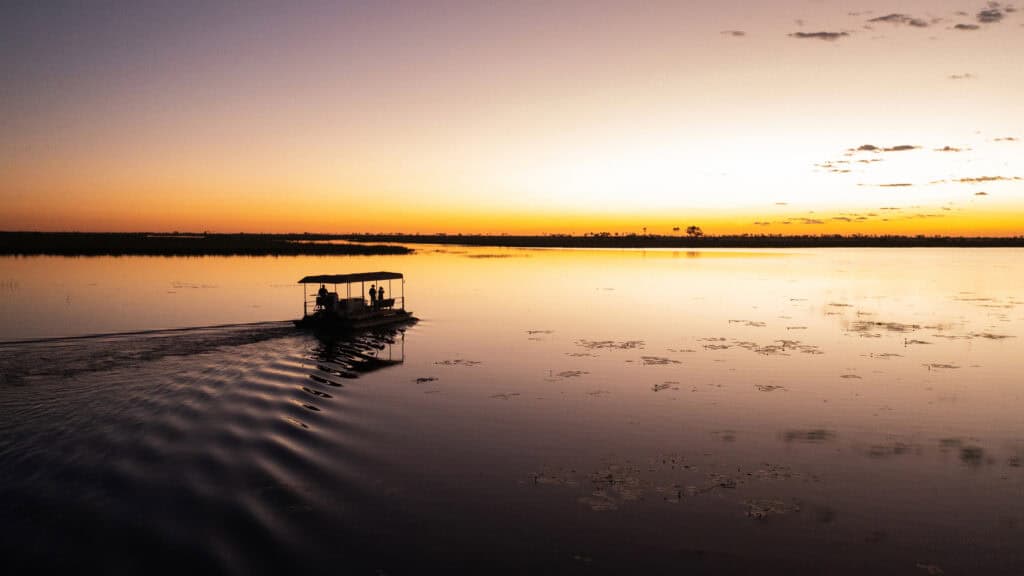
The Delta is a pinnacle of avian diversity. By navigating the labyrinth of waterways and channels of the Okavango Delta by mokoro or motorboat, you’ll be able to experience some of the best birding in the world. The wealth of species diversity in the Delta is immense, with over 600 species. It’s a fantastic location for serious (or amateur) birders and photographers.
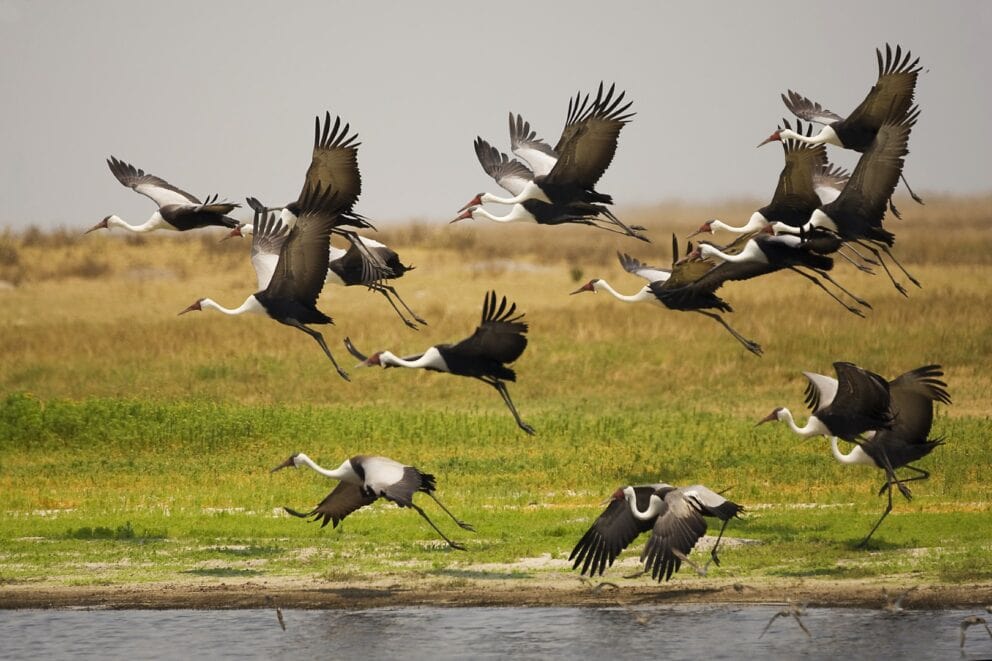
Diverse habitats make up the puzzle pieces of the Delta, including both swamps and woodlands, which are fantastic for spotting waterbirds and raptors. Keep your binoculars at the ready for the elusive Pel’s fishing owl, the wattled crane, and the African skimmer. For a newbie, the Okavango Delta is the perfect start to your Africa birding chapter.
Best Time: November to March (green season) is ideal for spotting migrants, while the flood season (May-August) attracts high concentrations of water birds.
Some prime birding hotspots in the Okavango Delta include:
- Moremi Game Reserve
- Xakanaxa Lagoon
- Chief’s Island
- Khwai River and Concession
2. Greater Kruger, South Africa
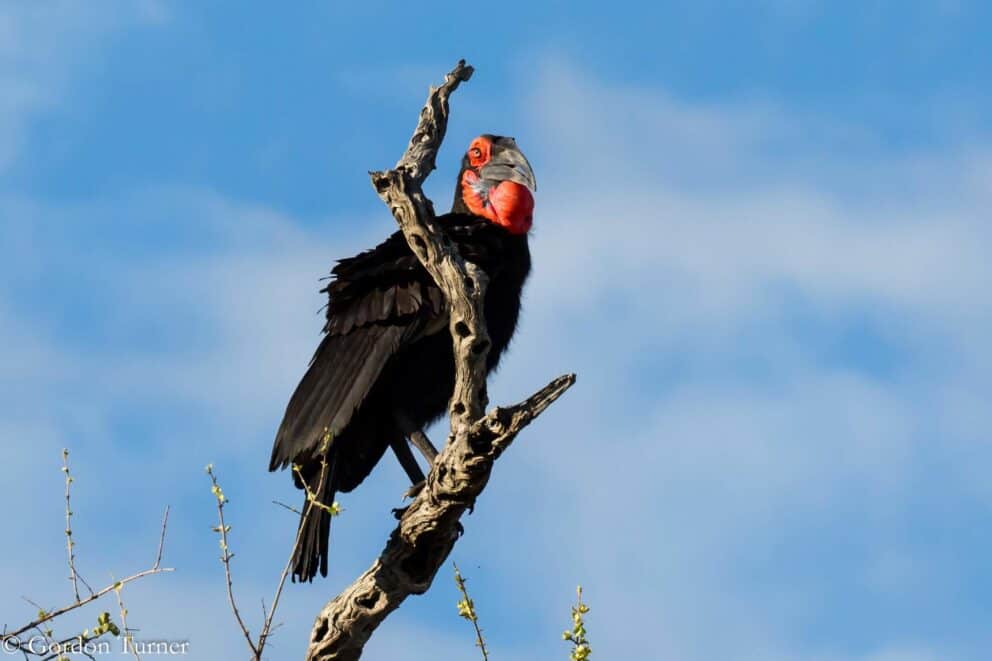
For birdwatching in South Africa, the Kruger remains unbeatable. It boasts over 500 species, including the Birding Big Six: the lappet-faced vulture, martial eagle, saddle-billed stork, Pel’s fishing owl, southern ground hornbill, and kori bustard.
The park’s diverse habitats mean you can move from riverine forests to dry acacia woodlands, seeing a completely different kit of birds in every loop. This makes for some of the best birding in the world.
To the far north (Pafuri and Punda Maria), a birders’ paradise awaits – this region is ideal for spotting rarities like the Pel’s fishing owl, Arnot’s chat, and the racket-tailed roller. Meanwhile, in the south (lower Sabie and Skukuza), there is a high bird density due to several permanent water sources.
Best Time: The wet summer (October to March) is peak birding season, as approximately 200 migrant species from Eurasia and other parts of Africa arrive, and resident birds often display breeding plumage. During the dry winter (April to September), raptors are particularly active.
Some of the top areas for birdwatching in South Africa include:
- Pafuri
- Punda Maria
- Sabi Sands Game Reserve
- Timbavati Private Nature Reserve
3. Cape Town, South Africa
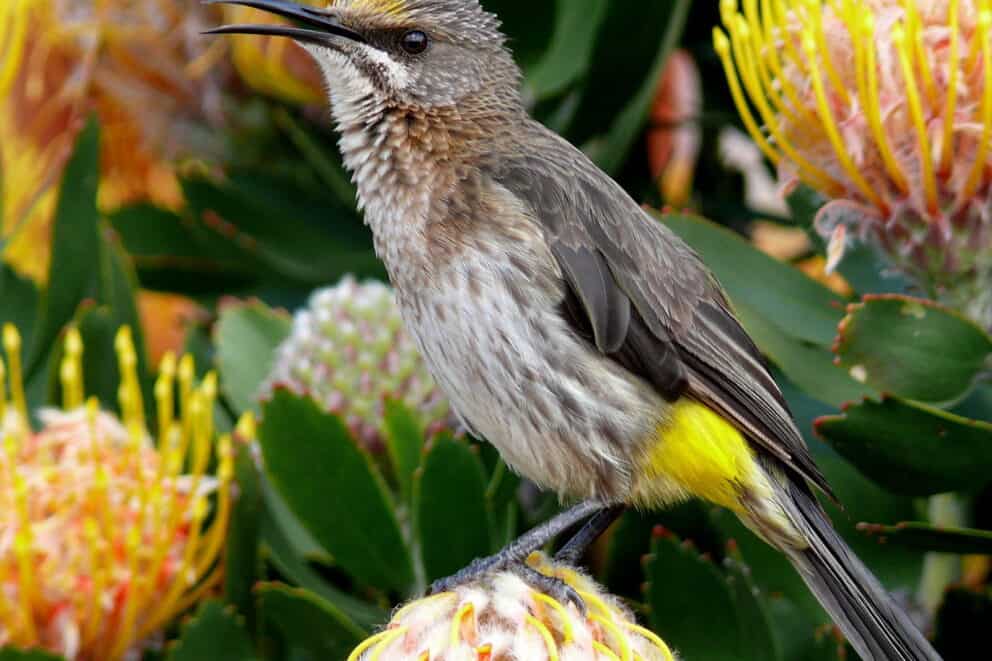
If you think that there aren’t many birds to see in Cape Town, besides pigeons and the occasional pied crow, you’d be incorrect. The shores off the Mother City offer a unique niche in the Africa birding community: pelagic birding. This involves taking a boat trip across the open ocean to observe species that rarely come to land, such as albatrosses, petrels, and shearwaters. Cape Town is a major hub for these excursions, with trips departing daily from Simon’s Town and Hout Bay.
Just imagine seeing a Cape gannet plunge-diving in the distance while kelp gulls fly past on their way to follow a fishing boat. If you’re lucky, you might even spot a raft of African penguins heading out to sea. As you depart, you’ll even be able to see various terns and cormorants roosting in the dozens on offshore granite boulders along the Cape’s rugged coastline.
Back on land, the fynbos biome holds unique endemic species like the Cape sugarbird and the orange-breasted sunbird. They can easily be seen on a simple hike up Constantia Nek – where you can see various other species like forest buzzards, jackal buzzards, and African harrier-hawks. In the city, you’ll probably get woken up by the call of the hadeda and spot Egyptian geese.
Best Time: For pelagic birding, autumn and winter (May to September) is the best time for great albatross species, as sub-Antarctic species move north. Spring and summer (October to April) typically brings north Atlantic migrants, while the shoulder months offer the best chance to see passage migrants as they move between hemispheres.
For birding in the fynbos, the best time is during the springtime (September to November), as many plants are in bloom, attracting nectar feeders.
4. South Luangwa National Park, Zambia
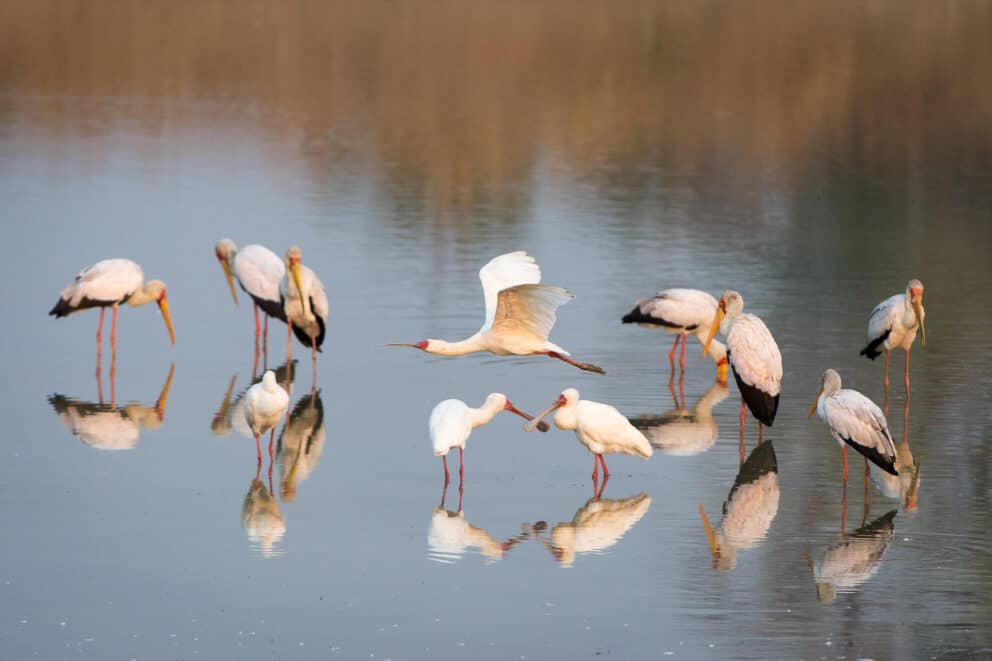
Zambia is famous for its walking safaris, which happen to be the most immersive way to experience an Africa birding safari. South Luangwa offers classic Miombo woodland and riverine species. It sells itself to explorers who want to get out of their vehicles and hear the call of the African broadbill or spot the ginger-coloured Pel’s fishing owl roosting in mahogany trees.
On foot, you move at the pace of the bush. You can hear the faint tapping of a woodpecker or the rustle of a coucal in the thickets that an engine would drown out. Your guide helps you scan the canopy, the mid-level branches, and the leaf litter, allowing you to appreciate the mixed-species foraging parties that are the heartbeat of the Miombo.
The South Luangwa is a mosaic of environments, which is why it has over 400 species of bird. Its Miombo woodland is a specialised biome dominated by Brachystegia trees. It’s home to specialities you won’t find in open savannahs, such as the racket-tailed roller or the babbling starling.
On the other hand, the Luangwa River creates several oxbow lagoons and lush riverine forests. This is where the giant African ebony and mahogany trees provide the deep shade required by more elusive species such as the saddle-billed stork, the African skimmer, and jacanas.
Best Time: November to April is the prime time for birding in Zambia, as it’s the optimal time to see migratory species. Many birds also sport their vibrant breeding plumage during this time.
5. Bangweulu Wetlands, Zambia
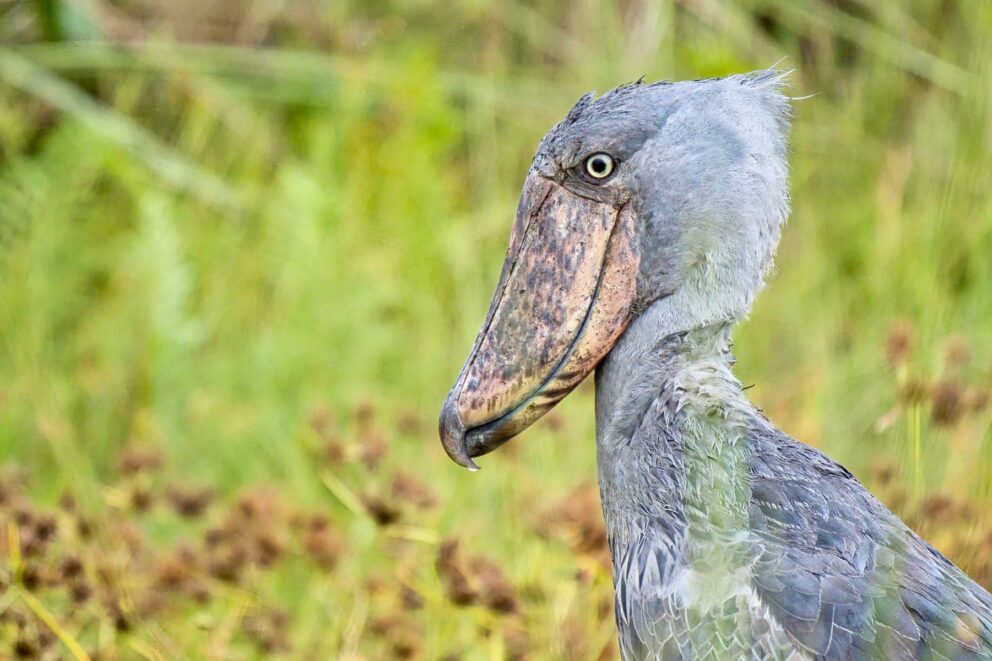
For the hardcore birder, Bangweulu is a pilgrimage site, often hailed as one of the best sites for birdwatching in Africa. This is a high-effort, high-reward destination focused on one major prize: the shoebill.
Located in northeastern Zambia, the Bangweulu Wetlands’ rich and diverse ecosystem forms one of Africa’s most important wetlands. It comprises mostly of floodplains, seasonal and permanent swamps and woodlands.
The star attraction here is the shoebill, with the areas being home to between 300 and 500 individuals. Shoebills inhabit the grassy fringes of the swamps here, making them quite easy to spot. While the shoebill is the mega-tick, these wetlands also support hundreds of other species, including the wattled crane, the African openbill, the swamp flycatcher, and Fülleborn’s longclaw. Even after a few hours here, it quickly becomes apparent why this is considered one of the best birdwatching destinations in Africa.
If you’re interested in more than birds, you can even time your trip to coincide with the bat migration, which occurs between November and December. You can witness the arrival of 15 million straw-coloured fruit bats in the nearby Kasanka National Park – a spectacle that draws plenty of raptors.
Best Time: The dry season (May to August) is the best for shoebills. The weather is also cool, and most areas are accessible. The wet season (November to March) is best for spotting migratory birds. However, logistics may be difficult due to flooding roads.
East Africa
East Africa is characterised by its dramatic landscapes – from the volcanic floor of the Great Rift Valley to the dense, ancient canopies of the Albertine Rift. Here, African birdwatching safaris offer a rich tapestry of forest endemics and soaring raptors. These diverse landscapes make for some of the best birding in the world.
6. Bwindi and Queen Elizabeth National Park, Uganda
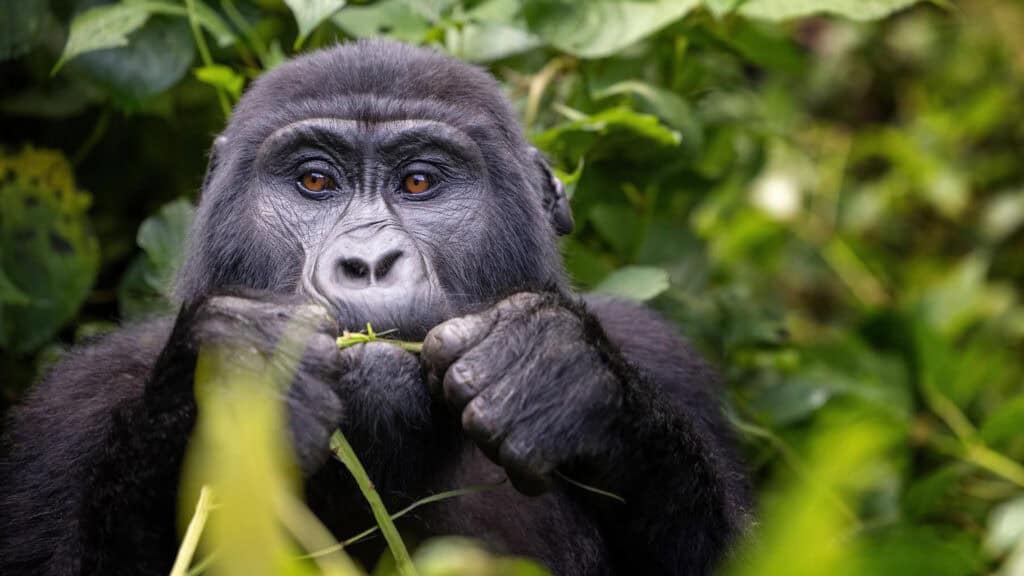
Uganda is where the savannah meets the rainforest – the perfect destination for an Africa birding safari of variety. It’s the premier destination for those who want a primates and birds combo.
For birders in Bwindi, no fewer than 23 of Uganda’s 24 Albertine Rift endemic species can be seen here, including Kivu ground-thrush, Oberlaender’s ground-thrush, dwarf honeyguide, Lagden’s bush-shrike, and Chapin’s flycatcher. You even have the opportunity to see rare and endangered species like the African green broadbill and Shelley’s crimsonwing.
Birdspotting hotspots in Bwindi include the Mubwindi Swamp (for rare species), the main trail between Buhoma and Ruhija, and the bamboo zone, which hosts the handsome francolin and mountain yellow warbler.
Queen Elizabeth National Park is no different, with over 600+ species inhabiting the area. This is the highest of any protected area in East Africa – mostly thanks to its mix of savannah, crater lakes, and tropical forest. Key habitats like the Kazinga Channel and Lake George (a Ramsar site) host several species, including the African fish eagle, rare shoebill stork, African skimmer, and flamingos.
Best Time: Late May to August is generally considered the prime window for visiting both parks in a single trip. In Bwindi, the dry seasons make the steep, forested trails in the Ruhija and Buhoma sectors much safer and more manageable. Birds are active, and visibility through the canopy is higher. In Queen Elizabeth National Park, the vegetation is thinner, making it easier to spot savannah birds.
If you want to see the maximum amount of species possible, November to April is the best time. In Queen Elizabeth National Park, this is the peak for Palearctic migrants (birds flying in from Europe and Asia).
In Bwindi the forest is lush and food is abundant, leading to high bird activity and some of the best birdwatching in Africa. However, be prepared for rain and very slippery, muddy trails.
7. Tarangire National Park, Tanzania
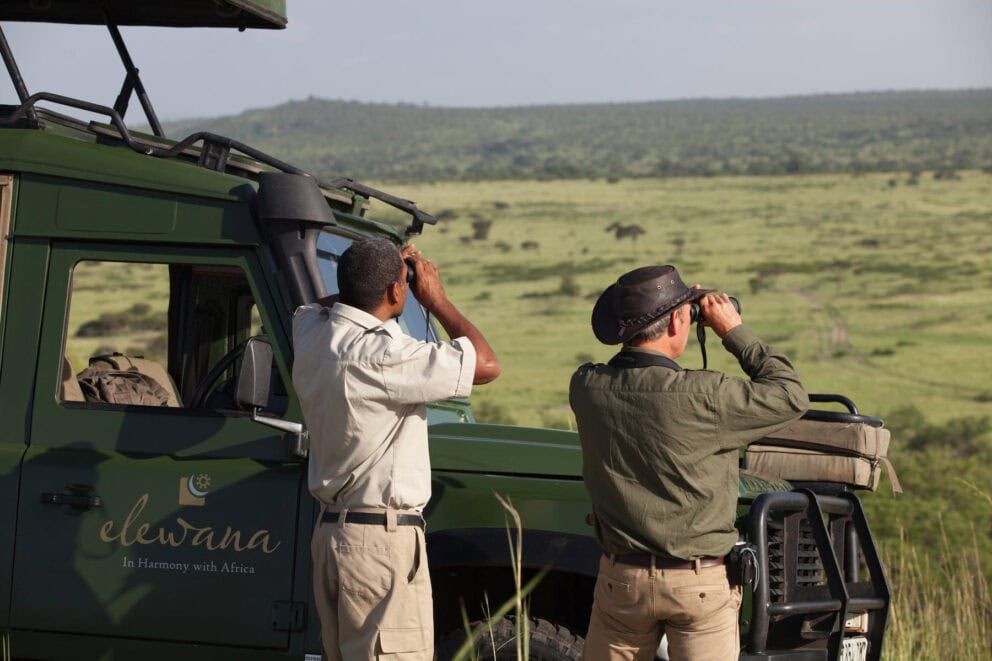
Often overlooked in the northern circuit, Tarangire is particularly excellent for raptors and dry-country specials. The baobab-studded landscape provides a dramatic backdrop for spotting the Big Three endemics of Tanzania: the ashy starling, the yellow-collared lovebird, and the rufous-tailed weaver.
Tarangire boasts over 500 species of birds. If you want to see birds of prey in action, this is the place to be for your African birdwatching safari, as Tarangire is home to one of the world’s highest concentrations of birds of prey, like martial eagles, hooded vultures, secretary birds, and even the tiny pygmy falcon.
Its prime birding locations include:
- Siilale Swamp: A biological engine during the wet season, acting as a magnet for waterbirds. Be on the lookout for the saddle-billed stork, African jacana, and great white pelican.
- Tarangire River: As the only permanent water source in the area during the dry season, the riverine forest attracts woodland kingfishers, double-banded coursers, and various bee-eaters.
- Acacia Woodlands: Home to hoopoes, barbets, and the white-bellied go-away-bird.
Best Time: November to April falls within the wet season, which is prime time for birding in Tarangire, as thousands of migratory birds arrive from Europe and North Africa.
If you want the ultimate experience, consider a walking safari (offered by select lodges like Oliver’s Camp or Tarangire Treetops). Birding on foot allows you to notice the smaller “LBJs” (Little Brown Jobs) and hear calls that you’d miss over the sound of a Land Cruiser engine.
8. The Rift Valley Lakes, Kenya and Tanzania
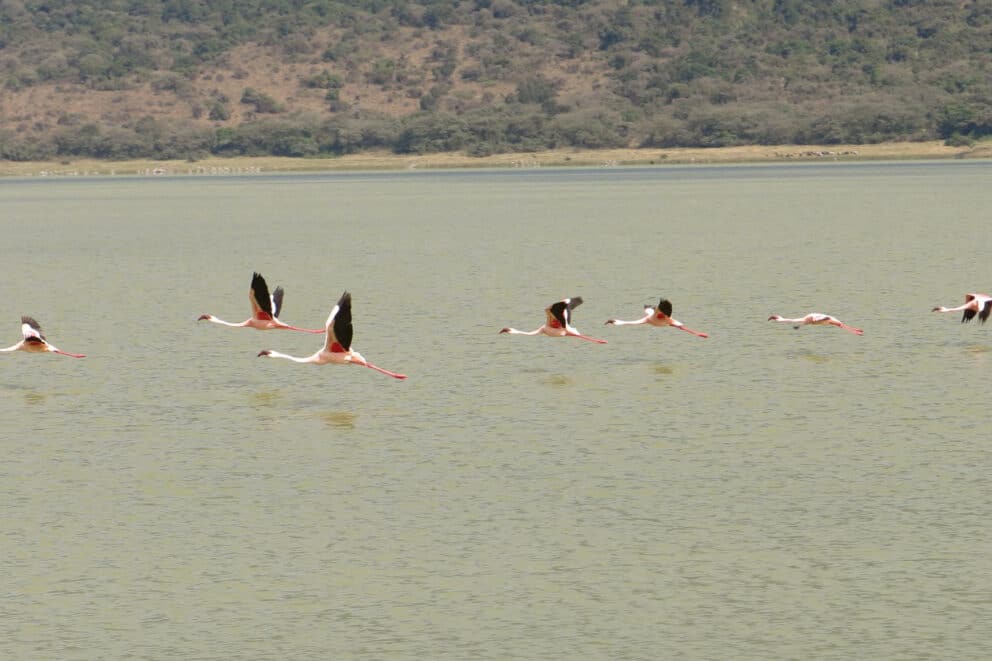
The alkaline lakes of the Rift Valley – specifically Lake Nakuru, Lake Manyara, and Lake Natron – create some of the best birding in the world. Millions of lesser and greater flamingos turn the shorelines pink, while the surrounding acacia woodlands are home to the narina trogon and silvery-cheeked hornbill.
Lake Manyara is also historically strong for waterbirds and forest species, making it a perfect birding-focused tack-on to any northern circuit safari.
Best Time: For maximum species count, November to April is the best time for birding in the Rift Valley, as several migrant species escape the northern winter. For the spectacle of millions of pink flamingos dancing across the salt ponds, time your visit for between July and October or January and February.
9. Murchison Falls, Uganda
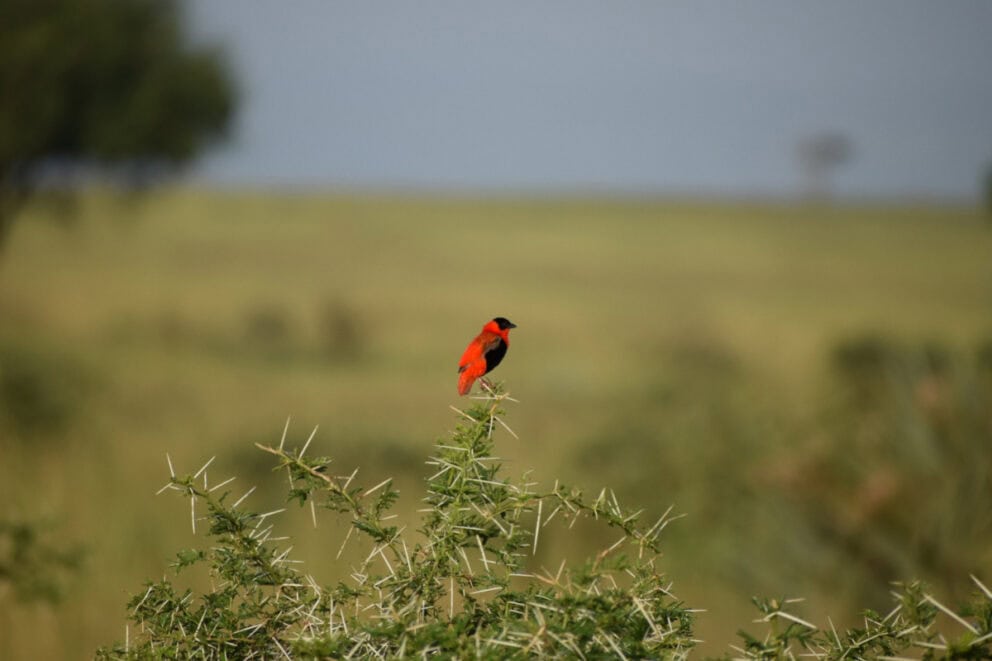
Murchison Falls is where the mighty Nile squeezes through a narrow cleft in the Rift Valley escarpment, creating a thunderous spectacle that is matched only by the park’s avian diversity. With over 450 recorded species, it’s a cornerstone of any Ugandan birding itinerary and the pinnacle of birding safaris in Africa.
The park’s unique appeal lies in its varied ecosystems, ranging from soaring savannahs and borassus palm forests to the lush riverine thickets along the Victoria Nile.
The absolute holy grail for birders here is the prehistoric-looking shoebill. While elusive, they are frequently spotted in the marshy stretches of the delta where the Nile flows into Lake Albert. Navigating these papyrus-lined waterways by boat offers an unparalleled vantage point for spotting this mega-tick alongside the African skimmer, giant kingfisher, and goliath heron.
In the drier savannah sectors, you can scan the skies and palms for the Abyssinian ground hornbill, the secretary bird, and Denham’s bustard. The riverine forests are also home to the vibrant red-throated bee-eater, which nests in the sandy banks of the Nile.
Best Time: The dry seasons (January to February and June to August) are ideal for general game viewing and ease of travel. However, for those looking to maximise their Africa birding safari, November to April is the peak for migratory species, though you should be prepared for occasional tropical downpours.
10. The Masai Mara, Kenya
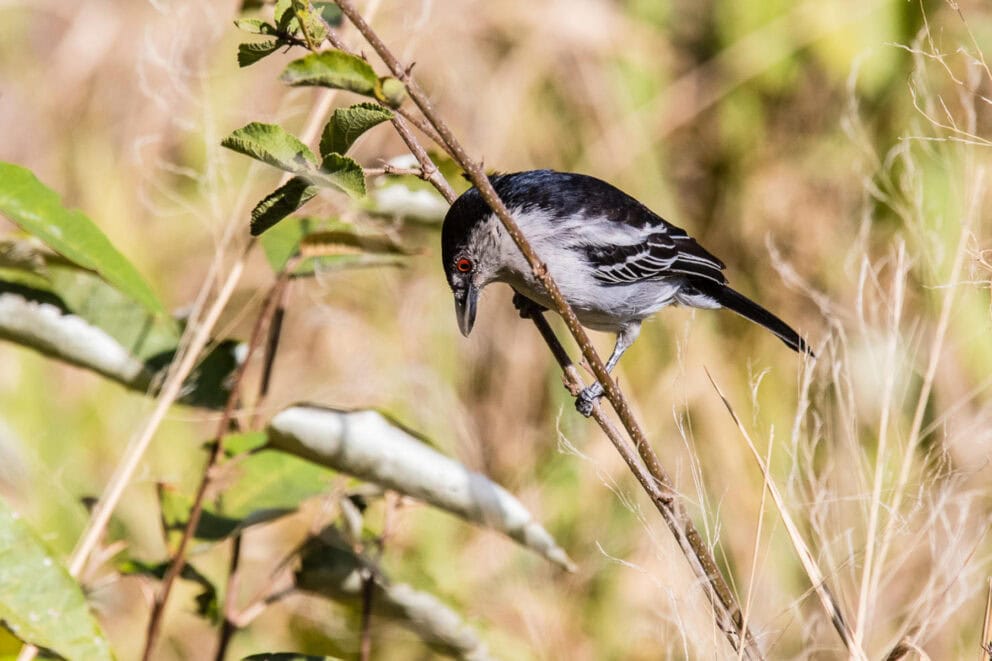
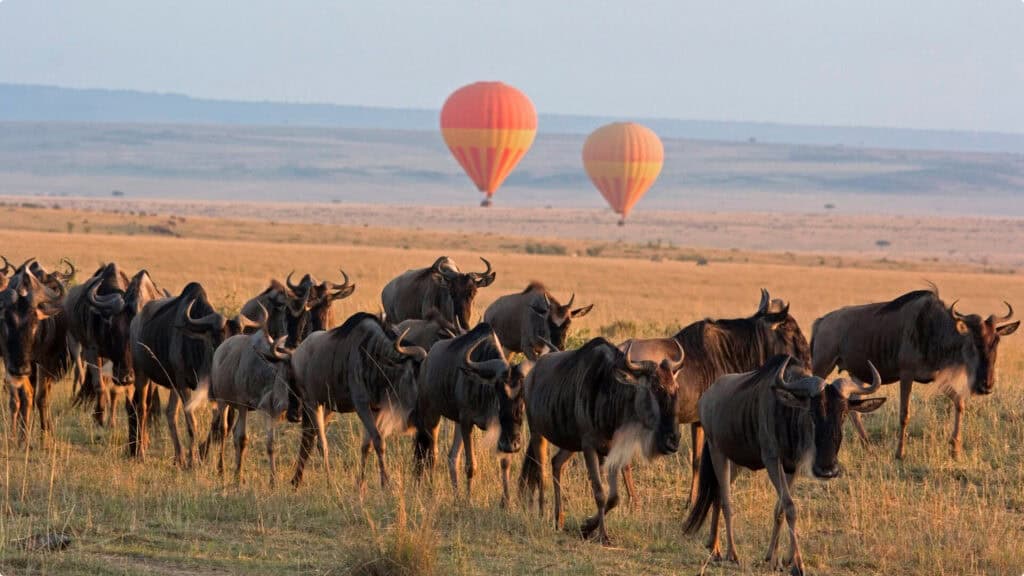
While globally famous for the Great Migration, the Masai Mara is equally spectacular for its avian residents. With over 470 species recorded, including nearly 60 species of raptors, it’s an essential stop for any birding enthusiast visiting East Africa. The Mara’s vast, rolling grasslands and riverine forests along the Mara and Talek Rivers provide a diverse stage for both year-round residents and seasonal visitors.
The open plains are the best place to spot the world’s largest bird, the common ostrich, alongside the secretary bird and the stately kori bustard. Riverine thickets provide cover for the beautiful Ross’s turaco and the Schalow’s turaco, while the skies are frequently patrolled by a variety of vultures and eagles, including the martial eagle and bateleur.
Best Time: The most rewarding birding occurs from November to April, when Palearctic migrants from Europe and North Africa arrive. For those interested in seeing birds alongside the Great Migration, July to October offers the most dramatic terrestrial wildlife action.
Plan Your Ultimate Birding Journey
Whether you’re chasing the rare endemics of Uganda or the Big Six in the Kruger, the best birdwatching destinations in the world await in Africa. Ready to find your lifers? Contact our safari experts today to tailor-make your specialist birding safari.

Written by Thaakiera Ackerdien
• Travel Writer


Verified by Devryn Panaino
• Africa Safari Expert
Discover the African Journey that’s Right for You
 Blog List














 30 Jan 2024





















Written by Thaakiera Ackerdien
• Travel Writer
Verified by Devryn Panaino
• Africa Safari Expert
Part of the Southern Africa Safari, East Africa Safari & Birding Safaris Collections