

 Email us






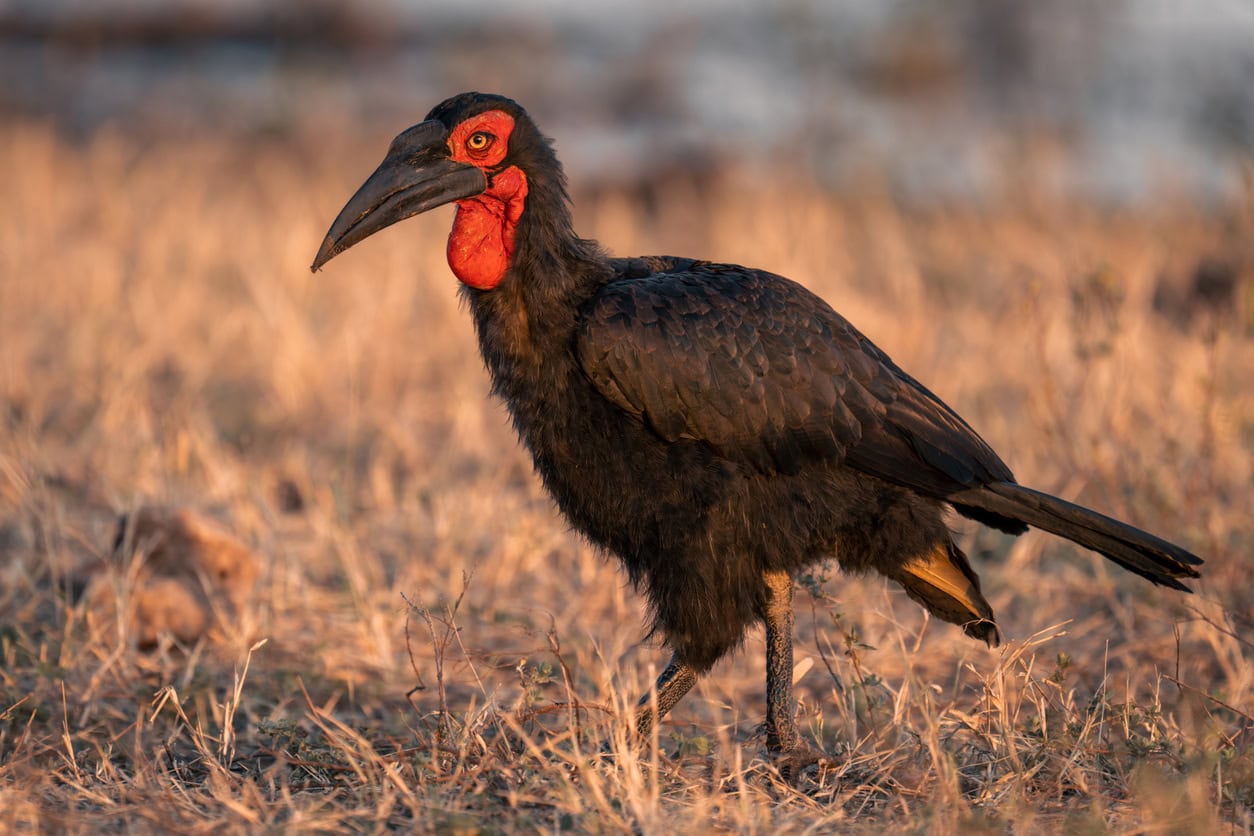
Conservationists are celebrating a significant milestone in the protection of the southern ground hornbill – new camera-trap footage reveals the fledging of several chicks from the Associated Private Nature Reserves (APNR). The sightings offer a rare glimpse into the early life of one of South Africa’s most endangered bird species.
The footage shows young fledglings emerging from massive nest boxes and following their family groups through the savannah. It has been analysed as part of a 25-year-long research project that has brought about the success of this year’s breeding season.
In the wild, the southern ground hornbill is considered a connoisseur of accommodation, requiring large, high-cavity trees like leadwoods or baobabs to nest. However, habitat loss and the destruction of large trees by elephants have created somewhat of a housing crisis for the birds.
This is where the artificial nesting programme comes in. Researchers have installed 31 artificial nest boxes – crafted from hollowed-out logs with temperature-buffered wooden designs. They’re used to replace large tree cavities, which are naturally used for breeding and are placed in the species’ natural range within the Greater Kruger region.
Preparation for the season begins in winter when teams repair or replace nest boxes ahead of the September to December breeding period, with chicks typically fledgling between February and March.
“The data is clear: without these artificial nests, we would likely see a significant decline in numbers,” the APNR Ground Hornbill Project stated in their recent research report. “Since 2000, 182 chicks have fledged in the APNR, and remarkably, 143 of those originated from our artificial nests.”
Challenges of the Wild
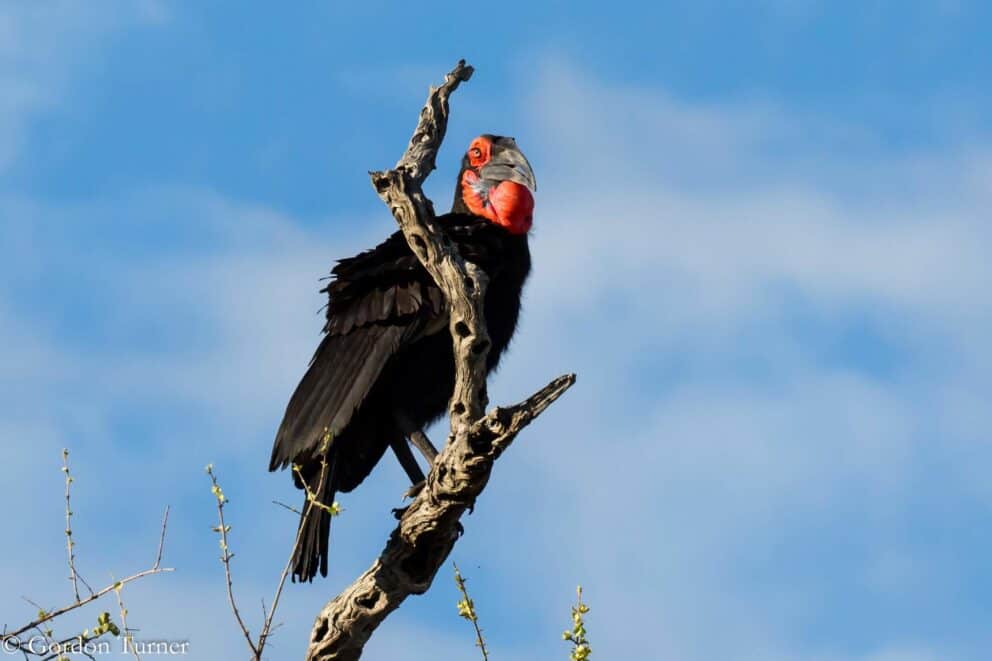
While this footage is a triumph for the species, it also highlights the perils these endangered birds face. Recent posts from the project detail a heartbreaking incident where a chick in a small natural nest on Argyle was lost to a genet.
Because the natural cavity was so narrow, the chick became stuck during the struggle and couldn’t defend itself. In response, the team has already installed an artificial nest in the vicinity to ensure the family group has a safer, more spacious option for the upcoming season.
The southern ground hornbill is, unfortunately, a slow breeder, typically only raising a single chick once every nine years in the wild. However, the use of artificial nests has shortened this interval to once every three years, fuelling a natural expansion.
According to a University of Cape Town (UCT) study, birds fledged in the APNR have been resighted up to 40 km/25 mi away, joining new breeding groups and helping to repopulate areas where the species has previously vanished.
The project is also now entering a new high-tech phase, with several birds being fitted with tracking rings. These solar-powered devices are already providing researchers with data on how the young birds navigate the landscape.
How You Can Help
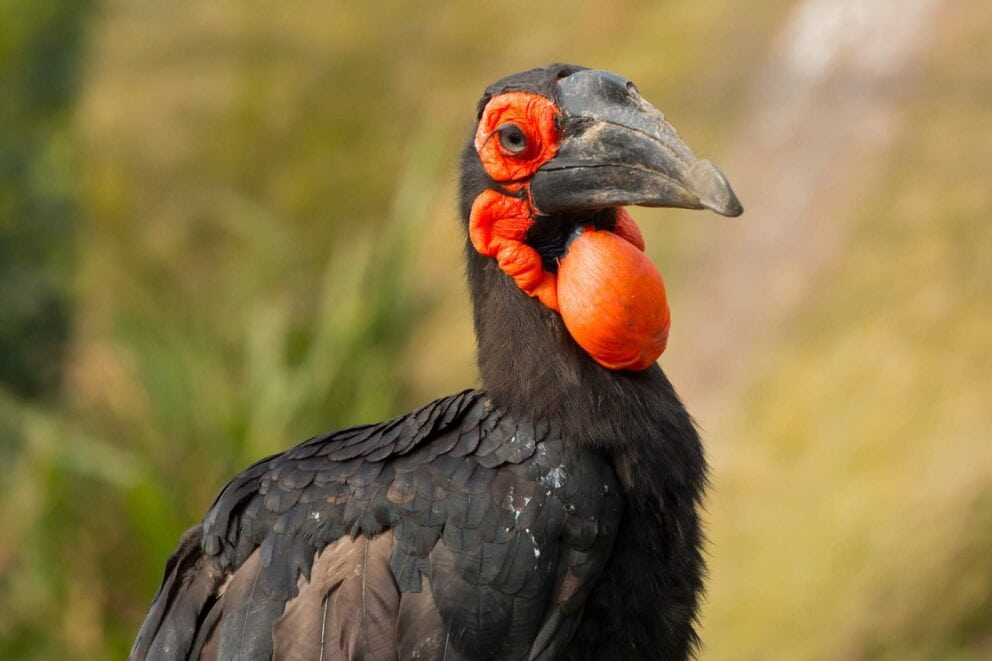
The APNR Southern Ground Hornbill Project continues to call on citizen scientists to support their research. Visitors to the Greater Kruger area are encouraged to submit sightings, photos, and videos of ground hornbills – especially those with leg rings – to help track the movements of these iconic “Thunderbirds”.
For birding enthusiasts, the Greater Kruger offers a unique opportunity to witness one of Africa’s most intensive conservation success stories. Because these birds have such a long breeding cycle and specific habitat needs, seeing them in the wild is a rare privilege that underscores the importance of the ongoing 25-year research project.
Your contributions and sightings help support the project by monitoring population expansion, providing vital data to researchers. While the southern ground hornbill is found from Kenya down to South Africa, the Greater Kruger is undoubtedly a stronghold for the population. If you’re keen on seeing one and ticking them off your list, a birding safari in the Kruger is your best bet.
This is particularly true in Klaserie, Timbavati, Umbabat, Balule, and Thornybush, where conservationists have set up over 30 artificial nesting boxes across the reserves. Your birdwatching safari will also directly contribute to the continued research and conservation of these unique birds.
Start planning your Kruger birdwatching safari with a Discover Africa safari expert to see these magnificent birds for yourself.

Written by Thaakiera Ackerdien
• Travel Writer
Discover the African Journey that’s Right for You
 Blog List





























Written by Thaakiera Ackerdien
• Travel Writer
Part of the South Africa Safari Collection