Email us




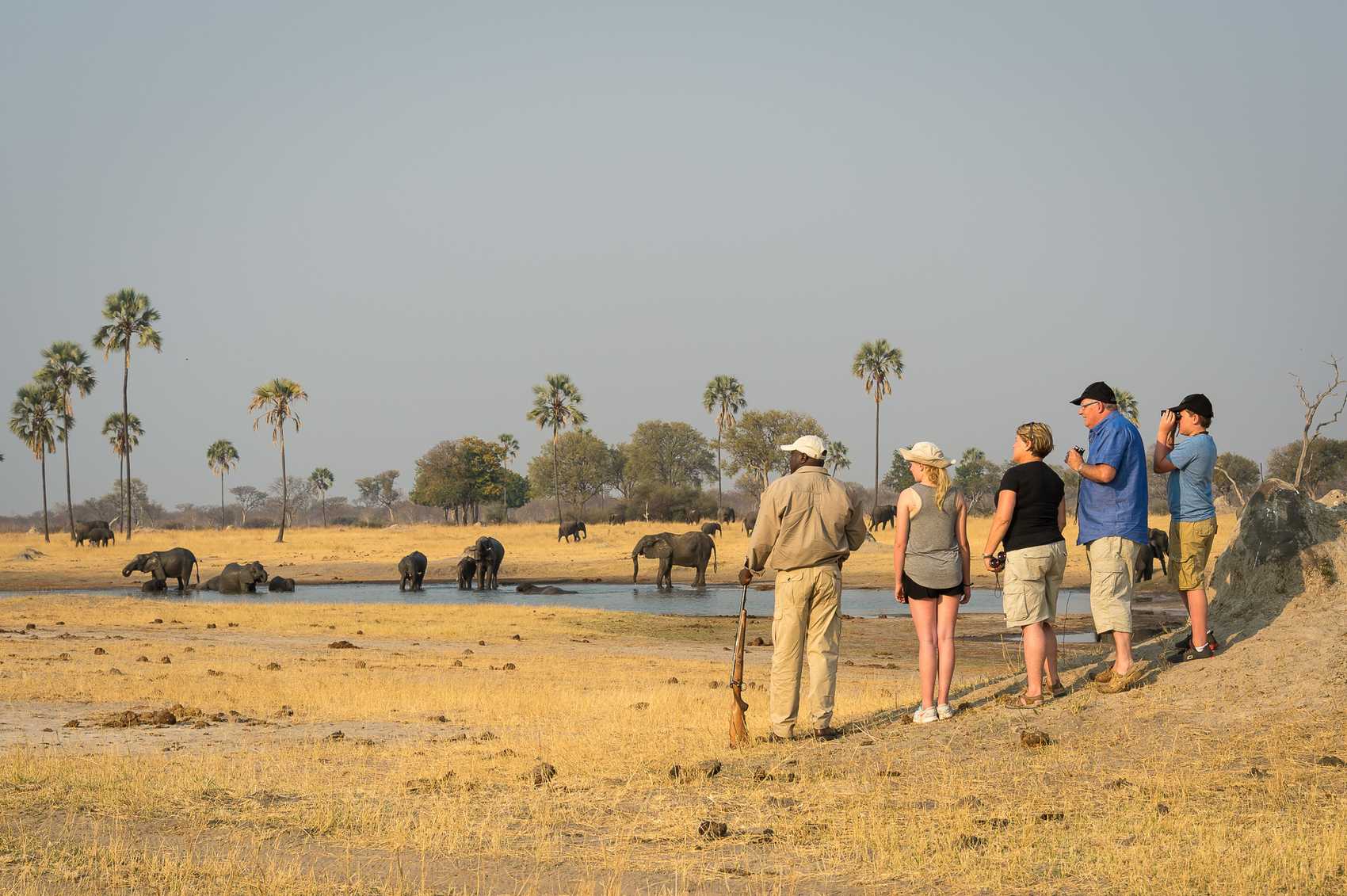



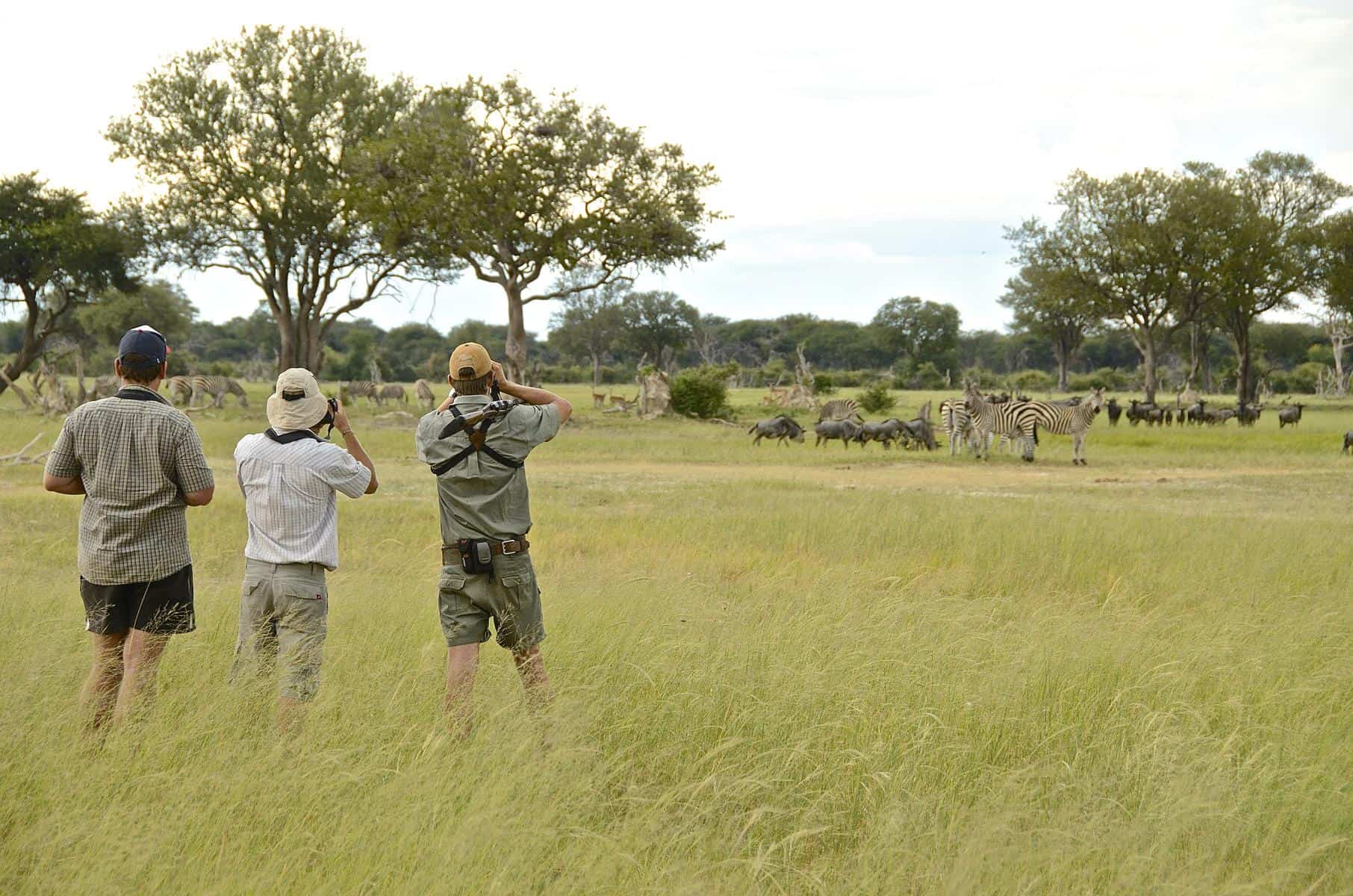
The Zimbabwean bush has a specific kind of silence, not so much the absence of sound but rather a heightened presence of life. Out there, being on foot during Zimbabwe walking safaris, you can feel as much as hear the scuttle of a dung beetle, the call of a go-away bird, the low rumble of elephants.
And underscoring it all, the soft crunch of your boots on sun-baked earth. When you choose a walking safari in Zimbabwe, you step into the wild heart of nature. The hoot of southern ground hornbills and snort of warthogs add to the soundtrack.
Why Guiding Matters
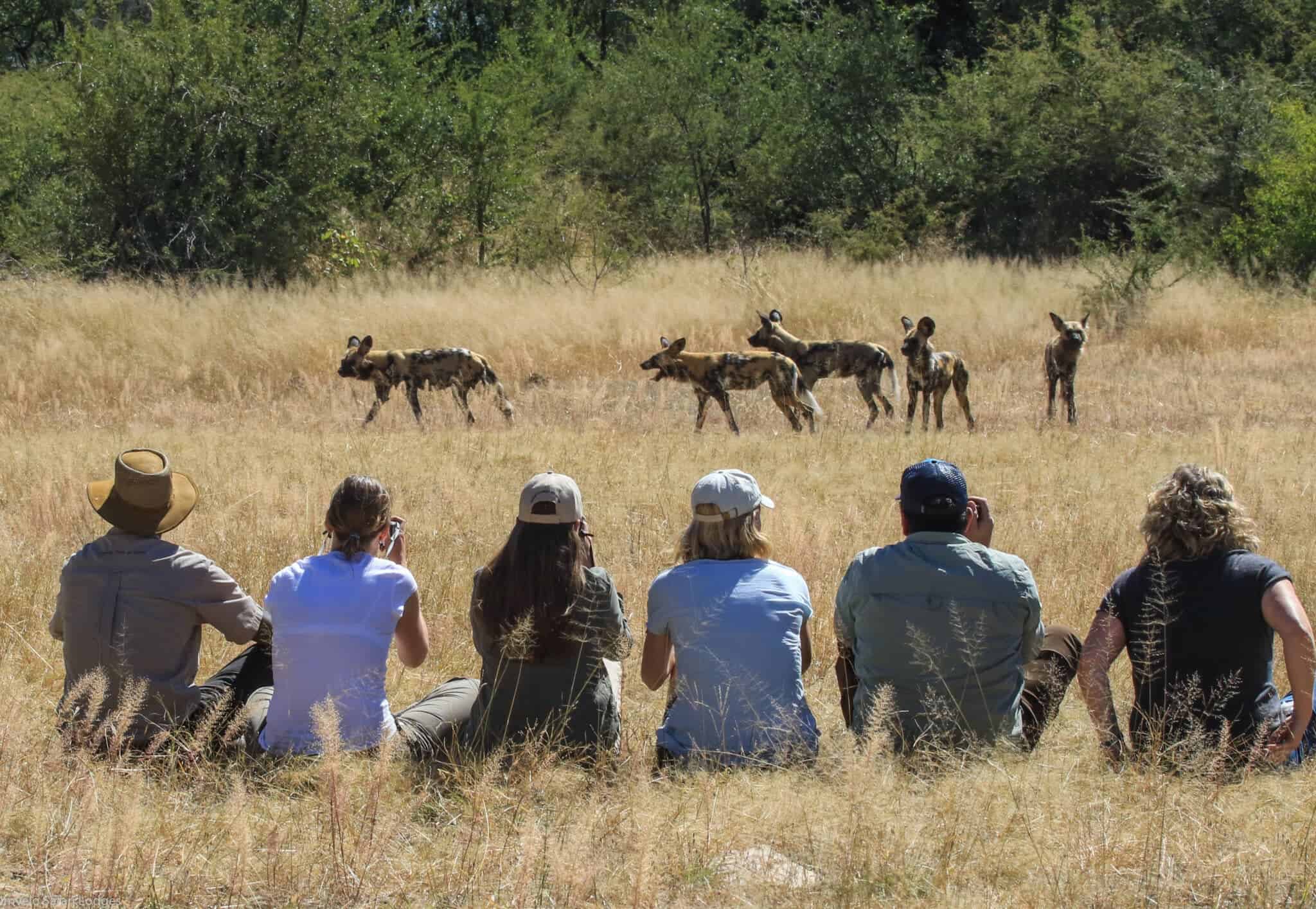
Zimbabwean guides are arguably the best on the continent. They’re both a protector and a walking encyclopaedia. To lead a walking safari, Zimbabwe requires one of the most rigorous professional licences in Africa.
Becoming a fully licensed Zimbabwean Professional Guide includes book learning, on-the-ground learning, and a minimum four-year apprenticeship. Examinations are rigorous and thorough to ensure your guide understands the subtle language of the wild, from the direction of the wind to the tension in a buffalo’s stance.
Zimbabwean pro guides also need to have advanced first aid training as well as critical firearms training and certification.
This means safety is given the highest regard, allowing you to focus on the magic of the bush. It starts with uncovering the intricate world of insects, termites, and tracks before your expert guide leads you towards the heavy footprints of a lion or the broken branches left by a passing bull elephant.
Along the way, you’ll stop, listen, and learn much about the bush and our place in it. Many guides are also wise to the ancient uses of flora and will happily tell you local folk tales, too.
Where to Walk
Each region in Zimbabwe offers a distinct slice of wilderness:
Mana Pools National Park
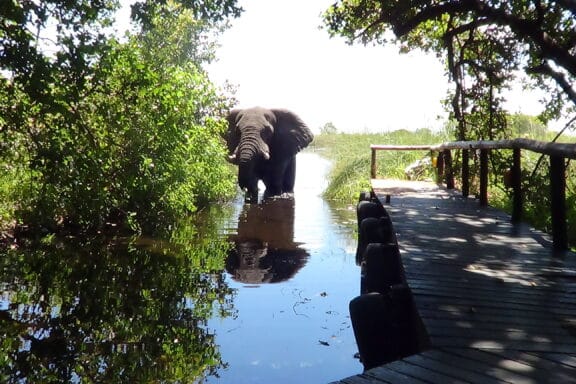
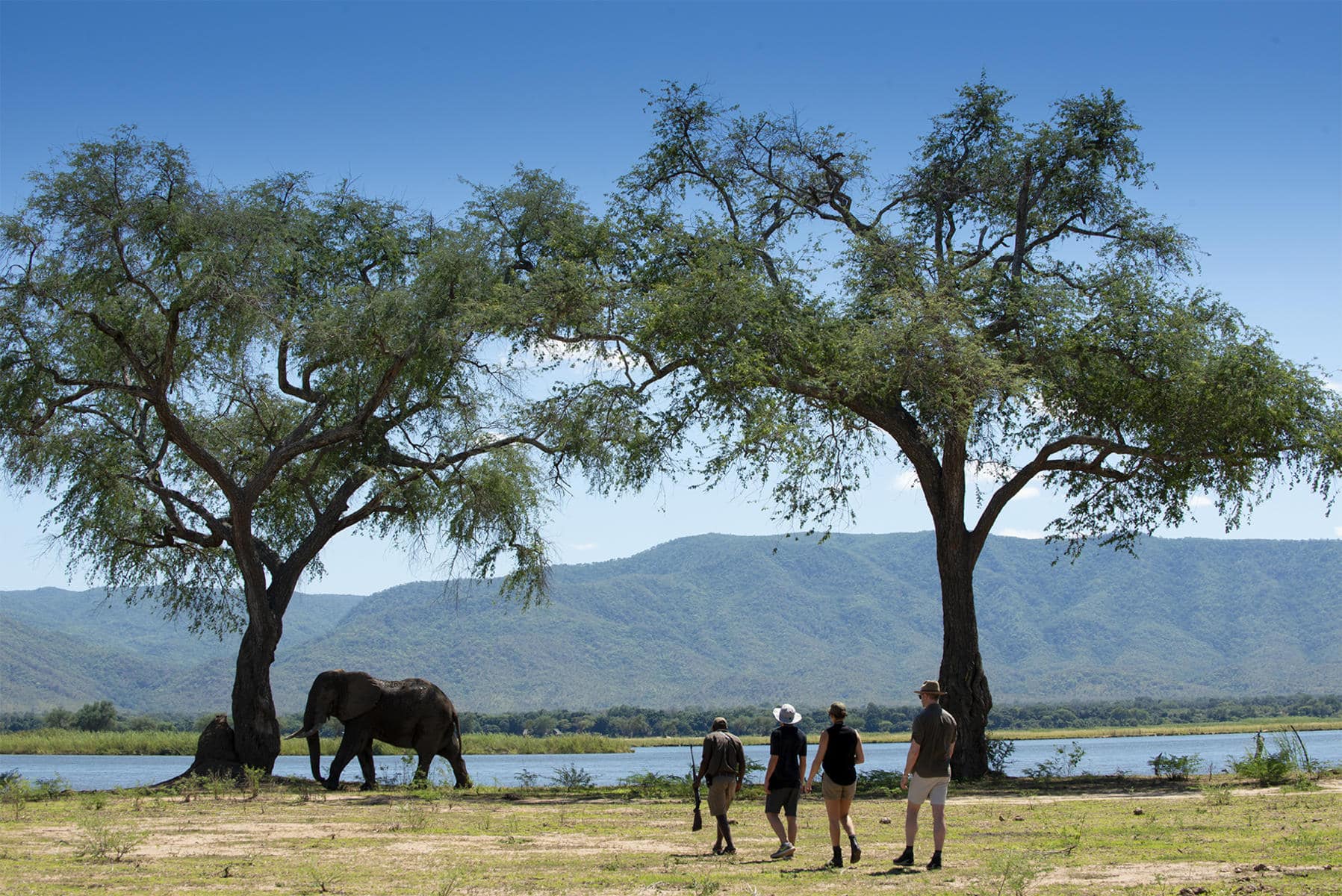
A Mana Pools walking tour is the pinnacle of adventure. Here, the green-hued light filters through apple-ring, Natal mahogany, mopane, and baobab trees, creating nature’s cathedral. Here you have the chance to encounter elephants and predators on foot under the watch of elite professionals.
Hwange National Park
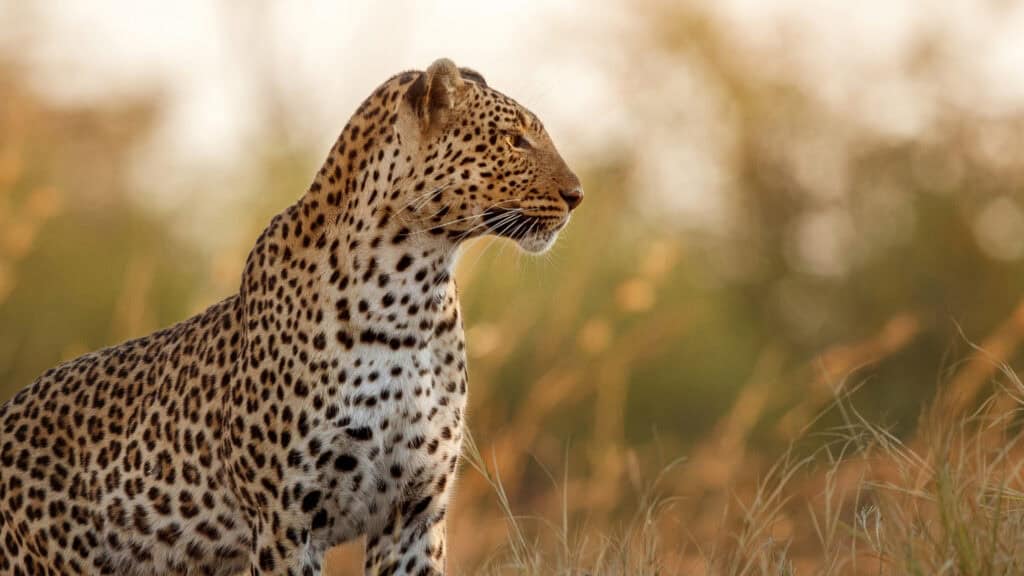
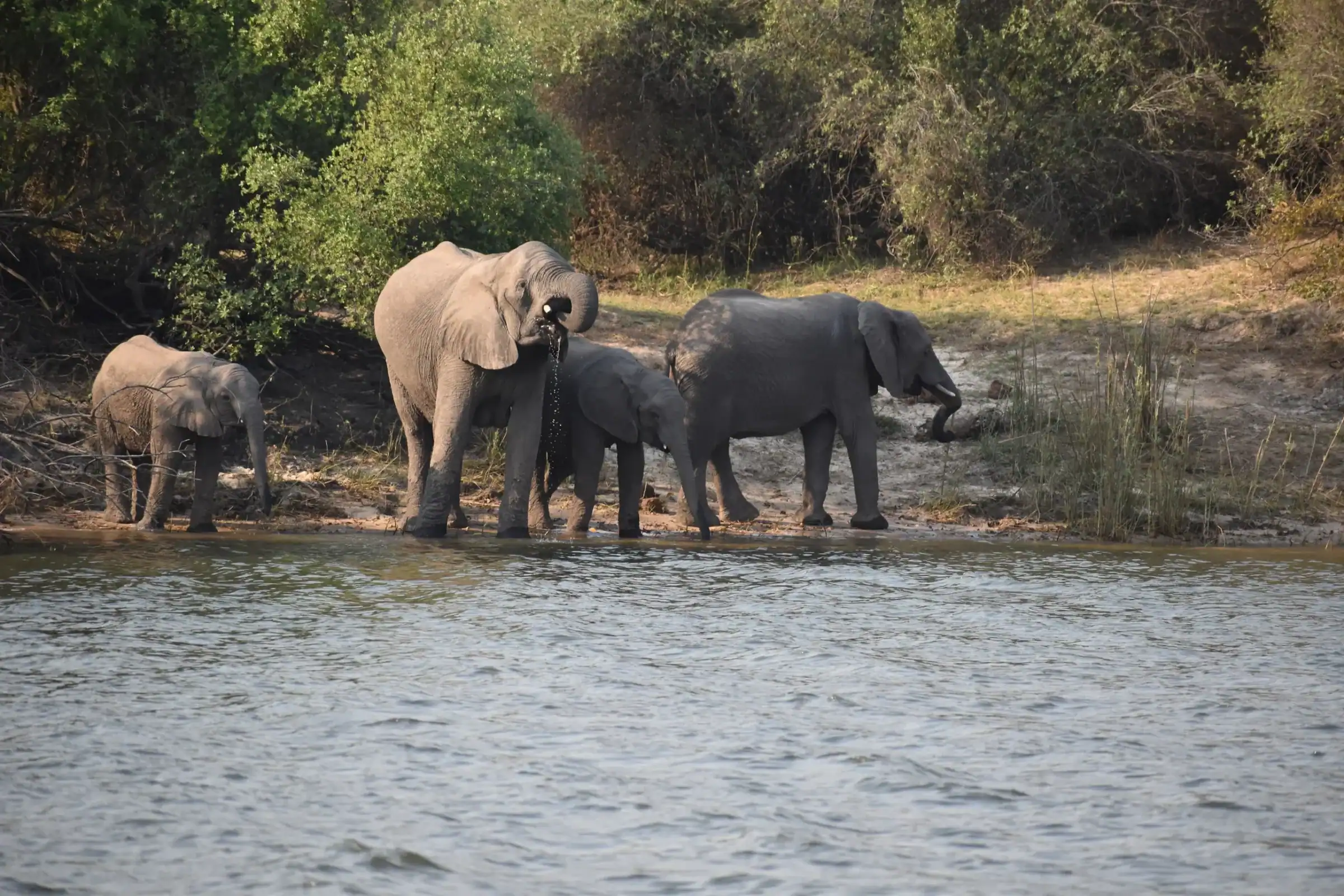
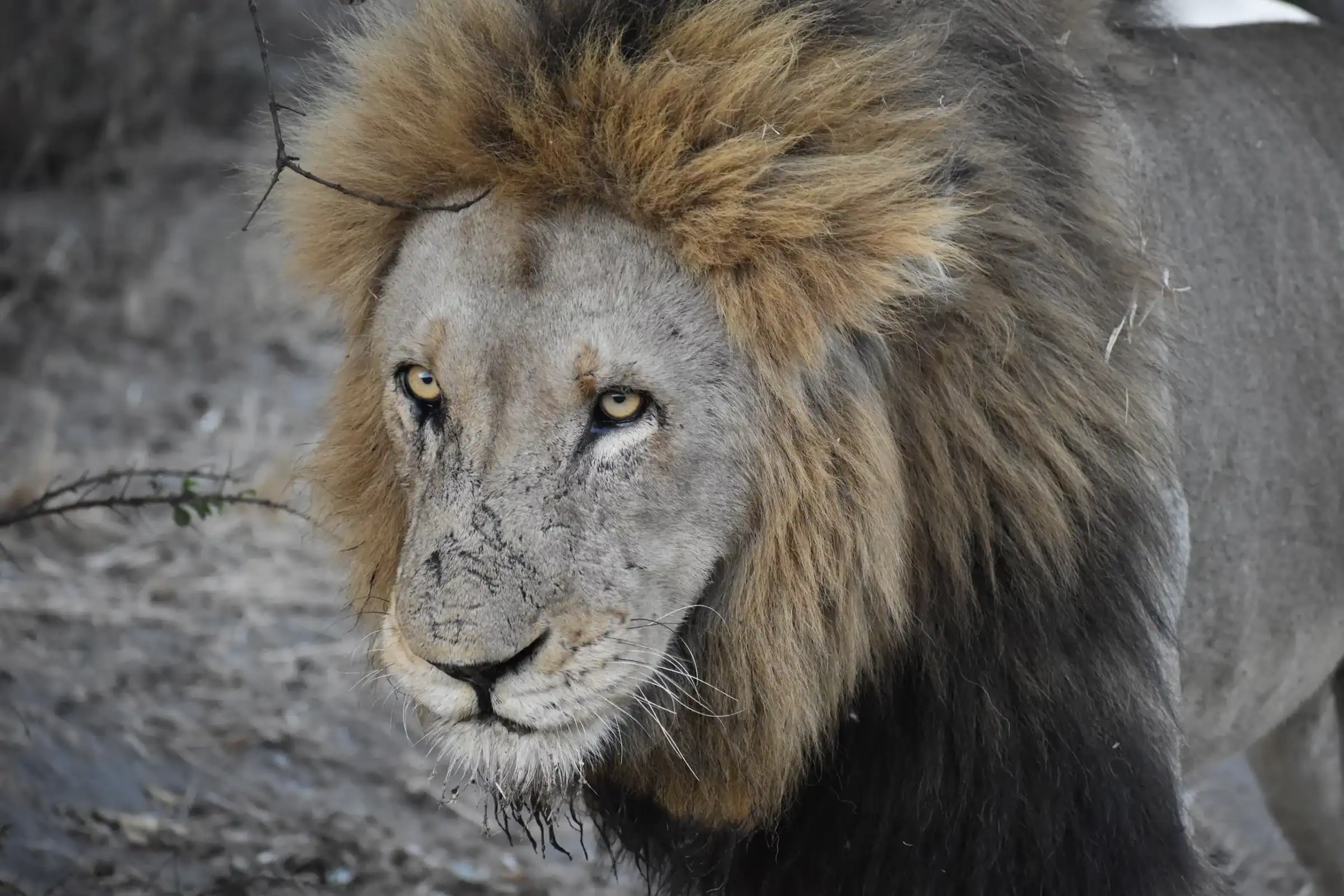
A Hwange walking safari is about vast horizons and the thrill of the unknown. Rhinos are making a comeback in private concessions, with a significant return of both black and white rhinos, but Hwange is primarily about elephants and lions, whose density makes every footstep feel electric.
Matobo Hills
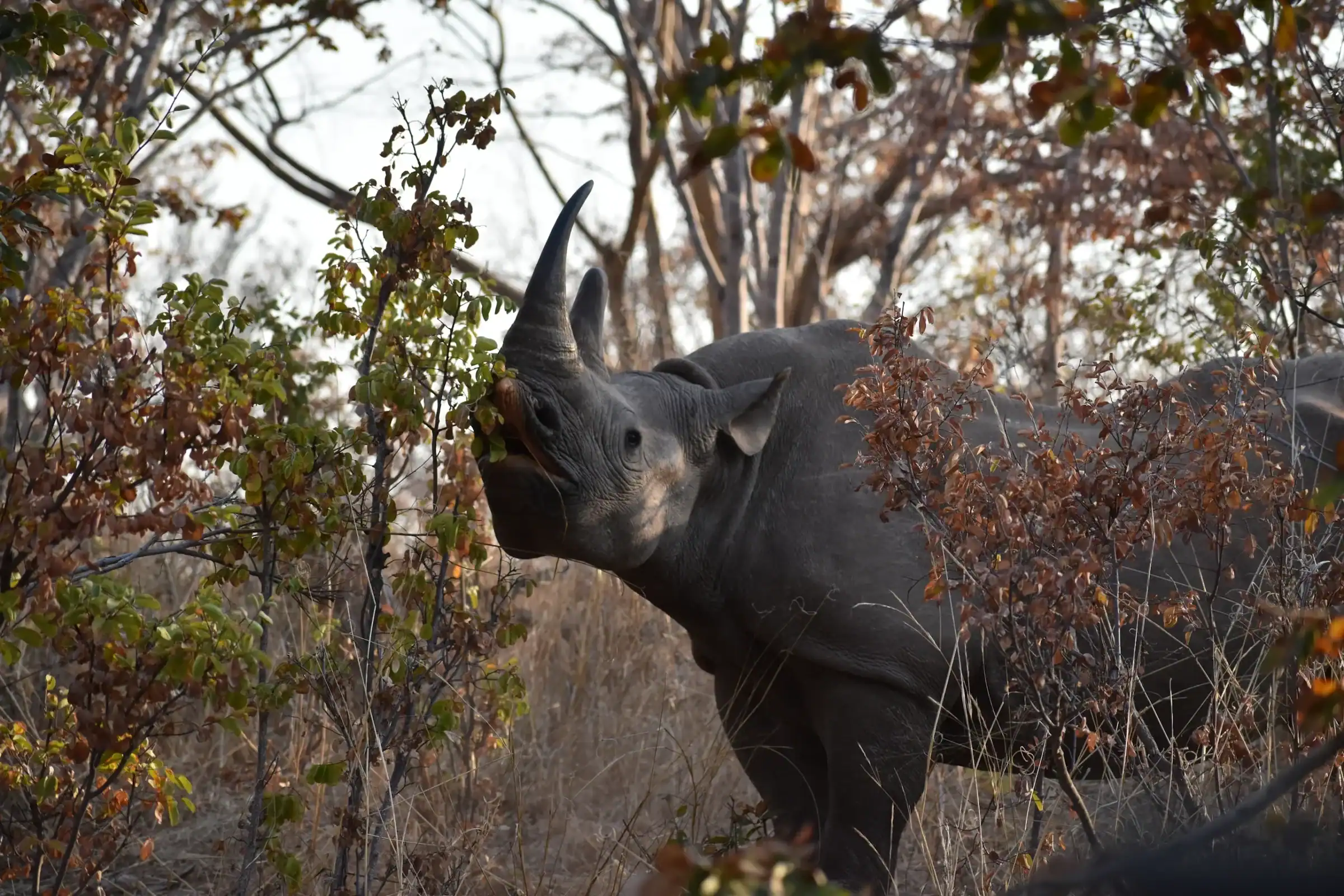
If your heart is set on rhinos, Matobo is your answer. This is the most reliable area for white rhino encounters on foot, often paired with walks through ancient San rock art sites. It’s also a black rhino stronghold, but it can be difficult to spot them.
Zambezi National Park
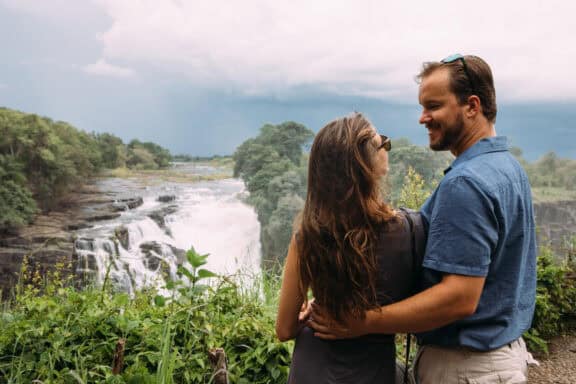
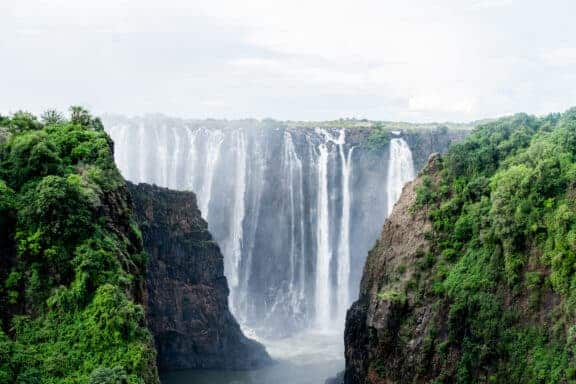
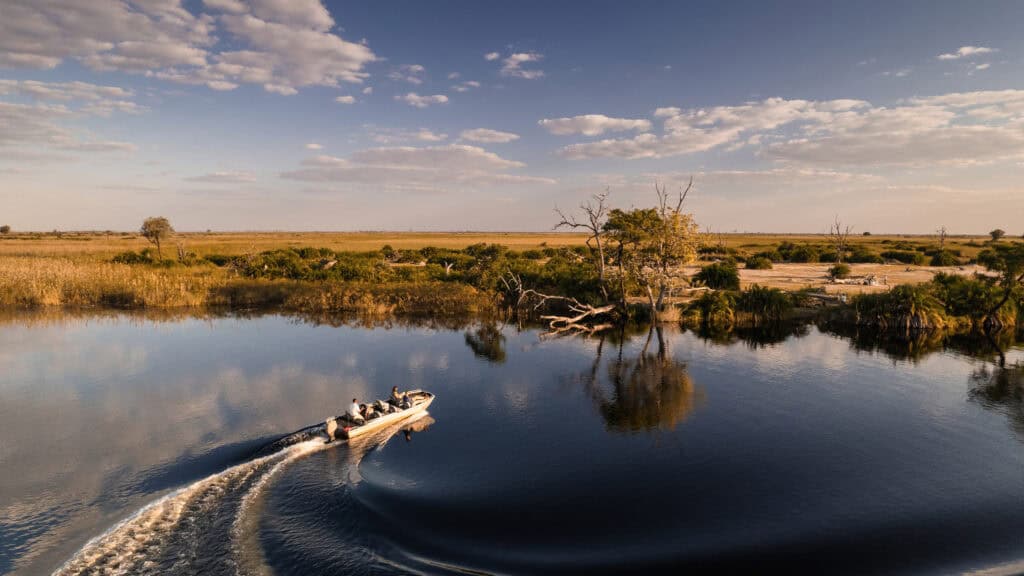
Perfect for an introduction, Zambezi National Park walking safaris offer lush riverine views near Victoria Falls, ideal if you want to blend adventure with the spray of the Smoke that Thunders.
Planning Your Chapter
The best time to visit: Walking is highly seasonal, and the dry winter months (May to October) are best. The bush thins out, improving visibility, and the cooler mornings make long treks comfortable. Some Mana Pools camps close during the rains (November to March) when the black cotton soil turns to impassable mud.
Fitness and preparation: You don’t need to be an elite athlete, but a moderate bush-ready level of fitness is key. Expect to cover roughly 10 km/6 mi in a morning at a steady pace. We suggest packing khaki or olive green lightweight layers; the mornings can be surprisingly crisp before the midday heat takes hold.
Expert tip: The sun can be brutal, so pack a wide-brimmed hat and sunscreen.
A holistic journey: Walking doesn’t have to be your only mode of travel. The best rhythm is a hybrid safari, alternating morning walks to ground yourself in the earth with afternoon game drives to cover more territory.
Inspired by the call of the wild? Let’s start designing your journey.